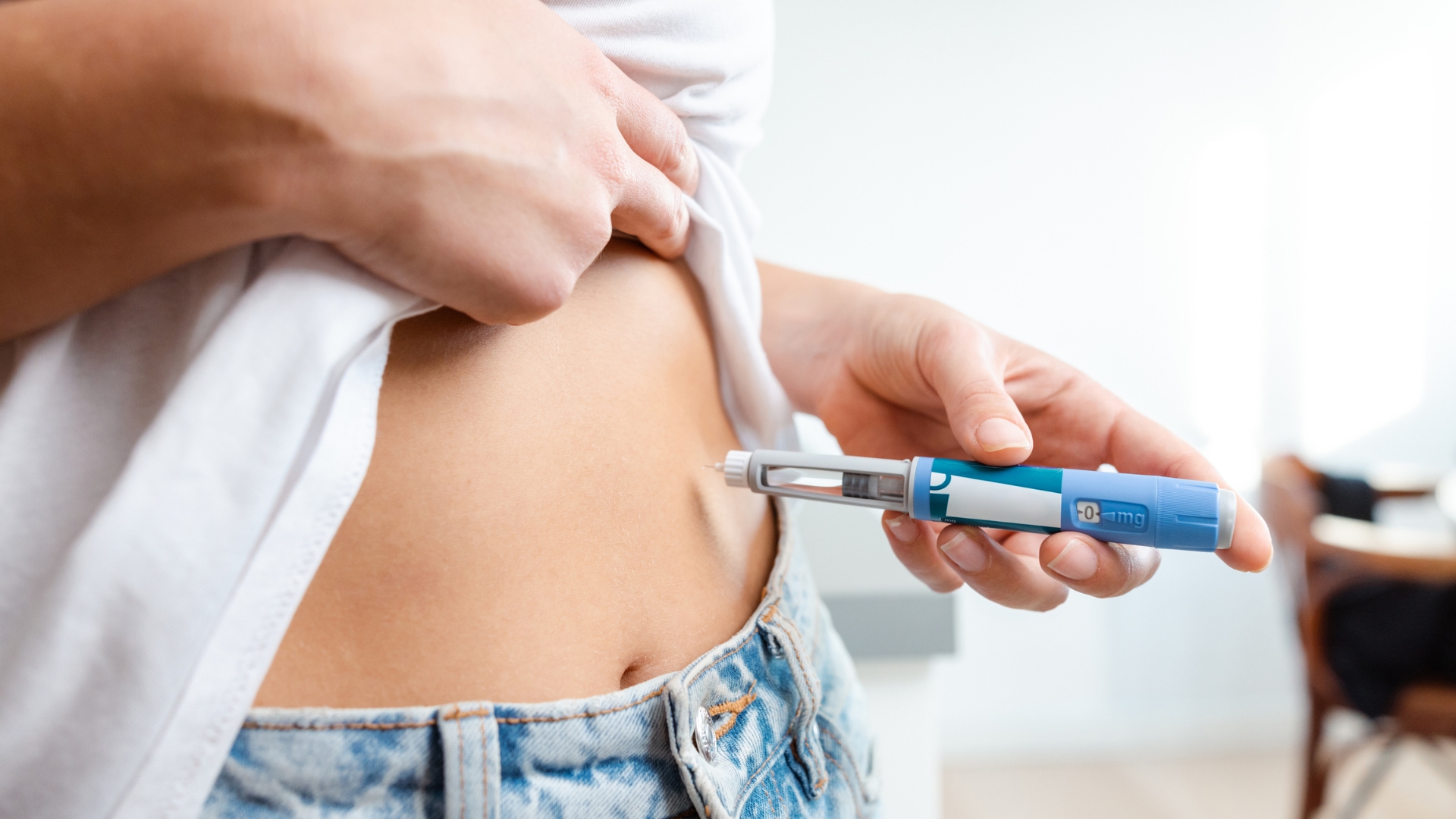

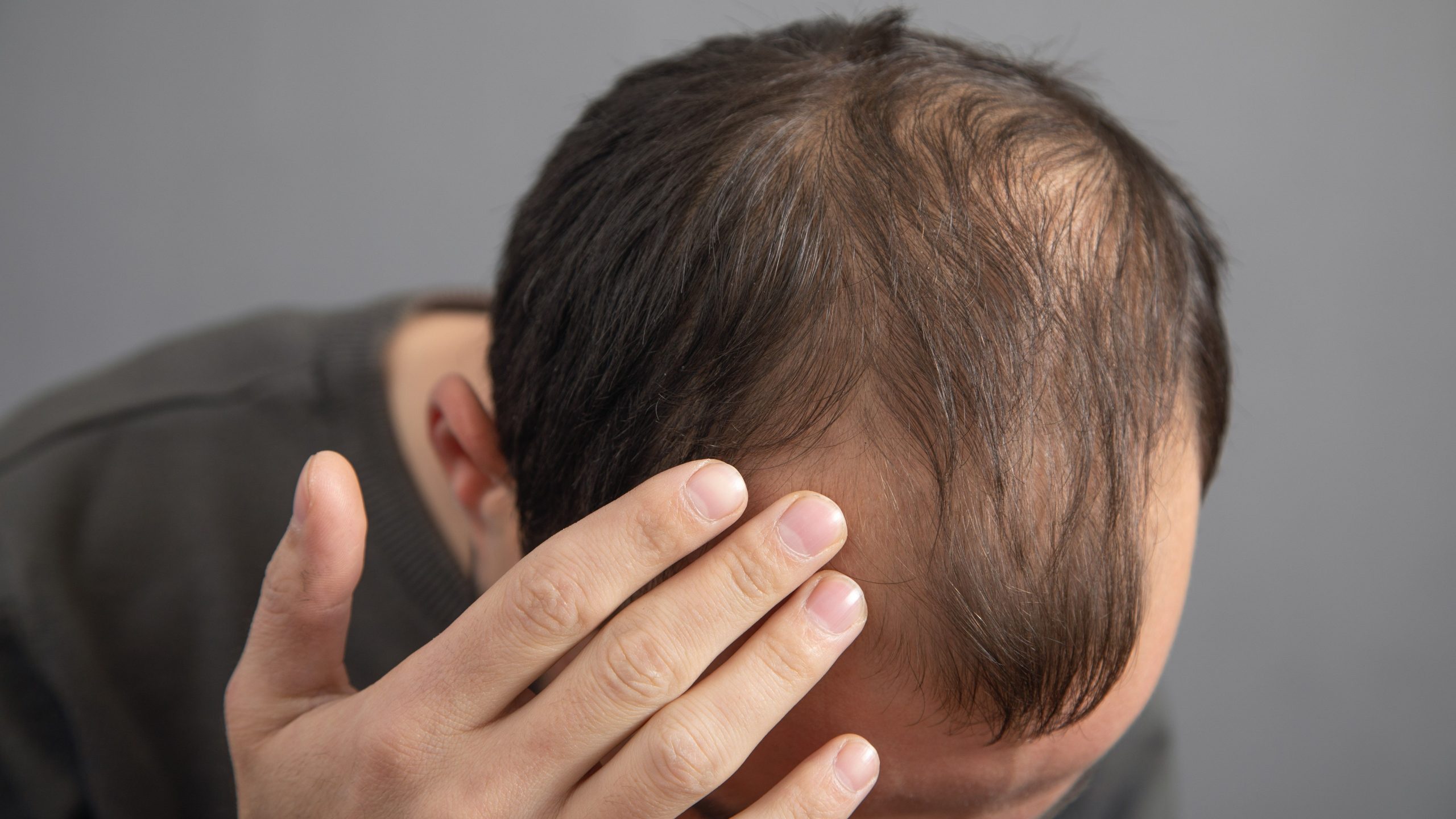
Hair loss is now listed as a common side effect of Mounjaro (tirzepatide) — affecting up to 1 in 10 people using it for weight management. If you have noticed more hair in the shower, on your pillow, or on your brush since starting GLP-1 medication, you are not alone, and in the vast majority of cases, it is temporary.
How common is hair loss on Mounjaro?
- SURMOUNT clinical trials found 4.9–5.7% of participants experienced hair loss on 5–15mg doses, compared to 0.9% on placebo
- The MHRA has now classified alopecia as a common side effect (affecting up to 1 in 10 people) of Mounjaro for weight management
- A 2025 study of 547,993 GLP-1 users found a 76% increased risk of telogen effluvium at 12 months of use
- Women are significantly more affected than men — clinical trials found 7.1% of females vs 0.5% of males experienced hair loss
Why it happens — telogen effluvium explained
Hair grows in cycles: an active growth phase (anagen, 2–8 years), a brief transition phase (catagen), and a resting phase (telogen, ~3 months) after which hairs shed. Normally about 10–15% of hairs are in the resting phase at any time.
When the body experiences significant physiological stress — including rapid weight loss — a larger proportion of hair follicles simultaneously enter the resting phase. Approximately 2–4 months later, those resting hairs shed all at once. This is telogen effluvium. The follicles are not damaged — they re-enter the growth phase once the triggering stress resolves, and hair grows back.
Tirzepatide is not likely to directly damage hair follicles. The mechanism is the weight loss itself — the same phenomenon occurs after bariatric surgery, severe illness, childbirth, and any major metabolic stress.
What actually helps
Protein — the most important intervention
Hair is made almost entirely of a protein called keratin. When protein intake is insufficient during rapid weight loss, the body deprioritises non-essential functions including hair growth. Hitting a protein target of at least 1.6g per kg of target body weight every day is the single most important nutritional step for minimising hair loss on GLP-1 medication.
Key micronutrients for hair health
| Nutrient | Role in hair growth | UK deficiency risk | Food sources |
|---|---|---|---|
| Iron | Oxygen delivery to follicles; essential for anagen phase | High — especially in women | Red meat, spinach, lentils, fortified cereals |
| Vitamin D | Activates hair follicle cycling; deficiency directly linked to hair loss | Very high in UK (autumn/winter) | Oily fish, eggs, fortified foods; supplementation usually needed |
| Zinc | Protein synthesis and cell repair in follicles | Moderate on restricted diets | Meat, shellfish, pumpkin seeds, legumes |
| Biotin (B7) | Keratin structure; deficiency causes hair thinning | Low overall but reduced by calorie restriction | Eggs, nuts, sweet potato, salmon |
| B12 | Red blood cell production; oxygen to follicles | High on reduced food intake | Meat, fish, eggs, dairy; supplement if on low protein intake |
Stress management
Psychological stress amplifies telogen effluvium. Elevated cortisol from chronic stress can worsen and extend hair shedding beyond the initial weight-loss trigger. Managing stress through exercise, sleep, and cortisol-modulating supplements reduces the severity and duration.
What does not help
- Stopping Mounjaro — the hair loss is caused by the weight loss, not the medication. If you stop the medication, weight often returns but the hair loss may continue anyway as follicles continue their cycle
- Expensive hair growth shampoos — topical products do not reach the follicle at the depth where telogen effluvium occurs
- Crash dieting harder to “get through it faster” — this worsens and extends the trigger
🌿 Lily & Loaf Daily Fuel — protein plus the micronutrients hair needs
Daily Fuel provides 21g of complete protein per serving plus B12, zinc, iron, and vitamin D — four of the five key micronutrients most commonly deficient in people experiencing hair loss on GLP-1 medication. Designed for people whose food intake is reduced. A practical daily baseline for hair health protection during weight loss.
🌿 Lily & Loaf Vitamin D3+K2 — essential for UK GLP-1 users
Vitamin D deficiency is associated with hair loss independently of weight loss — and is extremely common in the UK for much of the year. Correcting vitamin D deficiency has been shown to improve telogen effluvium outcomes in multiple clinical studies. D3+K2 provides high-strength vitamin D3 with K2 for optimal absorption and bone health.
Related: How to Reduce Muscle Loss on GLP-1 UK | High Protein Meals for Weight Loss UK | What to Eat When You Have No Appetite on GLP-1
Discover more from Healthy Weight Loss GLP1
Subscribe to get the latest posts sent to your email.