
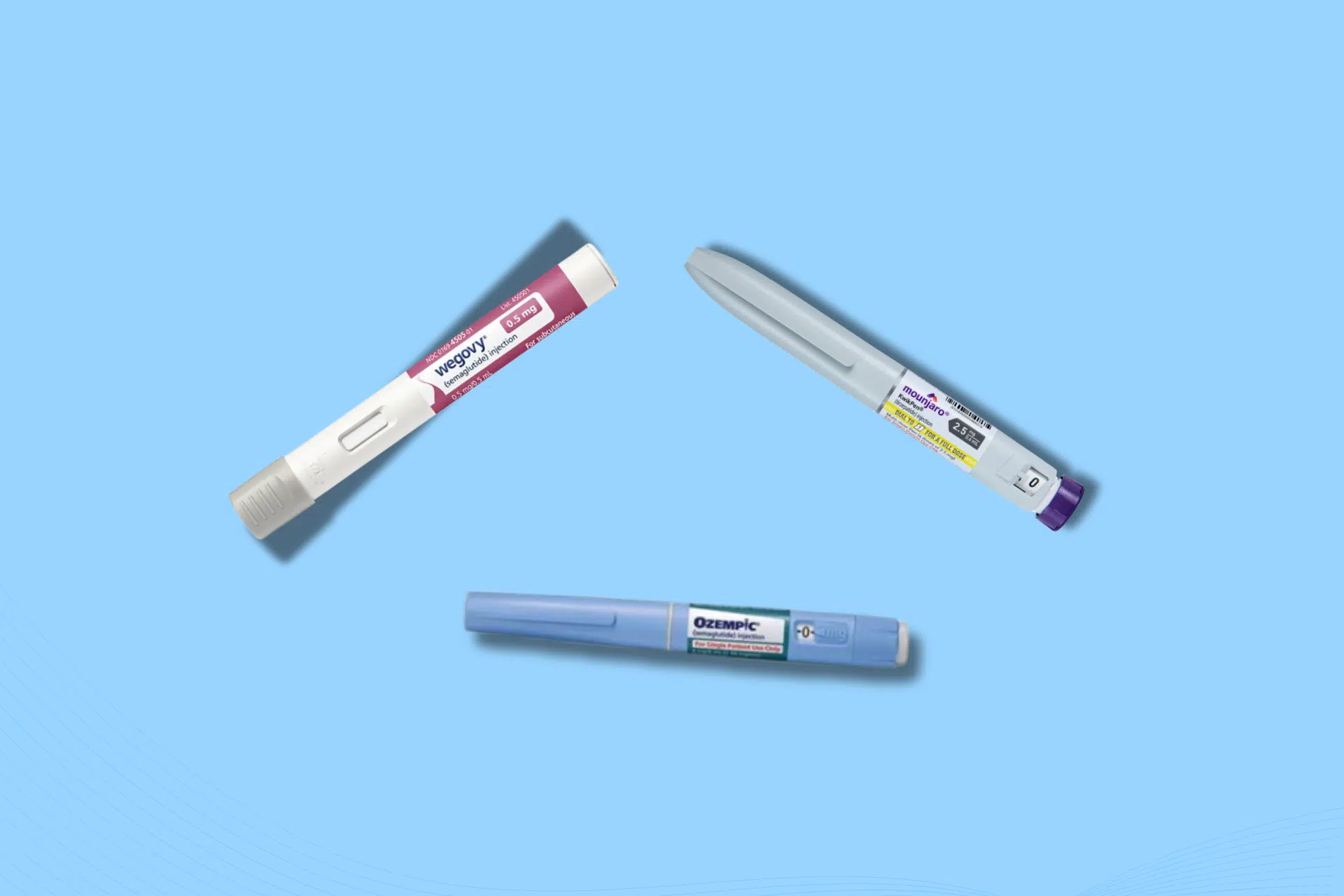
Mounjaro, Wegovy, and Ozempic are the three GLP-1 medications driving the UK weight loss injection conversation. They are not interchangeable. They contain different active ingredients (or different doses of the same ingredient), work through different mechanisms, produce different weight loss results, carry different NHS statuses, and cost very different amounts — especially after Mounjaro’s significant price increase in late 2025.
This guide covers everything you need to make an informed decision or understand where you are in your treatment. It is built on the full clinical trial data, current UK prescribing reality, and honest cost comparisons as of 2026 — not pharmaceutical marketing copy.
📋 IN THIS GUIDE
- The three medications at a glance
- How each one works
- Weight loss results compared
- Side effects compared
- UK cost comparison 2026
- NHS access UK
- Missed dose rules — all three
- Who should choose which
- Mounjaro — full verdict
- Wegovy — full verdict
- Ozempic — full verdict
- Switching between medications
- Supplements for all three
- Nutrition principles for all three
- What happens when you stop
- 40+ FAQs answered
The three medications at a glance
| Feature | Mounjaro | Wegovy | Ozempic |
|---|---|---|---|
| Active ingredient | Tirzepatide | Semaglutide | Semaglutide |
| Drug class | Dual GLP-1 + GIP agonist | GLP-1 agonist | GLP-1 agonist |
| Manufacturer | Eli Lilly | Novo Nordisk | Novo Nordisk |
| UK licence — weight management | ✅ Licensed (MHRA) | ✅ Licensed (MHRA + NICE) | ❌ Off-label only |
| UK licence — type 2 diabetes | ✅ Licensed | ❌ Not T2DM licensed | ✅ Licensed |
| Starting dose | 2.5mg | 0.25mg | 0.25mg |
| Standard maintenance dose | 10–15mg | 2.4mg (7.2mg available) | 1mg (2mg if needed) |
| Maximum dose | 15mg | 7.2mg (Jan 2026) | 2mg |
| Injection frequency | Once weekly | Once weekly | Once weekly |
| Half-life | ~5 days | ~7 days | ~7 days |
| Missed dose window | 96 hours (4 days) | 48 hours (2 days) | 5 days |
| NHS weight management pathway | Limited (BMI 40+ criteria, phased rollout) | ✅ NICE approved pathway | ❌ Not applicable |
| Private cost UK (2026) | £149–£375/month | £130–£295/month (2.4mg) | £100–£180/month |
How each one works — and why the difference matters
GLP-1 receptor agonism — the shared mechanism
All three medications activate GLP-1 (glucagon-like peptide-1) receptors. GLP-1 is a hormone naturally produced by the gut after eating — it signals to the brain that food has been consumed, stimulates insulin secretion, suppresses glucagon, and slows gastric emptying. Activating GLP-1 receptors pharmacologically produces all these effects continuously, not just after meals.
The GIP difference — why Mounjaro works differently
Mounjaro goes further. Tirzepatide also activates GIP (glucose-dependent insulinotropic polypeptide) receptors — making it a dual agonist. GIP receptors are found not only in the pancreas but also in adipocytes (fat cells). The GIP receptor component of tirzepatide appears to:
- Enhance insulin secretion synergistically with GLP-1 activation
- Directly affect adipose tissue metabolism — promoting fat oxidation and reducing fat accumulation
- Reduce the GI side effects that GLP-1 activation alone produces — potentially explaining why Mounjaro has lower diarrhoea rates than Wegovy despite being more effective
| Mechanism | Mounjaro | Wegovy | Ozempic |
|---|---|---|---|
| GLP-1 receptor activation | ✅ Yes | ✅ Yes | ✅ Yes |
| GIP receptor activation | ✅ Yes (dual) | ❌ No | ❌ No |
| Appetite suppression | ⭐⭐⭐⭐⭐ Strongest | ⭐⭐⭐⭐ Strong | ⭐⭐⭐ Moderate |
| Gastric emptying slowdown | ⭐⭐⭐⭐⭐ | ⭐⭐⭐⭐ | ⭐⭐⭐ |
| Direct fat metabolism effect | ⭐⭐⭐⭐⭐ (GIP on adipocytes) | ⭐⭐ (indirect only) | ⭐⭐ (indirect only) |
| Insulin sensitivity improvement | ⭐⭐⭐⭐⭐ (both receptors) | ⭐⭐⭐⭐ | ⭐⭐⭐⭐ |
Weight loss results compared — the clinical evidence
Head-to-head data
The SURMOUNT-MMO trial (2024) was the first adequately powered head-to-head comparison of tirzepatide vs semaglutide 2.4mg. It confirmed what separate trials suggested: tirzepatide produces significantly greater weight loss than semaglutide at comparable timepoints. This was not a surprise to researchers — the dual mechanism produces a stronger combined effect — but it settled the question definitively.
| Clinical trial | Medication & dose | Population | Duration | Average weight loss | % losing >20% |
|---|---|---|---|---|---|
| SURMOUNT-1 | Mounjaro 5mg | Obesity, no T2DM | 72 weeks | 16.0% | 39% |
| SURMOUNT-1 | Mounjaro 10mg | Obesity, no T2DM | 72 weeks | 21.4% | 49% |
| SURMOUNT-1 | Mounjaro 15mg | Obesity, no T2DM | 72 weeks | 22.5% | 57% |
| STEP-1 | Wegovy 2.4mg | Obesity, no T2DM | 68 weeks | 14.9% | 32% |
| STEP UP | Wegovy 7.2mg | Obesity, no T2DM | 72 weeks | 20.7% | ~43% |
| STEP-2 | Wegovy 2.4mg | Obesity + T2DM | 68 weeks | 9.6% | ~15% |
| SUSTAIN-1 (est.) | Ozempic 1mg | T2DM | 30 weeks | ~4–6% | <5% |
| Off-label data | Ozempic 2mg | Various | Variable | ~9–11% | ~15% |
What the weight loss numbers mean at real UK body weights
| Starting weight | Mounjaro 15mg (22.5%) | Wegovy 7.2mg (20.7%) | Wegovy 2.4mg (14.9%) | Ozempic 2mg (~10%) |
|---|---|---|---|---|
| 14 stone (89kg) | ~28lbs / 2 stone | ~26lbs / 1.9 stone | ~19lbs / 1.4 stone | ~13lbs / ~1 stone |
| 16 stone (102kg) | ~32lbs / 2.3 stone | ~30lbs / 2.1 stone | ~21lbs / 1.5 stone | ~14lbs / 1 stone |
| 18 stone (114kg) | ~36lbs / 2.6 stone | ~33lbs / 2.4 stone | ~24lbs / 1.7 stone | ~16lbs / 1.1 stone |
| 20 stone (127kg) | ~40lbs / 2.9 stone | ~37lbs / 2.6 stone | ~27lbs / 1.9 stone | ~18lbs / 1.3 stone |
| 24 stone (152kg) | ~48lbs / 3.4 stone | ~44lbs / 3.2 stone | ~32lbs / 2.3 stone | ~21lbs / 1.5 stone |
These are population averages. Individual results vary substantially. Roughly one-third of people on any of these medications lose significantly more than the average; one-third lose significantly less. Protein intake, exercise, sleep quality, and dose reached all influence where you land.
Cardiovascular outcomes — a critical difference
| Trial | Medication | Finding |
|---|---|---|
| SELECT (2023) | Wegovy (semaglutide 2.4mg) | 20% reduction in major adverse cardiovascular events (MACE) in people with obesity and established CVD — landmark result |
| SUSTAIN-6 (Ozempic) | Ozempic (semaglutide 1mg) | 26% reduction in MACE in T2DM patients with high CV risk |
| SURMOUNT-MMO | Mounjaro (tirzepatide) | CVD outcomes data expected — trials ongoing as of 2026. Cardiovascular benefit not yet established in the same way as semaglutide. |
This matters: if you have established cardiovascular disease — previous heart attack, stroke, heart failure — Wegovy has the proven cardiovascular outcome data that Mounjaro does not yet have. For many cardiologists and GPs, this is the deciding factor regardless of weight loss efficacy.
Side effects compared — what the data actually shows
| Side effect | Mounjaro | Wegovy | Ozempic | Notes |
|---|---|---|---|---|
| Nausea (any) | ~40–45% | ~44% | ~15–20% | Similar Mounjaro and Wegovy; much lower Ozempic (lower max dose) |
| Diarrhoea | ~8–12% | ~29% | ~15% | Wegovy significantly higher — key clinical differentiator |
| Constipation | ~12–17% | ~24% | ~10% | Mounjaro more constipation-dominant; Wegovy more diarrhoea-dominant |
| Vomiting | ~6–9% | ~24% | ~8% | Wegovy substantially higher vomiting rate |
| Hair loss | 4.9–7.1% | ~3% | <2% | Mounjaro highest — faster weight loss = more telogen effluvium |
| Injection site reactions | 3–8% | 14–26% | ~8% | Wegovy significantly higher injection site reactions |
| Hypoglycaemia risk (with insulin/SU) | High (discuss dose reduction) | Moderate | High | All require prescriber review of concurrent diabetes medications |
| Diabetic retinopathy (T2DM) | Not yet established | Similar risk | 3.0% vs 1.8% placebo (SUSTAIN-6) | Ozempic-specific caution for T2DM patients with retinopathy history |
| Pancreatitis (rare) | Very rare | Very rare | Very rare | All three — severe abdominal pain = seek immediate care |
The GI side effect pattern difference — clinically important
Wegovy and Mounjaro have very different GI side effect profiles despite similar overall nausea rates:
- Mounjaro is more likely to cause constipation (12–17%) — the GIP component appears to partially counteract GLP-1’s gut motility effects, resulting in slower transit rather than faster
- Wegovy is more likely to cause diarrhoea (29%) and vomiting (24%) — the pure GLP-1 mechanism with no GIP counterbalance produces stronger gut motility changes
People who cannot tolerate Wegovy’s diarrhoea often switch to Mounjaro and find the GI profile significantly easier. Conversely, people who struggle with Mounjaro’s constipation sometimes find Wegovy easier to manage. Individual response is the ultimate determinant.
UK cost comparison 2026 — the full picture
| Medication & dose | Typical private cost/month UK (2026) | Annual cost estimate | NHS cost |
|---|---|---|---|
| Mounjaro — initiation doses (2.5–5mg) | £149–£200/month | ~£1,800–£2,400 | Very limited — specialist T2DM/obesity services only |
| Mounjaro — maintenance (10–15mg) | £300–£375/month | ~£3,600–£4,500 | As above |
| Wegovy 2.4mg maintenance | £130–£295/month | ~£1,560–£3,540 | ~£9.90/prescription (if NICE eligible) |
| Wegovy 7.2mg | ~£300/month | ~£3,600 | Not yet available on NHS |
| Ozempic 1mg (off-label) | £100–£180/month | ~£1,200–£2,160 | ~£9.90/prescription (T2DM indication only) |
The cost-efficacy analysis — which gives best value per kg lost?
| Medication | Avg additional weight lost vs placebo (18 stone / 114kg) | Annual private cost | Approx cost per kg lost |
|---|---|---|---|
| Mounjaro 15mg | ~23kg (SURMOUNT-1) | ~£4,500 | ~£195/kg |
| Wegovy 7.2mg | ~21kg (STEP UP) | ~£3,600 | ~£171/kg |
| Wegovy 2.4mg | ~15kg (STEP-1) | ~£2,400 | ~£160/kg |
| Ozempic 2mg (off-label) | ~10kg | ~£1,800 | ~£180/kg |
These are rough estimates based on average trial outcomes and typical mid-range UK pricing. Individual results and provider costs vary. The key takeaway: after the Mounjaro price increase, Wegovy 2.4mg offers better cost-per-kg-lost value for most patients, and Wegovy 7.2mg approaches Mounjaro efficacy at lower cost.
NHS access UK — who can get what
| Medication | NHS indication | NICE criteria | Reality in 2026 |
|---|---|---|---|
| Wegovy (2.4mg) | Weight management | BMI ≥35 + ≥1 weight-related comorbidity; or BMI 30–35 in high-risk groups (T2DM, South Asian, Black African, etc.) | NICE-approved. NHS England rollout ongoing through specialist weight management services. Waiting lists remain in most areas but the pathway exists and is expanding. |
| Mounjaro | Type 2 diabetes (primary); weight management (phased rollout) | T2DM: standard diabetes pathway. Weight management: phased rollout starting with BMI ≥40 + ≥4 weight-related conditions. Very limited access currently. | NHS phased rollout for weight management is underway but highly restricted. Most people access Mounjaro privately. |
| Ozempic | Type 2 diabetes | T2DM management in line with NICE T2DM guidelines | Widely available on NHS for T2DM. Not available on NHS for weight loss — Wegovy has the weight management pathway. |
The practical NHS reality
For most UK adults seeking GLP-1 medication for weight loss in 2026:
- The NHS route most likely to succeed is asking your GP about the Wegovy NICE pathway — the criteria are achievable and the pathway exists
- If you meet Wegovy NHS criteria, the prescription charge (~£9.90) vs private cost (£130–£295/month) makes it dramatically more cost-effective
- Mounjaro NHS access for weight management remains very limited in practice — most access is private
- NHS Ozempic for weight loss is not available — do not expect a GP to prescribe it for this purpose
Missed dose rules — all three side by side
| Medication | If you miss a dose… | Take it if: | Skip it if: | Never: |
|---|---|---|---|---|
| Mounjaro | Check timing from scheduled day | Within 4 days (96 hours) of missed dose | More than 4 days have passed | Double dose |
| Wegovy | Check timing from next scheduled dose | Next dose is MORE than 2 days (48 hours) away | Next dose is less than 48 hours away | Double dose |
| Ozempic | Check timing from scheduled day | Within 5 days of missed dose | More than 5 days have passed | Double dose |
If you are switching between medications — the missed dose logic changes. Always clarify with your prescriber what rule applies during any transition period.
Who should choose which — the decision framework
🏆 Choose Mounjaro if:
Mounjaro produces the highest average weight loss (22.5% at 15mg) and the highest proportion of people losing 20%+ of body weight. If you have significant weight to lose, can access it, and can afford the post-2025-increase price — Mounjaro gives you the best chance of the most dramatic results. It is also the best dual-indication medication if you have both T2DM and want to lose weight significantly.
💚 Choose Wegovy if:
Wegovy is the only GLP-1 medication with a NICE NHS pathway for weight management. If you qualify (BMI ≥35 + comorbidity), NHS Wegovy at £9.90/prescription is dramatically more cost-effective than any private option. It also has the proven cardiovascular outcomes data (SELECT trial: 20% MACE reduction) that Mounjaro does not yet have — making it the preferred choice for patients with established heart disease or stroke.
🔮 Choose Wegovy 7.2mg if:
MHRA-approved in January 2026, the 7.2mg dose produced 20.7% average weight loss in STEP UP — approaching Mounjaro 15mg’s 22.5%. At ~£300/month vs £300–£375/month for Mounjaro maintenance, it now offers comparable efficacy at comparable or lower cost. This is the new best option for Wegovy users who have plateaued before reaching their goals.
💙 Use Ozempic for T2DM:
Ozempic is an excellent Type 2 diabetes medication that produces meaningful weight loss as a beneficial side effect. It has the longest track record, robust cardiovascular outcomes data in T2DM populations (SUSTAIN-6), and is widely available on NHS for T2DM. If blood sugar control is your primary goal and weight loss is secondary — Ozempic is appropriate and accessible. It is not the right choice if weight loss is your primary goal.
💛 Consider Ozempic privately if budget is the constraint:
At £100–£180/month privately, Ozempic is the cheapest of the three for off-label weight loss. The trade-off is lower average weight loss (~6–11% vs 14.9–22.5%). If budget prevents accessing Wegovy or Mounjaro, Ozempic provides real appetite suppression and real weight loss — just at a lower ceiling. Be honest with your prescriber that weight loss is the goal so they can manage expectations appropriately.
Mounjaro — full verdict
MOUNJARO (TIRZEPATIDE)
✅ Advantages
- Highest average weight loss of any medication available in UK
- Dual GIP/GLP-1 mechanism — stronger metabolic effect
- Lower diarrhoea rate than Wegovy despite being more effective
- T2DM and weight management dual licence
- Best clinical option for people with insulin resistance alongside obesity
⚠️ Limitations
- Most expensive after September 2025 price increase (£300–£375/month at maintenance)
- No cardiovascular outcomes data yet (unlike Wegovy SELECT trial)
- NHS weight management access very limited
- Hair loss rate higher than Wegovy (faster weight loss = more telogen effluvium)
- Longer titration (20 weeks to 15mg vs 16 weeks to Wegovy 2.4mg)
Best for: People with significant weight to lose who are paying privately, have T2DM or insulin resistance alongside obesity, and want the highest possible weight loss outcomes. Also best for people who have not responded adequately to semaglutide-based medications.
Full dose guide: Mounjaro Dose Guide UK — 2.5mg to 15mg
Wegovy — full verdict
WEGOVY (SEMAGLUTIDE)
✅ Advantages
- NHS pathway exists — dramatically reduces cost if eligible
- Proven cardiovascular benefit (SELECT trial: 20% MACE reduction)
- 7.2mg dose now available (Jan 2026) — approaches Mounjaro efficacy
- Longest track record of the weight management medications
- Better value than Mounjaro at maintenance doses post-price-increase
⚠️ Limitations
- Lower average weight loss than Mounjaro at standard 2.4mg dose
- Higher diarrhoea and vomiting rates than Mounjaro
- Higher injection site reaction rates (14–26%)
- 7.2mg not yet available on NHS
- Supply disruptions have occurred historically
Best for: People who qualify for the NHS pathway (best value by far); people with established cardiovascular disease where the SELECT trial outcomes data matters; people who want the best balance of efficacy and cost when paying privately; people transitioning from Ozempic who want higher-dose semaglutide.
Full dose guide: Wegovy Dose Guide UK — 0.25mg to 7.2mg
Ozempic — full verdict
OZEMPIC (SEMAGLUTIDE)
✅ Advantages
- NHS-accessible for T2DM patients at standard prescription charge
- Longest available track record of all three medications
- Proven cardiovascular outcomes in T2DM patients (SUSTAIN-6)
- Lowest private cost option if budget is constraining
- Lowest maximum dose = lower GI side effect burden overall
⚠️ Limitations
- Not licensed for weight loss in UK — off-label only for weight management
- Lowest weight loss ceiling of the three (max ~9–11% at 2mg)
- No NICE weight management pathway — cannot access for weight loss on NHS
- Supply shortages have been significant — T2DM patients were displaced by weight loss demand
- Wegovy and Mounjaro are more appropriate choices if weight loss is the primary goal
Best for: T2DM patients managing blood sugar (with weight loss as a beneficial secondary effect); people who need the cheapest possible private option and accept lower weight loss results; people waiting for Wegovy/Mounjaro access who need to start treatment.
Full dose guide: Ozempic Dose Guide UK — 0.25mg to 2mg
Switching between medications — what you need to know
| Switch | Wait time | Starting dose | Notes |
|---|---|---|---|
| Ozempic → Wegovy | None if continuing same semaglutide — start Wegovy at the equivalent dose or next step up, as advised by prescriber | Usually at or near your current Ozempic dose equivalent | Same molecule — transition is straightforward. Prescriber will advise on dose equivalence. |
| Ozempic → Mounjaro | At least 7 days (one week) after last Ozempic dose | 2.5mg (always restart titration) | Different molecule — must restart from 2.5mg regardless of Ozempic dose. Do not skip initiation. |
| Wegovy → Mounjaro | At least 7 days after last Wegovy dose | 2.5mg (always restart titration) | Same as above — different molecule. Always start Mounjaro titration from 2.5mg. |
| Mounjaro → Wegovy | At least 7 days after last Mounjaro dose | 0.25mg (restart Wegovy titration) | Restart full Wegovy titration from 0.25mg. |
| Mounjaro → Ozempic | At least 7 days after last Mounjaro dose | 0.25mg (restart Ozempic titration) | Restart from 0.25mg regardless of previous Mounjaro dose. |
| Wegovy 2.4mg → Wegovy 7.2mg | None — same medication, dose escalation | 7.2mg (administered as three 2.4mg pens) | No gap needed. Discuss with prescriber. 7.2mg currently available as three consecutive 2.4mg injections. |
Why all switches to a different molecule start at the lowest dose
Even if you have been on Wegovy 2.4mg for 12 months and your GI tract is well adapted to semaglutide, switching to tirzepatide (Mounjaro) requires starting from 2.5mg. The GIP receptor component of tirzepatide is entirely new to your system — it requires the same adaptation period as any first-time GLP-1 user. Attempting to start Mounjaro at a higher dose after stopping Wegovy would produce severe GI side effects.
Supplements — what you need regardless of which medication
The nutritional gaps created by reduced food intake on GLP-1 medication are the same regardless of which medication you are on. The only differences are in the GI symptom focus:
| Supplement | Mounjaro priority | Wegovy priority | Ozempic priority | Why |
|---|---|---|---|---|
| Daily Fuel (protein) | ⭐⭐⭐⭐⭐ | ⭐⭐⭐⭐⭐ | ⭐⭐⭐⭐⭐ | Universal — protein gap is immediate on all three medications |
| Electrolyte Drink | ⭐⭐⭐⭐⭐ | ⭐⭐⭐⭐⭐ | ⭐⭐⭐⭐⭐ | Universal — thirst suppressed alongside appetite on all three |
| Vitamin D3+K2 | ⭐⭐⭐⭐⭐ | ⭐⭐⭐⭐⭐ | ⭐⭐⭐⭐⭐ | Universal — near-universal UK deficiency; hair and immune function |
| Triple Magnesium | ⭐⭐⭐⭐⭐ | ⭐⭐⭐⭐⭐ | ⭐⭐⭐⭐⭐ | Universal — sleep, cortisol, muscle function critical on all three |
| Pre+Pro 15 (probiotics) | ⭐⭐⭐⭐ (constipation focus) | ⭐⭐⭐⭐⭐ (diarrhoea focus) | ⭐⭐⭐⭐ | Higher priority on Wegovy due to significantly higher diarrhoea rates |
| Biotin Plus | ⭐⭐⭐⭐⭐ (highest hair loss risk) | ⭐⭐⭐⭐ | ⭐⭐⭐ | Higher priority on Mounjaro due to higher hair loss rates |
| Collagen Plus | ⭐⭐⭐⭐ (fastest loss = more skin laxity) | ⭐⭐⭐ | ⭐⭐ | Higher priority on Mounjaro — faster weight loss means more loose skin concern |
🌿 Lily & Loaf — Recommended
Daily Essentials Bundle
Daily Fuel (21g protein + vitamins) + Daily Balance (omega-3) + Daily Flora (probiotics) · The core foundation on any GLP-1 medication
✅ 90-day money-back guarantee · ✅ Free UK delivery over £40
Add Triple Magnesium and Vitamin D3+K2 separately — both essential but not included in the bundle.
Nutrition principles that apply to all three medications
Regardless of which medication you are on, the nutritional principles are identical. The food choices that make the difference are the same whether you are on Mounjaro, Wegovy, or Ozempic:
| Principle | Why it matters on any GLP-1 | Practical approach |
|---|---|---|
| Protein first at every meal | Prevents muscle loss during deficit; maintains metabolic rate; most satiating macronutrient | Target 1.6g/kg target weight/day. Protein shake on difficult days — non-negotiable. |
| Eat slowly — 20 minutes minimum | Gastric emptying slowed by all three; satiety signal takes 15–20 min; eating fast causes nausea | Put cutlery down between bites; time meals; stop at 70–80% full |
| Avoid carbonated drinks | Carbonation worsens nausea and bloating on all GLP-1 medications | Still water only; no sparkling water; no fizzy drinks |
| Avoid high-fat meals on injection days | GLP-1 slows gastric emptying; high fat slows it further — prolonged discomfort and nausea | Choose lower-fat meals in 48–72 hours around each injection |
| Stay hydrated — schedule, not thirst | Thirst suppressed alongside appetite on all three; dehydration causes most ‘medication symptoms’ | 2.5 litres still water daily; electrolytes daily from first dose |
Sponsored — Hello Fresh
Good nutrition on GLP-1 medication starts with removing the daily decision fatigue
Hello Fresh pre-portioned, calorie-labelled meal kits take the planning out of dinner entirely. Choose their higher-protein recipes and hit your targets without thinking about it every evening. Use code ALAN50 for 50% off your first box, then 20% off for your next 4 boxes plus free treats for 3 months.
What happens when you stop — all three medications
Weight regain after stopping GLP-1 medication is consistent across all three medications. The biology is the same — removing the pharmacological appetite suppression allows the underlying hormonal drivers of obesity (elevated ghrelin, reduced leptin, altered food reward pathways) to reassert themselves.
| Trial | Medication | Weight regain after 52 weeks off medication |
|---|---|---|
| SURMOUNT-4 | Mounjaro (tirzepatide) | ~14% body weight regained (two-thirds of loss) |
| STEP-4 | Wegovy (semaglutide) | ~6.9% body weight regained (approximately two-thirds of loss) |
| Estimated (STEP extension data) | Ozempic at weight loss doses | Similar pattern — two-thirds of loss typically regained within 12 months |
The consistent message from all trial data: weight management is a long-term condition. These medications address the biological mechanisms of obesity — removing them allows those mechanisms to return. Long-term use with lifestyle support produces the best sustained outcomes.
If you need to stop — minimising regain on all three
- Discuss structured tapering with your prescriber — gradual dose reduction moderates the appetite rebound vs abrupt stopping
- Increase protein intake significantly — protein is the primary non-medication hunger management tool
- Maintain and if possible increase exercise — physical activity partially replaces the appetite-suppressing effect
- Continue supplement stack — Daily Fuel, Triple Magnesium, Electrolytes, and Vitamin D3+K2 remain relevant after stopping
- Consider switching rather than stopping — if stopping due to side effects or cost, switching medications may be better than stopping entirely
Complete FAQ — 40+ questions answered
Which medication is best?
Mechanism and Science
Side Effects
Practical Questions
Week-by-week experience — what each medication actually feels like
Clinical trial data tells you what happens on average across thousands of people. What it does not tell you is what starting one of these medications actually feels like week by week — what changes, when it gets hard, and when you know it is working. Here is an honest account based on what the research and real-world experience shows for each medication.
Mounjaro — the week-by-week experience
| Timeframe | What typically happens | Common challenges | What to focus on |
|---|---|---|---|
| Weeks 1–4 (2.5mg) | Subtle appetite reduction; mild nausea in some; rapid water weight drop of 2–5lbs in week 1–2 then slowing | Feeling like “nothing is happening” after week 2 scale slows | Start supplement stack immediately; establish protein routine |
| Weeks 5–8 (5mg) | First meaningful appetite suppression; food less interesting; afternoon hunger often absent | Nausea at first 5mg injection; eating too fast triggers discomfort reliably | 20-minute meals; stop at 70–80% full; electrolytes daily |
| Weeks 9–12 (7.5mg) | The turning point — weight loss visible; clothes fitting differently; significant food noise reduction | Food aversions develop; solid protein foods may become unappealing; hair loss may begin | Protein shake non-negotiable; soft protein foods on bad days |
| Weeks 13–16 (10mg) | Full therapeutic range; peak weekly loss phase for most; energy improving | First plateaus may appear; constipation can worsen; muscle loss concern if protein inadequate | Track protein; add Triple Magnesium for sleep; resistance training |
| Weeks 17–20 (12.5mg) | Further loss; some people experience a return of nausea at this step | Eating feels like a chore; two shakes per day may be needed | Full supplement stack; creatine for muscle preservation |
| Week 21+ (15mg) | Maximum dose effect; first 15mg injection often produces notable nausea; then settles | Appetite almost completely suppressed — eating requires active effort | Treat protein shake as medication — take it regardless of appetite |
Wegovy — the week-by-week experience
| Timeframe | What typically happens | Common challenges | What to focus on |
|---|---|---|---|
| Weeks 1–4 (0.25mg) | Very subtle effect; 1–3lbs water weight loss; most people feel almost nothing | Losing patience — 0.25mg is an initiation dose, not a therapeutic dose | Build supplement and nutrition habits before the medication really kicks in |
| Weeks 5–8 (0.5mg) | First real appetite suppression; food less rewarding; afternoon hunger absent | Nausea more likely than at 0.25mg; eating too fast reliably punished | Slow eating; electrolytes daily; protein shake from this week |
| Weeks 9–12 (1mg) | Consistent appetite suppression; food noise reducing; first meaningful results visible | Diarrhoea more common at this dose — a Wegovy-specific pattern; injection site reactions | Probiotics; electrolytes critical for diarrhoea days; hydration |
| Weeks 13–16 (1.7mg) | Near-therapeutic effect; weight loss rate accelerating; approaching 2.4mg | Injection site reactions remain common; some people find they are satisfied at 1.7mg | Assess whether 2.4mg is needed or 1.7mg is the maintenance dose |
| Week 17+ (2.4mg) | STEP-1 therapeutic dose; full appetite suppression; the dose where the trial results were produced | First 2.4mg injection often brings nausea return; diarrhoea risk highest at this dose | Full supplement stack; protein targets non-negotiable |
| Month 6+ (7.2mg — optional) | Additional appetite suppression for those who plateaued at 2.4mg; approaching Mounjaro-level results | First 7.2mg dose may produce strong nausea; currently administered as three 2.4mg pens | Only escalate if genuinely plateaued at 2.4mg with all other factors addressed |
Ozempic — the week-by-week experience
| Timeframe | What typically happens | Common challenges | What to focus on |
|---|---|---|---|
| Weeks 1–4 (0.25mg) | Almost no effect — EMA SmPC explicitly states this is not a therapeutic dose | Expecting more at the initiation dose; scale drop in week 1–2 is water weight only | Establish habits; start supplements; do not judge the medication yet |
| Weeks 5–8 (0.5mg) | First therapeutic dose; blood sugar improvement begins (T2DM); appetite noticeably reduced | First meaningful nausea often appears here; high-fat food is a reliable trigger | 20-minute meals; avoid fried food; electrolytes essential from this week |
| Weeks 9+ (1mg) | Standard maintenance dose for most patients; consistent appetite suppression; peak HbA1c improvement (T2DM) | Weight loss ceiling is lower than Wegovy/Mounjaro — some people plateaued with more to lose | If weight loss is insufficient at 1mg: discuss 2mg or switching to Wegovy/Mounjaro |
| Weeks 13+ (2mg — if needed) | Additional blood sugar control (T2DM); additional 3–5% body weight loss over 1mg | First 2mg injection may bring nausea return; still a lower ceiling than Wegovy at 2.4mg | Full supplement stack; if weight loss is primary goal, discuss whether Wegovy is more appropriate |
Real-world results vs clinical trial results — what to expect in practice
Clinical trial results are often described as “average weight loss” figures. In reality, the distribution of outcomes is wide — and understanding that distribution matters more for setting personal expectations than the average alone.
The distribution of outcomes — not everyone gets the average
| Category | Mounjaro 15mg | Wegovy 2.4mg | What it means |
|---|---|---|---|
| Lost less than 5% body weight | ~9% of participants | ~17% of participants | Some people are non-responders — the medication does not work for everyone |
| Lost 5–10% body weight | ~13% of participants | ~15% of participants | Modest responders — real benefit but below average |
| Lost 10–15% body weight | ~17% of participants | ~22% of participants | Good responders — meaningful clinical benefit |
| Lost 15–20% body weight | ~16% of participants | ~14% of participants | Strong responders — significant weight loss |
| Lost 20–25% body weight | ~18% of participants | ~10% of participants | Excellent responders — near-bariatric outcomes |
| Lost more than 25% body weight | ~27% of participants | ~12% of participants | Outstanding responders — Mounjaro particularly strong here |
The practical implication: roughly 1 in 10 people on Mounjaro and 1 in 6 on Wegovy will be non-responders or minimal responders (<5% weight loss) despite full adherence to the medication and treatment protocol. This is not a failure of willpower — it reflects genuine biological variability in GLP-1 and GIP receptor sensitivity. If you are not responding after 3–4 months at therapeutic doses with all lifestyle factors addressed, discuss switching medications with your prescriber.
Real-world UK results — what clinical services are seeing
Second Nature, a UK weight management service, published 12-month real-world data on semaglutide-supported programmes showing 19.1% average weight loss at 12 months — meaningfully higher than the STEP-1 trial’s 14.9% at 68 weeks. The difference likely reflects:
- Structured lifestyle support alongside medication (as recommended by NICE)
- Higher protein targets and dietary coaching
- Regular monitoring enabling faster plateau identification and response
- Self-selection of highly motivated participants in private programmes
The lesson: the medication alone produces the trial results. The medication plus good nutritional support and regular monitoring consistently outperforms the trial data.
Type 2 diabetes considerations — how treatment goals change the decision
For people managing Type 2 diabetes, the medication choice calculation is different. Weight loss is often still a goal, but HbA1c reduction, cardiovascular outcomes, and kidney protection may be equally or more important clinical priorities.
| Clinical priority | Best medication choice | Evidence |
|---|---|---|
| Maximum HbA1c reduction | Mounjaro | SURMOUNT-2 and SURPASS trials show greater HbA1c reduction for tirzepatide vs semaglutide at comparable doses |
| Cardiovascular risk reduction (established CVD) | Ozempic or Wegovy | SUSTAIN-6 (Ozempic) and SELECT (Wegovy) both show proven MACE reduction. Mounjaro cardiovascular outcomes trial pending. |
| Kidney protection (CKD with T2DM) | Ozempic | FDA-approved specifically for kidney disease worsening reduction in T2DM with CKD. Most established data in this indication. |
| Weight loss + T2DM management combined | Mounjaro | Only medication with a dual T2DM + weight management licence. Produces the most weight loss and the strongest HbA1c reduction simultaneously. |
| NHS access + T2DM + weight loss | Ozempic (NHS T2DM) or Wegovy (NHS weight management if eligible) | Both have NHS pathways; combination of both indications needs careful prescriber coordination |
The sulfonylurea and insulin interaction — critical for T2DM patients
All three medications significantly improve insulin sensitivity. For T2DM patients on sulfonylureas (gliclazide, glibenclamide, glimepiride) or insulin, starting any GLP-1 medication creates hypoglycaemia risk as two glucose-lowering mechanisms operate simultaneously. Your prescriber should proactively reduce sulfonylurea or insulin doses before starting — not wait for a hypoglycaemia episode. If your prescriber does not mention this, raise it yourself.
Contraception and pregnancy — important for all three
All three medications share similar reproductive considerations that every person of reproductive age should understand before starting.
| Consideration | Mounjaro (tirzepatide) | Wegovy / Ozempic (semaglutide) | |
|---|---|---|---|
| Stop before planned pregnancy | At least 1 month before | At least 2 months before | |
| Oral contraceptive interaction | Yes — slowed gastric emptying reduces absorption | Yes — same mechanism | |
| Recommended contraception approach | Non-oral method (IUD, implant, injection, patch) throughout treatment, or additional barrier method | Same recommendation | |
| Use during pregnancy | Contraindicated | Contraindicated | |
| Use during breastfeeding | Not recommended — insufficient data | Not recommended — insufficient data |
The oral contraceptive risk is real and underreported. GLP-1 medications slow gastric emptying, which reduces the absorption of oral contraceptives — potentially reducing their effectiveness. The risk is greatest in the 4 weeks after each dose increase when gastric slowing is most pronounced. Discuss with your GP before starting any GLP-1 medication if you are using oral contraception.
Who should not take these medications — contraindications
| Contraindication | Applies to | Notes |
|---|---|---|
| Personal or family history of medullary thyroid carcinoma (MTC) | All three | GLP-1 receptor agonists caused thyroid C-cell tumours in rodent studies. Human relevance uncertain but contraindicated as a precaution. |
| Multiple Endocrine Neoplasia syndrome type 2 (MEN 2) | All three | Associated with MTC risk — absolute contraindication |
| Severe gastroparesis | All three | All slow gastric emptying further — contraindicated in severe gastroparesis |
| Pregnancy | All three | Contraindicated — stop before planned pregnancy (see above) |
| Type 1 diabetes | All three | Not approved for T1DM; hypoglycaemia risk without the preserved beta-cell function these medications require |
| Severe hepatic impairment | Mounjaro (caution required) | Limited experience in severe liver impairment — use with caution |
| Previous pancreatitis | All three — caution | Not absolute contraindication but requires prescriber assessment; GLP-1 medications associated with rare pancreatitis risk |
| Diabetic retinopathy history | Ozempic — specific caution | SUSTAIN-6 showed small increase in retinopathy complications — inform ophthalmologist; ensure regular eye monitoring continues |
Injection technique — all three medications
All three are subcutaneous injections using autoinjector pens. The injection sites, technique, and storage principles are similar across all three.
Approved injection sites — all three medications
| Site | Location | Notes |
|---|---|---|
| Abdomen | At least 5cm from the navel; any quadrant | Most commonly used; easiest self-injection; best subcutaneous tissue access |
| Thigh | Outer, upper, middle third of thigh | Good second site; easy to see and access |
| Upper arm | Outer, back of upper arm | More difficult to self-inject without practice; easier with help |
Injection technique — reducing side effects and reactions
- Always let the pen reach room temperature — remove from the fridge at least 30 minutes before injecting. Cold medication causes more discomfort and may alter absorption.
- Let the alcohol wipe dry completely — injecting through wet skin increases stinging. Wait 30 seconds after wiping before injecting.
- Inject slowly and hold for the full count — the autoinjector will click or indicate completion; hold in place until the full dose has delivered.
- Rotate sites consistently — do not inject the same spot more than once per month. Repeated injection in one area causes lipohypertrophy — hard, fibrous tissue that absorbs medication inconsistently.
- Never inject into scar tissue, bruises, or inflamed skin.
Storage comparison
| Feature | Mounjaro | Wegovy | Ozempic |
|---|---|---|---|
| Before first use | Refrigerate 2–8°C | Refrigerate 2–8°C | Refrigerate 2–8°C |
| After first use / room temperature | Up to 21 days below 30°C | Up to 28 days below 30°C | Up to 56 days below 30°C |
| Do not freeze | ✅ All three | ✅ All three | ✅ All three |
| Protect from light | Yes — keep cap on | Yes — keep cap on | Yes — keep cap on |
Health monitoring during treatment — what should be tracked
All three medications require ongoing prescriber oversight. What should be monitored and how frequently:
| Measure | Frequency | Why | Action if changes |
|---|---|---|---|
| Body weight | Monthly minimum (weekly self-monitoring recommended) | Track treatment efficacy; identify plateaus early | Address plateau causes before escalating dose |
| Blood pressure | Every 1–3 months | Weight loss reduces BP significantly; antihypertensives may need reducing | Discuss antihypertensive dose reduction with prescriber |
| HbA1c (T2DM patients) | Every 3 months | GLP-1 medications improve glycaemic control; diabetes medications may need reducing | Reduce sulfonylureas/insulin proactively — do not wait for hypoglycaemia |
| Lipid panel | Every 6 months | Weight loss and GLP-1 effects improve cholesterol profile; statin dose may need adjusting | Discuss statin adjustment with prescriber |
| Ferritin / full blood count | Baseline + 6 months | Reduced food intake lowers dietary iron; particularly important for premenopausal women | Supplement iron only if confirmed deficiency |
| Thyroid function (TSH) | Baseline + if symptoms develop | Thyroid disorders can cause symptoms similar to medication side effects | Check if unexplained fatigue or cold intolerance develops |
| Renal function | Annually if renal history | GI side effects causing dehydration can affect kidneys; monitor if vomiting/diarrhoea is significant | Ensure adequate hydration; discuss with prescriber if significant GI symptoms |
Diet and exercise — maximising results on each medication
Why diet quality matters more than diet quantity on GLP-1 medications
GLP-1 medications handle the quantity side of the equation — they suppress appetite and reduce calorie intake automatically for most people. What they do not do is ensure that the reduced calorie intake is nutritionally optimal. The people who achieve the best body composition outcomes — losing fat rather than fat and muscle, emerging with definition rather than a deflated appearance — are those who use the appetite suppression window to actively improve dietary quality, not just eat less of the same foods.
The three nutritional differences that matter most on any GLP-1 medication:
| Priority | Target | Why | How to hit it |
|---|---|---|---|
| 1. Protein | 1.6g per kg target body weight daily | Prevents muscle loss; maintains metabolic rate; most satiating macronutrient; supports hair, skin, immune function | Daily protein shake + high-protein foods at every meal; track daily |
| 2. Hydration | 2.5 litres still water daily | Thirst suppressed alongside appetite on all three; dehydration causes most apparent ‘side effects’ | Schedule water intake; set reminders; electrolytes daily |
| 3. Fibre | 25–30g daily | Gut motility support; constipation prevention; stimulates natural GLP-1 production; gut microbiome health | Oats, lentils, vegetables, psyllium husk; fibre in Daily Fuel |
Exercise — what actually works on GLP-1 medications
| Exercise type | Evidence for GLP-1 users | Practical target | Key benefit |
|---|---|---|---|
| Daily walking | ⭐⭐⭐⭐⭐ Strongest — most sustainable, lowest barrier | 7,000–10,000 steps/day | Burns 300–600 calories/day; directly reduces visceral fat; improves gut motility (reduces constipation) |
| Resistance training | ⭐⭐⭐⭐⭐ Essential for body composition | 2–3 sessions per week; bodyweight, bands, or weights | Preserves muscle during deficit; prevents resting metabolic rate decline; improves body composition |
| Swimming / cycling | ⭐⭐⭐⭐ Excellent low-impact options | 2–3 sessions per week | Cardiovascular fitness; low joint stress for higher-weight individuals |
| High-intensity interval training | ⭐⭐⭐ Useful but carry caveats | 1–2 sessions per week maximum | Effective calorie burn; but increases cortisol and hunger — can undermine adherence if overdone |
🌿 Lily & Loaf — Recommended
Daily Fuel Plant Protein Shake
21g protein · 15 vitamins and minerals · 5g fibre · 102 calories · Works on all three medications
✅ 90-day money-back guarantee · ✅ Free UK delivery over £40
The single most important nutritional addition on any GLP-1 medication. Take daily from week 1, regardless of appetite.
Hitting a plateau — what to do on any GLP-1 medication
Plateaus are universal on GLP-1 medications — they are not a sign of treatment failure. They are a predictable consequence of the body reducing its energy expenditure as it adapts to the deficit. Understanding the causes allows you to address them systematically rather than assuming the medication has stopped working.
The plateau checklist — work through this before escalating dose
| # | Check | How to identify | Fix |
|---|---|---|---|
| 1 | TDEE decreased as weight fell | Most common cause — the deficit that worked at your starting weight no longer exists at your current weight | Recalculate calorie target at current weight; reduce by 100–200 kcal from new TDEE |
| 2 | Dietary drift — intake has crept up | Track food honestly with a kitchen scale for 2 weeks; most people find intake is 200–400 kcal higher than believed | Return to tracked eating; portion reassessment |
| 3 | Protein insufficient | Muscle loss reducing resting metabolic rate; fatigue; hair loss | Audit daily protein; two shakes per day if struggling; 1.6g/kg target weight non-negotiable |
| 4 | Poor sleep quality | Ghrelin elevated by sleep deprivation; energy low; hunger stronger than expected | Magnesium glycinate before bed; consistent sleep schedule; limit caffeine after 2pm |
| 5 | Insufficient daily movement | Steps per day lower than during active loss phase | Add 2,000–3,000 steps per day before any other change |
| 6 | Metabolic adaptation beyond TDEE change | All above addressed but scale still not moving after 6+ weeks | 2–4 week diet break at maintenance calories (partially reverses adaptive thermogenesis) |
| 7 | Dose at ceiling for your body | All above addressed; still on non-maximum dose | Discuss dose escalation with prescriber — this is the last resort, not the first |
Sponsored — Hello Fresh
When plateaus hit, the first thing to examine is the quality of your daily meals
Hello Fresh pre-portioned, macro-labelled meal kits make it easy to audit exactly what you are eating — removing the guesswork from the most common plateau cause. Use code ALAN50 for 50% off your first box, then 20% off your next 4 boxes plus free treats for 3 months.
Long-term treatment planning — thinking beyond 12 months
GLP-1 medications are not short-term interventions. The clinical evidence — SURMOUNT-4, STEP-4, STEP-5 — is unambiguous: most people regain significant weight after stopping. Planning for this from the beginning produces better outcomes than treating each medication stage as a short-term fix.
The four long-term scenarios and what each means
| Scenario | What it means | Recommended approach |
|---|---|---|
| Continued treatment at maintenance dose | Medication remains necessary for sustained weight management — as it does for the majority of people | Work with prescriber to find the lowest dose that maintains target weight; explore NHS access if not already |
| Planned medication holiday (e.g. pregnancy) | Stopping for 1–3 months; weight regain likely but partial | Increase protein, exercise, and lifestyle measures before stopping; plan restart date; do not stop abruptly if possible |
| Transitioning off medication | Goal achieved; attempting to maintain without medication | Structured tapering (not abrupt stop); highest protein intake; maximum exercise; realistic expectation of partial regain; plan for re-prescribing if weight regain is significant |
| Switching to a different medication | Cost change, side effect intolerance, or seeking higher efficacy | Follow proper switching protocols (7-day washout, restart titration); do not simply substitute at current dose |
The habits that determine long-term success — on or off medication
The people who maintain the most weight loss after stopping GLP-1 medication are those who used the treatment period to genuinely establish these habits — not as restrictions imposed by the medication, but as preferences that replaced previous patterns:
- Default protein-first eating: reaching for Greek yoghurt, cottage cheese, or a protein shake without thinking about it
- Consistent daily walking: 7,000–10,000 steps per day as a baseline, not a target
- Reduced alcohol consumption: most people consume significantly less on GLP-1 medication; maintaining this off-medication is one of the highest-leverage changes
- Scheduled eating rather than grazing: regular meal times rather than continuous snacking
- Continued supplementation: Daily Fuel, electrolytes, magnesium, and vitamin D3 remain relevant indefinitely
🌿 Lily & Loaf — Recommended
Triple Magnesium
Glycinate (sleep) + Malate (energy) + Taurate (cardiovascular) · Essential on any GLP-1 and beyond
✅ 90-day money-back guarantee · ✅ Free UK delivery over £40
Poor sleep is the most reliable predictor of weight regain after stopping medication — magnesium addresses the primary sleep quality mechanism.
More FAQs — additional questions answered
Cost and Access
Medical and Safety
Lifestyle and Practical
Master comparison table — everything at a glance
| Category | Mounjaro | Wegovy | Ozempic |
|---|---|---|---|
| Active ingredient | Tirzepatide | Semaglutide | Semaglutide |
| Mechanism | GLP-1 + GIP (dual) | GLP-1 only | GLP-1 only |
| Weight loss avg (max dose) | 22.5% (15mg) | 20.7% (7.2mg) / 14.9% (2.4mg) | ~9–11% (2mg) |
| UK weight loss licence | ✅ Yes | ✅ Yes | ❌ Off-label |
| UK T2DM licence | ✅ Yes | ❌ No | ✅ Yes |
| NHS weight loss pathway | Very limited | ✅ NICE approved | ❌ None |
| Private cost (maintenance) | £300–£375/month | £130–£295/month | £100–£180/month |
| Cardiovascular outcomes data | Pending (trials ongoing) | ✅ SELECT trial (20% MACE reduction) | ✅ SUSTAIN-6 (T2DM population) |
| Diarrhoea rate | ~8–12% | ~29% | ~15% |
| Constipation rate | ~12–17% | ~24% | ~10% |
| Hair loss rate | 4.9–7.1% | ~3% | <2% |
| Injection site reactions | 3–8% | 14–26% | ~8% |
| Missed dose window | 96 hours | 48 hours | 5 days |
| Half-life | ~5 days | ~7 days | ~7 days |
| Time to max dose | ~20 weeks (2.5mg→15mg) | ~16 weeks (0.25mg→2.4mg) | ~8–12 weeks (0.25mg→1–2mg) |
📋 Download the free 14-day meal plan — designed for GLP-1 users on any medication.
Full dose guides: Mounjaro Dose Guide UK | Wegovy Dose Guide UK | Ozempic Dose Guide UK
Related: GLP-1 Side Effects UK | Best Supplements on GLP-1 UK | How to Maximise Results on GLP-1 UK | Hair Loss on GLP-1 UK
Discover more from Healthy Weight Loss GLP1
Subscribe to get the latest posts sent to your email.