
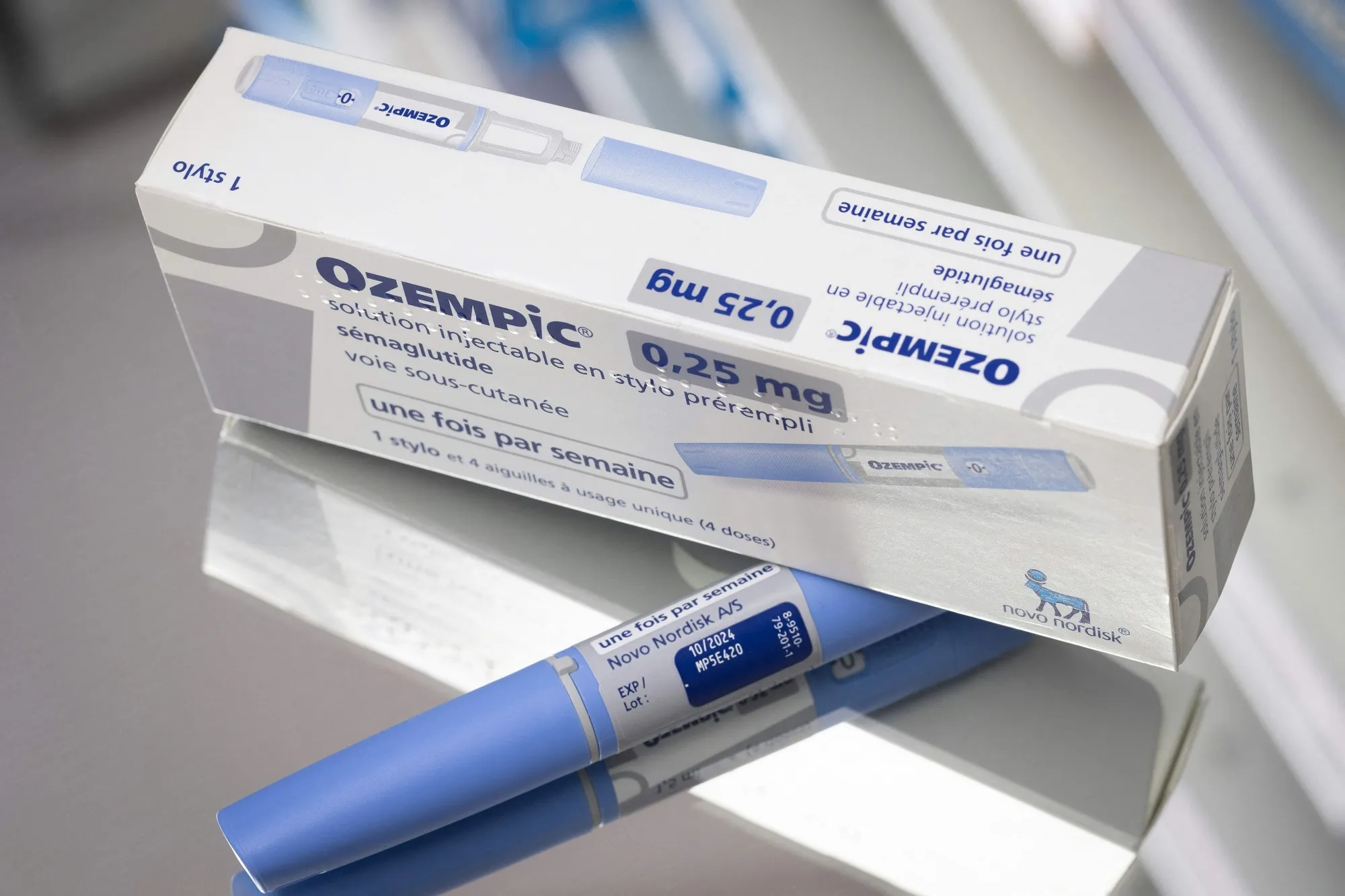
Ozempic (semaglutide) is a weekly injection licensed in the UK for Type 2 diabetes management. It is also one of the most widely prescribed medications for weight loss — off-label — in the UK, following widespread demand from people who either cannot access Wegovy or who were already on Ozempic for diabetes and found the weight loss effects significant.
This guide covers the full Ozempic dose schedule — 0.25mg to 2mg — in detail. What to expect at each dose, how blood sugar and weight loss results differ by dose level, how side effects change, what to eat, which supplements matter, and all the critical differences between Ozempic and Wegovy that most people do not know before starting.
📋 IN THIS GUIDE
- How Ozempic titration works
- Full schedule 0.25mg to 2mg
- 0.25mg — Weeks 1–4
- 0.5mg — First real effect
- 1mg — Standard maintenance
- 2mg — Extended dose
- Ozempic for weight loss UK
- When to progress vs hold
- Missed a dose? What to do
- Side effects at each dose
- Nutrition at each dose
- Supplements at each dose
- Ozempic vs Wegovy vs Mounjaro
- UK access and licensing
- What happens when you stop
- 40+ FAQs answered
How Ozempic titration works — and why it matters
Titration means starting at a low dose and increasing gradually. Ozempic’s schedule begins at 0.25mg — a dose the European Medicines Agency (EMA) SmPC explicitly states “is not a maintenance dose” — and steps up every four weeks until you reach the dose that achieves your treatment goals.
Semaglutide has a half-life of approximately 7 days (168 hours). This is unusually long for a weekly medication — it means the drug is still measurably active when you take your next dose. The clinical implications:
| Pharmacokinetic fact | Clinical implication |
|---|---|
| Half-life ~7 days | Steady-state reached after ~4–5 weeks at each dose level |
| Peak concentration 1–3 days post-injection | Side effects worst in first 2–3 days after each injection |
| Missed dose window: 5 days | Longer than Wegovy (48hrs) or Mounjaro (96hrs) — more flexibility but still skip if more than 5 days have passed |
| Weekly injection only | Never increase frequency — plasma levels accumulate; more frequent dosing causes overdose risk |
| No meal-timing requirement | Inject any time of day, with or without food |
Ozempic vs Wegovy titration — the key difference
Ozempic and Wegovy both contain semaglutide, but their titration schedules diverge at 1mg. Ozempic maxes out at 2mg; Wegovy continues to 2.4mg and now 7.2mg. The dose difference explains much of the weight loss gap between the two medications — the additional semaglutide in the 2.4mg Wegovy dose produces meaningfully stronger appetite suppression than Ozempic 1mg for most people.
| Feature | Ozempic | Wegovy |
|---|---|---|
| Active ingredient | Semaglutide | Semaglutide |
| UK licensed indication | Type 2 diabetes + cardiovascular risk reduction | Chronic weight management |
| Starting dose | 0.25mg | 0.25mg |
| Standard maintenance dose | 1mg (most patients) | 2.4mg |
| Maximum dose | 2mg | 7.2mg (MHRA approved Jan 2026) |
| Average weight loss (typical maintenance) | ~6–8% body weight at 1mg off-label | ~14.9% at 2.4mg (STEP-1) |
| Missed dose window | 5 days | 48 hours |
| NHS availability for weight loss | Not licensed for weight loss — off-label only | NICE-approved pathway |
Minimum 4 weeks at each dose. Most people reach their maintenance dose at 1mg. 2mg is for insufficient response only.
Full Ozempic dose schedule UK 2026 — 0.25mg to 2mg
| Week | Dose | Status | T2DM: typical HbA1c reduction | Weight loss (off-label use) | Side effects |
|---|---|---|---|---|---|
| 1–4 | 0.25mg | Initiation only — not for glycaemic control | Minimal | 1–3lbs (water weight) | ⭐ Very low |
| 5–8 | 0.5mg | First therapeutic dose | Meaningful reduction begins | 0.5–1.5lbs/week | ⭐⭐ Low-moderate |
| 9+ | 1mg | Standard maintenance dose (most patients stop here) | Peak HbA1c reduction for most | 0.75–2lbs/week | ⭐⭐⭐ Moderate |
| 13+ | 2mg | Extended dose — only if insufficient response at 1mg | Additional glycaemic benefit for non-responders | Additional 3–5% body weight over 6 months | ⭐⭐⭐ Moderate–higher |
0.25mg — Weeks 1 to 4: Initiation dose
Weeks 1–4 | Initiation only — not a maintenance dose
| Average weekly loss | 0.25–0.75lb/week (primarily water weight) |
| Appetite suppression | Very subtle — appetite barely affected at this dose for most people |
| Main side effects | Usually minimal. Possible mild nausea on injection day. |
| Nutrition priority | Establish protein routine immediately. Electrolytes from day 1. |
| Key supplements | Daily Fuel (protein), Electrolyte Drink, Vitamin D3+K2 — build the habit now |
What you need to know at this dose: The EMA SmPC for Ozempic explicitly states that 0.25mg ‘is not a maintenance dose’ — it exists solely to allow your body to adapt to semaglutide before the 0.5mg dose. Many people are surprised by how little they feel at 0.25mg. This is correct and expected. Do not judge the medication based on the first four weeks. People who escalate early because nothing is happening significantly increase their side effect risk at higher doses.
Week-by-week at 0.25mg
| Week | Appetite | Blood sugar (T2DM) | Scale (weight loss) | Focus |
|---|---|---|---|---|
| Week 1 | Very mildly reduced in 24–48hrs post-injection | Beginning to improve — HbA1c reduction starts | 1–3lbs drop (water weight) | Establish injection routine and supplement stack |
| Week 2 | Consistent mild reduction developing | Fasting glucose beginning to reduce | Slows — water weight has dropped | Protein first at every meal. Don’t cut calories further than needed. |
| Week 3 | Steady-state approaching — subtle consistent effect | Measurable blood sugar improvement for most T2DM patients | 0.25–0.5lb/week genuine fat loss beginning | Walk 7,000–10,000 steps. Protein targets daily. |
| Week 4 | Full 0.25mg effect established — still modest | Stable improvement | Slow consistent loss | Ready for 0.5mg? 4 weeks up? Side effects settled? |
The most common 0.25mg mistake
Escalating early because “nothing is happening.” The 0.25mg dose produces minimal appetite suppression and minimal weight loss — by design. The significant effects come at 0.5mg and above. Wait the full four weeks, start your supplement and nutrition routine, and let the titration do its job.
0.5mg — Weeks 5 to 8: First real therapeutic effect
Weeks 5–8 | First therapeutic dose
| Average weekly loss | 0.5–1.5lbs/week | Blood sugar management begins meaningfully |
| Appetite suppression | Noticeably stronger — most people feel genuinely different from 0.25mg |
| Main side effects | Nausea more likely here. Eating too fast at this dose reliably triggers discomfort. High-fat meals are a risk. |
| Nutrition priority | Protein first at every meal. Eat slowly — 20 minutes minimum per sitting. |
| Key supplements | Electrolytes (essential from here), Triple Magnesium (add at this transition), Daily Fuel |
What you need to know at this dose: 0.5mg is where Ozempic genuinely ‘kicks in’ for most people. The afternoon hunger that previously arrived reliably often simply does not appear. Blood sugar control improves markedly for T2DM patients — if you are monitoring HbA1c or blood glucose, you will likely see measurable change by the end of this phase. This is also where the first meaningful nausea commonly occurs. The mechanism is almost always eating too fast or too large a portion — not the medication itself being intolerable.
Week-by-week at 0.5mg
| Week | What changes | Side effect watch | T2DM blood sugar |
|---|---|---|---|
| Week 5 (first 0.5mg) | Noticeably stronger appetite suppression within 24–72hrs | Nausea most likely here — eat before injecting if morning; small meals only | Often a significant additional improvement in fasting glucose |
| Week 6 | Food aversions may begin — certain foods less appealing | If nausea is significant, do not progress to 1mg until settled | Steady reduction in post-meal glucose spikes |
| Week 7 | Constipation or diarrhoea may appear — hydration critical | Bowel habits changing? Increase water to 2.5L; probiotics if needed | Most T2DM patients seeing meaningful improvement by week 7 |
| Week 8 | Full 0.5mg effect established | Side effects usually settled by week 8 | For many T2DM patients, 0.5mg is sufficient — prescriber will assess at this point |
🌿 Lily & Loaf — Recommended
Electrolyte Drink
Na + K + Mg + B vitamins · Zero sugar · Essential from week 5 onwards
✅ 90-day money-back guarantee · ✅ Free UK delivery over £40
Dehydration is extremely common from 0.5mg as thirst suppression begins. Most ‘medication fatigue’ at this dose is actually electrolyte depletion.
1mg — Week 9 onwards: Standard maintenance dose
Weeks 9+ | Standard maintenance for most Ozempic patients
| Average weekly loss | 0.75–2lbs/week for weight loss; continued HbA1c improvement for T2DM |
| Appetite suppression | Strong and consistent — significant reduction in food noise for most people |
| Main side effects | Nausea typically manageable for people who titrated carefully. High-fat food is still a reliable trigger. |
| Nutrition priority | Protein supplementation important here — food intake drops enough that daily shake is wise. |
| Key supplements | Full stack: Daily Fuel, Electrolytes, Triple Magnesium, Vitamin D3+K2 |
What you need to know at this dose: 1mg is where approximately 70% of Ozempic patients reach their treatment goals for T2DM, and where most people prescribed it off-label for weight loss find a stable long-term dose. In clinical trials, 1mg Ozempic produced approximately 6–8% body weight loss when used primarily for diabetes management — less than Wegovy 2.4mg’s 14.9% average, but still clinically meaningful. For T2DM patients whose primary goal is blood sugar control, 1mg is usually sufficient. For weight loss, the lower ceiling compared to Wegovy is the key limitation.
1mg — the weight loss ceiling question
The most important context for anyone using Ozempic off-label for weight loss: 1mg is significantly less effective than Wegovy 2.4mg. Clinical comparisons show:
| Medication / dose | Average weight loss (68–72 weeks) | % achieving >10% loss | % achieving >20% loss |
|---|---|---|---|
| Ozempic 0.5mg | ~4–5% body weight | ~30% | <5% |
| Ozempic 1mg | ~6–8% body weight | ~45% | ~10% |
| Ozempic 2mg | ~9–11% body weight | ~55% | ~15% |
| Wegovy 2.4mg (STEP-1) | 14.9% | 68% | 32% |
| Mounjaro 15mg (SURMOUNT-1) | 22.5% | 91% | 57% |
If weight loss is your primary goal and you are using Ozempic off-label, it is worth discussing with your prescriber whether switching to Wegovy (which has a higher licensed dose and a specific NICE pathway) or Mounjaro would be more appropriate. Ozempic at 1mg is an effective diabetes medication with meaningful weight loss effects — but it is not optimised for weight loss in the way Wegovy and Mounjaro are.
T2DM monitoring at 1mg
For Type 2 diabetes patients, the 1mg phase is where the most significant glycaemic benefit is usually established. Blood pressure and cholesterol often improve alongside blood sugar. If you are on sulfonylureas (e.g. gliclazide) or insulin, your prescriber may need to reduce those doses as Ozempic improves insulin sensitivity — low blood sugar (hypoglycaemia) risk increases when combining these medications.
Hair loss often begins here
Telogen effluvium — the temporary hair shedding caused by rapid weight loss — typically begins 2–4 months after significant weight loss starts. For most Ozempic users, this is around the 1mg phase (months 3–4). The mechanism is the physiological stress of weight loss, not the medication directly. Protein and vitamin D3 are the most important interventions — both covered by Daily Fuel.
🌿 Lily & Loaf — Recommended
Daily Fuel Plant Protein Shake
21g protein · 15 vitamins and minerals including iron, B12, zinc, D3 · 102 calories
✅ 90-day money-back guarantee · ✅ Free UK delivery over £40
At 1mg food intake drops enough that a daily protein shake closes the gap efficiently. On difficult days it is the most important food choice you make.
Sponsored — Hello Fresh
Protein first at every meal is the non-negotiable at 1mg
Hello Fresh pre-portioned dinners with full calorie and macro information remove the daily planning burden. Choose their higher-protein recipes and the protein management largely takes care of itself. Use code ALAN50 for 50% off your first box, then 20% off your next 4 boxes plus free treats for 3 months.
2mg — Week 13+ if needed: Extended dose
Week 13+ | Only if insufficient response at 1mg after 4+ weeks
| Average weekly loss | Additional 3–5% body weight vs 1mg over 6 months (off-label weight loss) |
| Appetite suppression | Stronger than 1mg — meaningful additional appetite suppression for most people |
| Main side effects | First injection at 2mg often brings a return of nausea. High-fat meals are a more reliable trigger than at 1mg. |
| Nutrition priority | Protein harder to hit — two daily shakes may be needed on difficult days. |
| Key supplements | Full stack plus Pre+Pro 15 probiotics. Consider Biotin Plus if hair loss is present. Consider Ashwagandha if stress high. |
What you need to know at this dose: The 2mg dose is for patients with insufficient glycaemic control or insufficient weight loss at 1mg, after at least 4 weeks at that dose. Clinical data shows approximately 3–5% additional body weight loss at 2mg vs 1mg over 6 months — meaningful, but still well below Wegovy 2.4mg. For T2DM patients, 2mg provides the most powerful HbA1c reduction available from Ozempic. For weight loss users who still have significant weight to lose, this may be the right step — or it may be the point to discuss switching to Wegovy or Mounjaro with your prescriber.
2mg — should you escalate or switch medication?
This is the most important decision point for Ozempic weight loss users. At 2mg you have reached the ceiling of what Ozempic can deliver. If you still have significant weight to lose:
| Your situation | Consider |
|---|---|
| T2DM patient, 2mg providing good blood sugar control | Stay on 2mg — you are at the right dose for your primary indication |
| Weight loss user, happy with 2mg results | Stay on 2mg — no need to change |
| Weight loss user, 2mg not producing enough results and you qualify for NHS Wegovy | Discuss switching to Wegovy with prescriber — it has a NICE pathway and higher maximum dose |
| Weight loss user, paying privately, significant weight still to lose | Mounjaro produces 22.5% average loss vs ~9–11% for Ozempic 2mg — and is cheaper than Wegovy privately |
| T2DM patient who also wants more weight loss | Mounjaro has a dual T2DM + weight management indication and is the strongest option for both goals simultaneously |
Ozempic for weight loss UK — the honest picture
Ozempic is prescribed off-label for weight loss in the UK in large numbers — partly because of demand from people who cannot wait for or access Wegovy through NHS pathways, and partly because it was the first widely available semaglutide medication and its weight loss effects became well known.
Why Ozempic is used for weight loss despite not being licensed for it
- It works — semaglutide at 0.5mg–1mg does produce meaningful weight loss, even if less than Wegovy’s higher doses
- Availability — during periods of Wegovy supply shortages (which have been significant in the UK), Ozempic was more reliably available
- Prescriber familiarity — many GPs have more experience with Ozempic from its diabetes use than with Wegovy
- Cost — Ozempic is sometimes cheaper than Wegovy through private prescription, though this varies
What weight loss to realistically expect from Ozempic
| Starting weight | Average loss at 1mg | Average loss at 2mg | For comparison: Wegovy 2.4mg avg |
|---|---|---|---|
| 14 stone (89kg) | 7–10lbs | 11–14lbs | 18–20lbs |
| 16 stone (102kg) | 9–13lbs | 13–17lbs | 21–24lbs |
| 18 stone (114kg) | 10–14lbs | 14–19lbs | 24–27lbs |
| 20 stone (127kg) | 11–16lbs | 16–22lbs | 27–30lbs |
These are average estimates based on clinical data. Individual results vary significantly. Ozempic’s lower ceiling is the primary reason most weight loss specialists prefer Wegovy or Mounjaro for patients whose primary goal is weight management.
When to progress to the next dose — and when to hold
| Progress when: | Hold when: |
|---|---|
| ✅ Minimum 4 weeks at current dose | ⛔ Less than 4 weeks at current dose |
| ✅ Side effects settled (typically week 3–4) | ⛔ Still experiencing significant nausea or diarrhoea |
| ✅ Blood sugar or weight loss not at target (T2DM/weight loss goal not met) | ⛔ Treatment goals already met at current dose |
| ✅ Prescriber confirms escalation is appropriate | ⛔ Prescriber advises holding |
| ✅ Protein and hydration consistently managed | ⛔ Nutritional foundations not in place |
When NOT to escalate — the weight loss user decision
For weight loss users, the escalation question at 1mg is different to the T2DM question. A T2DM patient escalates if blood sugar control is insufficient. A weight loss user should ask: is 1mg producing consistent weekly loss? If yes — there may be no need to escalate to 2mg. If results have plateaued, address calorie target, protein, and exercise before assuming a dose increase is needed. See: How to Break a Weight Loss Plateau UK.
Missed an Ozempic dose — exactly what to do
| Scenario | What to do |
|---|---|
| Missed dose — fewer than 5 days since scheduled injection day | Inject as soon as you remember. Resume your normal weekly schedule. |
| Missed dose — more than 5 days since scheduled injection day | Skip the missed dose entirely. Resume on your normal injection day next week. Never double-dose. |
| Missed multiple weeks (illness, supply, holidays) | Contact your prescriber before resuming — re-titration from a lower dose may be needed after a gap of 2+ weeks |
| Missed dose if on sulfonylurea or insulin | Monitor blood glucose carefully when resuming — hypoglycaemia risk increases when Ozempic effect is intermittent alongside these medications |
Best day and time to inject Ozempic
Any day of the week, same time each week, independent of meals. The practical strategies:
- Friday or Saturday injection: side effects peak in days 1–3 post-injection — weekend timing keeps this away from work demands
- Consistent time of day: early morning or evening — whichever you will remember. Set a phone reminder.
- Can inject at a different time than usual once if needed — as long as you maintain at least 4–5 days gap to the next dose during any schedule shift
Side effects at each Ozempic dose
GI side effects — frequency by dose
| Side effect | 0.25mg | 0.5mg | 1mg | 2mg |
|---|---|---|---|---|
| Nausea | ~15–20% | ~20–25% | ~15–20% (established) | ~25–30% at dose increase |
| Diarrhoea | ~10% | ~15% | ~15% | ~20% |
| Constipation | ~5% | ~10% | ~10% | ~15% |
| Vomiting | ~5% | ~8% | ~8% | ~10% |
| Abdominal pain | ~7% | ~10% | ~10% | ~12% |
Side effect rates are generally lower than Wegovy because the maximum dose is lower — you never reach the 2.4mg level where Wegovy’s GI side effect burden peaks.
Nausea management — what works
- Eat slowly — 20+ minutes per meal, put cutlery down between bites
- Stop at 70–80% full — not when the plate is empty
- Avoid carbonated drinks entirely
- Ginger tea before and after meals — evidence-based antiemetic
- Avoid high-fat meals (fried food, takeaways, heavy creamy dishes) — the most reliable nausea trigger on semaglutide
- Warm food over cold on bad days (cold food can worsen nausea for some)
- Ask prescriber for ondansetron if nausea is severe or preventing adequate nutrition
T2DM-specific side effect: hypoglycaemia
Ozempic itself has very low direct hypoglycaemia risk. However, when combined with sulfonylureas (gliclazide, glibenclamide) or insulin — both of which force glucose-lowering independently of blood sugar levels — Ozempic’s improvement in insulin sensitivity can cause blood sugar to drop too low. Symptoms: shakiness, sweating, dizziness, confusion, rapid heartbeat. If you are on sulfonylureas or insulin and starting Ozempic, your prescriber should proactively discuss dose reduction of those medications.
T2DM-specific side effect: diabetic retinopathy
The SUSTAIN-6 cardiovascular outcomes trial showed a small increase in diabetic retinopathy complications (3.0% vs 1.8% on placebo) over 2 years in high-risk T2DM patients with a history of retinopathy. The likely mechanism is rapid improvement in blood glucose creating temporary worsening of existing retinopathy. If you have a history of diabetic retinopathy, inform your ophthalmologist before starting Ozempic and ensure regular eye checks continue.
Nutrition at each Ozempic dose
| Dose | Typical daily intake | Protein challenge | Most common failure | Key strategy |
|---|---|---|---|---|
| 0.25mg | 1,600–2,000 kcal | ⭐ Easy | Not changing habits yet | Start protein-first eating now |
| 0.5mg | 1,300–1,700 kcal | ⭐⭐ Manageable | Protein falling below 100g/day | Daily protein shake from this dose |
| 1mg | 1,100–1,500 kcal | ⭐⭐⭐ Moderate | Muscle loss from protein drift | Track protein daily; two shakes if needed |
| 2mg | 1,000–1,400 kcal | ⭐⭐⭐⭐ Challenging | Food feels like a chore; protein inadequate | Protein shake non-negotiable; treat as medication |
Daily protein targets at each dose
| Target weight | Protein minimum/day (1.6g/kg) | How to hit it on a difficult day |
|---|---|---|
| 10 stone (63kg) | 100g | Shake (21g) + Greek yoghurt (20g) + tuna tin (26g) + 2 eggs (12g) + cottage cheese (17g) = 96g |
| 12 stone (76kg) | 120g | Two shakes (42g) + salmon fillet (33g) + Greek yoghurt (20g) + cottage cheese (17g) + 2 eggs (12g) = 124g |
| 14 stone (89kg) | 140g | Two shakes (42g) + chicken (45g) + tuna (26g) + skyr (16g) + cottage cheese (17g) = 146g |
| 16 stone (102kg) | 160g | Two shakes (42g) + salmon (33g) + chicken (45g) + yoghurt (20g) + 2 eggs (12g) + tuna (26g) = 178g |
Supplements at each Ozempic dose
| Supplement | Start at | Priority | Why |
|---|---|---|---|
| Daily Fuel (protein) | Day 1 — 0.25mg | ⭐⭐⭐⭐⭐ Essential | Protein gap starts from day 1 |
| Electrolyte Drink | Day 1 — 0.25mg | ⭐⭐⭐⭐⭐ Essential | Thirst suppression begins immediately |
| Vitamin D3+K2 | Week 1 — 0.25mg | ⭐⭐⭐⭐⭐ Essential | Near-universal UK deficiency; hair and immune function |
| Triple Magnesium | 0.5mg transition | ⭐⭐⭐⭐⭐ Essential | Sleep disruption and cortisol from 0.5mg+ |
| Pre+Pro 15 (probiotics) | 0.5mg or when GI symptoms begin | ⭐⭐⭐⭐ High | Gut motility support; both constipation and diarrhoea risk |
| Biotin Plus | Month 2–3 if hair loss begins | ⭐⭐⭐⭐ High (if hair loss) | Hair support alongside protein and D3 |
| Collagen Plus | 1mg+ if skin laxity concerns appear | ⭐⭐⭐ Moderate | Skin elasticity as weight loss accumulates |
| Ashwagandha KSM-66 | 1mg+ if stress levels high | ⭐⭐⭐ Moderate | 28% cortisol reduction in trials; relevant for stress-driven weight gain |
🌿 Lily & Loaf — Recommended
Daily Essentials Bundle
Daily Fuel + Daily Balance + Daily Flora · Protein, omega-3, and probiotics — the three most important foundations
✅ 90-day money-back guarantee · ✅ Free UK delivery over £40
Add Triple Magnesium and Vitamin D3+K2 separately — both essential but not included in the bundle.
Ozempic vs Wegovy vs Mounjaro — the full comparison
All three medications are used for weight management in the UK. Here is the honest comparison that most people need before deciding whether to continue with Ozempic or discuss switching:
| Factor | Ozempic | Wegovy | Mounjaro |
|---|---|---|---|
| Active ingredient | Semaglutide | Semaglutide | Tirzepatide |
| Mechanism | GLP-1 agonist | GLP-1 agonist | Dual GLP-1 + GIP agonist |
| UK weight loss licence | ❌ Off-label only | ✅ NICE approved | Limited (mainly T2DM) |
| Maximum dose | 2mg | 7.2mg (Jan 2026) | 15mg |
| Average weight loss | ~6–11% at 1–2mg | ~14.9–20.7% at 2.4–7.2mg | ~22.5% at 15mg |
| NHS availability (weight) | Not licensed — off-label prescribing only | ✅ NICE pathway exists | Limited to specialist T2DM services |
| Private cost UK | ~£100–180/month | ~£200–250/month | ~£100–160/month |
| Missed dose window | 5 days | 48 hours | 96 hours |
| Diarrhoea rate | ~15% | ~29% | ~8–12% |
| Best for | T2DM patients getting weight benefit; lower budget; bridge to Wegovy | Weight management primary goal; NHS access; higher dose ceiling | Maximum weight loss; T2DM + weight; best value for money |
The bottom line on switching
If you are on Ozempic primarily for T2DM and the weight loss is a welcome benefit — stay on Ozempic. If you are using Ozempic primarily for weight loss and results are insufficient: Wegovy is the appropriate licensed alternative (with NHS pathway), and Mounjaro is the highest-efficacy option for those paying privately.
Ozempic UK access — what you need to know
| Pathway | Criteria | Notes |
|---|---|---|
| NHS — T2DM treatment | Type 2 diabetes diagnosis; in line with NICE T2DM guidelines | Standard prescription route. GPs can prescribe. Prescription charge ~£9.90 per item. |
| NHS — weight loss | Not applicable — Ozempic is not licensed for weight management | Wegovy has the NICE weight management pathway, not Ozempic |
| Private — T2DM | T2DM diagnosis | Available through private diabetes clinics and online services |
| Private — off-label weight loss | BMI ≥30 (some providers ≥27 with comorbidity) | Available through multiple UK private services. Legal but not licensed for this use. Cost ~£100–180/month. |
Supply shortages — a UK reality
Ozempic has experienced significant supply shortages in the UK since 2022, driven by demand for off-label weight loss use outpacing manufacturing capacity. The MHRA has at various points requested that Ozempic be reserved for T2DM patients. If you are a T2DM patient being displaced from Ozempic by supply issues, contact your prescriber — NHS T2DM patients should be prioritised for supply.
What happens when you stop Ozempic
The weight regain data for semaglutide comes primarily from Wegovy withdrawal trials (STEP-4), but applies to Ozempic weight loss use:
| Timepoint after stopping | Average weight outcome |
|---|---|
| At stopping point (after active loss phase) | Maximum weight loss achieved |
| 12–16 weeks post-stopping | Partial regain as appetite returns to baseline |
| 52 weeks post-stopping | Average two-thirds of lost weight regained |
For T2DM patients stopping Ozempic, blood sugar management must be reviewed with your prescriber — HbA1c and fasting glucose will typically worsen after stopping and alternative management will be needed.
How to minimise regain if stopping
- Discuss gradual tapering with your prescriber rather than abrupt stopping
- Increase protein intake to use as the primary hunger management tool
- Maintain exercise habits built during treatment — physical activity partially replaces the appetite suppression effect
- Continue supplement stack — Daily Fuel, Triple Magnesium, Electrolytes, and Vitamin D3+K2 remain relevant
- Consider switching to Wegovy or Mounjaro before stopping entirely if weight management remains a clinical priority
Complete FAQ — 40+ questions answered
Getting Started
Weight Loss and Results
Dose Progression
Side Effects
Practical Questions
NHS and Cost
Quick reference — Ozempic dose schedule at a glance
| Dose | Weeks | Avg weekly loss (weight) | T2DM HbA1c reduction | GI side effects | Key supplement |
|---|---|---|---|---|---|
| 0.25mg | 1–4 | 0.25–0.75lb | Minimal at this dose | ⭐ Very low | Daily Fuel + Electrolytes from day 1 |
| 0.5mg | 5–8 | 0.5–1.5lb | Meaningful improvement begins | ⭐⭐ Moderate | Add Triple Magnesium |
| 1mg | 9+ | 0.75–2lb | Peak reduction for most patients | ⭐⭐⭐ Settled | Add Pre+Pro 15; Biotin if hair loss |
| 2mg | 13+ | 0.5–1.5lb additional | Further improvement for non-responders | ⭐⭐⭐ Moderate at transition | Full stack; two shakes daily if needed |
📋 Download the free 14-day meal plan — designed for GLP-1 users at every dose level.
Related: Wegovy Dose Guide UK | Mounjaro Dose Guide UK | Mounjaro vs Wegovy UK | Best Supplements on GLP-1 UK | GLP-1 Side Effects UK | Hair Loss on GLP-1 UK
Discover more from Healthy Weight Loss GLP1
Subscribe to get the latest posts sent to your email.