
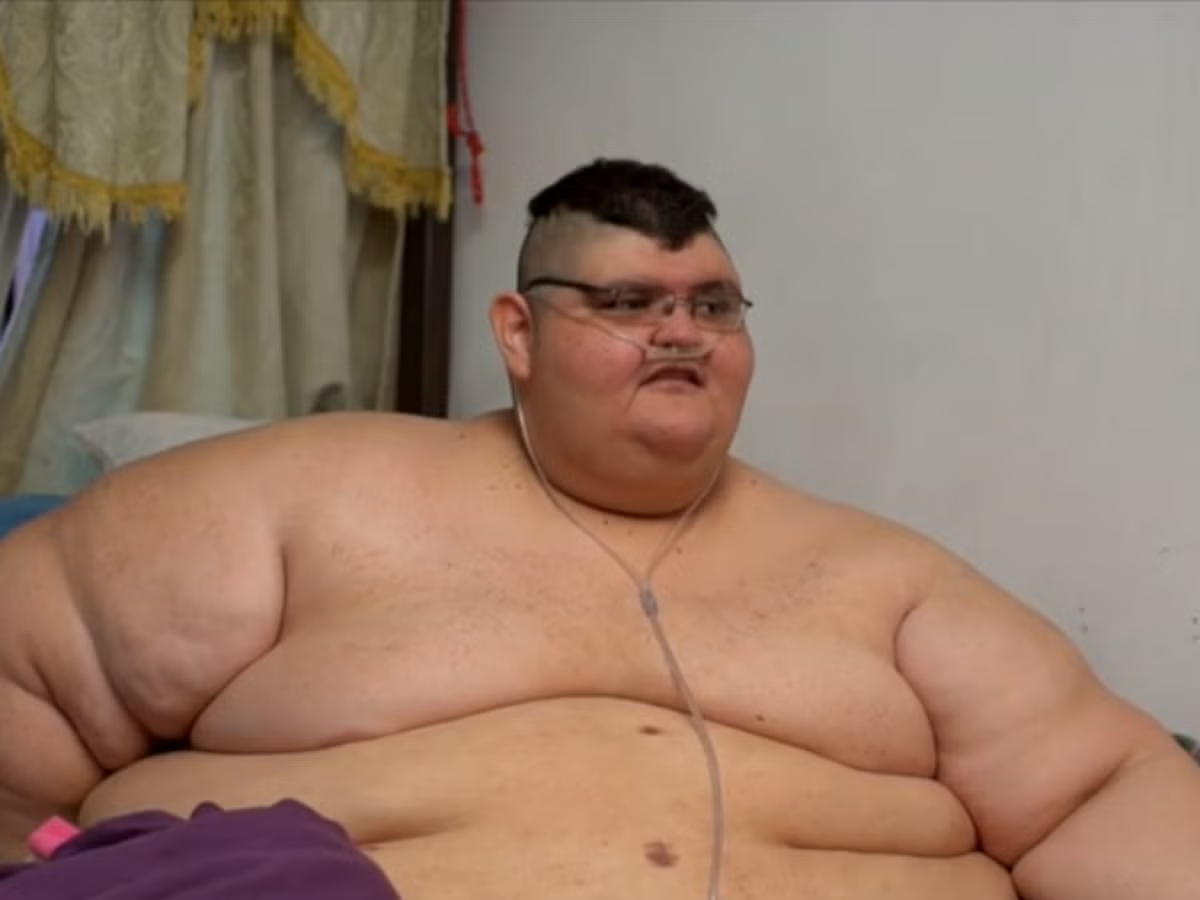
If you are significantly overweight — over 18–20 stone — most standard exercise advice is not written for you. Guides that recommend 5km runs, HIIT circuits, or gym sessions assume a starting fitness level and body weight where high-impact exercise is not problematic. This guide is written specifically for people starting from a high weight.
Why standard exercise advice does not apply at high weight
- Joint load scales with body weight — running at 25 stone transmits 5–7× body weight through each knee per stride
- Heat management is harder at higher weights — overheating during exercise happens faster
- Many gym machines have weight limits — always check before using equipment
- Recovery time is longer — the same workout takes more out of a heavier, less-conditioned body
The best starting exercises at high weight
Swimming and aqua aerobics
Water supports approximately 90% of body weight, removing virtually all joint load while allowing full cardiovascular exercise. Heavier people actually float more easily — making water exercise more comfortable at high starting weights. Start with 15–20 minutes of gentle swimming or an aqua aerobics class.
Walking at low speed — indoors or outdoors
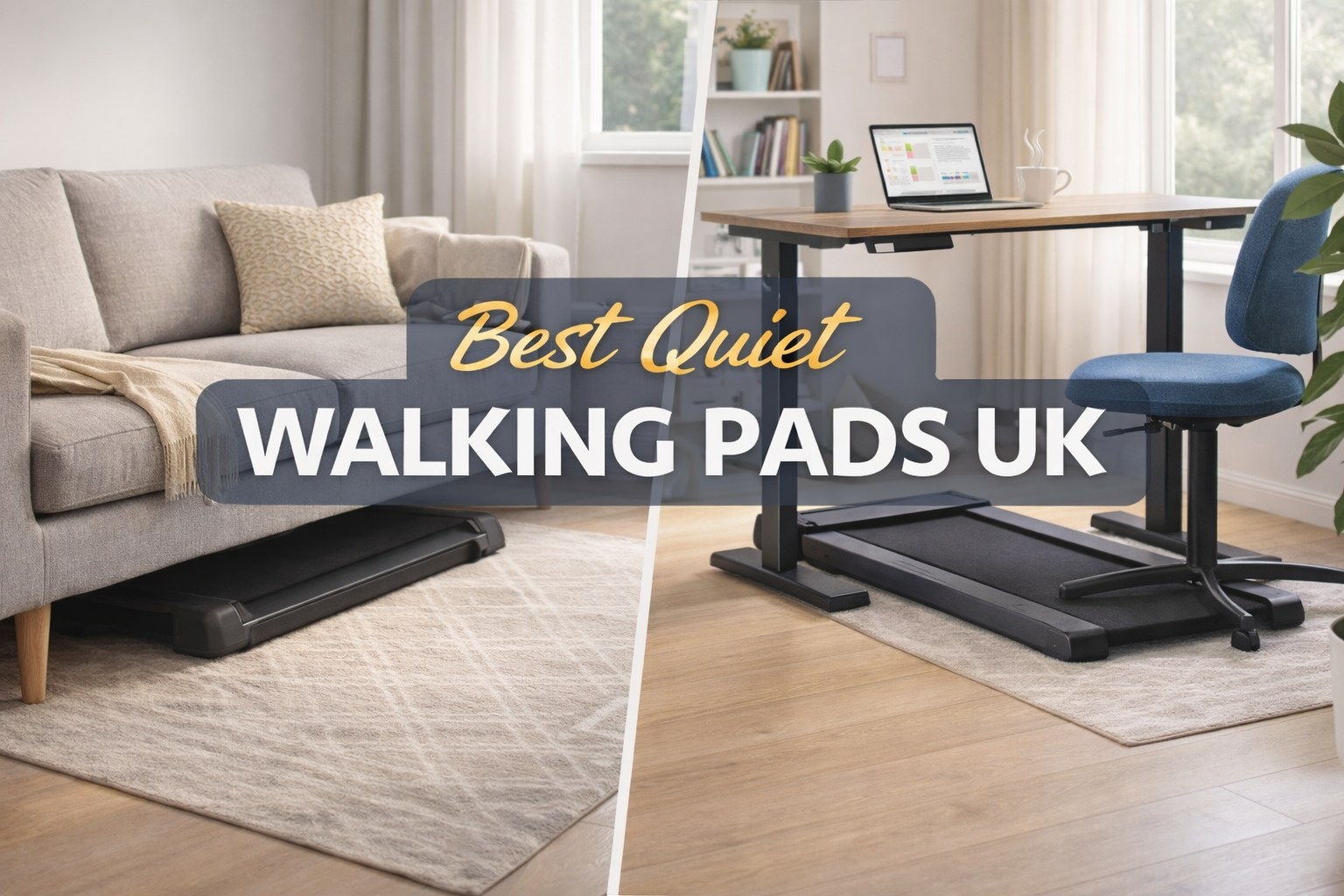
Walking at 1.5–2 km/h on a flat surface transmits only 1–1.5× body weight through joints. A walking pad with a high weight capacity is often the most accessible starting option — flat surface, controlled speed, private environment, no weather dependence.
Always check weight limits carefully: Best Walking Pads for Heavy People UK.
Seated resistance exercises
- Seated leg raises from a chair
- Wall push-ups (standing, hands against wall)
- Resistance band rows seated (anchor band at waist height)
- Chair squats — stand up and sit back down using the chair as the stopping point
- Glute bridges — lie on back, feet flat, push hips upward
Stationary cycling
The seated position takes weight off joints. Check the weight limit of any bike before use — most commercial gym bikes support up to 150–160kg; some home models only up to 100–120kg.
How to start without injury
- Start shorter than you think you need to: 10 minutes in week one. 12 minutes in week two. Gradual progression prevents the soreness that stops most beginners
- Rest days are essential: alternate exercise days with rest days in the first month
- Footwear matters more at higher weight: wide-fit trainers with substantial cushioning reduce foot and ankle pain significantly
- Ignore the pace: slow counts. 1 km/h on a walking pad is 1,500 steps per hour that would not otherwise exist
🌿 Lily & Loaf Electrolytes — hydration during exercise at high weight
Heavier people sweat more during exercise and are more susceptible to dehydration and electrolyte loss. The Lily & Loaf Electrolyte formula supports hydration, energy metabolism, and normal muscle function — one teaspoon in water before or after exercise.
🌿 Lily & Loaf Vitamin D3+K2 — bone and muscle support
Vitamin D deficiency is more prevalent in people who are significantly overweight — body fat stores vitamin D rather than releasing it. Vitamin D supports normal muscle function and bone health, both of which matter more when increasing exercise load at higher body weights.
📋 Download the free 14-day meal plan — designed for people starting their journey at any starting weight.
For the full low impact exercise guide: Best Low Impact Exercise for Weight Loss UK.
Discover more from Healthy Weight Loss GLP1
Subscribe to get the latest posts sent to your email.