
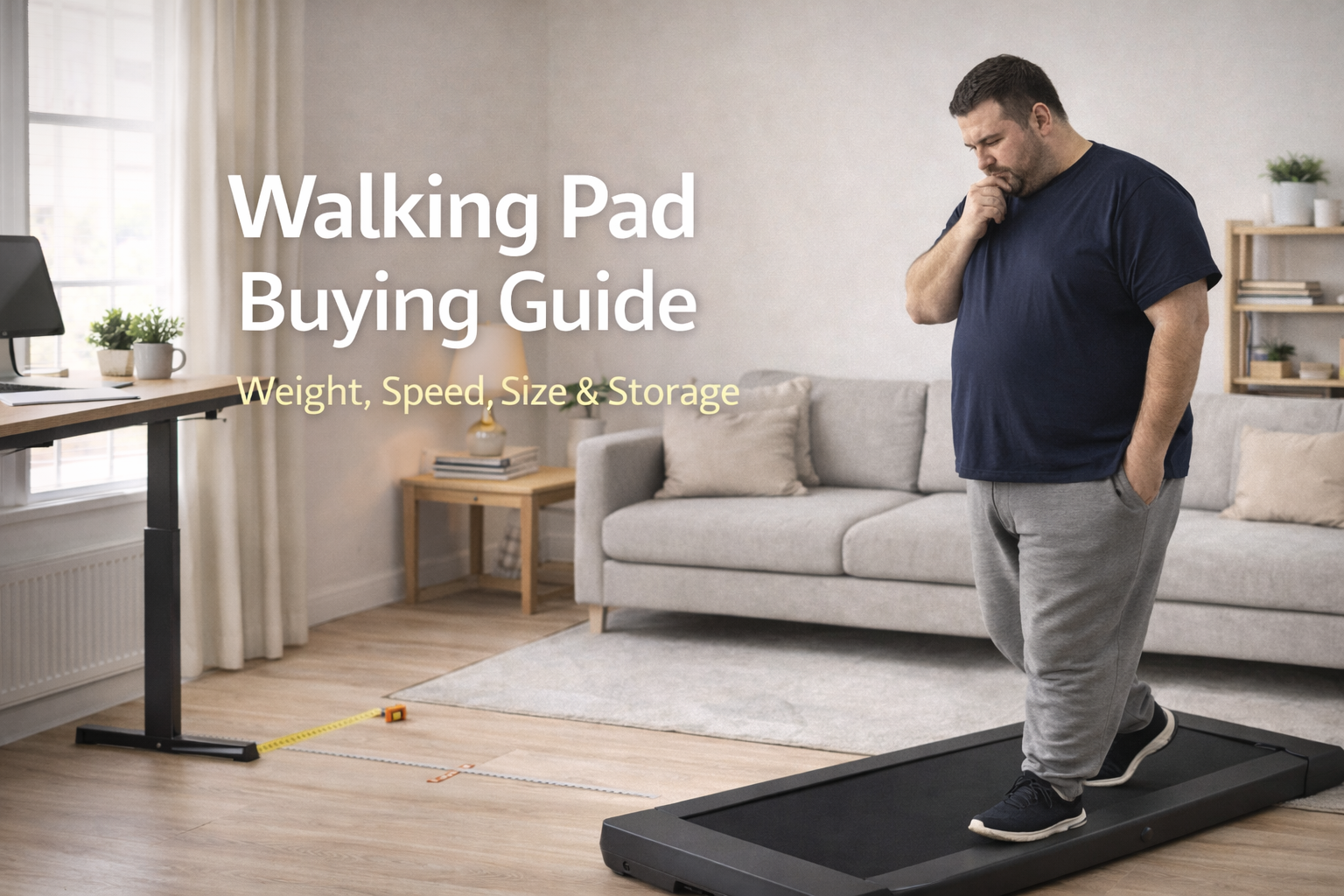
Walking Pad Buying Guide: Weight Capacity, Speed, Belt Size and Storage
When buying a walking pad, focus on four things first: weight capacity, speed, belt size, and storage. Those four filters will tell you far more than flashy marketing ever will. The best walking pad is not the one with the longest feature list. It is the one that fits your body, room, routine, and confidence level well enough to use consistently.
If you mainly want a simple way to walk more at home, stay active while working, or support a realistic weight-loss routine, a walking pad can be an excellent buy. But they are not all the same. Some are better for small flats, some are better for heavier users, and some are better if you want a little more deck width or a more reassuring feel underfoot.
Jump to:
Why trust this guide?
I write these guides from the perspective of someone who cares much more about realistic routines than fantasy workouts. My own weight-loss journey started after reaching around 27 stone, so I know how important it is to choose gear that actually fits your life rather than equipment that looks good on paper and gathers dust.
This site’s walking pad content is built around practical home movement, sustainable habits, and believable advice for UK homes. You can read more about me here, and if you want support on the food side too, you can grab my free meal plan here.
Quick answer
If you are unsure where to start, here is the simplest version:
- Choose by weight capacity first if you want the safest, most realistic shortlist.
- Choose by speed second based on whether you want easy walking or something closer to a treadmill feel.
- Choose by belt size third if comfort and confidence underfoot matter more than ultra-compact storage.
- Choose by folded size fourth if you live in a flat, small lounge, or home office where storage matters every day.
For most people on this site, the best buy is a walking pad that feels easy to live with and easy to repeat. If the machine is too bulky, too narrow, too flimsy, or too ambitious for your actual routine, it becomes much harder to use consistently.
Quick comparison: what matters most?
| Spec | Why it matters | Best for | Watch out for |
|---|---|---|---|
| Weight capacity | Safety, stability, confidence and long-term durability | Everyone, especially heavier users | Buying too close to the limit |
| Speed | Determines whether the machine suits desk walking, daily steps, or more brisk walking | Home workers, step-goal walkers, routine builders | Buying more speed than you will ever use |
| Belt size | Affects how comfortable and confident the machine feels underfoot | Taller users, heavier users, nervous beginners | Choosing ultra-slim decks that feel cramped |
| Storage | Decides whether the walking pad fits your room and gets used regularly | Flats, small homes, home offices | Ignoring folded dimensions and furniture clearance |
The four walking pad specs that matter most
A lot of buyers get distracted by extras. App features. Display style. Fancy marketing. Those things can be nice, but they are not what makes a walking pad right for you.
If you strip the decision back to what actually matters in real life, it usually comes down to four filters:
- Can it comfortably support your bodyweight?
- Does the top speed match what you actually want to do?
- Will the belt feel comfortable enough to use often?
- Can you store it without your room turning into a gym permanently?
Once you answer those four questions, most of the fluff falls away very quickly.
1. Weight capacity: the most important spec for a lot of buyers
If you ignore everything else and get this wrong, the rest of the buying guide becomes irrelevant. Weight capacity affects safety, confidence, stability, and how believable the machine feels when you step on it.
My honest rule is simple: do not shop right on the edge if you can help it. A walking pad that technically supports your weight is not always the same thing as one that feels like a genuinely good fit.
If you are heavier, leave some safety margin rather than buying to the absolute ceiling. That is exactly why I built the separate guide for the best walking pads for heavy people in the UK.
Practical weight-capacity brackets
- Up to 100 kg: most mainstream walking pads are still realistic options.
- 100 to 110 kg: start prioritising sturdier builds over the cheapest entry models.
- 110 to 120 kg: selection matters more, and deck confidence becomes more important.
- 120 kg and above: shortlist carefully and consider whether a foldable treadmill is actually the smarter buy.
2. Speed: what do you actually need?
Most buyers on a site like this do not need a machine built for sprints. They need something that makes daily movement feel easier.
That is why a lot of WalkingPad models top out at 6 kph. For everyday walking, under-desk use, and home step goals, that is usually enough. If your dream is “I want to walk while working, watching TV, or getting my steps in after dinner,” you probably do not need treadmill-level speed.
You only need to step up a category if you know you want something more treadmill-like, more workout-focused, or more future-proof for brisker sessions.
Use speed like this:
- Desk walking / easy daily steps: lower-speed walking pads are usually ideal.
- Brisk walking: 6 kph is enough for many buyers.
- Jogging or running: you are probably in foldable treadmill or treadmill territory, not classic walking-pad territory.
For the broader category choice, read Walking Pad vs Treadmill vs Foldable Treadmill.
3. Belt size: the spec buyers underestimate
Belt size matters more than many people realise. On paper, small differences can look unimportant. In real life, a slightly wider deck can make a walking pad feel much calmer and more confidence-building.
If you are taller, broader, heavier, newer to walking pads, or simply a bit cautious, belt comfort matters. You do not want every step to feel like you are carefully balancing on a narrow strip.
What belt size affects
- how natural your stride feels
- how much confidence you have when walking
- how beginner-friendly the machine feels
- whether the machine feels “too slim” for your body
That is why I would rather see someone buy the right deck for comfort than obsess over shaving a few centimetres off storage size.
4. Storage: the spec that decides whether you’ll actually use it
Storage is where good intentions go to die.
If a walking pad is awkward to move, awkward to store, awkward to fit under furniture, or permanently in the way, that friction adds up. Small bits of hassle are often what stop a machine becoming a routine.
Before buying, think through:
- Will it live out full time or be stored after each use?
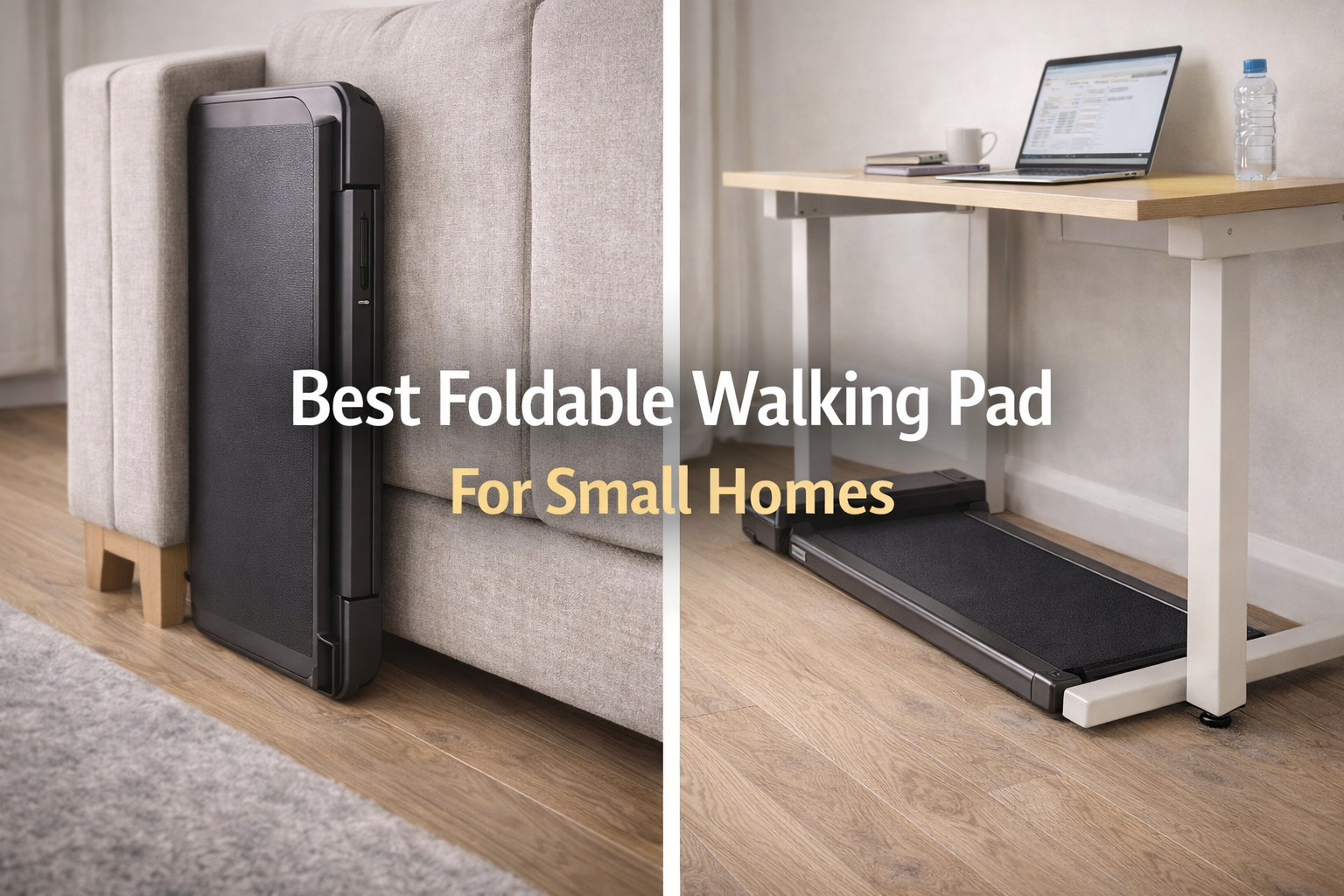
- Does it need to fit under a sofa, bed, or desk?
- Can you comfortably move its weight?
- Do you need a flat-fold design or would a more upright fold be fine?
If you live in a smaller UK home, this part matters a lot. The right walking pad should fit your room, not force your room to fit it.
How to match the right spec to your real use case
If you work from home
Prioritise storage, lower noise, and steady easy walking over “fitness machine” vibes. Start with Best Under-Desk Treadmill for Working From Home (UK).
If you live in a flat or small lounge
Prioritise folded size, noise, and whether the machine can tuck away under furniture or against a wall. Your next read is Best Quiet Walking Pads for UK Flats and Small Spaces.
If you are a heavier buyer
Prioritise weight capacity and deck confidence before anything else. Start with Best Walking Pad for Heavy People in the UK.
If your main goal is weight loss support
Prioritise realism and repeatability. The best walking pad is the one that gets used often enough to help you move more. Read Can a Walking Pad Help You Lose Weight?.
Best WalkingPad picks by buying priority
Best overall spec balance: WalkingPad A1 Pro
If you want the strongest all-round WalkingPad-first recommendation, this is usually the safest place to start. It gives you a higher capacity ceiling, a good walking area, and compact folded storage without drifting into full treadmill territory.
Check the A1 Pro and current WalkingPad UK offers
Best if you want a little more deck width: WalkingPad R3
If belt comfort matters more and you want a slightly broader-feeling option while staying in the home-walking lane, the R3 is worth a look. It makes sense for buyers who want a more reassuring underfoot feel.
See WalkingPad treadmill-style and hybrid options
Best value for lighter-duty buyers: WalkingPad C2
If you are shopping with a tighter budget and do not need the highest capacity or the roomiest deck, the C2 can make sense. It is more of a value pick than a universal recommendation, but for the right user it is still a credible compact option.
Browse the WalkingPad range here
When Amazon or a foldable treadmill is the smarter buy
Sometimes the right answer is not “buy a walking pad anyway.”
If you need more capacity, a wider deck, higher speeds, or a more traditional treadmill feel, it can make more sense to widen the shortlist instead of forcing a compact desk-walking machine to do a bigger job than it was built for.
That is where Amazon can be useful as a fallback route, especially for:
- price-sensitive buyers
- people needing higher-capacity foldable treadmills
- people wanting a more treadmill-like frame and handrail setup
Browse Amazon foldable treadmill alternatives
Common buying mistakes
- Buying for fantasy you. If your real goal is easy daily walking, do not buy like you are training for a 10k.
- Ignoring storage. If it is awkward to store, use tends to drop quickly.
- Underestimating belt comfort. A narrow deck can make a walking pad feel far less inviting.
- Shopping too close to the weight limit. Safety margin matters more than many buyers realise.
- Paying for speed you will never use. Most home walkers need consistency more than headline speed.

My honest recommendation
If you want the cleanest, least-regrettable buying path, start by asking one question: what is the actual job this machine needs to do in my life?
If the answer is “help me walk more, fit into a small home, and make movement easier to repeat,” then a good walking pad is a brilliant buy. If the answer is “I want more speed, more stability, more deck room, and maybe some future jogging,” then step up to a foldable treadmill sooner rather than later.
The biggest win is not buying the “best” machine in abstract. It is buying the one that fits your home and habits so well that using it becomes normal.
People also ask
What should I look for when buying a walking pad?
Start with weight capacity, speed, belt size, and storage. Those four things usually matter more than app features or marketing extras.
What speed do I need on a walking pad?
For most buyers, a top speed around normal brisk walking is enough. If you want jogging or running, you are usually better off with a foldable treadmill or treadmill instead.
How wide should a walking pad belt be?
Wider belts tend to feel more comfortable and confidence-building, especially for taller, broader, heavier, or more cautious users.
Can you store a walking pad under a sofa?
Many walking pads are designed for flat storage under furniture, but you should always measure your available clearance before buying.
Are all walking pads good for under-desk use?
No. Some are much better suited to desk walking than others, especially when noise, speed control, and overall profile are considered.
Can I use a walking pad every day?
Yes, for many people that is the whole point. Walking pads work best when they support regular, low-friction movement rather than occasional heroic effort.
FAQ
What weight capacity should I choose on a walking pad?
Choose a model that sits comfortably above your current bodyweight rather than buying right at the limit.
Is 6 kph enough on a walking pad?
For most home walkers, yes. It is usually enough for daily walking, step goals, and many work-from-home setups.
How important is belt size on a walking pad?
Very important. It affects comfort, confidence, and whether the machine feels natural to walk on.
Should I buy a walking pad or a foldable treadmill?
Buy a walking pad if you mainly want simple daily movement and easy storage. Buy a foldable treadmill if you need more speed, stability, or future flexibility.
Are walking pads worth it for weight loss?
They can be very useful if they help you move more consistently. Their value usually comes from routine and repeatability, not from flashy features.
What is the best walking pad for small spaces?
The best option is usually the one with a realistic folded size, low-friction storage, and a profile that fits your room without constant hassle.
Related reading
Friendly note: This article is based on product research, practical home-use considerations, and lived experience rather than personal medical advice. If you have pain, balance issues, or a medical concern, get personalised advice before starting a new exercise routine.
Discover more from Healthy Weight Loss GLP1
Subscribe to get the latest posts sent to your email.