
The best running trainers for GLP-1 users starting to run are cushioned, stable, and sized up slightly to account for foot swelling during runs — the last thing you need when building an exercise habit is a shoe-related injury that sets you back weeks. This guide covers the best options at each price point for UK buyers, what features matter specifically for users who are heavier and newer to running, and how to build a running habit that works alongside Mounjaro treatment rather than against it.
For training context: Strength Training on GLP-1 UK and How Many Steps a Day to Lose Weight UK. For complementary home training: Best Kettlebell Workouts for GLP-1 UK.
Running on a GLP-1: what changes
Starting or returning to running while on Mounjaro has specific considerations:
Energy can be unpredictable. On injection day and the day after, energy is often lower than baseline. Scheduling runs on days three to five post-injection produces better sessions than on injection day itself.
Reduced appetite means potentially under-fuelling. Running on a GLP-1 significantly suppressed appetite without eating anything beforehand risks energy crashes mid-run. A small protein-carb snack 45–60 minutes before running (banana + protein shake, or egg on toast) prevents this.
Higher-intensity running raises protein needs further. Running adds to the muscle stress of your week. Already elevated protein targets for GLP-1 users need maintaining on run days — don’t let a good run session lead to lower nutrition because the run suppressed appetite further.
Joint load. Running is higher impact than walking or strength training. Starting with run-walk intervals rather than continuous running is smarter for users carrying significant extra weight — joints need time to adapt. The good news: every kilogram lost from Mounjaro reduces joint impact on running by approximately 3–4× body weight per foot strike.
What to look for in running trainers for GLP-1 users
Cushioning: higher cushioning absorbs more impact per stride, reducing joint stress. For users who are heavier or new to running, maximum cushioning (stack height of 28mm+ in the heel) is worth the slight trade-off in ground feel. The injury protection matters more than responsiveness at this stage.
Stability features: a mild stability shoe (not motion control — just mild guidance) suits most users who overpronate slightly when tired or carrying higher body weight. Pure neutral shoes can allow pronation to worsen during the back half of a run when form deteriorates from fatigue.
Width: running causes feet to swell by half a size to a full size during longer runs. Buy trainers half a size larger than your street shoe size and check they’re available in wide fit if you have wide feet. UK brands consistently underestimate how many runners need wide fit.
Heel-to-toe drop: for users not accustomed to running, a moderate drop (8–12mm) is safer than minimalist or zero-drop shoes. Lower drop shifts load to calves and Achilles tendons — fine for experienced runners who have conditioned gradually, but injury-prone for newcomers.
Durability: running trainers typically last 400–600 miles / 640–960km. Heavier runners experience faster midsole compression, so lean toward 400 miles as your replacement indicator. Buying a shoe and expecting it to last indefinitely is one of the most common running injury causes.
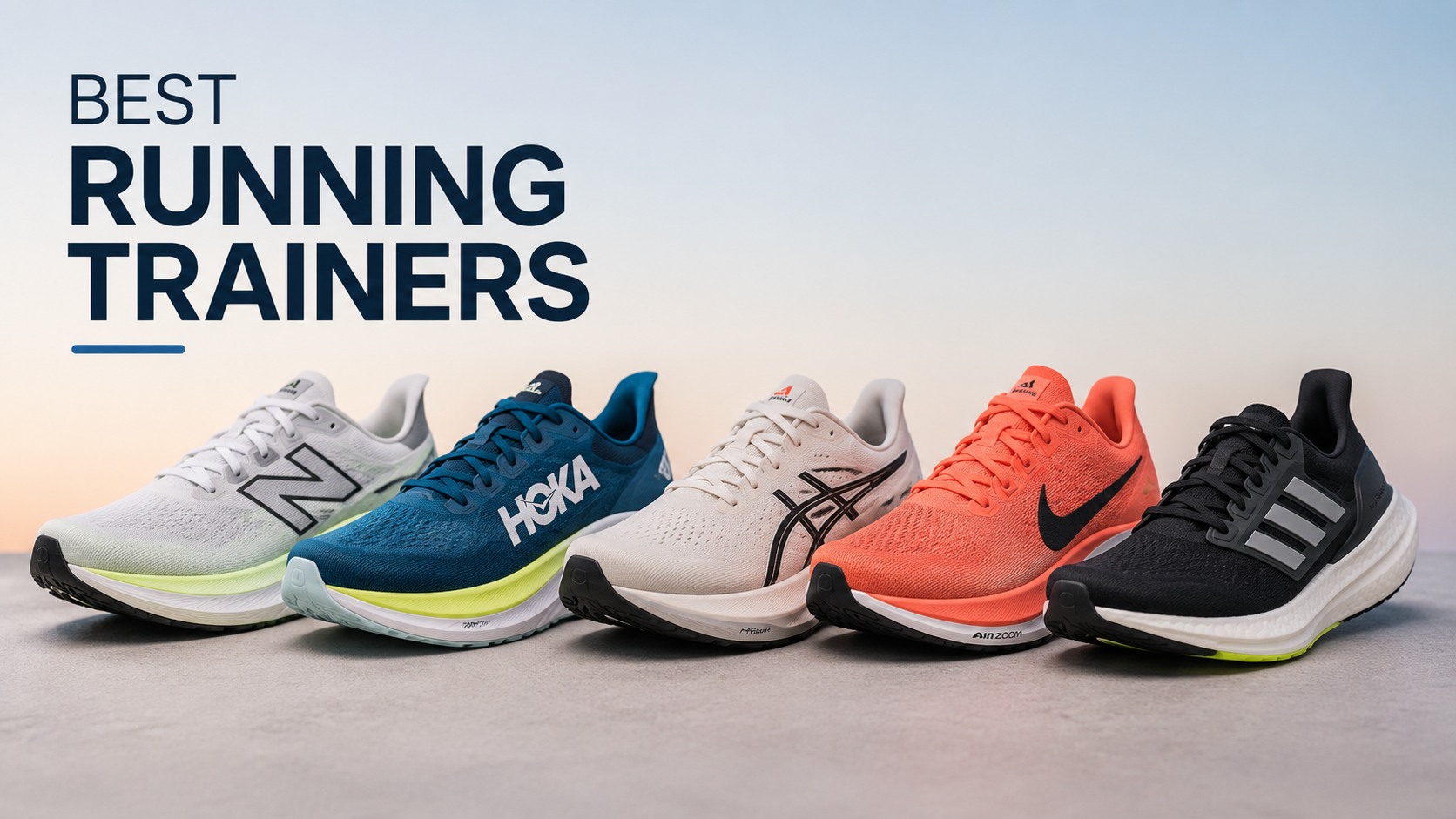
Best running trainers UK for GLP-1 users
Best overall: ASICS Gel-Kayano (stability) or Gel-Cumulus (neutral)
ASICS’s Gel series remains the most consistent performer for new-to-running and returning-to-running adults at higher body weights. The Gel-Kayano 30 combines maximum cushioning with mild stability guidance; the Gel-Cumulus 26 is the neutral version with similar cushioning. Both absorb impact well, come in wide-fit options, and have a history of strong durability.
Typically £120–£150. Widely available in UK running shops (Sweatshop, Up and Running) and online. Check ASICS Gel-Kayano on Amazon UK.
Best budget: Saucony Cohesion or ASICS Gel-Contend
Both in the £60–80 range. The Saucony Cohesion 16 and ASICS Gel-Contend 9 offer sufficient cushioning and stability for beginner runners without the premium price. Midsole foam is less advanced than the flagship models — you’ll notice more fatigue on runs above 5km — but for building up from walk-run intervals to regular 5km running, these are entirely adequate.
Browse Saucony Cohesion on Amazon UK.
Best cushioning: HOKA Clifton 9 or Bondi 8
HOKA has built its reputation on maximum cushioning — stack heights significantly higher than most competitors. The Clifton 9 is their everyday trainer; the Bondi 8 is their maximum cushioning option. For GLP-1 users with knee pain, history of injury, or who are returning to running after a significant break, HOKA’s cushioning reduces impact stress substantially.
Typically £130–£165. Wide-fit options available for both models. Check HOKA Clifton on Amazon UK.
Best for wide feet: New Balance 1080
New Balance consistently offers the best wide-fit options of any major brand (2E and 4E widths available). The 1080 v14 combines high cushioning with neutral guidance and excellent durability. Premium pricing (£150–£170) but the wide-fit options justify the premium for users who consistently find standard-fit shoes cause blisters or bunion pressure.
Best value for money: Brooks Ghost
The Brooks Ghost has been the reliably recommended “can’t go wrong” trainer for new runners for years. The Ghost 16 maintains this reputation — balanced cushioning, neutral with mild stability, durable, available in multiple widths. Typically £120–£140. A safe choice if you want one trusted recommendation without researching further.
Browse Brooks Ghost on Amazon UK.
Getting a gait analysis
The single best thing you can do before spending £120+ on running trainers is a free gait analysis at a UK running specialist (Up and Running, Sweatshop, most independent running shops). They observe your foot strike on a treadmill for two minutes and recommend the appropriate category of shoe (neutral, mild stability, or motion control).
This takes 15 minutes, is completely free, and prevents the common mistake of buying the wrong category of shoe — which is the main cause of preventable running injuries for new runners.
Building a running routine around Mounjaro
A progressive approach that fits around injection day patterns:
Weeks 1–4: run-walk intervals. Run one minute, walk two minutes, repeat for 20–25 minutes. Three sessions per week. This is sufficient to build cardiovascular base without injury risk.
Weeks 5–8: extend run intervals to two to three minutes with one to two minute walk breaks. Total time 25–30 minutes.
Weeks 9–12: aim for continuous 20-minute run by the end of this block. Progress based on how you feel — the target isn’t a specific distance but sustained comfortable effort.
Injection day protocol: rest or walk only on injection day (days one and two post-injection). Resume running on days three, four, or five when energy and any nausea has settled.
Track your runs alongside nutrition in Cronometer — the app supports exercise logging, and noting that you ran on a given day alongside your food intake shows whether you’re eating adequately on training days (a common gap on GLP-1-reduced appetite).
Frequently asked questions
Can I run on Mounjaro?
Yes — running is compatible with GLP-1 treatment and adds cardiovascular benefit beyond what strength training alone provides. Start with run-walk intervals rather than continuous running, and schedule sessions on days three to five post-injection rather than on injection day.
What running trainers are best for overweight runners?
Prioritise cushioning (reduces impact per stride), mild stability (supports form as fatigue sets in), and appropriate width (feet swell during running). HOKA Clifton, ASICS Gel-Kayano, and Brooks Ghost are all strong choices. Getting a gait analysis at a running shop before buying is the most valuable step.
How far should I run when starting on Mounjaro?
Distance doesn’t matter in the early weeks — time and effort do. 20–25 minutes of run-walk intervals is a better starting goal than a specific kilometre target. Let your cardiovascular fitness and joint adaptation guide progression, not ambition.
How often should I replace running trainers?
Every 400–500 miles (640–800km) for most runners. At 20km per week, that’s approximately 5–6 months. The midsole foam compresses before the upper shows visible wear — buy new trainers when your legs feel noticeably more tired after runs than they used to, or after 5–6 months of regular use.
Some links in this post use the Amazon affiliate tag (mrh04-21). Prices are correct at time of writing. Always try trainers in person if possible, or buy from a retailer with a good return policy.
Running nutrition specific to GLP-1 users
Standard running nutrition advice doesn’t fully apply when you’re on a medication that suppresses appetite — GLP-1 users need a modified approach:
Pre-run: a small snack 45–60 minutes before running is more important on Mounjaro than off it, because running on an empty stomach when the medication has already suppressed appetite can cause significant energy drops mid-run. Practical options: a banana with a protein shake, an egg on a small piece of toast, or a yoghurt with some berries. Approximately 15–25g carbohydrate plus 15–20g protein.
During runs under 45 minutes: water is sufficient. No gels or sports drinks needed for short runs, particularly on a GLP-1 where blood glucose management is improved by the medication.
Post-run nutrition: this is the most commonly neglected element for GLP-1 users. The appetite suppression that continues after exercise means post-run hunger doesn’t occur naturally — but muscle protein synthesis requires amino acids within a few hours of training. A deliberate post-run protein source (protein shake, Greek yoghurt, eggs) within two hours of your run is worth building as a habit even when you don’t feel like eating.
Hydration during running: sweat loss on a GLP-1 with already-compromised thirst signalling creates dehydration risk. For runs over 30 minutes, take your water bottle or plan a water stop. Use your smart water bottle’s tracking to check you’re adequately rehydrating post-run.
Track your running days in Cronometer alongside food intake. A pattern most users notice: protein intake drops on running days (the run further suppresses already-low appetite), but protein need is higher on training days. Identifying this allows you to plan specifically for run-day nutrition rather than letting the appetite signal (or lack of it) dictate intake.
Discover more from Healthy Weight Loss GLP1
Subscribe to get the latest posts sent to your email.