
The most common reason Mounjaro users are losing muscle alongside fat, experiencing hair loss, feeling perpetually tired, and struggling with slow recovery from training is not the medication — it’s protein deficiency. GLP-1 appetite suppression is so effective that many users eat far less protein than they realise, and the gap between perceived protein intake and actual protein intake is consistently 30–50g daily. You can find out exactly where you stand in ten minutes using a free app. This guide shows you how.
Set up your tracker: Cronometer free →. Find your protein target: Protein Calculator UK.
The ten-minute protein audit
Step 1: Install Cronometer (2 minutes)
Download Cronometer (free, iOS and Android, also web browser). Create an account — just an email address needed.
Step 2: Set your protein target in grams (2 minutes)
Go to: Profile → Targets → Macronutrients → Protein. Switch from percentage to grams. Enter your target from the table below:
| Your weight | Minimum target | Optimal target |
|---|---|---|
| 60–70 kg | 72–84g | 84–98g |
| 70–80 kg | 84–96g | 98–112g |
| 80–90 kg | 96–108g | 112–126g |
| 90–100 kg | 108–120g | 126–140g |
| 100–110 kg | 120–132g | 140–154g |
| 110–130 kg | 132–156g | 154–182g |
| 130 kg+ | 156g+ | 182g+ |
Use current body weight, not goal weight. Update monthly as you lose weight.
Step 3: Log yesterday’s food honestly (5 minutes)
Enter everything you ate and drank yesterday. Use the barcode scanner for packaged foods (fastest). Use the search for whole foods. Be specific — “chicken breast, cooked, 150g” produces accurate data; “chicken” doesn’t. Include cooking oils, sauces, milk in coffee — these add up.
If yesterday was unusual (a party, a takeaway-heavy day), log a typical recent day instead. The goal is your actual eating pattern, not your best or worst day.
Step 4: Read the result (1 minute)
Check the protein bar at the bottom of the diary view. Compare it to your target. The gap is what you need to address.
What you’re likely to find
Based on consistent patterns across UK GLP-1 users logging in Cronometer:
| Profile | Perceived daily protein | Actual logged protein | Gap |
|---|---|---|---|
| Eating “healthily” but not specifically tracking | “Around 80–90g” | 55–70g | 25–35g under |
| Trying to hit targets but not measuring | “I think I’m hitting 120g” | 85–100g | 20–35g under |
| On a very suppressed GLP-1 appetite | “I barely eat anything” | 40–60g | 50–80g under |
| Actively tracking with Cronometer | Accurate | Accurate | Known and manageable |
The most alarming finding is the third profile — some GLP-1 users on very strong appetite suppression are eating so little that protein intake has fallen to levels that guarantee significant muscle loss alongside fat loss. The medication works brilliantly at losing total body weight; without protein intervention, the composition of that loss is suboptimal.
The symptoms of chronic protein deficiency on GLP-1
- Hair loss that isn’t improving: after the first 3–4 months, hair loss from telogen effluvium should be stabilising. If it’s not, protein is almost always part of the cause.
- Visible muscle loss: arms looking thinner, face appearing gaunt, loss of muscular definition despite weight loss
- Fatigue that persists at stable dose: once side effects have settled, persistent tiredness often reflects nutrient deficit rather than medication effect
- Slow wound healing: injection sites that bruise easily and take weeks to heal
- Weak nails: nails breaking or growing slowly
If you have three or more of these, a Cronometer protein audit is the most important thing you can do today. See also the GLP-1 Symptom Checker UK for the full symptom-to-nutrient mapping.
Fixing the protein gap: practical additions that work on a suppressed appetite
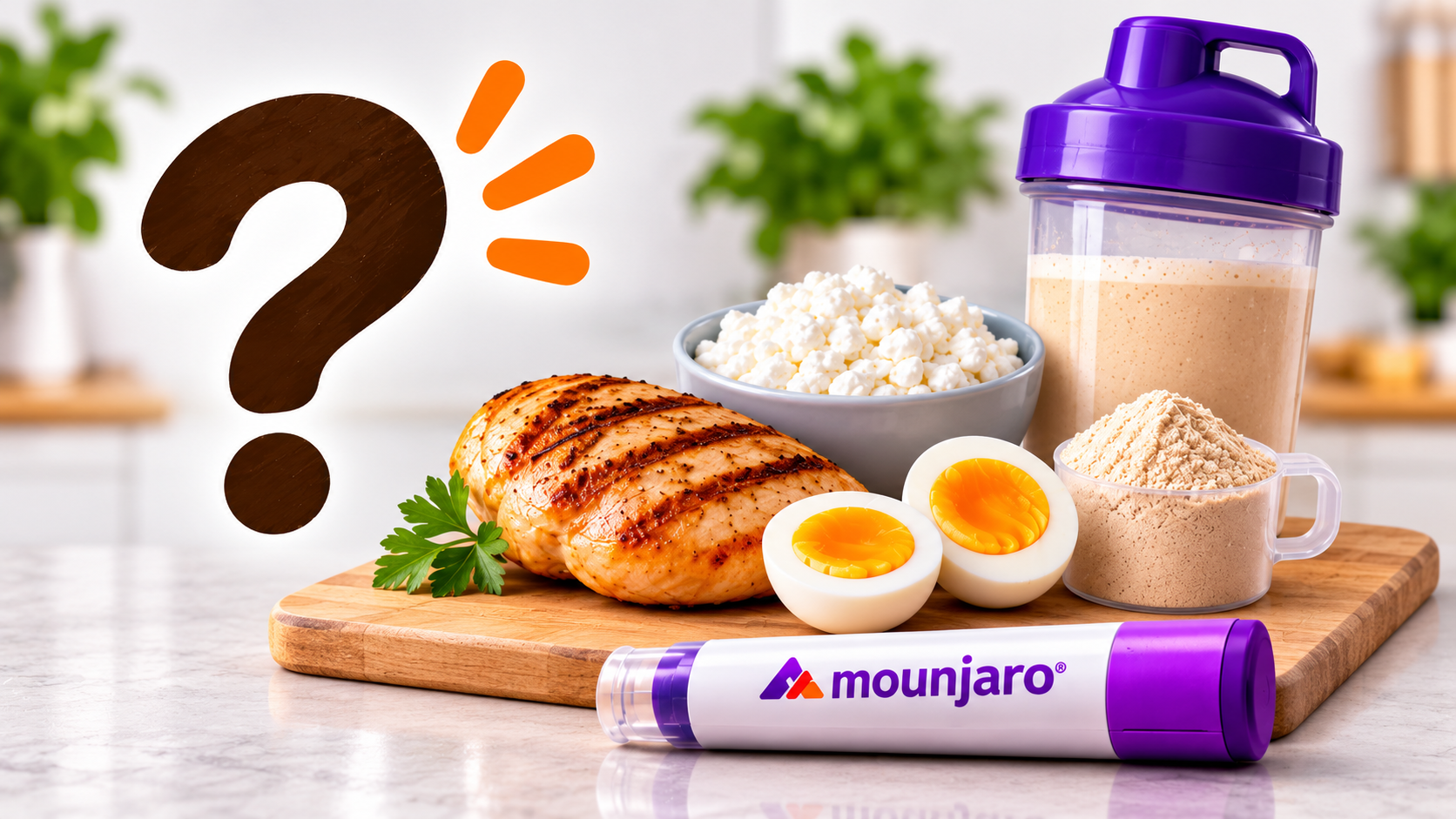
The challenge on Mounjaro is that you can’t simply eat more — appetite suppression limits total volume. Every addition has to be protein-dense:
| Addition | Protein added | Approximate calories | Volume |
|---|---|---|---|
| 1 scoop whey protein powder | 22–25g | 100–120 kcal | Low — dissolves in 200ml water |
| 200g Greek yoghurt (full fat) | 20g | 190 kcal | Moderate — filling |
| 1 tin sardines (130g) | 27g | 190 kcal | Low — no cooking |
| 2 boiled eggs | 13g | 155 kcal | Moderate |
| Grenade Carb Killa bar | 20g | 215 kcal | Low — convenient, no prep |
| 100g cottage cheese | 12g | 98 kcal | Low — pairs with other foods |
Adding a protein shake (25g) and a tin of sardines (27g) to an otherwise typical day adds 52g protein for approximately 310 kcal — in about 10 minutes of total effort including eating. That closes most protein gaps for most users without requiring a larger overall food volume.
The micronutrients that work alongside protein
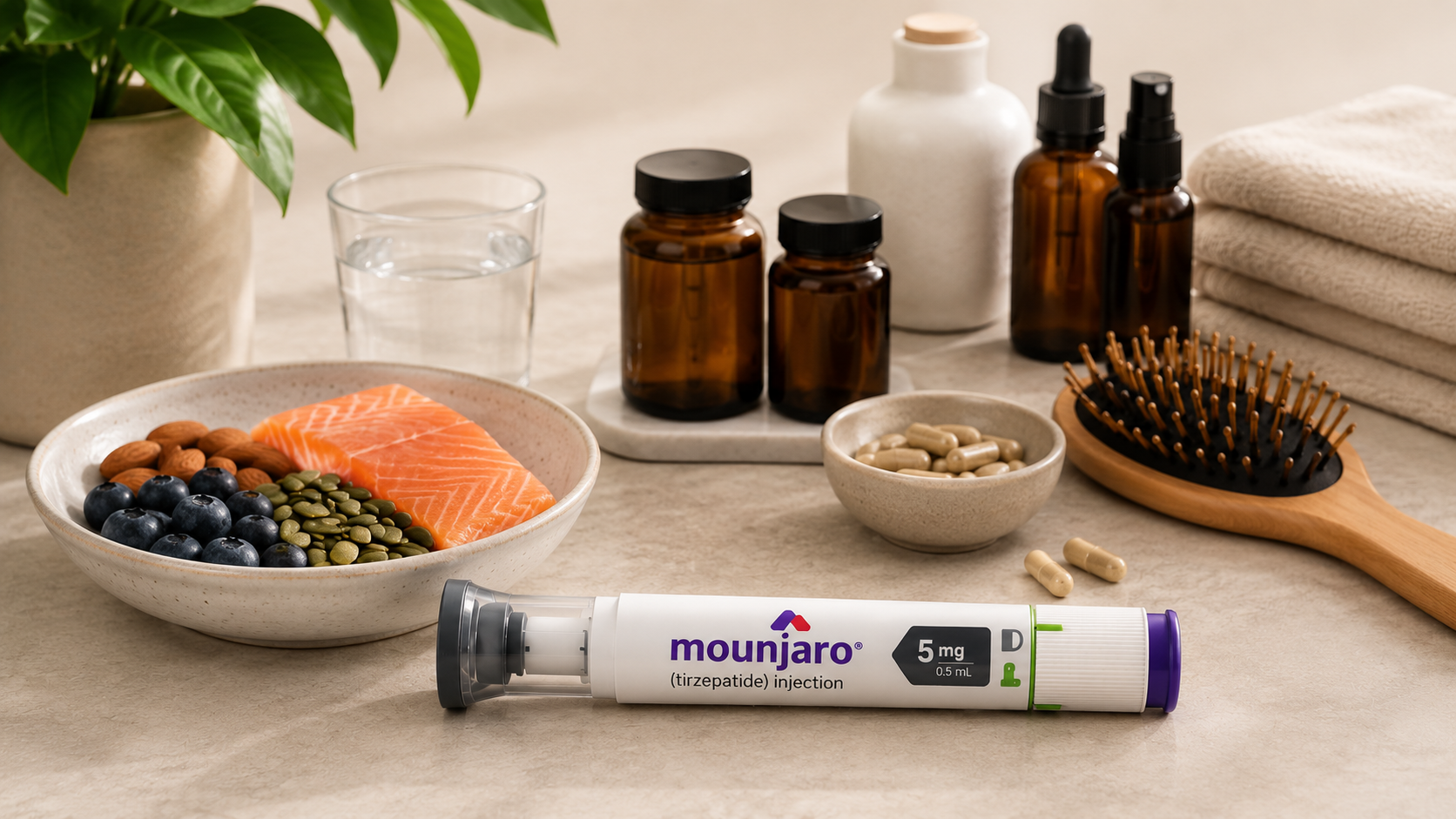
Adequate protein is the primary intervention. Micronutrients that support protein’s muscle-preserving effect:
- Zinc — required for tissue repair and protein synthesis
- Magnesium — supports muscle function and reduces catabolism under stress
- Vitamin D — directly involved in muscle protein synthesis regulation
- B vitamins — cofactors in amino acid metabolism
The free Lily & Loaf lifestyle analysis identifies which of these are most likely low based on your specific symptoms, rather than requiring you to guess which ones to supplement.
The knowledge that makes tracking stick
Understanding why protein matters for muscle preservation — the mTOR pathway, leucine as the key trigger for muscle protein synthesis, the thermic effect that makes protein more metabolically expensive — converts daily tracking from a chore into purposeful action. Start your free Audible trial and download The Obesity Code or any sports nutrition title that covers protein science. Understanding the mechanism is the single best predictor of long-term tracking consistency.
Frequently asked questions
How do I know if I’m eating enough protein on Mounjaro?
Log three to five days of honest eating in Cronometer and compare your weekly average protein to the table above. If you’re consistently below minimum target, you’re under-eating protein. Most GLP-1 users find they are — the audit is the fastest way to find out.
What happens if I don’t eat enough protein on Mounjaro?
Muscle loss makes up a higher proportion of total weight lost — potentially 25–30% of loss from lean tissue rather than 5–10% with adequate protein. This reduces resting metabolic rate, impairs body composition, and makes long-term weight maintenance harder. It also causes the hair loss, fatigue, and skin changes that many users attribute to the medication when diet is the actual cause.
Is it possible to eat too much protein on Mounjaro?
At the targets listed above (up to 1.6g/kg), no practical risk. Protein has no established upper limit concern at these ranges for healthy adults. The main cost is caloric — ensure protein additions don’t push total calories higher than needed, not that protein itself is harmful.
High-protein meal ideas that work on GLP-1 appetite
The practical challenge on Mounjaro isn’t knowing you need protein — it’s fitting adequate protein into meals when appetite is suppressed and volume tolerance is low. The most effective high-protein options are those with a high protein-to-volume ratio:
| Meal/snack | Protein | Volume | Prep time |
|---|---|---|---|
| Greek yoghurt + protein powder + berries | 38–45g | 300ml equivalent | 2 min |
| Scrambled eggs (3) + feta | 22g | Small bowl | 5 min |
| Tinned sardines on rice cakes | 25g | Very small | 1 min |
| Chicken thigh + salad | 38g | Plate-sized | 15–20 min |
| Cottage cheese + cucumber + seeds | 22g | Small bowl | 2 min |
| HelloFresh High Protein recipe | 35–50g | Full meal | 25–35 min |
For structured meal planning that takes the protein calculation off your plate: HelloFresh (50% off first box) provides calorie and protein information for every recipe, making Cronometer logging effortless — just enter the HelloFresh macro data when you serve up.
For the supplement support that works alongside dietary protein: zinc and magnesium both support protein synthesis and tissue repair. The free Lily & Loaf lifestyle analysis identifies which micronutrients you specifically need alongside your protein target.
And for understanding the protein science in depth — why leucine specifically triggers muscle protein synthesis, what the mTOR pathway does, why food timing around training matters — start your free Audible trial and search “protein muscle nutrition” for the most accessible sports nutrition audiobooks currently in the UK library.
How do I find time to log my food in Cronometer every day?
The free Cronometer barcode scanner takes under 10 seconds per packaged food item. Whole foods are entered by search or saved as custom foods from a previous entry. For most users who’ve saved their 10–15 most common foods, daily logging takes 3–5 minutes total. The habit becomes automatic within 1–2 weeks. The data this generates is the most actionable information available about your GLP-1 progress — 5 minutes per day is a very small investment for that insight.
The protein audit described in this guide takes ten minutes and produces the most actionable single data point available about your GLP-1 progress. Everything else — the supplement stack, the training programme, the medication dose conversation — is more impactful when protein is known to be adequate. Start with the audit. Fix the gap if there is one. Then build from there.
Alan’s own protein tracking journey — including the shock of discovering he was 50g below target in month two — is documented on the YouTube channel. The two weeks after closing that gap produced noticeably better energy, reduced hair shedding, and improved training performance. The data doesn’t lie.
Discover more from Healthy Weight Loss GLP1
Subscribe to get the latest posts sent to your email.