
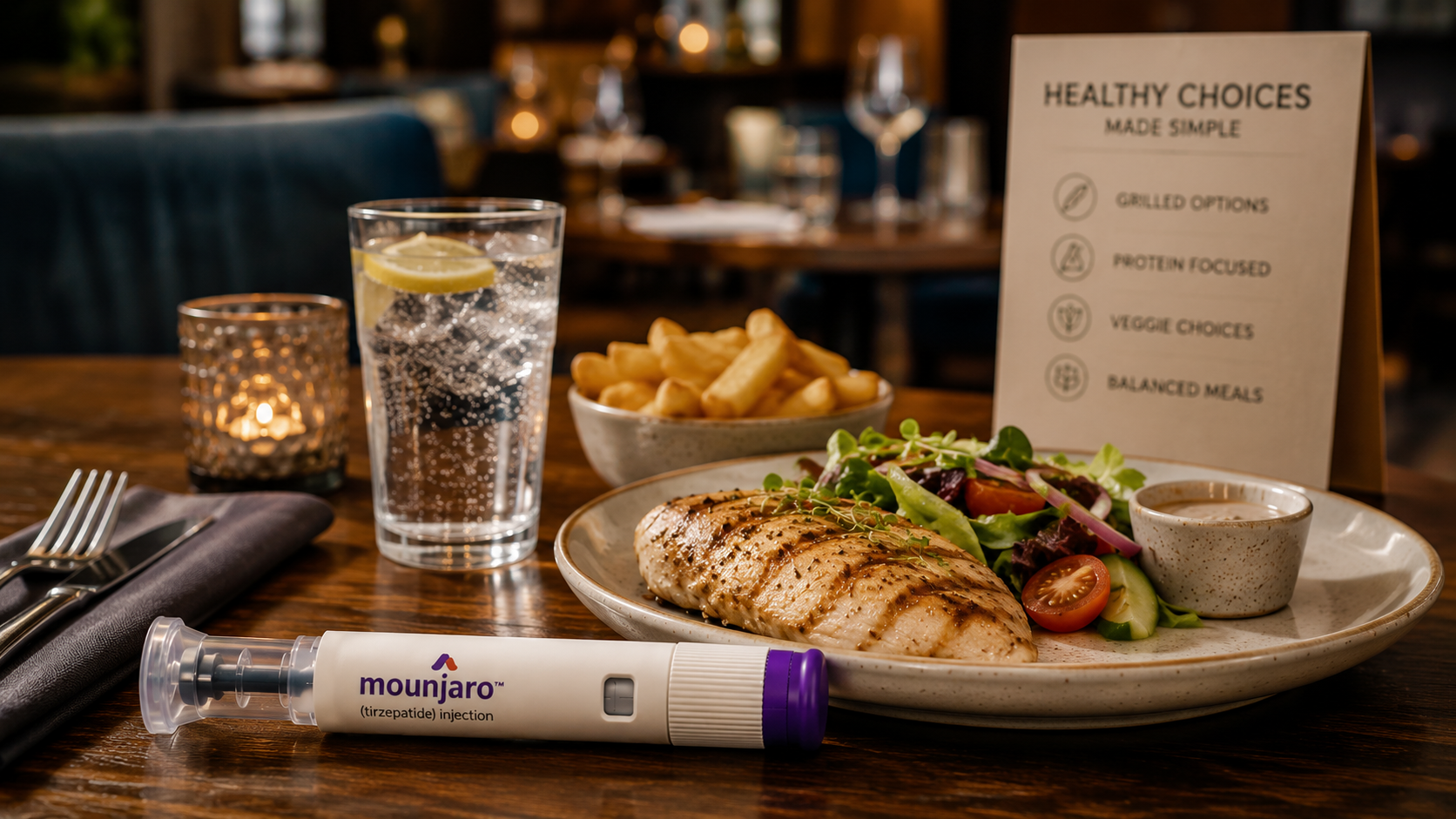
Eating out on Mounjaro is manageable — but it requires a different approach to both ordering and social expectations. Restaurant meals are typically larger than your GLP-1 appetite can handle, calorie counts are impossible to know accurately, and the social pressure to eat the same as everyone else can work against what the medication is doing. The practical strategies that work: ordering intentionally, being unapologetic about leaving food, focusing on protein-anchored choices, and knowing which cuisines tend to work better than others. This is the honest UK guide to restaurants and takeaways on Mounjaro.
Related reading: Food Noise Explained on GLP-1 and Identity Shift After Weight Loss UK.
What changes about eating out on Mounjaro
Before medication, eating out had several drivers — hunger, social enjoyment, pleasure of tasting different things, reward, occasion. On Mounjaro, many of these persist but hunger as a driver essentially disappears. What this changes:
- Restaurant meal sizes that previously felt appropriate now feel enormous
- Ordering a starter and main becomes difficult — the starter plus one or two bites of the main is often sufficient
- Rich, fatty dishes that were favourites often become less appealing — gastric emptying is slower, making heavy food more uncomfortable
- Courses unfold differently — appetite hasn’t built up from having not eaten, so the occasion eating pattern doesn’t apply
- The social enjoyment of eating with others is unaffected — the conversation, atmosphere, and shared experience continues
The adjustment most users need to make is internal: accepting that eating out means ordering differently and eating less, not trying to eat the same as before and feeling uncomfortable or nauseous.
Ordering strategies
Starter as main
Many UK restaurants’ starter portions are actually an appropriate GLP-1 meal size — a tiger prawn starter, a soup, a small fish dish, or a cheese-based starter often delivers 20–30g protein in a volume that feels manageable. Order a starter as your main, explain you’re not hungry for a full main if asked, and enjoy the meal at the right pace for your appetite.
Share a main
If eating with someone else, sharing a main between two is now practical where it previously wasn’t. Not every restaurant accommodates this, but many do — and it’s a reasonable request without requiring explanation.
Side dishes as a main
Many UK restaurants serve high-protein sides: grilled chicken, salmon fillet, egg dishes, halloumi. Ordering two or three side dishes rather than a main course gives you control over portion and protein content. Works particularly well at gastropubs, Mediterranean and Middle Eastern restaurants.
Box the rest
UK restaurants are increasingly accustomed to requests for a takeaway box. Don’t feel obliged to eat the whole plate — box half for tomorrow. This removes the internal conflict between the plate in front of you and your medication-reduced appetite.
Order last
Ordering last means you can hear what others are having, adjust your choices based on what’s available, and don’t have the anxiety of a large order sitting in front of you while others order smaller things. Practical for avoiding the social awkwardness of ordering significantly less than the rest of the table.
Cuisines that work well
Japanese / sushi: portion-based by design. Nigiri, sashimi, and miso soup are high protein, manageable portions, excellent on a GLP-1. Edamame as a starter adds protein. Moderate calorie density. The cuisine’s portion structure maps naturally onto GLP-1 eating patterns.
Middle Eastern / Lebanese: mezze-style sharing dishes allow you to eat the right amount without ordering a full plate. Hummus with chicken, grilled meats, tabbouleh, halloumi — all good protein options in manageable quantities. Pita bread can be left if portion is sufficient.
Thai: typically lower fat than Chinese, portion sizes more moderate. Grilled and steamed dishes are easier to tolerate than fried options. Stir-fries with protein are a reliable GLP-1-compatible choice.
Mediterranean (Greek, Italian with caveats): grilled fish, chicken, and meat dishes work well. Italian pasta in large portions is less ideal but a small pasta starter or shared pasta dish works. Salads with protein are consistently available.
Gastropubs: flexible portion approaches (sides as main, half portions often available on request), wide range of protein options.
Cuisines that need more navigation
Indian: delicious but often high fat (ghee, cream-based sauces). Rich curries with slow gastric emptying can cause significant nausea and reflux, particularly on injection day. Tandoori dishes (grilled, lower fat), dahl, and raita are better GLP-1 choices. Avoid on injection day and the day after.
Chinese: deep-fried dishes, sweet-and-sour sauces, and large portions. Steamed dishes and stir-fries are manageable; battered and fried options are harder. Worth navigating but more difficult.
Traditional British steakhouse / mixed grill: large portions are the norm. Ordering a single steak without sides, or a smaller cut, is fine — but social pressure to match the table’s portions can be stronger here than at other cuisine types.
Pizza: one to two slices maximum on a GLP-1; a full pizza is typically impossible and trying leads to reflux. Thin crust over deep dish. Share if possible.
Takeaways
Takeaways present similar challenges to restaurants but with less flexibility to customise. Most GLP-1 users find:
- Half a takeaway portion is usually sufficient — the rest refrigerates for the next day
- Greasy or heavily fried options cause more GI discomfort on Mounjaro than before
- The food noise reduction means the takeaway appeal that previously drove late-night ordering largely disappears — a positive side effect
- When you do order, grilled options, rice-based dishes, and lighter sauces work better than heavily battered or fried items
For days when cooking isn’t possible but you want controlled nutrition, using a meal kit service like HelloFresh (50% off first box) as the default over takeaways means better protein content, known macros, and less GI stress than a heavy takeaway on a GLP-1 day.
Logging restaurant meals
Accurate calorie and macro tracking is impossible for restaurant meals — the same dish across two restaurants can vary by 300–500 kcal based on cooking method, ingredients, and portion size.
Practical approach in Cronometer: find a comparable recipe or restaurant meal in the database and use it as an approximation. This isn’t precise but it’s better than not logging. For restaurants with published calorie data (chains like Wagamama, Nandos, Pizza Express, most fast food), use the exact data — it’s increasingly available on menus and apps.
The protein target is more trackable than calories for restaurant meals: visible quantities of chicken breast, fish fillet, or lean beef can be estimated reasonably accurately (a restaurant chicken breast portion is typically 130–180g = 35–50g protein). Focus on whether the protein target for the meal was met rather than hitting a precise calorie number.
The social dimension
Eating out with others is one of the most significant social adjustments on Mounjaro. Some practical notes:
You don’t need to explain your medication. “I’m not that hungry tonight” is sufficient. People accept this without requiring detail.
Eating slowly is an advantage. Slowed gastric emptying means each bite needs more time before your fullness signal activates — eating at the pace of the conversation rather than finishing before others is actually a better approach.
Dessert: often not appealing and usually inadvisable on a full stomach on Mounjaro. A coffee, a small portion shared with others, or simply passing works socially. The medication’s appetite suppression makes declining dessert much easier than it would have been pre-treatment.
Alcohol: tolerance is lower; see Mounjaro and Alcohol UK. Ordering a non-alcoholic drink for some rounds, or pacing significantly more slowly than your table, is practical and increasingly socially accepted.
Frequently asked questions
Can I eat out normally on Mounjaro?
Yes — the social aspects of eating out are fully compatible with Mounjaro. What changes is how much you eat and which dishes work best. Order intentionally, be comfortable leaving food, and prioritise protein-anchored choices.
Which restaurants work best on Mounjaro?
Japanese, Middle Eastern, and Mediterranean cuisines suit GLP-1 eating patterns particularly well. Heavily fried, rich, or large-portion cuisines require more navigation.
Should I avoid eating out on Mounjaro?
No. Eating out is part of normal life, and learning to navigate it on the medication is a useful skill for long-term success. Trying to avoid all restaurants creates unnecessary social restriction and fails to build the real-world eating skills that sustain results beyond medication.
How do I handle portion pressure at restaurants?
Order a starter as a main, share a dish, or simply order the full dish and box half. Most UK restaurants accommodate these approaches without comment. Brief explanation if asked: “I’ve not got a big appetite tonight” — no further detail needed.
Planning ahead for special occasions
Weddings, Christmas dinners, milestone birthdays — occasions where food is central and portion expectations are high. These are the hardest eating-out situations on Mounjaro because the food quantity and social expectation are both elevated.
Strategies that help:
Eat a small high-protein snack before the event. Arriving hungry at a wedding buffet on a GLP-1 is counterproductive — appetite suppression may mean you don’t eat until you’re at the dessert table. A Greek yoghurt or protein bar an hour before means you arrive with your protein base established and can graze sensibly at the meal without anxiety.
Treat the meal as a social occasion first, eating occasion second. At a sit-down wedding meal, eat what you enjoy from each course — in the portions you actually want, which will be smaller than others. Nobody is monitoring your plate at a wedding; the social pressure is mostly self-generated.
Be honest with close family or friends hosting. “I’m on medication that changes my appetite — the food is wonderful but I can’t eat as much” is sufficient and truthful. Most hosts who know about your treatment are happy with this; it also prevents the hurt feelings from hosts who think you disliked the food.
Alcohol awareness is particularly important. At celebrations where everyone is drinking, your reduced tolerance means monitoring your own intake carefully. See Mounjaro and Alcohol UK.
Special occasions happen throughout a year on Mounjaro. Developing a comfortable approach to them — rather than dreading them or trying to match others’ eating — is part of the long-term skill-set the medication period builds. Track these meals in Cronometer as approximate entries rather than perfect data; the purpose is awareness, not perfection.
Discover more from Healthy Weight Loss GLP1
Subscribe to get the latest posts sent to your email.