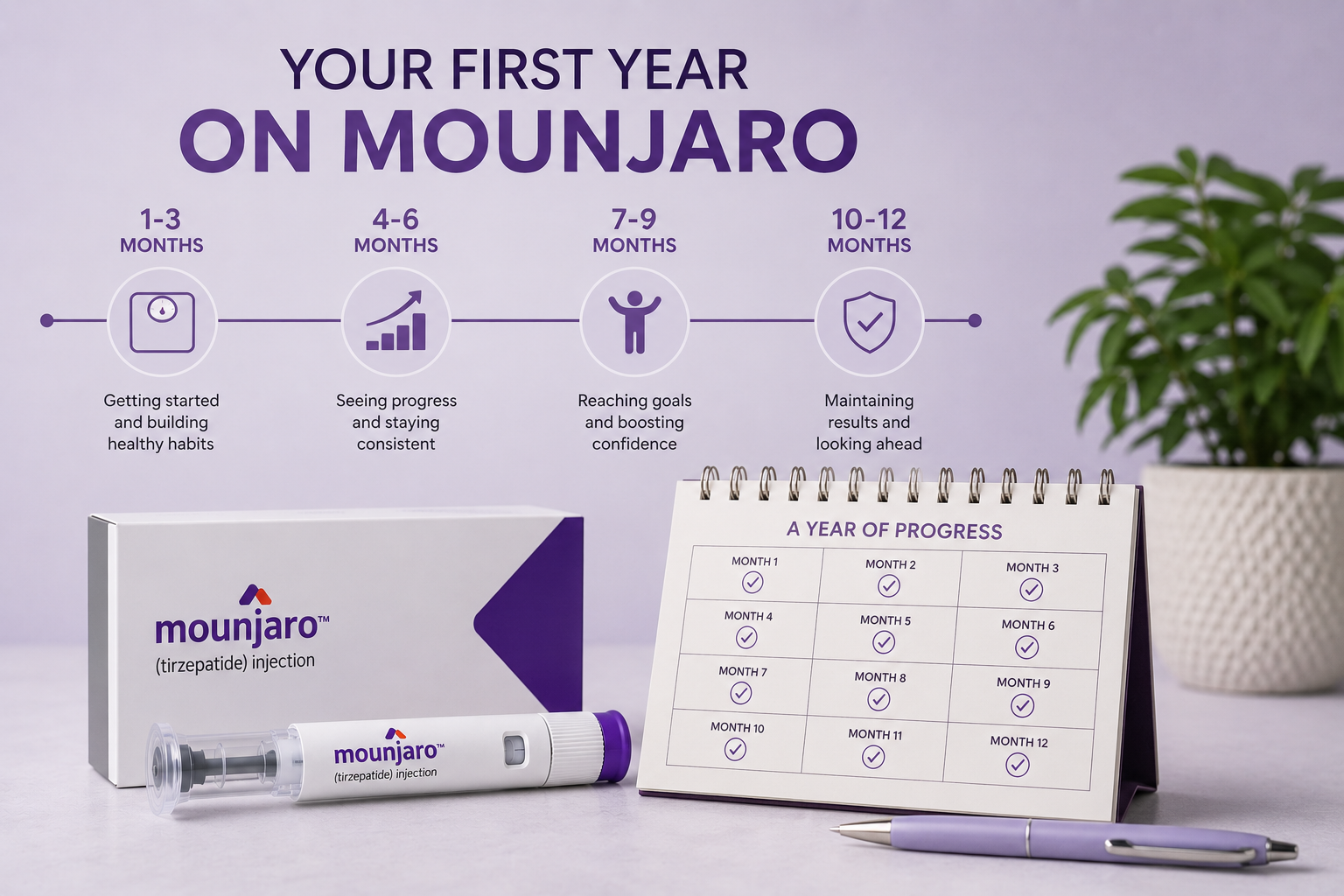

Mounjaro nausea is the most common side effect of treatment — but it’s also the most manageable once you understand the triggers. Most nausea on tirzepatide comes from eating too much, too fast, too close to injection day, or eating fatty and spicy foods that the slowed stomach struggles with. The remedies that actually work aren’t sophisticated: they’re eating smaller portions, avoiding specific food types, staying hydrated, and timing meals differently. This guide covers every practical fix in order of effectiveness.
See also: Nausea on GLP-1: What Actually Helps UK and Mounjaro Nausea: Why It Happens UK.
Why Mounjaro causes nausea
Tirzepatide slows gastric emptying — food stays in your stomach longer before moving to the small intestine. This slowing is part of how the medication produces fullness and reduces appetite. The nausea comes when you override the body’s signals: eating too much, eating too fast, or eating foods that are hard to digest when gastric emptying is slowed.
Nausea is most common during:
- The first 2–3 weeks of each new dose
- Within 2–6 hours of eating too much or eating triggering foods
- The 24–48 hours after injection (when medication levels peak)
For most users, nausea reduces significantly by weeks 3–4 at each dose. If you’re still experiencing significant nausea at week 6 of a new dose, contact your prescriber.
Fix 1: eat smaller portions, more slowly
This is the highest-impact intervention. The stomach physically empties more slowly on Mounjaro — eating a normal-sized meal creates more distension than it did before, triggering nausea receptors.
Practical approach:
- Serve yourself 50–60% of what you’d normally eat
- Eat slowly — put your fork down between bites
- Stop at the first sign of fullness. On Mounjaro, fullness signals arrive faster and are more pronounced; overshooting them causes nausea reliably.
- Wait 20 minutes before considering seconds (you almost certainly won’t want them)
This fix alone resolves most post-meal nausea for most users. It’s not a supplement, it’s not medication — it’s adapting your eating pace to your medication’s effect.
Fix 2: avoid the known trigger foods
Certain foods are consistently associated with worse nausea on Mounjaro:
High-fat foods: fatty meats, fried foods, pastry, creamy sauces, full-fat dairy in large quantities. Fat slows gastric emptying independently — combined with tirzepatide’s effect, the stomach becomes severely overloaded.
Spicy foods: capsaicin irritates gastric lining, which is more sensitive on slowed gastric emptying.
Carbonated drinks: gas in a stomach with slow emptying produces painful bloating and worsens nausea. See Can I Drink Diet Coke on Mounjaro UK.
Large salads and raw vegetables: high volume, difficult to break down rapidly. Counter-intuitive given they’re “healthy” — but volume in a slow stomach triggers nausea even without fat or spice.
Ultra-processed sweet foods: sugar spikes followed by drops amplify nausea. The fast-digesting carbs in biscuits and sweets create a post-consumption blood sugar curve that compounds medication nausea.
Better-tolerated foods during nausea phases:
- Plain crackers, toast, plain rice
- Eggs (scrambled or boiled — not fried)
- Plain chicken or fish
- Banana, apple (ripe, not acidic)
- Greek yoghurt (small portion)
- Plain soup or broth
This is essentially a GLP-1-specific version of the classic “BRAT diet” (bananas, rice, applesauce, toast) used for GI illness.
Fix 3: time your eating around injection day
Medication levels are highest 24–48 hours after injection. This is when gastric emptying is most significantly slowed and nausea risk is highest.
Practical injection day eating pattern:
- Injection day: eat small, bland meals. This is not the day for a special dinner, a rich meal out, or a food experiment.
- Day after injection: continue with simple, easily digestible foods. Light meals, adequate protein, minimal fat and spice.
- Days 3–7: return to normal eating as medication effect moderates. This is your window for more varied and challenging cooking.
Many users find using HelloFresh’s Quick & Easy meal plan (currently 50% off first box) on injection day and the day after is ideal — pre-measured, simple, low-effort cooking that doesn’t require decision-making when nausea is already in play.
Fix 4: stay hydrated — but sip, don’t gulp
Dehydration worsens nausea. But drinking large volumes at once on a slow stomach creates its own nausea. The pattern that works:
- Small sips consistently throughout the day rather than large glasses all at once
- Plain water or light cordial rather than fizzy drinks
- Room temperature rather than very cold (cold water can trigger gastric cramps)
- Electrolyte drinks during particularly nauseous periods — they support hydration more efficiently than water alone
See Electrolytes on GLP-1 UK for the fuller hydration picture.
Fix 5: don’t lie down after eating
Lying flat immediately after eating on slowed gastric emptying pushes stomach contents back toward the oesophagus, causing reflux and intensifying nausea. Wait at least 45–60 minutes after any meal before lying down. Sleep with your head slightly elevated during particularly nauseous periods.
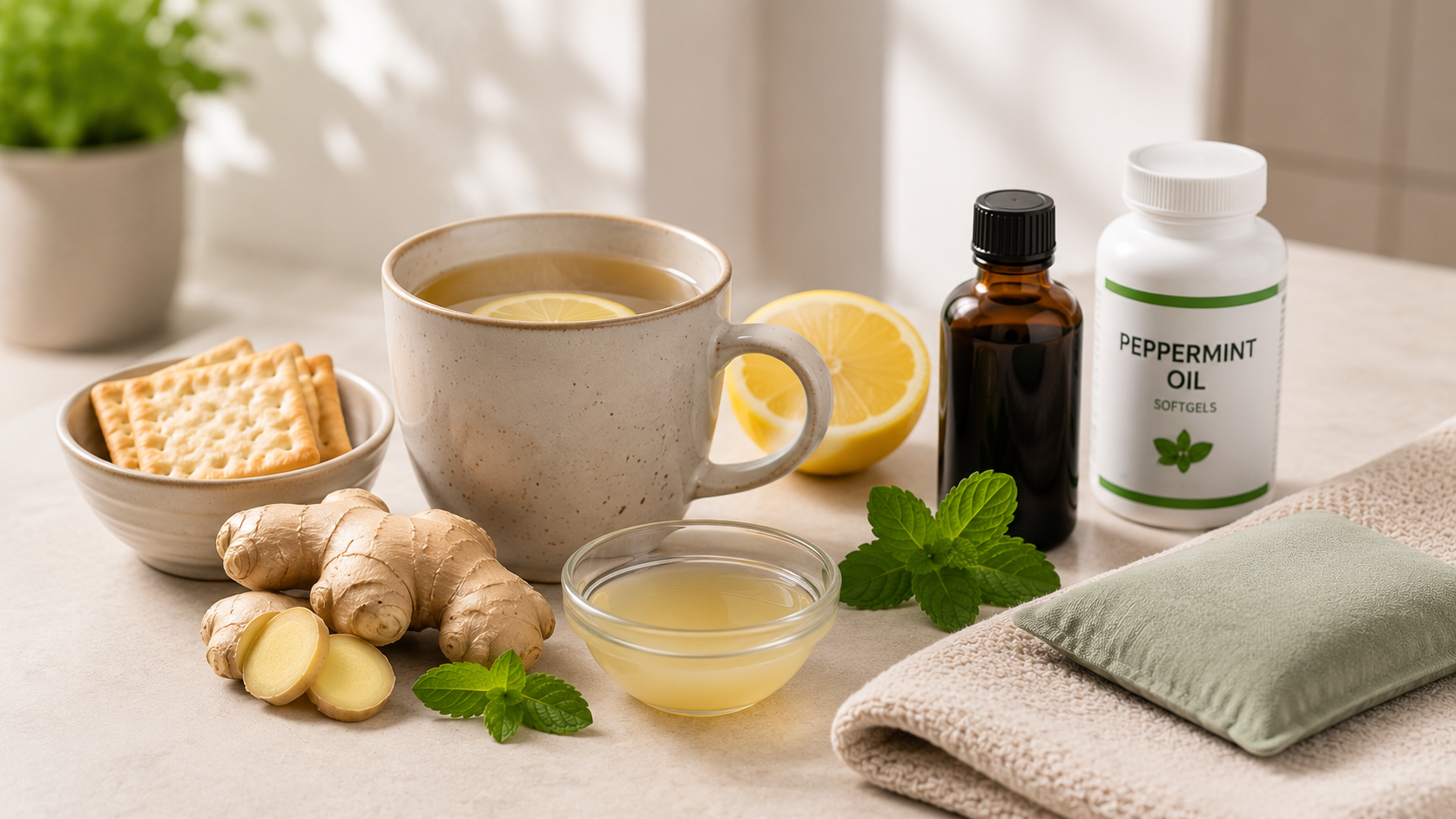
Fix 6: ginger
Ginger has genuine evidence for reducing nausea — it’s the only natural remedy with meaningful clinical support. Active compounds (gingerols and shogaols) modulate the serotonin receptors involved in nausea signalling.
Forms that work: ginger tea (fresh ginger steeped in boiling water), ginger chews, crystallised ginger, ginger capsules (250–500mg per dose). Ginger biscuits have some ginger but mostly sugar — less effective and harder to tolerate when nauseous.
Peppermint tea also has some evidence for gastric spasm and nausea — a secondary option if ginger isn’t available or preferred.
Fix 7: acupressure wristbands
Sea-Bands and similar acupressure wristbands apply pressure to the P6 (Nei-Kuan) point on the inner wrist. Evidence is mixed but they have a reasonable safety profile (essentially zero risk) and some users find them genuinely helpful during the worst nausea windows. Worth trying at under £10 per pair.
Sea-Bands are available on Amazon UK — the original brand has better quality control than cheaper imitations.
Fix 8: anti-nausea medication (when dietary measures aren’t enough)
Over-the-counter options available in UK pharmacies:
Cyclizine (Valoid, Marzine): antihistamine-based anti-emetic. Effective for motion sickness and mild nausea. May cause drowsiness. Available OTC.
Prochlorperazine (Buccastem M): dissolves under the upper lip. Prescription-only as a full dose; lower-dose OTC version available. Effective for more significant nausea.
Prescription options (request from GP if OTC measures are insufficient):
Ondansetron: serotonin antagonist, highly effective for chemotherapy-grade nausea. Some prescribers will issue for GLP-1-related nausea that significantly affects quality of life.
Metoclopramide: also increases gastric motility — works with Mounjaro’s mechanism rather than against it for nausea, but can have neurological side effects at higher doses.
Most users don’t need prescription anti-emetics. If you’re at the point of needing them regularly, discuss dose reduction with your prescriber — Mounjaro can be titrated more slowly for sensitive patients.
What to avoid
Things that don’t help nausea on Mounjaro (or make it worse):
- Eating through the nausea — eating when actively nauseous almost always makes it worse. Wait until the nausea subsides, then eat small amounts.
- Skipping water — dehydration amplifies everything. Small sips even when nauseous.
- Restricting calories further — empty stomach often produces worse nausea than small plain meals.
- Energy drinks or very sweet drinks — sugar spikes worsen post-consumption nausea.
- Stopping the medication without talking to your prescriber — significant nausea warrants a dose conversation, not unilateral stopping.
When nausea is not normal
Seek medical help if:
- Nausea is severe enough to prevent any food or fluid intake for more than 24 hours
- Vomiting blood (any amount)
- Severe persistent upper abdominal pain accompanying the nausea (could indicate pancreatitis or gallbladder issues)
- Nausea that worsens after 6 weeks at the same dose rather than improving
- Nausea accompanied by fever, jaundice (yellow skin/eyes), or dark urine
For side effect reporting: MHRA Yellow Card Scheme.
Nausea during dose steps: a specific protocol
Nausea peaks during dose step weeks. A specific protocol for these periods reduces the worst of it:
The week before stepping up: tighten your eating habits. Reduce alcohol, reduce fatty foods, increase hydration. Enter the step-up week with your GI system in as calm a state as possible.
Step-up injection day: eat only bland, low-fat foods. Plain crackers, rice, eggs, yoghurt. Keep portions small. No takeaway, no restaurant meal, no new foods.
Days 2–4 post step-up: continue with simple meals. Keep a supply of ginger tea and plain crackers. Sip fluids continuously. Don’t push food when nauseous — wait for the wave to pass, then eat small.
Days 5–7: most users find nausea starts moderating. Gradually reintroduce more variety.
Having HelloFresh Quick & Easy meals already in the fridge during step-up weeks removes the “I feel awful and now I need to figure out what to cook” problem. Pre-measured, simple recipes that take under 20 minutes are ideal for this window.
Logging meals in Cronometer during nausea weeks also helps maintain protein intake when appetite is lowest — seeing the protein counter in real time creates a useful prompt to eat a small protein-rich snack even when you don’t feel like it.
The link between nausea and food noise reduction
A less-discussed aspect of Mounjaro nausea: for many users, the weeks of strongest nausea coincide with the strongest reduction in food noise. The medication is doing its most powerful appetite work at the same time as its most intense side effects. This is uncomfortable, but it’s also the period where the long-term appetite rewiring is most active.
Users who push through the early nausea phase (typically 6–12 weeks total across all dose steps) generally report that their relationship with food has fundamentally changed by month three. Those who stop early due to nausea often miss this window. Managing the nausea well — rather than stopping the medication — gives the treatment time to do its deeper work.
Frequently asked questions
How long does Mounjaro nausea last?
Nausea typically peaks in the first 1–2 weeks of each new dose and subsides for most people by weeks 3–4. Ongoing nausea beyond 6 weeks at a stable dose usually indicates a dietary trigger that needs addressing rather than continuing medication side effect.
Does Mounjaro nausea get better over time?
Yes, for the majority of users. Each dose step may bring a brief return of nausea, but the baseline improves progressively through treatment. Most users at 6 months on a stable dose report minimal nausea.
Is it safe to take anti-nausea tablets with Mounjaro?
OTC antihistamine-based anti-emetics (cyclizine) are generally safe alongside Mounjaro. Prescription anti-emetics should be discussed with your GP or prescriber. Metoclopramide in particular has interactions to be aware of.
Does eating help Mounjaro nausea?
Sometimes — an empty stomach can worsen nausea, so small, plain snacks often help. Large meals reliably make it worse. The pattern is: eat small and bland before the worst nausea window; avoid eating when actively nauseous; try plain crackers or dry toast when hunger returns.
Medical disclaimer: persistent or severe nausea should be discussed with your prescriber. Do not stop Mounjaro without medical guidance if it’s been prescribed for type 2 diabetes management.
Discover more from Healthy Weight Loss GLP1
Subscribe to get the latest posts sent to your email.