

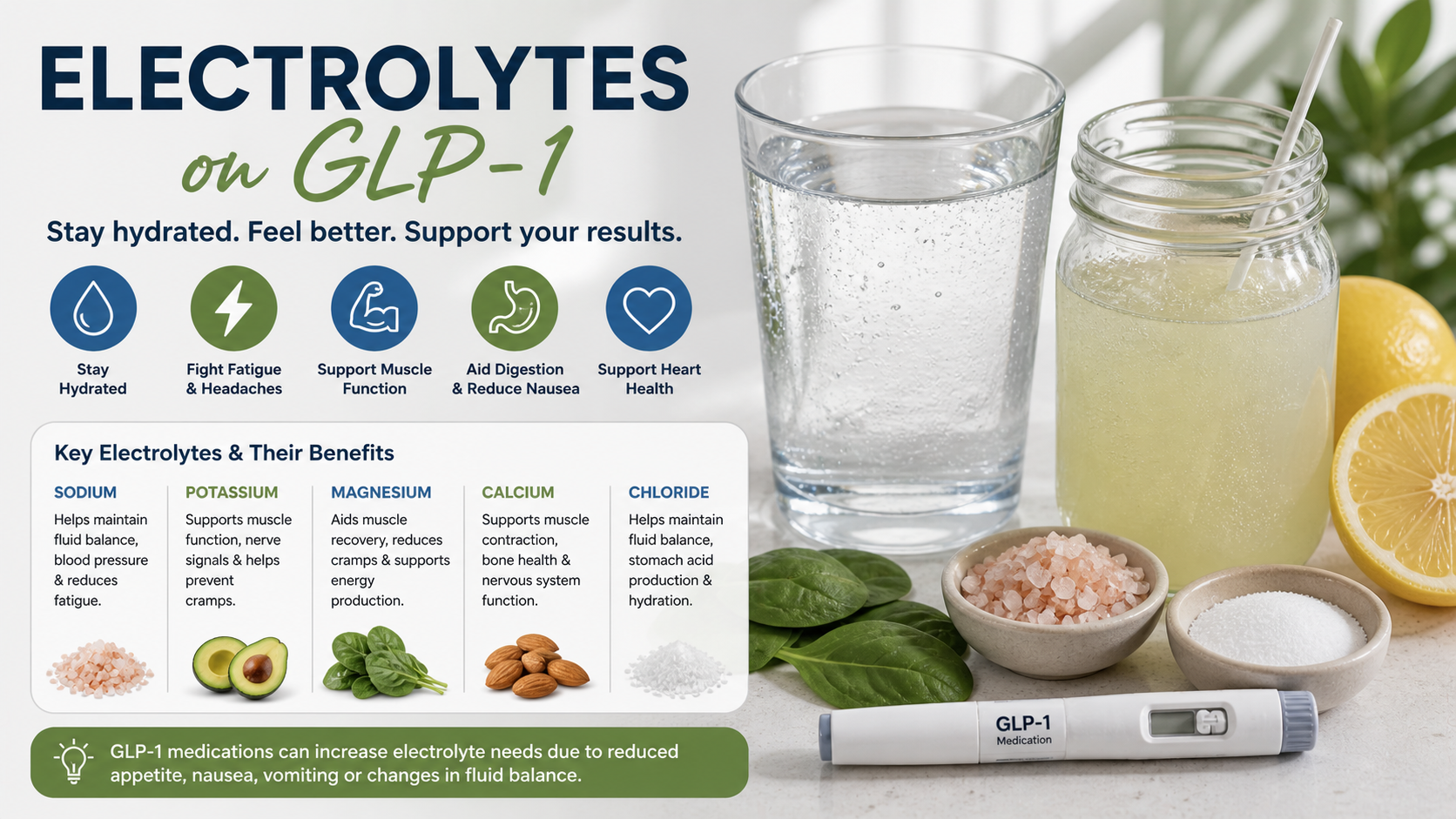
Electrolyte imbalance is one of the most underestimated side-effect drivers on a GLP-1. You’re drinking less, eating less, gastrointestinal changes are flushing sodium and potassium, and suddenly your headaches, fatigue, leg cramps, and brain fog make sense. This post covers why electrolytes matter specifically for GLP-1 users, the actual minerals you need to think about, when supplementation is warranted, and my picks for the UK market in 2026.
For the broader hydration and nutrition picture see The Nutrition Stack in the Complete Guide. For the specific constipation management that often pairs with electrolyte issues: Constipation on GLP-1.
Why electrolytes specifically matter on a GLP-1
Three independent factors combine to push GLP-1 users toward electrolyte imbalance in ways they wouldn’t expect:
1. Reduced food intake means reduced mineral intake. The standard UK diet delivers sodium, potassium, magnesium, and calcium largely through food. When you’re eating 30–50% less food, you’re also consuming 30–50% less of these minerals — unless you specifically compensate.
2. Water intake shifts. Many GLP-1 users drink more water in absolute volume in the early months (particularly those working hard to “stay hydrated”) while simultaneously eating less salt. The result: relatively low sodium and a lot of dilution. The sodium your body does have gets spread thinner.
3. Gastrointestinal turnover. Gastric emptying is slowed but overall GI movement eventually catches up, and the combination of altered digestive timing plus potential nausea, vomiting, or diarrhoea in early weeks can flush meaningful electrolytes. Even mild, on-and-off symptoms over several weeks add up.
The result: electrolyte imbalance in GLP-1 users is common, usually mild, often symptomatic, and usually solvable with modest adjustments.
Symptoms that suggest electrolyte issues
If you’re experiencing any combination of these in the first few months of GLP-1 use, electrolyte balance is worth checking:
- Persistent mild headaches (particularly morning headaches)
- Fatigue disproportionate to your calorie intake and sleep
- Muscle cramps, particularly at night or after exercise
- Dizziness on standing up quickly (orthostatic hypotension)
- Brain fog — difficulty concentrating, word-finding struggles, slower thinking
- Heart palpitations or an awareness of your heartbeat
- Persistent mild weakness
- Constipation that isn’t responding to fibre and fluid alone
- Feeling cold beyond what reduced food intake explains
None of these are unique to electrolyte problems — they can have many causes. But collectively, if you tick several boxes and you’re drinking plenty of plain water without salt, electrolyte replenishment is a cheap, safe, fast test.
The four electrolytes you actually need to think about
Sodium
The big one. Sodium is the primary extracellular electrolyte; it regulates blood volume, blood pressure, and fluid balance. Your body needs 1,500–2,300mg per day of sodium on a standard diet; during rapid weight loss and active exercise you may need slightly more, not less.
The UK health messaging has been “reduce salt” for decades, which is broadly correct for the average diet high in processed food. On a GLP-1 where food intake is low, that messaging can accidentally flip on its head. If you’re eating fresh home-cooked meals with minimal processed food and drinking a lot of water, you may be mildly sodium-deficient without realising it. Adding salt back in — to water, to meals, through an electrolyte drink — is often the single biggest symptom-resolver.
Potassium
The intracellular counterpart to sodium. Potassium is essential for muscle function, nerve signalling, and heart rhythm. Daily target is around 3,500mg for UK adults. Potassium-rich foods include bananas, potatoes, avocados, tomatoes, leafy greens, beans. On a reduced-food GLP-1 eating pattern, meeting this number needs deliberate effort.
Cramps (especially at night), palpitations, and weakness are the classic potassium-deficient signs. Most electrolyte supplements contain potassium, though in more modest amounts than sodium because potassium over-supplementation can be more dangerous.
Magnesium
Involved in over 300 enzyme reactions in the body. Essential for muscle relaxation (yes, contraction is sodium and calcium; relaxation is magnesium), sleep quality, and, specifically relevant for GLP-1 users, bowel motility. Daily target: 300mg men, 270mg women in the UK.
Magnesium deficiency symptoms: leg cramps, poor sleep, low mood, constipation, muscle twitches, restless legs. Mild deficiency is common even in the general UK population; on a GLP-1 it can be more pronounced.
Magnesium citrate is the most bioavailable common form and has the useful side-effect of supporting healthy bowel function. Magnesium glycinate is gentler on the stomach and better for sleep. Magnesium oxide is cheap but poorly absorbed.
Calcium
Important for bone density, particularly in the context of rapid weight loss where bone mineral density can decline. Daily target: 700mg in UK adults. Food sources: dairy, fortified plant milks, leafy greens, small fish with bones.
Calcium deficiency is less common than the others on a GLP-1 specifically because dairy (yogurt, cheese, milk) features heavily in most high-protein GLP-1 eating patterns. But worth checking that you’re getting 2–3 portions of calcium-containing foods daily.
How to meet electrolyte needs on a GLP-1
Approach 1: Food first (preferred)
Before reaching for a powder, optimise food. Targets per day:
- Sodium: pinch of salt on meals (don’t avoid); 1–2g of added salt is typically appropriate
- Potassium: banana or avocado daily; potatoes with skin; leafy greens at 2 meals; beans or lentils in 2–3 meals/week
- Magnesium: 30g pumpkin or sunflower seeds daily; leafy greens; dark chocolate 80%+ (small piece); or a magnesium supplement
- Calcium: 1–2 portions of dairy (Greek yogurt, cheese, milk) or fortified alternatives; tinned sardines weekly
For many GLP-1 users, getting the food right solves 70–80% of electrolyte issues without a single supplement. The other 20–30% is where powders and tablets earn their place.
Approach 2: Electrolyte drinks and powders
For days when:
- You’ve done a harder workout and sweated substantially
- You’ve been nauseous and eating less than usual
- It’s hot and you’re losing more sodium
- You’ve had an upset stomach (a few bouts of diarrhoea)
- You just feel generally off-balance despite adequate water
Adding an electrolyte drink to the day is the simplest intervention. Don’t treat it as a daily requirement — it’s a tool for specific scenarios.
UK electrolyte products worth considering in 2026
Best premium: LMNT Recharge
1,000mg sodium, 200mg potassium, 60mg magnesium per sachet. Around £35–£45 for 30 sachets via UK distributors or direct import.
LMNT is the product most frequently recommended in the US low-carb and endurance-athlete communities. Very high sodium (1,000mg per serving, which is the subject of plenty of debate), zero sugar, uses stevia for sweetness. Available in the UK through various secondary distributors and direct Amazon UK listings.
Honest take: LMNT is excellent if you’re genuinely sweating hard, following a low-carb plan alongside your GLP-1, or dealing with ongoing electrolyte issues. The 1,000mg sodium dose is more than most UK users need daily — it’s designed for athletic use. If you’re moderately active and on a standard diet, this can be too much sodium. Half-sachet portions work better for most GLP-1 users.
Buy from: LMNT Recharge on Amazon UK.
Best UK mid-market: SiS Go Hydro
302mg sodium, 160mg potassium, 28mg magnesium per tablet. £8–£12 for 20 tablets.
Science in Sport’s Go Hydro electrolyte tablets have been the UK endurance-sports standard for a decade. Drop a tablet into 500ml water, fizzes up, drink. Simple, effective, modest sodium (enough for daily use without overshooting), sugar-free. Informed Sport certified.
For most GLP-1 users this is the sensible default — less hardcore than LMNT, better value, broadly available in UK supermarkets and sport shops. Flavours are decent; Lemon & Lime is the most neutral.
Buy from: SiS Go Hydro on Amazon UK.
Best no-frills budget: High5 Zero Electrolyte Tablets
250mg sodium, 111mg potassium, 56mg magnesium per tablet. £5–£8 for 20 tablets.
The value option that still contains proper electrolyte doses. Slightly lower sodium than SiS, similar potassium and magnesium. Tastes fine, dissolves quickly, doesn’t overcomplicate. For casual daily use without the athletic-grade pricing, this is the cheapest legitimate choice.
Buy from: High5 Zero on Amazon UK.
Best magnesium-focused: Lily & Loaf Triple Magnesium
Magnesium citrate, glycinate, and bisglycinate blend. 375mg elemental magnesium per serving.
Not an electrolyte drink per se but worth including because magnesium is frequently the single most helpful intervention for GLP-1 users with night cramps, poor sleep, or constipation. The triple-form blend means you get the motility benefits of citrate, the sleep benefits of glycinate, and the absorbency advantages of bisglycinate.
Take at night for best sleep impact. Pair with your regular electrolyte drink rather than instead of it — magnesium doesn’t replace sodium and potassium.
Buy from: Lily & Loaf Triple Magnesium.
Honourable mention: homemade electrolyte solution
If you’re the DIY sort, you can make a perfectly good electrolyte drink at home for pennies:
- 500ml water
- 1/4 tsp sea salt (~600mg sodium)
- 1/8 tsp potassium chloride (lo-salt) or the juice of half a lemon/lime for potassium, plus flavour
- Optional: a tiny splash of honey or stevia for palatability
Not as precise as a formulated product, but functional and free. Good for occasional use when you’re caught without a proper electrolyte drink.
What NOT to use for electrolytes
Several things marketed as electrolyte sources that don’t actually deliver:
- Coconut water. Decent potassium (~600mg per 500ml) but very low sodium (~50mg). Not a full electrolyte replacement.
- Standard sports drinks (Lucozade Sport, Powerade). Some sodium but loaded with sugar (30–50g per bottle). Defeats the purpose for weight-loss users.
- Plain “electrolyte” waters. Most UK bottled “electrolyte” waters have token mineral content — 10–50mg of various minerals. Marketing, not nutrition.
- Dioralyte (rehydration salts). Designed for acute diarrhoea recovery; contains glucose and high salt. Fine for that use; overkill and awkward-tasting for daily electrolyte maintenance.
- Energy drinks (Monster, Red Bull). Stimulant drinks, not electrolyte drinks. Don’t confuse them.
When to worry about electrolytes
Most electrolyte imbalance on a GLP-1 is mild and self-correcting with modest adjustments. Scenarios where it’s more serious and needs prescriber attention:
- Persistent vomiting for more than 24 hours — risk of significant sodium and potassium loss
- Severe diarrhoea over several days
- Signs of severe dehydration: very dark urine, no urination for 8+ hours, extreme dizziness, confusion
- Heart palpitations that feel alarming, persist for hours, or are accompanied by chest pain
- Known kidney disease (electrolyte balance needs medical oversight)
- Known adrenal, thyroid, or endocrine conditions
- On other medications affecting electrolyte balance (diuretics, some blood pressure medications, lithium)
In any of these cases, contact your GP or prescriber. Severe cases warrant A&E.
My own electrolyte approach
After 18 months on Mounjaro, the routine I’ve settled into:
- Normal meals with adequate seasoning (not avoiding salt)
- Banana or small avocado most days
- Greek yogurt daily (calcium plus protein)
- SiS Go Hydro tablet in 500ml water: post-workout days and occasional weekday slumps (maybe 3–4 times a week)
- Lily & Loaf Triple Magnesium at night (nightly for the first 6 months, now 3–4 nights a week)
- LMNT half-sachet in water on heavy hiking days or when travelling in hot climates
Total cost: about £12–£15 per month for the supplements. Return on investment: significant — the early-months “why do I feel generally off?” feeling largely disappeared once electrolytes were steady.
The single most important electrolyte habit
Stop fearing salt. The UK messaging around sodium is designed for the average overeating, processed-food-heavy diet. On a GLP-1 where you’re eating fresh, home-cooked, portion-controlled meals, mild under-seasoning is a much bigger risk than mild over-seasoning. A pinch of sea salt on your vegetables, a little salt in your water at the gym, a dash in your omelette — this is food that tastes right and delivers the minerals your body needs.
For the broader hydration and nutrition picture: The Nutrition Stack in the Complete Guide. For more on muscle cramps specifically: Muscle Cramps on Mounjaro.
Medical note: this is general information, not personalised advice. If you have kidney disease, adrenal conditions, or are on medications affecting electrolyte balance, get medical input before supplementing. Disclosure: some links are affiliate links; the site earns a small commission at no extra cost to you.
Discover more from Healthy Weight Loss GLP1
Subscribe to get the latest posts sent to your email.