
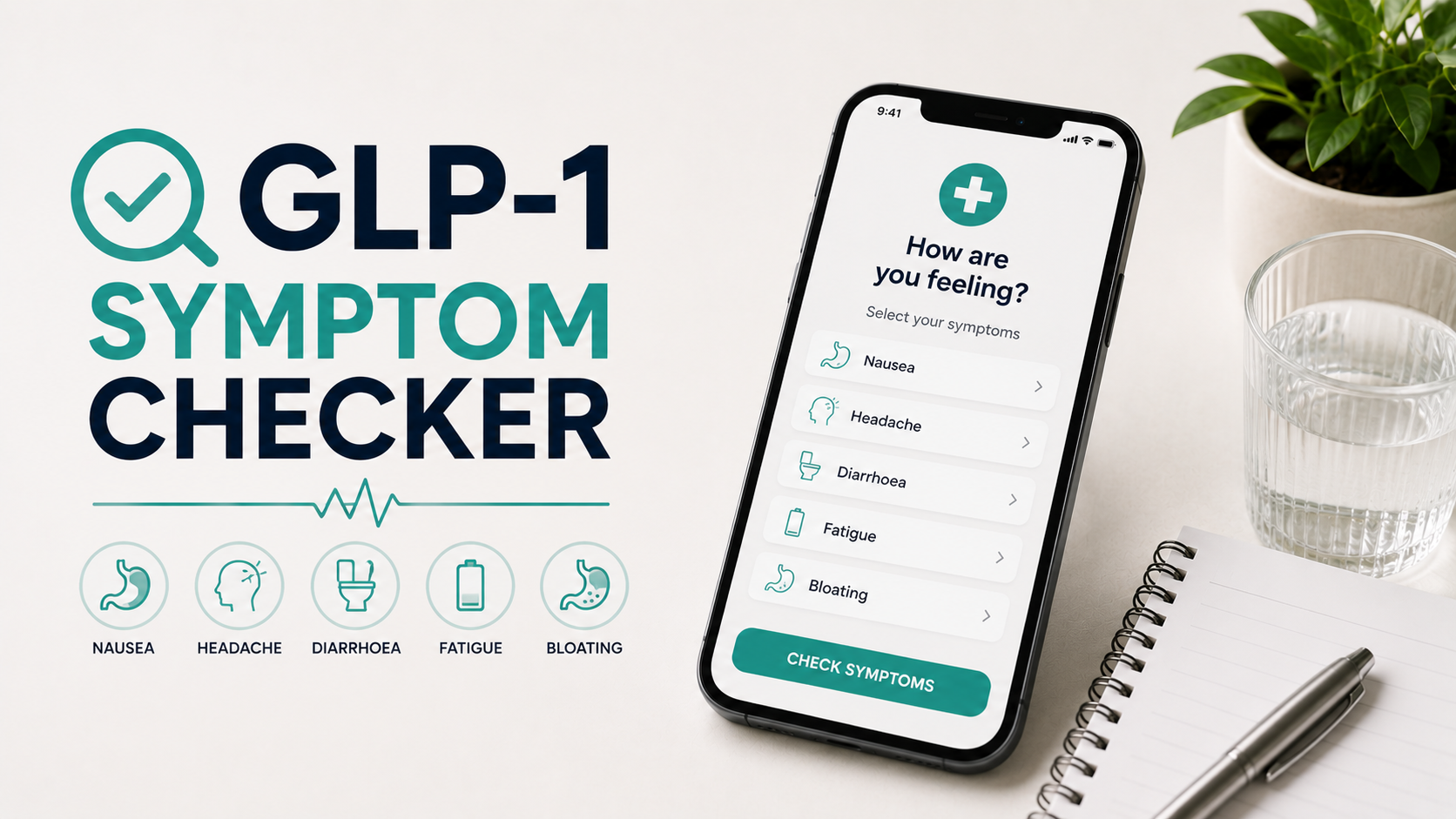
Most GLP-1 side effects that persist beyond the first six to eight weeks at a stable dose are nutritional signals, not medication failures. Tiredness at month four isn’t the drug — it’s almost certainly iron, B12, or magnesium. Ongoing hair loss at month six isn’t inevitable — it’s protein and zinc. Brain fog that won’t shift isn’t permanent — it’s B12 or inadequate calories. This symptom checker maps the most common GLP-1 complaints to their most likely nutritional causes, with specific actions for each.
After reading this, take the free Lily & Loaf lifestyle analysis to get a personalised supplement recommendation based on your specific symptom combination.
How to use this checker
Find your primary symptom. Read the most likely nutritional cause and the secondary possibilities. Click through to the dedicated post for each nutrient. Then take the free lifestyle analysis to confirm which gaps apply to you.
This checker covers persistent symptoms — those present beyond weeks 1–6 at a stable dose. For acute side effects (nausea, vomiting, injection site reactions) in the first weeks of treatment: Mounjaro Nausea Remedies UK.
TIREDNESS AND FATIGUE
Persistent fatigue beyond the first 6 weeks
Most likely causes in order of frequency:
- Iron deficiency / anaemia — the most common cause of fatigue in women on GLP-1. Reduced food volume cuts iron-rich food intake (red meat, spinach, fortified cereals). Women lose iron monthly through menstruation. Ask your GP for a ferritin blood test. Target ferritin above 50 ng/mL for optimal energy. See Iron on GLP-1 UK.
- Vitamin B12 deficiency — develops slowly, typically at 4–12 months. Presents as fatigue, brain fog, and low mood alongside exhaustion. Sublingual B12 (500–1000mcg) daily resolves this. See B12 on GLP-1 UK.
- Magnesium deficiency — disrupts sleep architecture, which creates secondary fatigue even if you’re getting 7–8 hours in bed. See Magnesium on GLP-1 UK. Fix: Lily & Loaf Triple Magnesium →
- Insufficient total calories — GLP-1 appetite suppression can push intake below 1,000 kcal. Fatigue this causes isn’t a deficiency in a single nutrient; it’s overall fuel shortage. Check in Cronometer.
- Hypothyroidism — undiagnosed or undertreated. TSH test via GP. See Mounjaro and Thyroid UK.
HAIR LOSS
More hair loss than expected, not improving after month 6
Most likely causes:
- Protein deficiency — hair is primarily keratin (a protein). Inadequate protein intake is the number one addressable cause of excessive GLP-1 hair loss. Check your weekly average protein in Cronometer and compare to the Protein Calculator.
- Iron deficiency — ferritin below 70 ng/mL is strongly associated with hair shedding. Women are at highest risk. Blood test from GP.
- Zinc deficiency — zinc regulates the hair follicle growth cycle. Depletion causes shedding. See Zinc on GLP-1 UK.
- Biotin deficiency — less common but present in some GLP-1 users with very restricted diets. Lily & Loaf Biotin Plus →
Full guide: Mounjaro Hair Loss Prevention Plan UK.
BRAIN FOG AND POOR CONCENTRATION
Difficulty thinking clearly, forgetting words, slow processing
Most likely causes:
- B12 deficiency — the most common nutritional cause of cognitive symptoms on GLP-1. B12 is required for myelin sheath maintenance (the coating on nerve fibres that enables rapid signal transmission). Deficiency presents as brain fog before fatigue in some people. Sublingual B12 (500–1000mcg) daily; improvement takes 4–8 weeks.
- Dehydration — GLP-1 reduces thirst signals alongside appetite. Even mild dehydration (1–2% of body weight) measurably impairs cognitive function. Target 2–2.5 litres daily regardless of thirst.
- Insufficient calories — the brain runs primarily on glucose. Very low calorie intake (below 1,000 kcal) reduces cognitive performance measurably. Check total intake in Cronometer.
- Sleep disruption — early GLP-1 treatment often disrupts sleep. Magnesium glycinate before bed improves sleep quality in most users. See Mounjaro and Sleep UK.
POOR SLEEP
Difficulty falling asleep or staying asleep on GLP-1
Most likely causes:
- Magnesium deficiency — magnesium regulates GABA receptors involved in sleep initiation. The most evidence-backed single supplement for sleep quality. Lily & Loaf Triple Magnesium → Take 200–400mg 30–60 minutes before sleep.
- Nausea disruption — nausea on injection days can interrupt sleep, particularly in early titration. This resolves as dose stabilises.
- Increased core body temperature — some users report feeling warmer at night on GLP-1 (possibly from increased metabolic rate). Lighter bedding often helps.
CONSTIPATION
Less frequent bowel movements than before treatment
Most likely causes:
- Reduced food volume → reduced fibre — eating less means less fibre. UK adults average 18g daily against a 30g target. On GLP-1, this often drops below 12g. Add high-fibre foods (oats, beans, lentils, seeds, vegetables) or a fibre supplement.
- Slowed gastric motility — GLP-1 mechanism directly slows gut movement. This is expected; the severity varies by person and dose.
- Dehydration — hard stools from insufficient fluid. 2–2.5 litres daily minimum.
- Magnesium deficiency — magnesium has an osmotic effect in the bowel. Deficiency worsens constipation. Magnesium citrate specifically (rather than glycinate) is most effective for constipation.
Full guide: Constipation on GLP-1 UK. Gut health supplement: Lily & Loaf Daily Flora Probiotic →
DRY SKIN AND SKIN CHANGES
Skin drier or more sensitive than before treatment
Most likely causes:
- Reduced dietary fat — essential fatty acids from food (particularly omega-3 and omega-6) maintain skin barrier function. On reduced-appetite GLP-1 eating, fat intake often drops. Supplement: Lily & Loaf Daily Balance Omega →
- Zinc deficiency — zinc supports skin cell renewal and the skin barrier. See Zinc on GLP-1 UK.
- Dehydration — skin moisture is directly linked to systemic hydration status.
Full guide: Mounjaro and Skin Changes UK.
LOW MOOD AND ANXIETY
Mood lower than normal, increased anxiety, emotional flatness
Most likely causes:
- Vitamin D deficiency — low vitamin D is the most strongly linked nutritional factor to low mood. UK adults are frequently deficient, particularly in winter. Blood test from GP or home test. Target 25(OH)D above 75 nmol/L. Lily & Loaf D3+K2 →
- Omega-3 deficiency — EPA specifically has clinical evidence for mood support. Low omega-3 is associated with increased depression and anxiety risk.
- Magnesium deficiency — magnesium is involved in serotonin synthesis and cortisol regulation.
- The psychological adjustment to treatment — food’s role as an emotional tool changes significantly on GLP-1. This is a psychological shift, not a nutritional one. See Mounjaro and Mental Health UK and Mounjaro and Stress Eating UK.
MUSCLE CRAMPS
Leg cramps, night cramps, general muscle cramping
Most likely causes:
- Magnesium deficiency — the most common cause. Lily & Loaf Triple Magnesium →
- Electrolyte imbalance — reduced food intake means lower potassium and sodium. See Electrolytes on GLP-1 UK.
- Dehydration — inadequate fluid makes electrolyte imbalances more pronounced.
Your personalised recommendation
This checker gives you the likely cause. The free Lily & Loaf lifestyle analysis takes your specific symptom combination and produces a ranked list of the supplements most likely to address them — including exact products from their range. Five minutes. Free. No obligation.
To verify nutritional gaps from the dietary side, log a week of eating in Cronometer and check the nutrient summary against targets. The combination of the lifestyle analysis and a Cronometer audit covers both the symptom-based and dietary-data-based angles simultaneously.
And for understanding the science behind why these specific nutrients matter — why magnesium affects sleep, why B12 affects nerves, why iron affects energy — the audiobooks available through Audible’s free trial cover nutritional biochemistry in accessible, listenableform. Download The Obesity Code or In Defence of Food and the patterns in this checker start to make sense at a much deeper level.
JOINT PAIN NOT IMPROVING
Slower-than-expected joint improvement despite weight loss
Most likely nutritional causes:
- Omega-3 deficiency — EPA and DHA have direct anti-inflammatory effects on joint tissue. At adequate doses (2g+ EPA+DHA daily), omega-3 supplementation produces measurable reduction in joint pain. Lily & Loaf Daily Balance Omega →
- Low collagen precursors — joint cartilage requires collagen. Hydrolysed collagen peptides (10–15g daily) specifically support joint cartilage matrix over 8–12 weeks. Lily & Loaf Collagen Plus →
- Insufficient protein for tissue repair — joint connective tissue requires adequate protein for maintenance. See Protein Calculator UK.
Full guide: Mounjaro and Joint Pain UK.
FREQUENT HEADACHES
Headaches that weren’t present or were less frequent before treatment
Most likely causes:
- Dehydration — the most common cause. GLP-1 reduces thirst signals. Most “Mounjaro headaches” resolve with 500ml of water and electrolytes.
- Caffeine withdrawal — if coffee consumption has reduced alongside food (common), caffeine withdrawal headaches typically peak days 2–4 of reduced intake.
- Electrolyte imbalance — sodium and potassium specifically. See Electrolytes on GLP-1 UK.
- Blood pressure changes — Mounjaro lowers blood pressure as weight drops. If you’re on antihypertensives, medication may need reviewing. See Mounjaro and Blood Pressure UK.
Use this checker, then confirm with the quiz
This checker identifies the most likely cause for each symptom. The free Lily & Loaf lifestyle analysis combines your full symptom picture — not just the most prominent symptom — to produce a personalised recommendation. If you have three symptoms simultaneously, the analysis weights them together; this checker can only address them one at a time.
For nutritional tracking to verify dietary gaps: Cronometer free tier logs all 84 nutrients and shows exactly which are below your daily target. Use both the quiz and Cronometer together for the most complete picture of your nutritional status.
For the science behind these symptom-to-nutrient connections — why B12 deficiency produces nerve symptoms, why magnesium affects sleep architecture, why iron depletion causes fatigue — Audible’s free trial gives you access to the nutrition and biochemistry titles that explain these mechanisms in detail. Download The Obesity Code or In Defence of Food and the logic of the symptom checker above becomes clear at a mechanistic level.
This symptom checker is general information. Persistent or severe symptoms should be discussed with your GP. Chest pain, breathing difficulty, or severe neurological symptoms require urgent medical attention regardless of this guide.
Discover more from Healthy Weight Loss GLP1
Subscribe to get the latest posts sent to your email.