

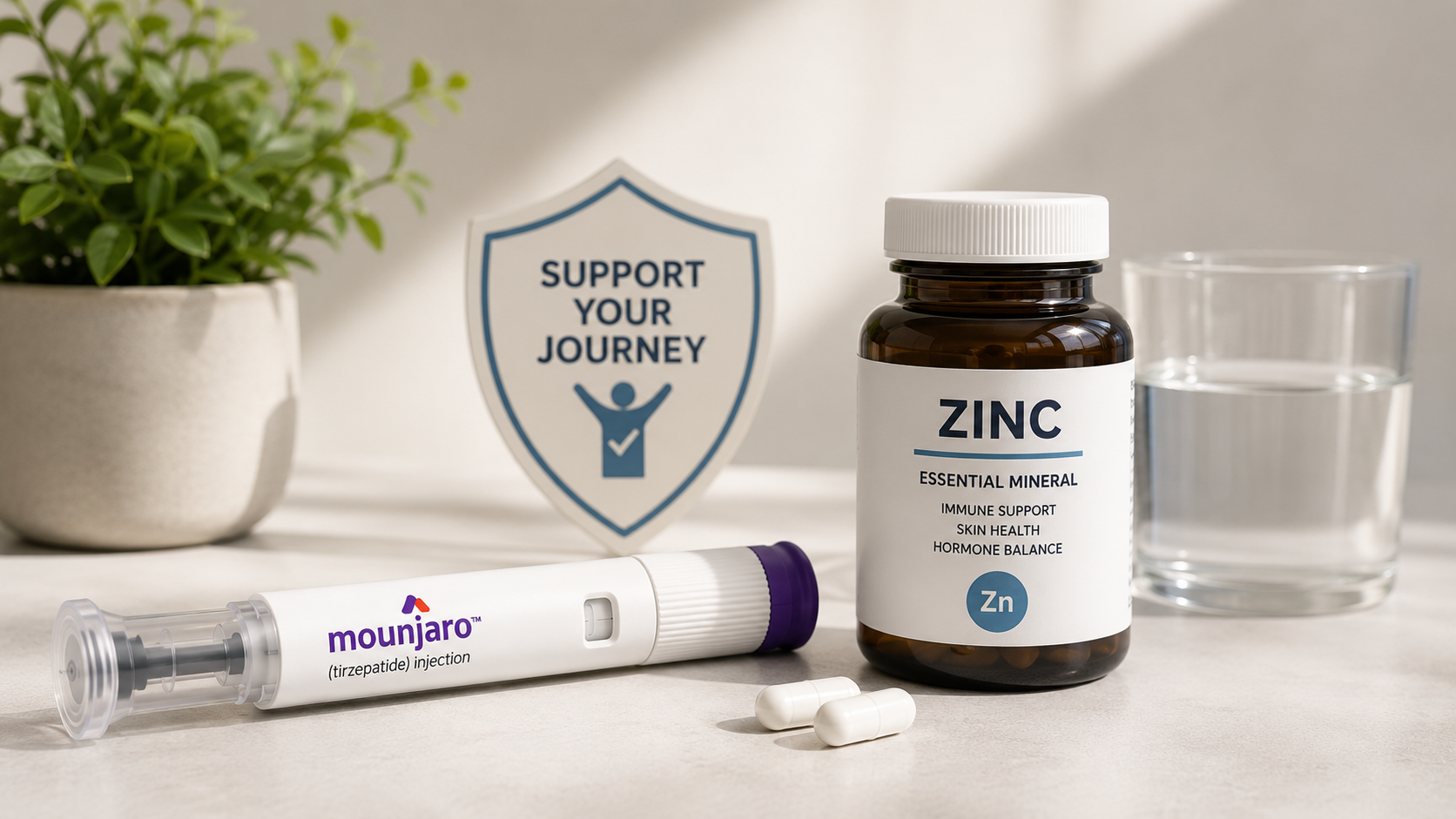
Zinc deficiency on a GLP-1 is more common than most users realise, and its effects are specific and identifiable: hair loss, altered taste perception, reduced immune response, and slow wound healing. The mechanism is simple — zinc is found predominantly in animal proteins (oysters, beef, lamb, pumpkin seeds, chickpeas) and on a GLP-1-reduced appetite these foods are often eaten less. The fix is dietary, supplemental, or both, and usually produces noticeable results within four to eight weeks. This is the complete UK guide.
Related reading: Mounjaro Hair Loss Prevention Plan UK and Supplements on GLP-1 Starter Stack UK.
Why zinc depletes on GLP-1s
Three converging factors:
Reduced food volume. If total food intake drops by 40–50% on Mounjaro, zinc intake from food drops proportionally — unless you specifically engineer meals around zinc-rich sources. Most users don’t do this deliberately, meaning zinc intake declines alongside everything else.
Reduced animal protein specifically. Zinc from animal sources (haem zinc) is two to three times more bioavailable than zinc from plant sources (non-haem zinc, inhibited by phytates in grains and legumes). On a GLP-1, appetite reduction often preferentially reduces meat and seafood consumption because these require more preparation and have stronger flavours — both barriers when appetite and motivation to cook are low.
GLP-1-related taste changes. Many GLP-1 users report altered taste perception in early treatment — some foods becoming unpleasant, metallic tastes, reduced enjoyment of previously liked foods. Ironically, this taste disruption can itself be a symptom of zinc deficiency, and avoiding zinc-rich foods because of taste changes compounds the deficiency.
Symptoms specific to zinc deficiency on GLP-1s
The symptom profile that clusters specifically in GLP-1 users with zinc depletion:
Hair loss beyond what tirzepatide explains. Hair loss on Mounjaro is expected (telogen effluvium from rapid weight loss). But zinc deficiency adds a second mechanism — direct disruption of the hair follicle cell cycle. Users with both drivers experience more significant shedding than those with adequate zinc. If your hair loss is particularly severe or is not improving after six months despite protein adequacy, zinc testing is worthwhile.
Taste changes that don’t improve. GLP-1-related taste changes typically moderate after two to three months at a stable dose. Persistent metallic taste or loss of taste that doesn’t improve suggests zinc deficiency as a concurrent cause.
Frequent minor infections. Zinc is essential for T-cell function and immune response. Users with depleted zinc status report more frequent colds, longer recovery from minor illness, and slower healing from small cuts or injection-site bruising.
Delayed injection site healing. Small bruises at injection sites that take more than two weeks to clear, or injection sites that remain sore for extended periods, can reflect impaired wound healing from zinc deficiency.
Reduced sense of smell. Less commonly reported than taste changes but a recognised zinc deficiency symptom.
How much zinc do you need
UK Reference Nutrient Intake (RNI):
- Women: 7mg daily
- Men: 9.5mg daily
Upper tolerable intake from supplements: 25mg daily. Exceeding this chronically competes with copper absorption and can cause copper deficiency — a secondary problem worth avoiding.
Check your current dietary zinc in Cronometer for three days before deciding on supplementation. The result typically falls into one of three categories:
- Below 5mg daily (very low, supplement needed)
- 5–7mg daily (moderate gap, supplement or dietary improvement)
- 7mg+ daily (adequate, dietary changes sufficient)
Zinc-rich foods for GLP-1 users
Best sources per 100g:
| Food | Zinc per 100g | Bioavailability |
|---|---|---|
| Oysters | 78mg | High (haem) |
| Beef mince (lean) | 7.0mg | High (haem) |
| Lamb | 5.3mg | High (haem) |
| Pumpkin seeds | 7.8mg | Moderate |
| Cashews | 5.6mg | Moderate |
| Hemp seeds | 9.9mg | Moderate |
| Chickpeas (cooked) | 1.5mg | Low (phytate inhibited) |
| Cheddar cheese | 4.0mg | Moderate-high |
| Eggs | 1.3mg | Moderate |
Practical additions that slot into GLP-1-friendly portions:
- A small handful of pumpkin seeds on yoghurt, salad, or oats adds approximately 2–3mg zinc daily
- Lean beef mince two to three times a week provides significant zinc alongside high-quality protein
- A matchbox-sized piece of cheddar delivers approximately 1.5mg zinc in a small, easy portion
Supplement options
Zinc gluconate: well-absorbed, gentle on the stomach, widely available. The most common form in UK pharmacies. Standard doses: 15–25mg elemental zinc.
Zinc picolinate: slightly higher bioavailability than gluconate. More expensive. Recommended if gluconate causes any GI discomfort.
Zinc citrate: good absorption, commonly used in multivitamins. Suitable as a supplement form.
Zinc oxide: the cheapest form, found in many budget supplements. Lowest bioavailability. Avoid as your primary zinc source.
Lily & Loaf Daily Essentials: includes zinc alongside other GLP-1-relevant micronutrients. See Lily & Loaf Daily Essentials Review UK for whether this combination approach suits you.
Dosing guidance
For correction of deficiency: 15–25mg elemental zinc daily for eight to twelve weeks, then reassess.
For ongoing maintenance once dietary sources are adequate: 8–11mg daily from a supplement is appropriate if dietary intake consistently falls short of the RNI.
Always take with food — zinc on an empty stomach causes significant nausea, particularly relevant for GLP-1 users with already-sensitised GI systems.
Separate from iron and calcium supplements by at least two hours — these minerals compete for absorption.
Separate from coffee and tea by one hour — tannins reduce zinc absorption.
Testing zinc status
Serum zinc (blood test) is the standard clinical measurement. It can be requested via your GP if symptoms suggest significant deficiency. Important caveats: serum zinc can be normal while tissue zinc is depleted (similar to the serum vs tissue distinction for iron). A normal result doesn’t fully rule out functional deficiency, but a low result confirms it.
Hair mineral analysis (popular in functional medicine) is not reliable for zinc status assessment — it reflects zinc from weeks ago and is highly variable. Don’t use it as your primary indicator.
How long until symptoms improve
With adequate supplementation and dietary improvement:
- Taste changes: often improve within two to four weeks
- Immune function (fewer colds): four to eight weeks for immune marker improvement
- Hair loss reduction: four to eight weeks for shedding rate to reduce; new hair growth takes three to six months
- Injection-site healing: three to four weeks
Frequently asked questions
Should all GLP-1 users take zinc?
Not automatically. Check dietary intake in Cronometer first. If you’re eating beef, lamb, or seafood regularly and hitting the RNI, supplementation adds little benefit. If animal protein consumption is low and portions are small, a moderate supplement (15mg daily with food) is a reasonable addition.
Is zinc the cause of hair loss on Mounjaro?
Zinc deficiency is one of several contributing factors alongside telogen effluvium (the primary GLP-1-related hair loss mechanism) and potentially low iron. Addressing zinc doesn’t replace addressing protein and iron — all three are part of the hair loss prevention picture. See Mounjaro Hair Loss Prevention Plan UK.
Can too much zinc be harmful?
Yes. Chronic intake above 25mg daily from supplements competes with copper absorption, leading to copper deficiency (anaemia, neurological symptoms). Stay within the tolerable upper intake of 25mg from supplements. Dietary zinc doesn’t carry this risk at normal consumption levels.
What’s the best zinc supplement for UK GLP-1 users?
Zinc gluconate or picolinate at 15–25mg elemental zinc, taken with food. Any reputable UK supplement brand. Check the label for elemental zinc content — “zinc gluconate 50mg” contains approximately 7mg elemental zinc; “zinc picolinate 22mg” contains approximately 15mg elemental zinc.
Medical disclaimer: zinc deficiency symptoms warrant testing if persistent. Discuss supplementation with your GP if you have kidney conditions or take diuretics, as zinc handling may differ.
The zinc-immunity connection on GLP-1s
Worth expanding on the immune function aspect specifically, as this is underappreciated in the GLP-1 context:
GLP-1 receptor agonists have complex effects on immune function — some evidence suggests GLP-1 receptors are expressed on immune cells and that activation may have anti-inflammatory properties. Whether this translates to practical immune benefit in GLP-1 users isn’t well-established. What is established: zinc deficiency definitively impairs immune function through several mechanisms:
- Zinc is required for T-lymphocyte maturation and activation — the immune cells that fight viral infections
- Zinc supports the function of natural killer cells that provide rapid non-specific immune defence
- Zinc is needed for the production of thymulin (thymic hormone that supports T-cell development)
- Zinc has direct antiviral activity against some common viruses at the cellular level
For GLP-1 users in the first 3–6 months of treatment, when reduced food volume is most acute and zinc stores may be depleting, a supplement at 15–25mg daily from zinc gluconate or picolinate provides practical immune protection during the transition period.
Track zinc intake in Cronometer for two weeks before deciding on supplementation. If dietary zinc from beef, seeds, and legumes is already meeting the RNI (7–9.5mg daily), supplementation adds marginal additional benefit. If dietary zinc is consistently below 5mg — common on a GLP-1 reduced food volume — a supplement is clearly worth adding to your daily routine.
The Lily & Loaf supplement range includes zinc as part of several formulations. See Best Lily & Loaf Supplements for GLP-1 UK for a complete overview of which of their products are most relevant to the micronutrient needs of GLP-1 users.
Frequently asked questions
Should all GLP-1 users take zinc?
Not automatically. Check dietary intake in Cronometer first. If you’re regularly eating beef, lamb, or seafood and hitting the RNI, supplementation adds limited benefit. If animal protein consumption is low and total food volume has dropped significantly, a 15mg daily supplement with food is a reasonable addition.
Is zinc the main cause of hair loss on Mounjaro?
Zinc deficiency is one of several contributing factors. The primary mechanism is telogen effluvium from rapid weight loss. Inadequate protein and low iron also contribute. Address all three — protein, iron, and zinc — rather than treating zinc as the sole answer. See Mounjaro Hair Loss Prevention Plan UK.
Can too much zinc be harmful on Mounjaro?
Yes. Chronic supplementation above 25mg daily from supplements competes with copper absorption, leading to copper deficiency (anaemia, neurological symptoms). Stay within the 25mg upper limit. Dietary zinc doesn’t carry this risk at normal consumption levels.
How long does it take for zinc supplementation to work?
Taste changes often improve within two to four weeks. Immune function improvements within four to eight weeks. Hair loss reduction within four to eight weeks, with new hair growth visible at three to six months. Results depend on how depleted stores are at the start of supplementation.
Discover more from Healthy Weight Loss GLP1
Subscribe to get the latest posts sent to your email.