
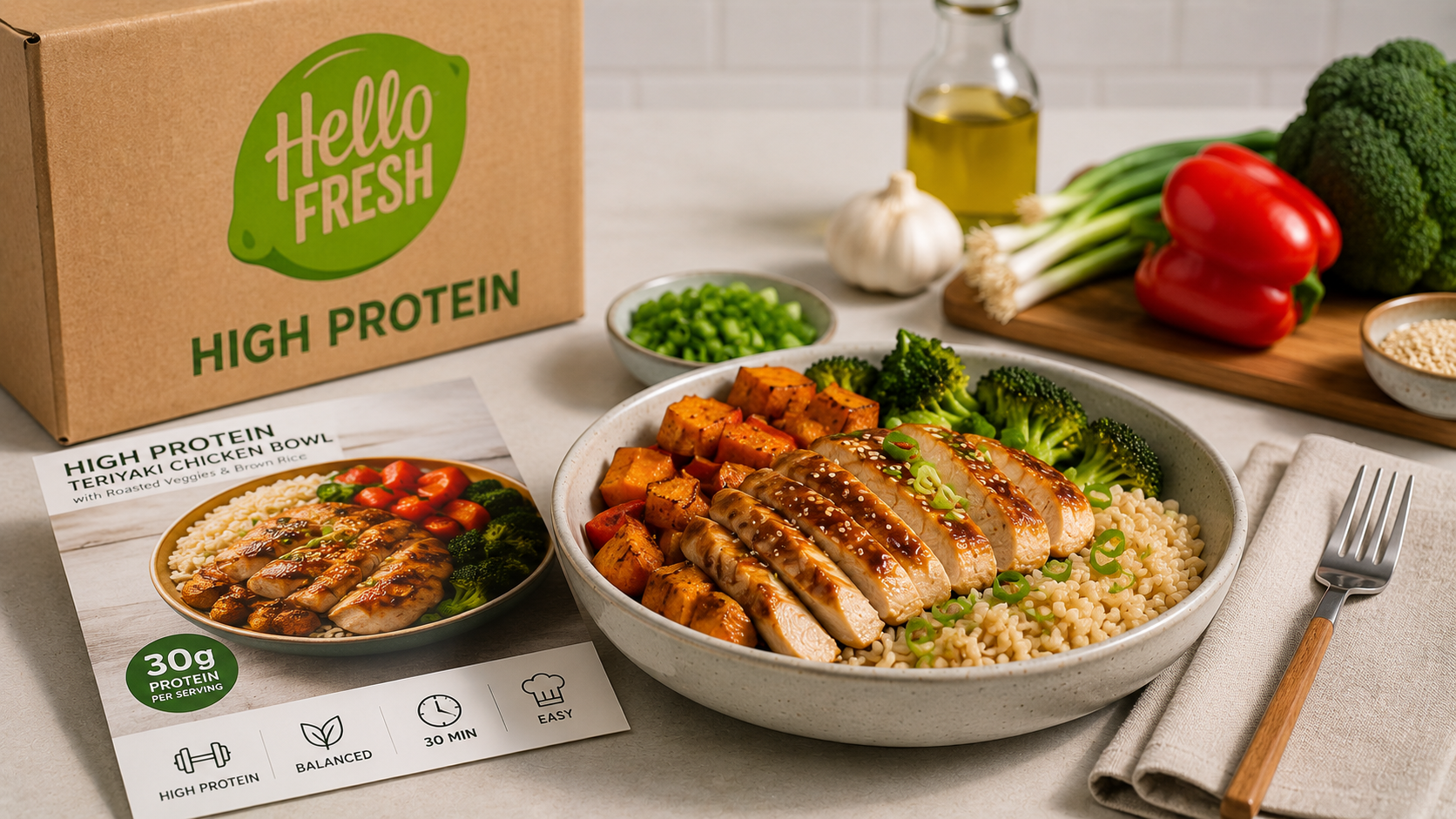
HelloFresh’s High Protein recipe filter contains genuinely useful options for Mounjaro users — meals delivering 35–55g protein per serving with published macro information, pre-measured ingredients, and 25–40 minute cook times. But not all High Protein tagged recipes are created equal, and the rotating weekly menu means knowing which recipe types consistently perform well is more useful than knowing which specific recipe to pick this week. This guide covers the recipe categories that work best for GLP-1 users, how to use the filters effectively, and the current 50% off offer that makes trialling it low-risk.
For the broader HelloFresh guide: HelloFresh for GLP-1 Users UK. For the meal kit comparison: Best Meal Kits UK for High-Protein Eating.
Why recipe selection matters for GLP-1 users
On a standard appetite, you might choose HelloFresh recipes based on what sounds appealing. On a GLP-1, the additional filter is nutritional — specifically protein content and macro balance. A recipe that looks great but delivers only 20g protein per serving isn’t serving a GLP-1 user as well as one that delivers 45g at the same or lower calorie count.
The good news: HelloFresh publishes full macro data for every recipe on their website and in-app. You can review the nutrition before adding to your box. Using this data rather than selecting by image or title produces meaningfully better nutritional outcomes for GLP-1 users.
The filters to use
On HelloFresh UK, when browsing your weekly menu:
Primary filter: High Protein
Applies to recipes with typically 35g+ protein per serving. This is the main lens for GLP-1 users. The tag doesn’t guarantee a specific protein amount — verify the nutrition panel for each recipe, as some “high protein” recipes are closer to 30g and others reach 50g+.
Secondary filter: Fit & Wholesome
Under 650 calories per serving. Useful alongside High Protein to find the intersection of high protein and controlled calories. Some recipes carry both tags.
Quick & Easy
Under 20 minutes. Prioritise these for injection day and the day after, when cooking motivation is lowest and simplicity matters more than variety.
Recipe categories that consistently deliver for GLP-1 users
Chicken breast or thigh recipes (35–50g protein per serving)
Chicken is HelloFresh’s most reliably high-protein protein source. Breast delivers approximately 31g protein per 100g cooked; thigh approximately 26g. Most chicken recipes are tagged High Protein. Recipes to look for:
- Chicken with roasted vegetables and grain base — one of the most consistently available, high protein, relatively low calorie
- Chicken stir-fry variations — quick, high protein, vegetables included
- Stuffed chicken or chicken schnitzel — slightly more involved but typically 40g+ protein
Salmon and white fish recipes (30–40g protein per serving)
HelloFresh’s fish recipes typically deliver 30–40g protein and provide omega-3 fatty acids alongside (important for GLP-1 users who may be reducing oily fish intake on smaller portions). Look for:
- Baked salmon with vegetables — one of the quickest cook times, consistently high protein
- Pan-fried fish with salsa or sauce — simple technique, good protein
- Salmon noodle or rice bowls — protein and carbohydrate in a manageable GLP-1-appropriate portion
Lean beef recipes (35–45g protein per serving)
Beef provides the highest zinc content of any HelloFresh protein option — important for GLP-1 users at zinc depletion risk. Lean beef mince dishes are typically the best combination of protein, zinc, and ease:
- Lean mince with grains and vegetables — one of the highest-protein HelloFresh recipe patterns
- Beef steak recipes — impressive protein content per serving, though more expensive within the subscription
Prawn and seafood recipes (25–35g protein per serving)
Lower protein than chicken but worth including for variety, micronutrient diversity (iodine, selenium from seafood), and GLP-1 tolerance (seafood is often better tolerated than heavier red meat on injection day and the following day).
Recipe types to use with caution
Pasta-based recipes
Pasta dishes often carry lower protein per serving than other HelloFresh categories — typically 20–30g even with added chicken or beef. The carbohydrate-to-protein ratio is less favourable for GLP-1 muscle preservation goals. They’re not off-limits, but checking the macro panel before selecting is particularly important here.
Vegetarian/plant-based recipes
HelloFresh’s veggie range often uses paneer, eggs, legumes, and tofu — all reasonable protein sources. But protein per serving is typically lower (20–30g) than meat and fish recipes. If you regularly choose the vegetarian options, plan for a protein supplement at another meal to compensate.
Very saucy dishes
Cream-based sauces, rich curries, and butter-heavy dishes add significant calories that can push a recipe from “ideal” to “over-budget” on a GLP-1 intake. Check calorie content alongside protein — High Protein tagged does not mean low calorie automatically.
Adapting HelloFresh portions for GLP-1 appetite
The 2-person recipe approach is the most practical for GLP-1 users:
- Order 2-person boxes even if cooking for one
- Cook the full recipe as instructed
- Divide into two equal portions — one for tonight, one refrigerated for tomorrow’s lunch
- Log one portion in Cronometer at time of cooking (takes 60 seconds with HelloFresh’s published macro data)
This approach halves the effective per-meal cost, reduces food waste, and ensures tomorrow’s lunch protein is handled without additional planning.
Tracking HelloFresh recipes in Cronometer
HelloFresh publishes full nutritional data for every recipe (calories, protein, carbs, fat, fibre, salt) on both the recipe card and the website. Two approaches for logging:
Option 1: Search Cronometer for the recipe name. Many HelloFresh meals are already in Cronometer’s database. If found, verify the protein/calorie figures match your recipe card (database entries are periodically outdated as HelloFresh reformulates recipes).
Option 2: Add manually as a custom meal. Enter the protein, carbs, fat, and fibre from the recipe card. Save as a custom meal entry. Future logging of that recipe is then a single tap.
Logging when you serve up (not when you eat) is the most practical timing — recipe card is in front of you and you’re thinking about the meal.
The current offer and how to use it well
Sign up through this link for 50% off your first box, then 20% off your next four boxes. A 2-person, 3-meals-per-week box at 50% off first week is roughly £15–20 — a low-commitment way to test whether the High Protein recipes work for your taste and GLP-1 situation.
Recommended first week strategy:
- Filter by High Protein, verify macro data for all three recipes
- Choose one chicken, one fish, one beef recipe
- Note which was best tolerated and most enjoyed
- Use this feedback to guide week two selections before the 20% offer period ends
Recipes that don’t need HelloFresh
HelloFresh is particularly useful for dinners. For breakfasts and lunches on a GLP-1, simpler no-cook options typically work better:
- Breakfast: Greek yoghurt, eggs, protein shake — no HelloFresh box needed
- Lunch: leftovers from previous night’s HelloFresh meal, tinned fish + salad, cottage cheese + fruit
- Dinner: HelloFresh High Protein recipe, cooked once and used twice
This hybrid structure means HelloFresh is covering dinner planning (the highest-decision-burden meal) while breakfasts and lunches stay simple and consistent — a pattern that works well throughout the week including on injection days when cooking motivation bottoms out.
Frequently asked questions
Which HelloFresh recipes are best for Mounjaro users?
Filter by High Protein and check the macro panel. Chicken, salmon, lean beef, and prawn recipes consistently deliver 35g+ protein per serving. Pasta and some veggie options are lower — check each individual recipe rather than assuming a category.
How do I track HelloFresh macros in Cronometer?
Search Cronometer for the recipe name (many are in the database) or add manually from the recipe card nutrition information. Save as a custom meal for one-tap logging in future.
Is HelloFresh worth it for GLP-1 users specifically?
For users who struggle with meal planning, food decision fatigue, or cooking motivation (particularly on injection days), the structure HelloFresh provides is genuinely useful. It costs more per meal than scratch cooking but less than takeaways, and the first-box discount makes it low-risk to trial. The current 50% off first box offer is the best time to start.
Can I pause HelloFresh if my appetite is very low in a given week?
Yes. Log into your HelloFresh account and skip individual weeks before the Wednesday midnight cutoff for the following week’s delivery. This flexibility is particularly useful for managing GLP-1-related appetite fluctuations without wasting food or money.
Disclosure: the HelloFresh link in this post is a referral link. This site earns a small commission if you sign up. The 50% off first box offer is applied automatically through the link.
Building a long-term HelloFresh routine on Mounjaro
The users who get the most from HelloFresh over 12 months of GLP-1 treatment tend to develop a personal “rotation” — 15–20 recipes they’ve tried, know work well for their appetite and taste, and cycle through reliably. Building this rotation takes about three months of consistent use.
Practical rotation-building process:
- Week 1–4: try all three recipes per week with no preconceptions. Note which you finish fully vs which felt too much
- Week 5–8: revisit the best performers from weeks 1–4. Try variations of recipes you liked (e.g., if the salmon with roasted veg worked, try the sea bass variant)
- Month 3 onwards: you have enough data to mostly select from known performers, with one new recipe per week to keep the menu fresh
A personal rotation of 15–20 HelloFresh recipes means you’re rarely selecting something that won’t work for your GLP-1 appetite or that contains ingredients that worsen nausea. This makes the subscription feel lower-maintenance than it does when every selection is uncertain.
Share your rotation with HelloFresh’s “favourites” feature — marking recipes means they surface more readily in future weeks’ menu recommendations, reducing the browsing time needed.
Log each new recipe in Cronometer when you first make it, save as a custom food entry. Future logging of that recipe takes seconds rather than re-entering the macro data each time. After three months of HelloFresh use, your Cronometer custom foods library effectively becomes a nutritional map of your most-used meals — a valuable reference for maintaining good nutrition whether you’re cooking from scratch or using the kit.
Discover more from Healthy Weight Loss GLP1
Subscribe to get the latest posts sent to your email.