
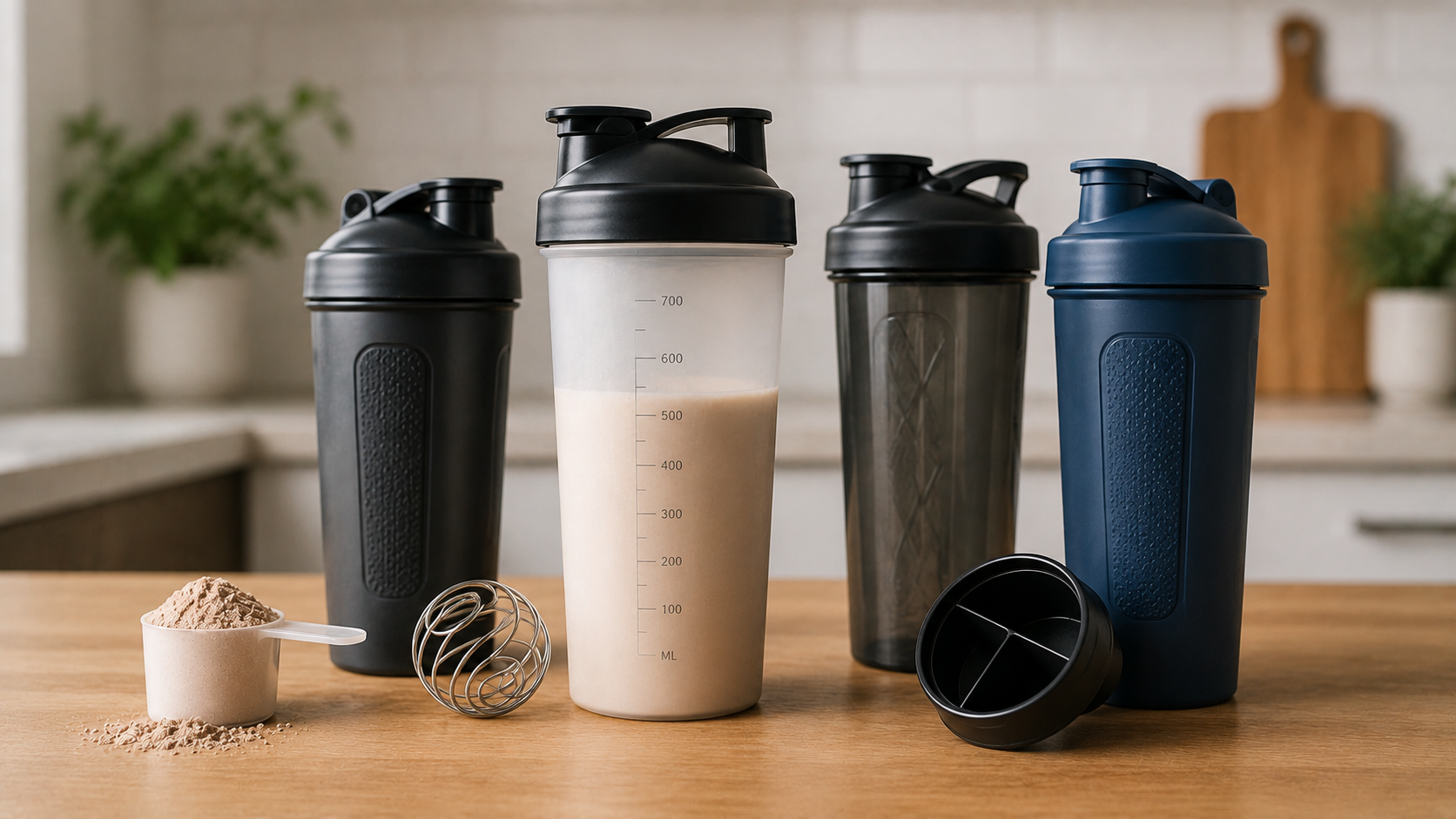
A protein shaker is under-£15 kitchen infrastructure that makes protein-shake habits sustainable. The difference between a good shaker and a bad one is the difference between “I drink a shake every morning” and “I keep meaning to but it’s too much faff.” This is the 2026 UK guide to protein shakers worth buying, including the unsexy but important details most reviews skip.
For protein powders themselves see Best Protein Powder UK 2026. For the broader supplement picture: Supplements Worth Taking in the Complete Guide.
Why the shaker actually matters
Three reasons this isn’t just a cup:
1. Lump-free mixing. Cheap shakers (basic tumbler with lid, no mixing mechanism) leave clumps of unmixed protein powder. Unpleasant to drink and means you’re not actually consuming the protein you scooped. A good shaker uses a mixing ball, mesh, or compartment design to break up the powder completely.
2. Leak-proof seal. Protein shakes in gym bags, car cup-holders, or backpack side pockets need to survive transport. Cheap shakers leak; good ones don’t. Once you’ve had a shake leak onto your laptop bag, you appreciate the difference.
3. Easy cleaning. Protein residue dries fast and sticks to plastic. A shaker you can’t easily rinse in 10 seconds becomes the one you avoid using. Threading, shape, and material all affect cleaning ease.
The four main shaker designs
Wire ball / whisk (BlenderBottle style)
A metal spring ball or whisk inside the bottle agitates the mixture when shaken. Industry standard; works well for typical protein shakes with water or milk. Cheap, effective, easy to clean (just toss the ball in the dishwasher with the bottle).
Works for: protein shakes, pre-workout, BCAAs, most powder-liquid mixtures.
Doesn’t work well for: thick shakes with peanut butter, banana, or ingredients that need blending rather than shaking; very cold drinks where the ball can’t break up the cold powder.
Mesh grid / strainer
A plastic mesh insert breaks powder through the grid as liquid passes. Less common than wire ball but effective. Slightly easier to clean than ball designs (no small parts to lose).
Works for: standard protein shakes, meal replacements.
Compartmented bottles (protein powder storage + shaker)
A built-in compartment in the base or lid stores protein powder dry until you’re ready to mix. Screws into the main bottle to mix. Useful for gym bags or pre-mixing for “add water later” situations.
Works for: taking powder to the gym, pre-dose for after-workout, travel.
Extra moving parts mean more cleaning surfaces; many users stop using the compartment within a few weeks.
Electric shakers / blenders
Battery-powered motor mixes the contents without shaking. Silent, effective, handles thick blends. Premium price (£25–£50).
Works for: thick shakes with whole fruits, nut butters, spinach, etc.
Overkill for simple protein-and-water shakes. Worth it if you want smoothies without a full blender.
What to look for in a good protein shaker
Seven practical things:
1. Mixing mechanism that actually works. Wire ball is proven. Avoid “no-mix-needed” shakers that just promise magic — they don’t.
2. Truly leak-proof threading. Threading should feel solid, not stripped or sloppy. Check reviews specifically for “leaks” complaints.
3. Wide opening. Too narrow an opening makes powder-loading messy. Wide enough for a scoop, narrow enough for a drinking flow.
4. Flip-cap or spout that seals well. If it has a drinking spout, the spout’s cap needs to seal independently from the main lid.
5. Durability. Cheap plastic bottles crack at the threads within 3–6 months of daily use. Look for BPA-free, shatter-resistant plastic.
6. Odour resistance. Protein residue smells. Some plastics hold the smell worse than others. Silicone-lined or higher-grade plastics resist odour much better than basic PE.
7. Dishwasher-safe. Top-rack dishwasher is the minimum. Hand-washing daily burns out the habit.
UK protein shaker picks for 2026
Best all-rounder: BlenderBottle Classic V2
700ml capacity, BlenderBall wire whisk. Around £10–£15.
BlenderBottle invented the wire ball shaker category in 2004; 20+ years of iteration means the current V2 is very well-engineered. Threaded lid with secure flip-cap, wide opening, dishwasher-safe, leak-proof threading that genuinely holds. Industry standard for a reason.
The size sweet spot: 700ml holds a typical shake (300–500ml liquid plus powder) with headroom for shaking. Available in multiple colours if colour matching matters to you.
Buy from: BlenderBottle Classic V2 on Amazon UK.
Best premium: BlenderBottle Strada Insulated
700ml, stainless steel insulated, flip-top. Around £25–£35.
Same mixing technology as the Classic but in an insulated stainless steel body. Keeps cold shakes cold for 24+ hours, hot drinks (not typical for protein but useful if you add coffee) warm for 12 hours. Premium build quality, feels substantial.
Worth it for: people who prep shakes the night before, travelling with shakes, or anyone who wants a reusable water bottle that doubles as a shaker.
Buy from: BlenderBottle Strada on Amazon UK.
Best budget: Myprotein or MyVegan Smartshake
600ml, basic wire ball style. Around £4–£8.
The honest budget pick. Myprotein and similar UK supplement brands sell branded shakers at loss-leader prices. Build quality is not premium but perfectly functional — wire ball, threaded lid, dishwasher-safe, leak-proof enough for home and gym use.
Caveat: replacements needed every 6–12 months with daily use (cheaper plastic, threading wears). At £5 each, this is usually still cheaper overall than a single premium shaker.
Buy from: Myprotein Smartshake on Amazon UK.
Best with storage compartment: PROMIXX Pro Shaker
600ml, integrated dry-storage compartment, battery-powered mixer. Around £20–£30.
Compartmented design with a base compartment for dry powder and a built-in battery mixer for blending. Useful for gym prep (“add water when ready”) or travel. Gets mixed reviews: the features are genuinely useful for specific use cases, but the extra parts mean more cleaning and more things to break.
Worth considering if: you’re often mixing shakes away from home and want a dry-storage compartment. Not worth it if your routine is home-based where a simpler design works better.
Buy from: PROMIXX Pro Shaker on Amazon UK.
Best electric: PROMIXX iX-R Electric Shaker
600ml, rechargeable electric motor. Around £30–£45.
Battery-powered motor with a small blade or whisk blends the contents silently. Handles thicker shakes (with banana, peanut butter, oats) that manual shaking struggles with. USB-rechargeable, 10–15 second blend cycles, modern design.
Worth it for: people who want smoothie-consistency shakes without pulling out a blender. Overkill for standard protein powder + water shakes.
Buy from: PROMIXX iX-R on Amazon UK.
Best for thick shakes (non-electric): VOLTRX / electric blender bottle
500–700ml, rechargeable base with rotating blade. Around £25–£40.
Similar category to PROMIXX iX-R — USB-rechargeable shaker with built-in blending mechanism. Slightly different design. Both work well; choose based on review patterns and price on the day.
Buy from: VOLTRX Electric Shaker on Amazon UK.
What most shaker reviews skip
Four practical realities:
1. Shakers stink after 6 months. Protein residue permeates the plastic, however well you clean. Ordinary wear. Don’t pay premium for “odour-resistant” claims; just plan to replace basic plastic shakers annually. Stainless steel (BlenderBottle Strada) genuinely resists odour better.
2. Two shakers are better than one. One at home, one at the gym or office, or one in the dishwasher and one in use. Prevents the “I need to wash my shaker before I can use it” friction.
3. The wire ball will occasionally go missing. Usually in the dishwasher cutlery basket or on the floor. Buy a few replacement balls for £3–£5 and stop worrying.
4. Warm liquids separate protein and can create clumps. Mix protein with cold or room-temperature liquid; not hot. If you want a warm shake, mix with cold first then warm briefly in the microwave.
The mixing technique that works
Even with a good shaker, technique matters:
- Add liquid first (water, milk, plant milk). Roughly 250–400ml depending on preferred consistency.
- Add protein powder scoop on top of the liquid.
- If you have a wire ball, it’s already inside. If not, drop it in now.
- Close the lid firmly.
- Shake for 10–15 seconds, vigorously. Up-down is more effective than side-to-side.
- Check for clumps against the lid opening; if still cloudy or clumpy, shake another 5 seconds.
- Drink within 10–15 minutes for best texture; shakes separate and thicken the longer they sit.
Don’t pre-mix protein shakes the night before; the texture degrades and flavour develops off-notes. Prep the shaker (powder loaded) the night before if you want, then add liquid in the morning.
Cleaning routine that actually works
Simplest reliable routine:
- Rinse immediately after drinking — swirl water inside, dump. This prevents residue drying and sticking.
- Once daily, wash with washing-up liquid, hot water, a bottle brush for the interior.
- Top-rack dishwasher every 2–3 days for deep clean.
- Replace every 6–12 months for basic plastic, 2–3 years for stainless steel.
If you skip the immediate rinse, protein residue dries into a thin film that’s much harder to remove later. Five-second rinse is the difference between a shaker that’s pleasant to use and one you avoid.
Shaker bottle hygiene: the bit nobody talks about
Protein shaker bacteria growth is real and researched. A shaker left with residual liquid for 8–12 hours at room temperature develops bacterial colonies, some of which are pathogenic. Keeping shakers clean isn’t just aesthetics:
- Rinse within 1 hour of finishing a shake
- Don’t leave shakers in a warm car for the afternoon
- Dishwasher sterilisation once a week minimum
- Replace the wire ball occasionally (they can harbor residue in the spring coils)
- Replace the bottle if you notice persistent odour that cleaning doesn’t fix
This matters especially if your immune system is compromised for any reason.
What to pair with your shaker
A few complementary items:
Protein powder: see Best Protein Powder UK 2026.
Small scoop (if yours loses its original): most powders come with 30g scoops; generic replacements cost £2 on Amazon.
Bottle brush for deep cleaning: £3–£5 for a narrow bottle brush that reaches the bottom corners of typical shakers.
Travel pod (if you don’t like compartmented shakers): small screw-top pod that holds one pre-measured scoop of powder. £3–£6 for a pack of 3.
The bigger point: consistency beats optimisation
A good protein shaker makes the protein-shake habit easier. The shaker itself isn’t the point; the daily protein is. Spend £10–£15 on a decent shaker, get two if you use one daily, replace when it stinks or cracks, don’t think about it beyond that.
The specific protein brand matters more than the specific shaker brand. For most UK users a BlenderBottle Classic and a quality protein powder cover 95% of what you need.
The summary
Spend £10–£15 on a BlenderBottle Classic V2 and you’re sorted for 2–3 years. Buy two if you use a shake daily. Replace when it stinks or cracks. Rinse immediately after use, dishwasher 2–3 times a week, add liquid before powder when mixing. The shaker is infrastructure; the protein habit is what matters.
For protein powder options: Best Protein Powder UK 2026. For the broader nutrition picture: The Nutrition Stack.
Disclosure: some links are affiliate links. The site earns a small commission at no extra cost to you.
Discover more from Healthy Weight Loss GLP1
Subscribe to get the latest posts sent to your email.