
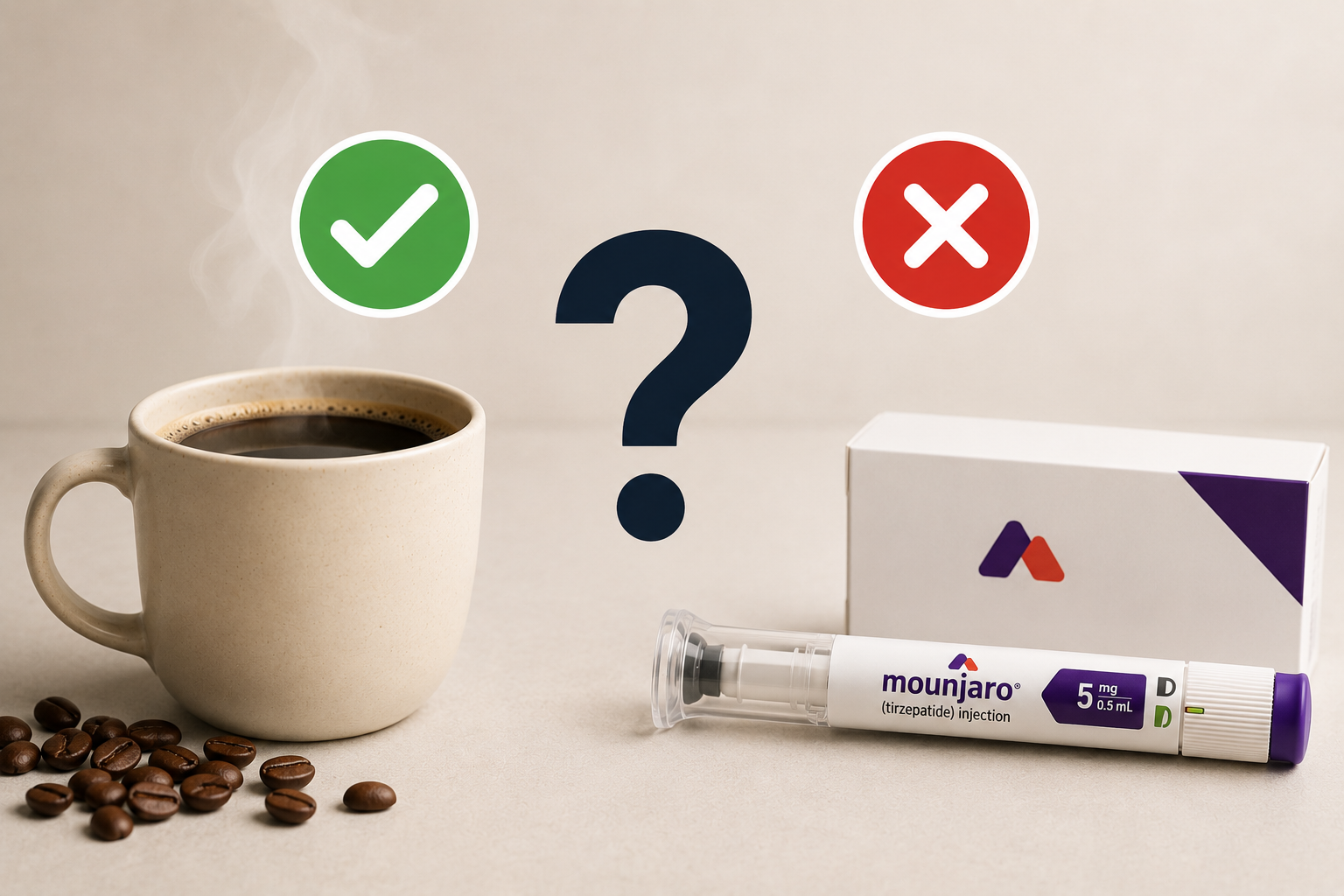
Coffee and Mounjaro usually coexist fine. There’s no pharmacological interaction that excludes caffeine, and most Mounjaro users drink coffee without any issue. The nuances worth knowing: some users find coffee tolerance changes on GLP-1s (often for the worse during early weeks), coffee on an empty stomach can compound GLP-1 nausea, and the habitual “coffee and a pastry” pattern may quietly shift as your appetite changes. This is the honest UK answer to “can I drink coffee on Mounjaro?”
For the first-week context see First Week on Mounjaro. For other lifestyle questions: Everyday Life Questions in the Complete Guide.
The short answer
Yes, you can drink coffee on Mounjaro. There’s no drug interaction. No prescribing guidance restricts caffeine. Most Mounjaro users continue their normal coffee habits.
Now the nuances worth understanding — because “can I” and “should I at the same rate as before” have different answers for some people.
Why the question comes up
A few reasons coffee frequently appears in GLP-1 FAQs:
1. GLP-1 side effects overlap with over-caffeination symptoms. Jitteriness, nausea, racing heart, GI upset — these can be caused by both GLP-1 medication and heavy caffeine. If you’re getting both effects, attribution is complicated.
2. Coffee on empty stomach can amplify nausea. Mounjaro slows gastric emptying; an empty stomach plus strong coffee can feel much harsher than usual. Users sometimes interpret this as “coffee stopped agreeing with me” when it’s really a timing/food issue.
3. Habitual “coffee and cake/pastry” combo changes. On reduced appetite, you may not want the sweet treat that normally accompanied your coffee. The coffee feels oddly solitary without it, which some people describe as “coffee tasting different.”
4. Dehydration compounds GLP-1 side effects. Coffee is mildly diuretic. On a GLP-1 with already-reduced fluid intake, regular coffee without counterbalancing water can worsen nausea, constipation, and fatigue.
What changes for some people
Tolerance changes
Some users report that coffee feels stronger during the first weeks of Mounjaro (and at new dose steps). This is likely because:
- Slowed gastric emptying means caffeine absorbs more slowly, then peaks higher
- General nausea sensitivity is elevated; coffee’s acidity can trigger this
- Early-treatment fatigue can make the caffeine effect feel more pronounced by contrast
Usually settles within 2–4 weeks of a new dose. If it doesn’t, consider reducing intake or switching to a less concentrated brew.
Appetite suppression breakthrough
A small subset of users report that morning coffee briefly reduces their appetite suppression — “food noise” returns for 1–2 hours after caffeine. Not universal, not well-understood mechanistically, but real enough that some users time their coffee after their main meal rather than before.
This isn’t something to worry about as a side effect; just an individual pattern worth noticing if you experience it.
Hydration drift
On a GLP-1, total fluid intake often decreases because of reduced appetite-adjacent drinking behaviour (no water with big meals, no extra snacks that drove water consumption). Coffee compounds this if it replaces water.
For most users, 2–3 cups of coffee a day isn’t a meaningful hydration problem if you’re also drinking water regularly. 4+ cups with minimal water intake can tip you into dehydration, which worsens nausea, constipation, and fatigue.
Coffee timing: what works best
A few practical patterns:
Best: coffee with or after food. Protein-forward breakfast first, coffee alongside or 20–30 minutes after. Food provides the buffer; gastric motility is already active; caffeine absorbs more smoothly.
Works for many: coffee with minimal food. A small yogurt, a protein shake, a handful of almonds — enough to have something in the stomach. For users who genuinely don’t want breakfast, this is the fallback.
Often problematic: coffee on a genuinely empty stomach. Especially first thing in the morning on peak-side-effect days. Can trigger nausea, reflux, or a stronger-than-expected caffeine reaction.
Mixed: evening coffee. On reduced appetite, your sleep quality matters even more for recovery. Afternoon caffeine (after 2pm) cuts into sleep for sensitive people. If you’re not tracking sleep quality, you might not notice the effect. Consider switching to decaf after lunch.
Types of coffee on a GLP-1
Black coffee
Minimal calories, no sugar. Fine at normal consumption levels. Just pair with water and food.
Coffee with milk
Adds some calories and a small amount of protein. Whole milk vs skimmed vs plant-based: personal preference. Nothing specifically changed by Mounjaro.
Lattes, cappuccinos, flat whites
Larger milk component means 100–200 calories per cup. Not a problem if you’re tracking; noticeable if you’re trying to minimise calories. Plant-based versions (oat, soy, almond) have varying protein contents and usually more added sugars — check labels.
Syrupy coffee drinks
Caramel macchiatos, mochas, hazelnut lattes, frappuccinos. These can be 400–600 calories with 50+g sugar. On a GLP-1 where your total appetite is smaller, a 500-calorie coffee is a much bigger proportion of your daily intake. Worth treating as a small meal rather than a drink.
Also: high-sugar drinks on slowed gastric emptying can sometimes cause a more noticeable blood sugar dip 1–2 hours later as the absorption finally completes. Not clinically dangerous for most people, but can feel unpleasant.
Energy drinks with caffeine
Higher caffeine concentration than coffee, plus sugar/artificial sweeteners/taurine. The general caffeine principles apply; the additional sugar and calorie load makes these less ideal for most GLP-1 users. Not forbidden, just worth considering against your overall nutritional plan.
Decaf
Fine. Still has tiny amounts of caffeine but not enough to trigger caffeine-related issues. Good option for afternoon/evening or if you’re sensitive to caffeine effects.
Coffee and specific GLP-1 side effects
Nausea
Coffee (especially strong or on empty stomach) can worsen nausea. During peak-side-effect windows (usually 24–72 hours after injection), consider reducing or delaying coffee.
Some users switch to lighter roasts or specific “low-acid” coffees during early treatment weeks. Not essential but can help sensitive stomachs.
Reflux/heartburn
Coffee relaxes the lower oesophageal sphincter, which can worsen reflux. On GLP-1s where slowed emptying already increases reflux risk, this can compound. If you’re getting reflux, try:
- Smaller coffee portions
- Avoiding coffee on empty stomach
- Switching to cold brew (slightly less acidic)
- Avoiding coffee 2–3 hours before lying down
- Reducing frequency or switching to decaf
If reflux persists, it’s not really about coffee specifically; talk to your prescriber about overall management (possibly PPI or H2 blocker as short-term help).
Constipation
Coffee is mildly laxative for many people (triggers colonic contractions). On a GLP-1 where constipation is common, some users find morning coffee actually helps regularity. Others find the dehydrating effect worsens constipation.
Net: if coffee helps you go, keep it. If it doesn’t, make sure water intake compensates.
Racing heart / palpitations
Rare but reported. Both GLP-1s and caffeine can cause heart palpitations in susceptible people; together they may compound. If you notice new-onset palpitations, reduce caffeine and discuss with your prescriber.
Anxiety/jitters
Same as above. Caffeine sensitivity varies; if GLP-1 treatment is making you feel jittery anyway, the coffee contribution matters. Consider cutting back on caffeine during early treatment weeks.
Caffeine and weight loss on a GLP-1
Does caffeine help weight loss on Mounjaro? Honest answer: marginally and probably not meaningfully.
Caffeine modestly increases metabolic rate (by about 3–11% depending on dose). It can suppress appetite slightly in some people. Mounjaro is doing the heavy lifting on both fronts already; the additional caffeine effect is tiny in context.
Some fitness communities recommend caffeine for “fat burning” or pre-workout energy. The evidence for pre-workout effect is legitimate but modest; the “fat burning” claim is mostly marketing.
Drink coffee for enjoyment and energy, not as a weight loss tool. The weight loss is coming from the medication and your behavioural changes.
Caffeine-free day experiment
Worth doing occasionally: a caffeine-free weekend to see what your baseline energy is without caffeine. On Mounjaro, you might discover:
- You feel more even-energy than you expected (medication contributes to sustained energy more than pre-GLP-1)
- Your sleep quality improves noticeably
- The “morning awful” window that needed coffee doesn’t exist without coffee
- Or: you feel much worse, headaches, fatigue, and realise caffeine is doing real work for you
Either answer is useful. Most regular coffee drinkers are modestly physically dependent on caffeine (headaches on withdrawal, fatigue, mood shift). Understanding the size of that effect helps you decide how much coffee you actually want.
Practical guidelines for most users
If you want a rough protocol:
- Drink coffee at roughly your normal rate on Mounjaro
- Time most coffee after some food rather than on empty stomach
- Switch to decaf after 2pm to protect sleep
- For every coffee, drink a glass of water within 30 minutes
- If nausea or reflux worsens during dose-step weeks, temporarily reduce coffee
- Watch for energy crashes 2–3 hours after heavy sweet/milky coffees; consider simpler drinks
Beyond this, it’s personal preference and tolerance.
Coffee-adjacent items worth knowing
Tea
Same principles as coffee at lower caffeine levels. Most teas (black, green, oolong) contain 40–80mg caffeine per cup vs 80–150mg in coffee. Herbal teas have no caffeine.
Tea is often gentler on sensitive stomachs than coffee. Green tea specifically has some modest metabolism-related effects but again, marginal vs what Mounjaro is doing.
Matcha
Green tea powder with higher caffeine and L-theanine (which smooths the caffeine effect). Some people find matcha gentler on the stomach than coffee while providing similar energy. Reasonable swap during early treatment if coffee isn’t agreeing.
Pre-workout supplements
Most pre-workouts contain 150–300mg caffeine per serving (equivalent to 2–3 cups of coffee). On a GLP-1, this can be more than you’re used to. Start with half a scoop for the first few uses on Mounjaro.
A note on coffee “fasting” and GLP-1
Some weight loss approaches recommend black coffee during intermittent fasting periods. On a GLP-1, the picture is:
- Intermittent fasting is popular pre-GLP-1 but less necessary when the medication is already suppressing appetite through the morning
- Black coffee during a fasted morning is fine if tolerated, but watch for amplified nausea
- The caloric benefit of “black coffee instead of meal” is trivial once Mounjaro has reduced your baseline intake
- Fasting + GLP-1 + coffee can cumulatively produce more fatigue and worse mood than either alone
Not a reason to avoid fasting-plus-coffee if it’s working for you. Just a nudge to notice how you actually feel rather than pushing through a pre-Mounjaro fasting framework that doesn’t serve your current physiology.
The ritual vs the drug
A useful distinction: coffee is both a caffeinated drink and a ritual. On a GLP-1 where your relationship with food and consumption is shifting, the ritual part of coffee often becomes more valued — it’s a moment, a routine, a comfort that doesn’t involve eating.
Preserving that ritual while adjusting the drink itself (smaller cup, decaf, differently-timed, with more water) is a reasonable path if the original version is causing issues. The ritual value is real; you don’t have to give it up to adapt.
The summary
Coffee on Mounjaro is fine. Drink it, enjoy it, don’t worry about interactions. Pay attention to: coffee on empty stomach worsening nausea, afternoon caffeine disrupting sleep, dehydration from coffee without balancing water, and how your tolerance shifts during dose-step weeks. Adjust timing and quantity based on what your body tells you, not on a fixed rule.
For related lifestyle questions: Can I Take Paracetamol on Mounjaro UK, First Week on Mounjaro, and the Complete GLP-1 Weight Loss Guide.
Medical note: this is general information. Specific concerns about caffeine and your medication should be discussed with your prescriber. Individual sensitivity varies; trust your own body signals over general guidance.
Discover more from Healthy Weight Loss GLP1
Subscribe to get the latest posts sent to your email.