

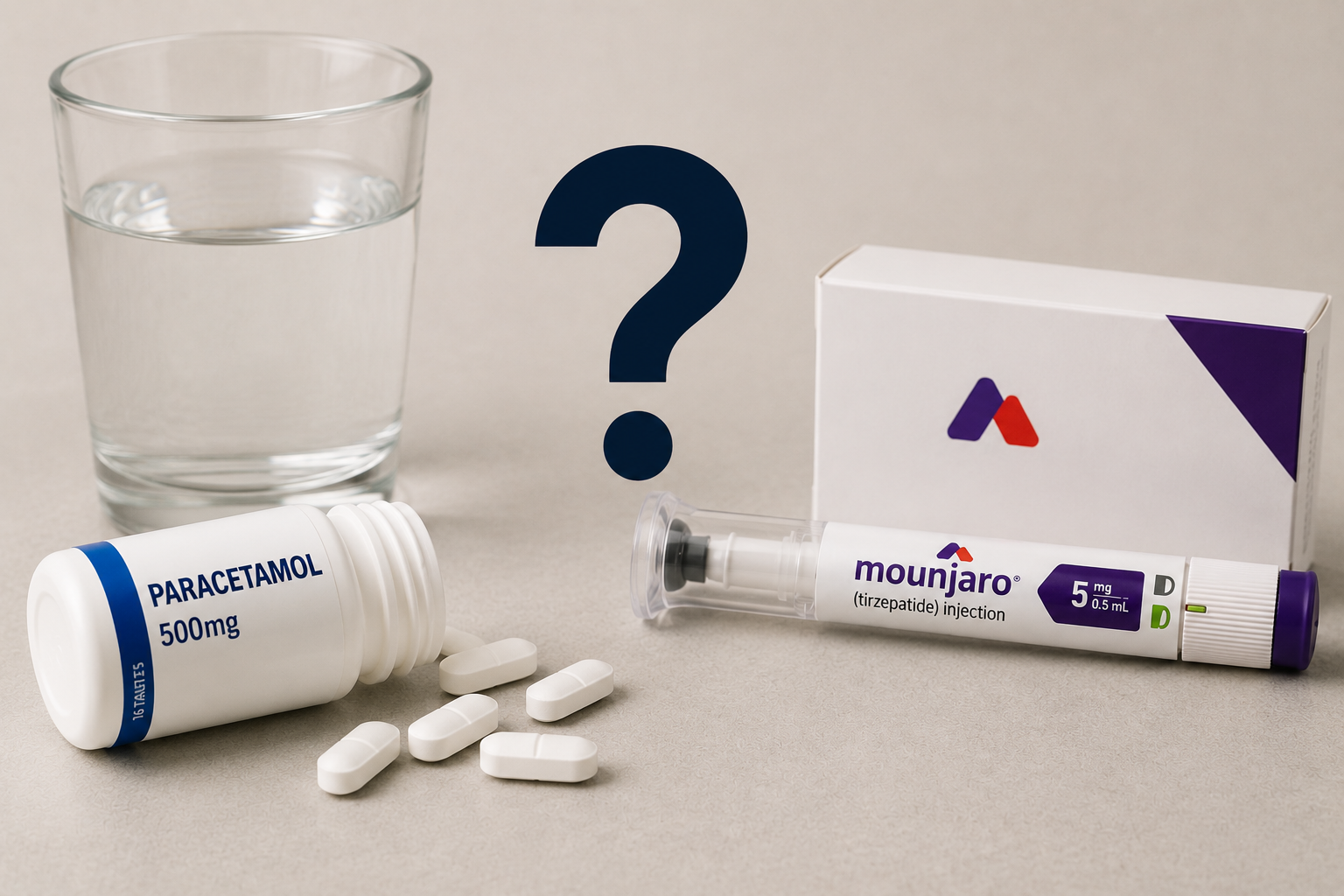
Paracetamol and Mounjaro have no known direct drug interaction. Most UK adults can take paracetamol (acetaminophen) at normal over-the-counter doses while on Mounjaro — it’s one of the safer choices for pain relief or fever on GLP-1 treatment. The practical caveats are around liver considerations, timing with peak nausea, and a few scenarios where other options are better. This is the honest UK answer to “can I take paracetamol on Mounjaro?”
For other common drug interaction questions see Can I Drink Coffee on Mounjaro UK. For the broader treatment picture: Complete GLP-1 Weight Loss Guide.
The short answer
Yes. Paracetamol at standard UK OTC dosing (up to 1g every 4–6 hours, maximum 4g per 24 hours for most adults) is compatible with Mounjaro. No pharmacological interaction reduces its effectiveness or causes adverse combined effects.
Paracetamol is generally the preferred simple analgesic for GLP-1 users because it’s easier on the stomach than NSAIDs (ibuprofen, naproxen, aspirin).
Why paracetamol is often preferred over NSAIDs on GLP-1s
NSAIDs (ibuprofen, naproxen, aspirin, diclofenac, etc.) work by inhibiting cyclo-oxygenase (COX) enzymes, which has two relevant side effects:
1. Stomach irritation. NSAIDs reduce the stomach’s own protective mucus layer, making gastric lining more vulnerable to irritation from stomach acid.
2. Delayed gastric emptying effect. NSAIDs themselves slightly slow gastric emptying at higher doses.
On a GLP-1, where gastric emptying is already slowed and nausea/reflux is common, adding NSAIDs can:
- Worsen reflux and heartburn
- Increase risk of gastric ulcers (particularly if you’re nauseated or not eating well)
- Compound the already-slowed gastric emptying
Paracetamol doesn’t work through the COX enzyme mechanism. It has virtually no stomach-irritation effect and no direct effect on gastric emptying. For most GLP-1 users, paracetamol is the first-line choice for headaches, body aches, or fever.
UK paracetamol dosing
Standard adult OTC dosing in the UK:
- 500mg–1g every 4–6 hours
- Maximum 4g per 24 hours (8 tablets of 500mg)
- Don’t exceed recommended dose; liver toxicity is the main risk at overdose
For specific products:
- Standard paracetamol 500mg tablets: 1–2 tablets every 4–6 hours
- Combined products (paracetamol with caffeine, codeine, ibuprofen): follow the specific product label; check for paracetamol content if combining with plain paracetamol
- Paracetamol suspension (for those who can’t swallow tablets): available via pharmacy; follow label instructions
- Dispersible paracetamol: fine for those with swallowing difficulties or nausea
If you need paracetamol regularly for chronic pain, speak to your prescriber or GP about whether other interventions are appropriate; regular long-term paracetamol use is generally safe but should be part of a broader pain management plan.
Peak-side-effect window considerations
Paracetamol timing with Mounjaro:
1. If you have nausea during peak side effects, standard paracetamol tablets may be harder to keep down. Options:
- Dispersible paracetamol (dissolves in water) — may be easier on nausea
- Paracetamol suspension — liquid form
- Take with a small amount of food if possible
- Wait 20–30 minutes after peak nausea if practical
2. Don’t double-dose if you threw up shortly after taking. If you vomited within 30 minutes of taking paracetamol, the medication may not have been absorbed. Taking another dose too soon risks overdose. General rule: if uncertain, wait the standard 4–6 hour interval before your next dose rather than “topping up.”
3. Slowed gastric emptying can delay paracetamol absorption slightly. You may find pain relief takes 10–20 minutes longer to kick in than you remember from pre-Mounjaro days. Not a problem clinically; just expectation management.
Paracetamol and liver considerations
The main safety concern with paracetamol in any user is liver toxicity. Most relevant for GLP-1 users:
1. Rapid weight loss can temporarily affect liver enzymes. GLP-1 users sometimes show mildly elevated liver enzymes during active weight loss (often because of shifts in liver fat and hepatic processes). This doesn’t typically change paracetamol safety at standard doses, but if your prescriber has flagged specific liver concerns, confirm with them.
2. Alcohol plus paracetamol raises liver risk. The combination of regular alcohol use (3+ units per day) with regular paracetamol use increases hepatotoxicity risk. On a GLP-1 where you may already be drinking less than before, this is usually not an issue. But if you’re doing heavy drinking plus heavy paracetamol use, talk to your GP.
3. Pre-existing liver disease. If you have hepatitis, fatty liver disease (NAFLD), cirrhosis, or other liver conditions, paracetamol dosing may need to be reduced or monitored. Discuss with your GP or specialist.
4. Paracetamol in multiple products. A common UK problem: you take paracetamol for a headache, then flu medicine (Lemsip, Sudafed Co, Beechams) that also contains paracetamol. Total dose can quickly exceed safe limits. Always check ingredients of combination products.
What about ibuprofen and other NSAIDs on Mounjaro?
NSAIDs can be used on Mounjaro but with caution:
Low-risk scenarios (occasional use at standard dose):
- One-off use for acute pain (headache, muscle strain)
- Short-course use (2–3 days) for specific conditions
- Standard OTC doses (ibuprofen 400mg 3x daily; max 1.2g)
- Always take with food
Higher-risk scenarios (more caution needed):
- Chronic daily use (more than 1–2 weeks continuous)
- High doses (1,200mg+ daily ibuprofen)
- Already-existing reflux or gastric issues
- Use during peak-nausea days
- Combined with aspirin or other anticoagulants
- Pre-existing kidney disease
For occasional headache or injury, ibuprofen 400mg with food is generally fine. For regular use, consider paracetamol first; if NSAIDs are required, talk to your GP about appropriate dose, duration, and possibly a stomach-protective agent (PPI).
Codeine-containing products
Paracetamol-codeine combinations (co-codamol, Solpadeine) are common UK OTC products. Considerations on Mounjaro:
1. Codeine worsens constipation. Mounjaro users are already at higher risk of constipation from slowed transit. Regular codeine use compounds this significantly.
2. Codeine causes additional nausea. Adding codeine’s own GI effects to Mounjaro’s can produce markedly more nausea.
3. Codeine is mildly addictive. Regular use can create dependency; UK restrictions on OTC codeine (max 3 days for simple pain) reflect this.
Generally: avoid regular codeine-containing products on Mounjaro. For occasional stronger pain, one-off use is fine; more than a few days in a row is unwise.
Aspirin specifically
Low-dose aspirin (75mg daily) is commonly prescribed for cardiovascular prevention. Considerations:
1. Continue prescribed cardiovascular aspirin unless your prescriber says otherwise. The cardiovascular benefit typically outweighs GI risk.
2. Take with food. Minimises stomach irritation.
3. If you develop GI symptoms (pain, heartburn, dark stools), inform your GP. They may add a stomach-protective agent.
High-dose aspirin for pain relief (300mg+ as analgesic) has the same cautions as other NSAIDs.
Cold and flu medications
Common UK cold and flu products contain varying combinations. Things to watch:
Paracetamol content: most “max strength cold and flu” products contain 1000mg paracetamol per dose. Don’t combine with additional plain paracetamol without checking total dose.
Decongestants (pseudoephedrine, phenylephrine): can cause blood pressure elevation, jitteriness, insomnia. Usually fine as short-course use; watch for amplified effects.
Antihistamines (diphenhydramine, chlorphenamine): can cause drowsiness. Safe on Mounjaro but don’t drive or operate machinery. Some formulations also contain paracetamol.
Cough suppressants (dextromethorphan) or expectorants (guaifenesin): compatible with Mounjaro.
Stick to recommended dose. Don’t take multiple different cold products simultaneously without checking ingredients.
Prescription pain medications on Mounjaro
If your GP has prescribed specific pain medications:
- Standard NSAIDs (diclofenac, naproxen): use as prescribed, with food
- Prescription strength codeine (co-codamol 30/500): temporary use is fine; long-term use needs careful management because of constipation on top of Mounjaro effects
- Tramadol: no direct interaction with Mounjaro but has its own nausea profile; combined can be unpleasant
- Gabapentin / pregabalin (for nerve pain): no direct interaction
- Muscle relaxants: typically no specific Mounjaro concern
- Topical analgesics (ibuprofen gel, capsaicin cream): minimal systemic absorption; generally safer than oral equivalent
For any prescription pain medication, tell the prescribing doctor you’re on Mounjaro/tirzepatide. They have access to interaction databases; they’ll flag anything concerning.
Dental pain and Mounjaro
Dental pain is a common reason people take pain relief. For dental issues on Mounjaro:
- Paracetamol is first choice
- Ibuprofen can help with inflammatory dental pain (tooth abscess, post-extraction) but watch for stomach irritation
- If sedation is required for dental work, see Mounjaro and Surgery/Anaesthesia UK for the pause guidance
- Regular NSAIDs for 4+ days of dental pain warrant a dental consultation; the pain often signals an underlying issue
Headaches and Mounjaro
Some users experience increased headaches early in treatment, particularly during dose-step weeks. Causes can include:
- Dehydration (common on reduced intake)
- Blood sugar shifts (from food timing changes)
- Caffeine withdrawal if reduced coffee intake
- Sleep changes
- Direct medication effect (less common)
Paracetamol is fine for symptomatic relief. But also address the underlying causes: hydration, regular meals, sleep hygiene. Frequent headaches that paracetamol can’t manage warrant GP consultation.
Period pain and Mounjaro
For users who menstruate, period pain can respond to either paracetamol or ibuprofen. On Mounjaro:
- Paracetamol fine as first line
- Ibuprofen for 1–3 days during period is generally acceptable
- Codeine-containing products are best avoided (constipation compound)
- Hot water bottle, heating pad, gentle movement can complement medication
If period pain is severe enough to need daily high-dose NSAIDs, that’s worth discussing with your GP regardless of Mounjaro — could indicate endometriosis or other treatable conditions.
What to avoid without medical advice
A few categories where more caution is warranted:
- Long-term high-dose NSAIDs (daily ibuprofen or naproxen for weeks+) without medical oversight
- Opioid medications from unofficial sources (always get prescribed)
- Combination products without checking total paracetamol dose
- Regular codeine use (avoid dependency and worsened constipation)
- Medications you’ve been off for a while that you’re re-starting (check with GP about current suitability on Mounjaro)
When to ask before taking
If you’re unsure, you can:
- Ask your prescriber (especially if their contact is responsive)
- Ask your GP
- Ask a community pharmacist (free, usually very well-informed on drug interactions)
- Check the patient information leaflet that comes with your Mounjaro
- Call NHS 111 for urgent guidance
Community pharmacists are particularly useful for OTC interaction questions — they’re trained specifically on drug interactions, and asking them costs nothing.
The summary
Paracetamol at standard UK OTC doses is fine alongside Mounjaro. It’s generally the safer choice than NSAIDs for GLP-1 users because it doesn’t irritate the stomach. Watch for total paracetamol intake across multiple products. NSAIDs can be used occasionally with food; longer-term use needs medical oversight. Codeine-containing products are best avoided regularly because of compound constipation and nausea. When unsure, ask a pharmacist or your GP.
For related lifestyle questions: Can I Drink Coffee on Mounjaro UK, Mounjaro and Surgery UK, and the Complete GLP-1 Weight Loss Guide.
Medical note: this is general information about common OTC pain relief. Your specific medical situation may change the best choice. For ongoing or severe pain, please consult a GP rather than relying on OTC medication. Report any adverse events to your prescriber and the MHRA Yellow Card Scheme.
Discover more from Healthy Weight Loss GLP1
Subscribe to get the latest posts sent to your email.