
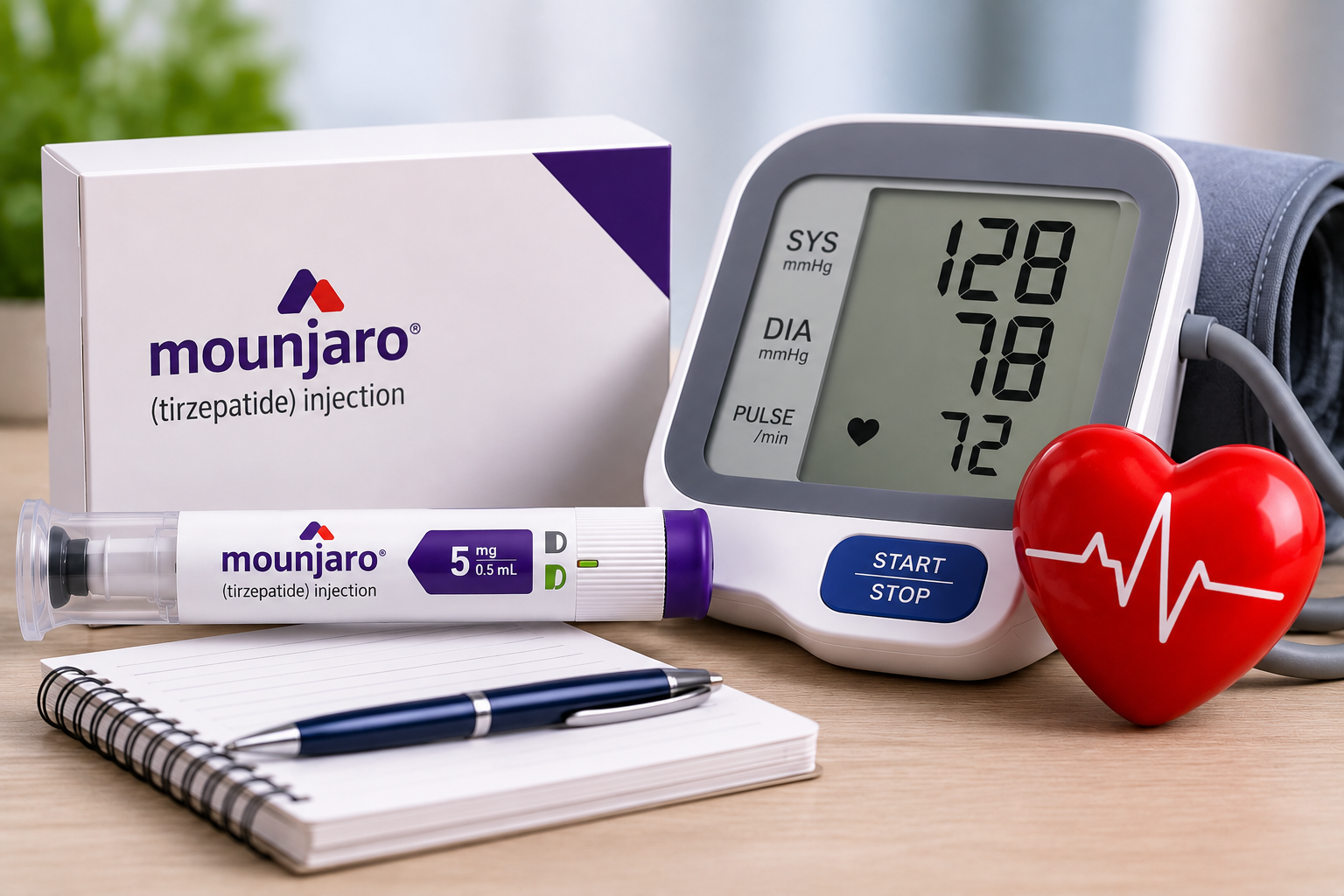
Mounjaro typically lowers blood pressure — this is one of the medication’s well-documented secondary benefits alongside weight loss. Most UK users with hypertension see meaningful blood pressure reductions within three to six months of starting treatment, often enough to require antihypertensive medication dose reduction. The weight loss mechanism is primary, but tirzepatide also has direct vascular effects through its GLP-1 activity. This guide covers what to expect, when blood pressure medications need reviewing, and the specific monitoring needed when both are in play.
Related reading: GLP-1 and Type 2 Diabetes UK (often coexists with hypertension). For the NHS perspective: NHS Blood Pressure guidance.
How Mounjaro affects blood pressure
Two mechanisms work simultaneously:
Weight loss: the primary driver of blood pressure reduction. Every kilogram of weight lost reduces systolic blood pressure by approximately 1–2 mmHg. A 20kg weight loss — typical on Mounjaro at 12 months — can reduce systolic BP by 20–40 mmHg. This is a clinically substantial effect, comparable to adding a second antihypertensive medication.
Direct GLP-1 vascular effects: GLP-1 receptors are present on blood vessel walls and in the heart. GLP-1 receptor agonism produces mild vasodilation and modest natriuresis (sodium excretion through urine), both of which reduce blood pressure independently of weight loss. This direct effect is smaller than the weight-loss-mediated reduction but measurable.
SURPASS trial data showed average systolic blood pressure reductions of 6–10 mmHg at 40 weeks — this is the direct drug effect above what weight loss alone would produce at that timepoint.
What this means if you’re on antihypertensives
If you’re taking medications to lower blood pressure and start Mounjaro, blood pressure may fall further than intended — potentially to levels where your antihypertensive doses become too high. This produces symptomatic low blood pressure:
- Dizziness when standing up (orthostatic hypotension)
- Light-headedness, particularly on exertion
- Feeling faint on rising from bed or a chair
- Unexplained fatigue or weakness
These symptoms warrant a GP blood pressure review and likely antihypertensive dose reduction. This isn’t a side effect of Mounjaro causing harm — it’s the medication working so well that your existing treatment needs recalibrating.
Important: do not self-reduce antihypertensive doses. Always involve your GP. Blood pressure medication adjustments require proper assessment, and some antihypertensives (beta-blockers particularly) need tapering rather than abrupt dose reduction.
Blood pressure monitoring schedule on Mounjaro
If you have hypertension and are starting Mounjaro:
Before starting: establish a baseline. Note your current antihypertensive medications and doses.
Monthly for the first six months: check blood pressure at a UK pharmacy (free blood pressure checks at most major pharmacies — Boots, Lloyds, many independents). A home blood pressure monitor is more convenient for regular tracking.
If symptomatic: check blood pressure immediately on experiencing dizziness or light-headedness. If below 100/60 or significantly lower than your normal range, contact your GP.
At every prescriber review: report your blood pressure readings. This guides both Mounjaro titration and antihypertensive management.
Track blood pressure readings alongside your food log in Cronometer — the diary section supports custom daily metrics. Seeing blood pressure trends alongside sodium intake and weight is clinically useful data for your GP appointments.
Sodium: the dietary lever for blood pressure on Mounjaro
High sodium intake is one of the most impactful dietary factors for blood pressure. UK adults average around 8–9g of sodium daily — nearly double the recommended 6g maximum. On Mounjaro where food volume is reduced, you have an opportunity to improve sodium intake relatively easily because you’re eating less.
Main sodium sources in UK diets:
- Bread and bakery products (often the largest single source)
- Processed meats (bacon, sausages, ham, deli meats)
- Ready meals and tinned soups
- Sauces (soy sauce, gravy granules, stock cubes)
- Cheese
- Crisps and savoury snacks
Check your sodium intake in Cronometer — most users are surprised by how much comes from bread and processed products rather than added table salt. Reducing these while maintaining high-quality protein sources (which HelloFresh’s High Protein recipes are well-suited for — currently 50% off your first box) improves blood pressure without feeling like restriction.
The cardiovascular case for Mounjaro
Beyond blood pressure specifically, Mounjaro’s cardiovascular evidence is accumulating. The SURPASS-CVOT trial showed meaningful cardiovascular risk reduction in T2D patients. For overweight adults with hypertension:
- Blood pressure reduction reduces stroke and heart attack risk directly
- Improved insulin sensitivity reduces arterial stiffness
- Weight loss reduces cardiac workload
- LDL-cholesterol often improves with weight loss
- Sleep apnea reduction (common in hypertension co-presentation) reduces nocturnal BP spikes
For patients with hypertension as a weight-related comorbidity, Mounjaro addresses the root cause rather than just the measurement. Antihypertensive medication may ultimately be reducible or discontinued for users who achieve significant weight loss — a clinical outcome that purely pharmacological hypertension management can’t offer.
Specific antihypertensives and Mounjaro considerations
ACE inhibitors / ARBs (lisinopril, ramipril, losartan, candesartan): most commonly prescribed for hypertension, especially in diabetics. No direct interaction with tirzepatide. Blood pressure reduction from Mounjaro may require dose reduction over time.
Calcium channel blockers (amlodipine, diltiazem): no direct interaction. Same blood pressure monitoring and dose review consideration applies.
Beta-blockers (bisoprolol, atenolol): no direct interaction. Important note: beta-blockers must be tapered rather than stopped abruptly. If your beta-blocker dose needs reducing due to Mounjaro-mediated blood pressure improvement, this requires a careful GP-managed process, not a quick dose change.
Thiazide diuretics (bendroflumethiazide, indapamide): no direct interaction. Diuretics increase urination; Mounjaro-related reduced fluid intake means dehydration is possible. Maintain adequate hydration.
Combination tablets: many patients are on fixed-dose combination antihypertensives. These may need replacing with separate medications that can be dose-adjusted independently as blood pressure improves on Mounjaro. Discuss with GP.
Target blood pressure on Mounjaro
NICE guidelines recommend blood pressure targets of below 140/90 for most adults, and below 130/80 for adults with diabetes or established cardiovascular disease.
On Mounjaro with ongoing weight loss, blood pressure may fall below these targets — at which point the goal is avoiding over-treatment (too much medication producing symptomatic hypotension) rather than further reduction. The moving target means regular monitoring matters more than at stable weight.
Frequently asked questions
Will Mounjaro lower my blood pressure?
For most users with hypertension, yes — through weight loss and direct GLP-1 vascular effects. Average reductions of 6–10 mmHg systolic from the direct medication effect, with further reduction as weight loss accumulates. Total reductions of 20–30 mmHg are common over 12 months of significant weight loss.
Can I reduce my blood pressure medication when on Mounjaro?
Possibly — but only under GP supervision. Don’t self-adjust. If you’re experiencing symptoms of low blood pressure (dizziness, light-headedness), contact your GP for a medication review. This is a positive development, not a cause for alarm.
Is high blood pressure a reason to start Mounjaro?
Hypertension is one of the weight-related comorbidities that supports eligibility for NHS Mounjaro prescribing. For private prescribing, hypertension alongside overweight/obesity is a legitimate clinical indication that a prescriber can assess.
Does Mounjaro cause high blood pressure in some people?
Rarely and transiently. Some users report brief blood pressure increases during early titration or nausea episodes. This typically resolves. Sustained hypertension caused by Mounjaro would be very unusual and worth reporting via the MHRA Yellow Card if it occurs.
How long before Mounjaro lowers blood pressure?
Direct GLP-1 effects on blood pressure can appear within weeks. The larger weight-loss-mediated reduction builds over months. Most users on antihypertensives notice a need for medication review at three to six months of treatment.
Medical disclaimer: blood pressure medication adjustments require clinical supervision. Do not change antihypertensive doses without GP guidance. Report unexplained dizziness or very low blood pressure readings to your GP promptly.
Practical blood pressure management day to day
Managing blood pressure well while on Mounjaro doesn’t require major lifestyle complexity beyond what the medication’s weight loss already produces. Specific actions that compound the blood pressure benefit:
Morning blood pressure check routine: if you have a home monitor (Omron, Microlife, and Beurer are the most accurate consumer brands — around £25–50 from most UK pharmacies), check first thing after five minutes of sitting quietly, before coffee. Log the reading with date and your current medication dose. This monthly or weekly data is far more useful to your GP than a single clinic reading.
Sodium audit: as mentioned above, tracking sodium intake in Cronometer for two weeks typically reveals the main sources in your diet. The top three UK dietary sodium sources are almost always bread, processed meat, and sauces — not table salt. Swapping to lower-sodium bread and reducing processed meat creates meaningful BP reduction without feeling restrictive.
Potassium balance: potassium counteracts sodium’s blood pressure effect. Most GLP-1 users on reduced food volume eat less potassium than before. Foods highest in potassium: bananas, sweet potato, spinach, avocado, white beans, salmon. Check your potassium intake in Cronometer — it’s often low, and increasing it while keeping sodium controlled produces a double blood pressure benefit.
Exercise timing for blood pressure: both resistance training and aerobic exercise produce a post-exercise blood pressure reduction lasting 4–8 hours. Scheduling exercise in the morning produces blood pressure benefits through the day. For users working from home or with flexible schedules, a morning kettlebell session followed by a walk compounds the Mounjaro cardiovascular benefit meaningfully.
These practical steps don’t replace medication management — but they document the changes your GP needs to make informed decisions about your antihypertensive therapy as Mounjaro changes your cardiovascular picture.
Discover more from Healthy Weight Loss GLP1
Subscribe to get the latest posts sent to your email.