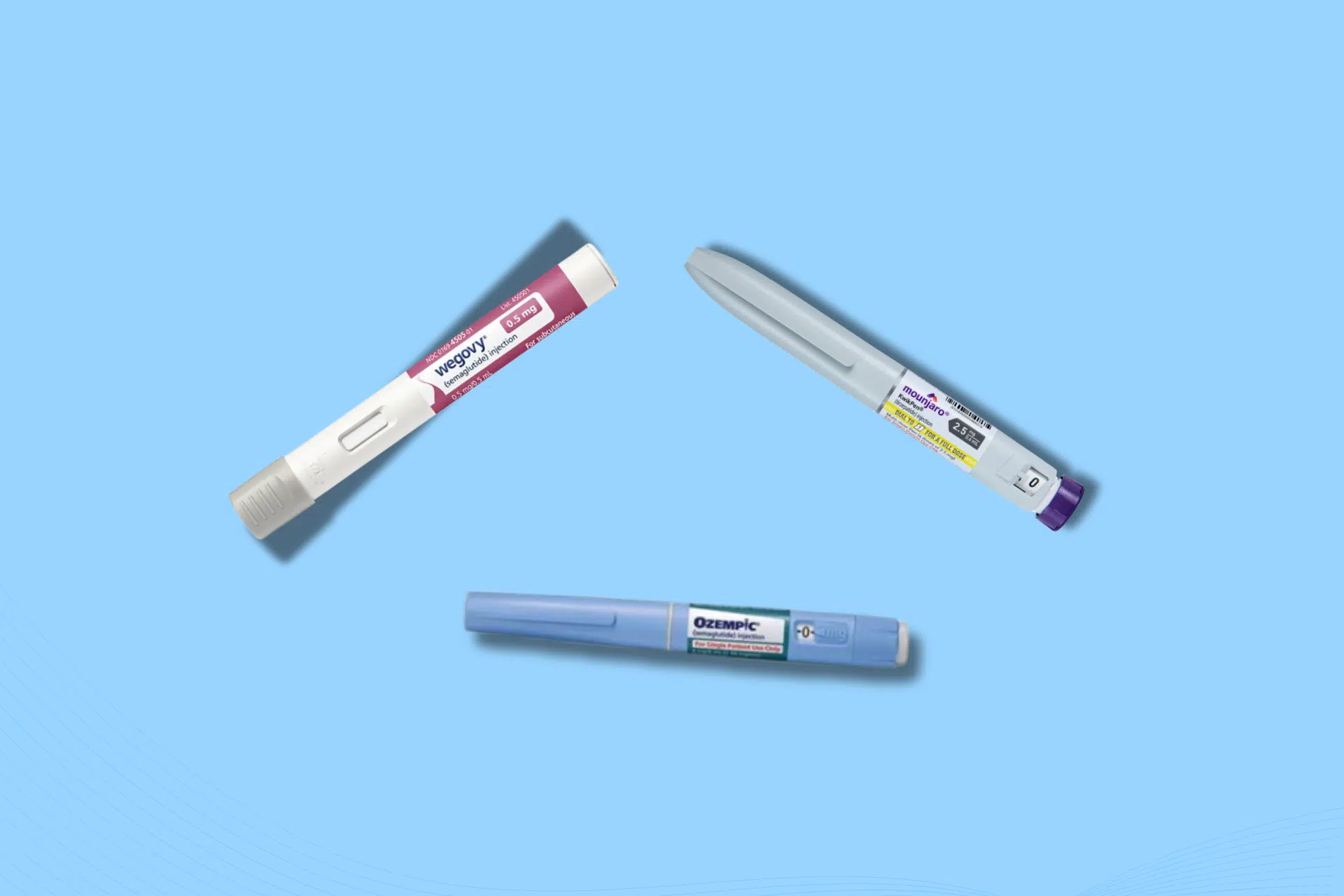

Weight loss on Mounjaro almost always slows or stalls at some point — usually between 6 and 12 months of treatment. For many users, this feels like the medication has stopped working. In most cases, the medication is still working. What has changed is your body’s energy balance, and understanding what has shifted points directly to what needs adjusting.
Why weight loss stalls on GLP-1 medication
Your TDEE has decreased as you lost weight
A smaller body burns fewer calories. Losing 2 stone (12.7kg) reduces your basal metabolic rate by approximately 150–200 calories per day. If you are eating the same amount now as you were 2 stone heavier, you may no longer be in a meaningful calorie deficit. This is not plateau — it is a recalibration needed.
Dietary habituation
The appetite suppression of GLP-1 medication is strongest in the first 6–12 months. As the body adapts, many users find their food intake gradually increases — sometimes without consciously noticing. Research on long-term GLP-1 use shows food intake tends to drift upward over 12–18 months even with consistent dosing.
Metabolic adaptation
Prolonged calorie restriction triggers compensatory reductions in metabolic rate beyond what body weight alone would predict — the “starvation response.” This adaptation can account for 200–400 fewer calories burned per day. It is more pronounced with very low calorie intake and is reversed by diet breaks (periods of eating at maintenance).
Muscle loss from insufficient protein and activity
Each kilogram of muscle lost reduces resting metabolic rate by approximately 13 calories per day. Over a significant weight loss journey with inadequate protein or exercise, muscle loss can accumulate to meaningfully reduce daily calorie burn.
What to do — in order of priority
- Track food honestly for 2 weeks: weigh and log food to establish whether calorie intake has drifted up. Most people who do this discover intake is 200–400 calories higher than they believed
- Recalculate your TDEE: use your current weight, not your starting weight, to set your calorie target. The deficit that worked at 22 stone needs recalibrating at 18 stone
- Audit protein intake: ensure you are hitting 1.6g per kg of target body weight. This is the most common nutritional drift on long-term GLP-1 treatment
- Add or increase physical activity: even 2,000–3,000 extra steps per day adds 150–200 additional calories of burn — enough to restart a stalled loss
- Consider a diet break: 2–4 weeks eating at estimated maintenance calories can partially reset metabolic adaptation and leptin levels before resuming the deficit
- Discuss dose with your prescriber: if on a submaximal dose and all of the above have been addressed, a dose increase may be appropriate — discuss with your prescribing clinician
What a plateau is telling you
A plateau is data, not failure. It means your body has adapted to its new setpoint and the previous approach needs updating. The SURMOUNT-4 trial showed that people who continued Mounjaro after reaching a plateau lost significantly more weight than those who stopped — the medication continues to support weight maintenance even when active loss stalls.
🌿 Lily & Loaf Daily Fuel — protein support during plateau recalibration
During a plateau, protein intake is the most important lever to audit. Daily Fuel provides 21g of complete protein with full micronutrient support — a reliable daily baseline that ensures protein targets are met even when food intake needs to be tightened to break a plateau.
📋 Download the free 14-day meal plan for a structured high-protein approach to breaking a plateau.
Related: Why Am I Not Losing Weight Even Though I’m Eating Less? | How to Stay Motivated to Lose Weight UK
Discover more from Healthy Weight Loss GLP1
Subscribe to get the latest posts sent to your email.