
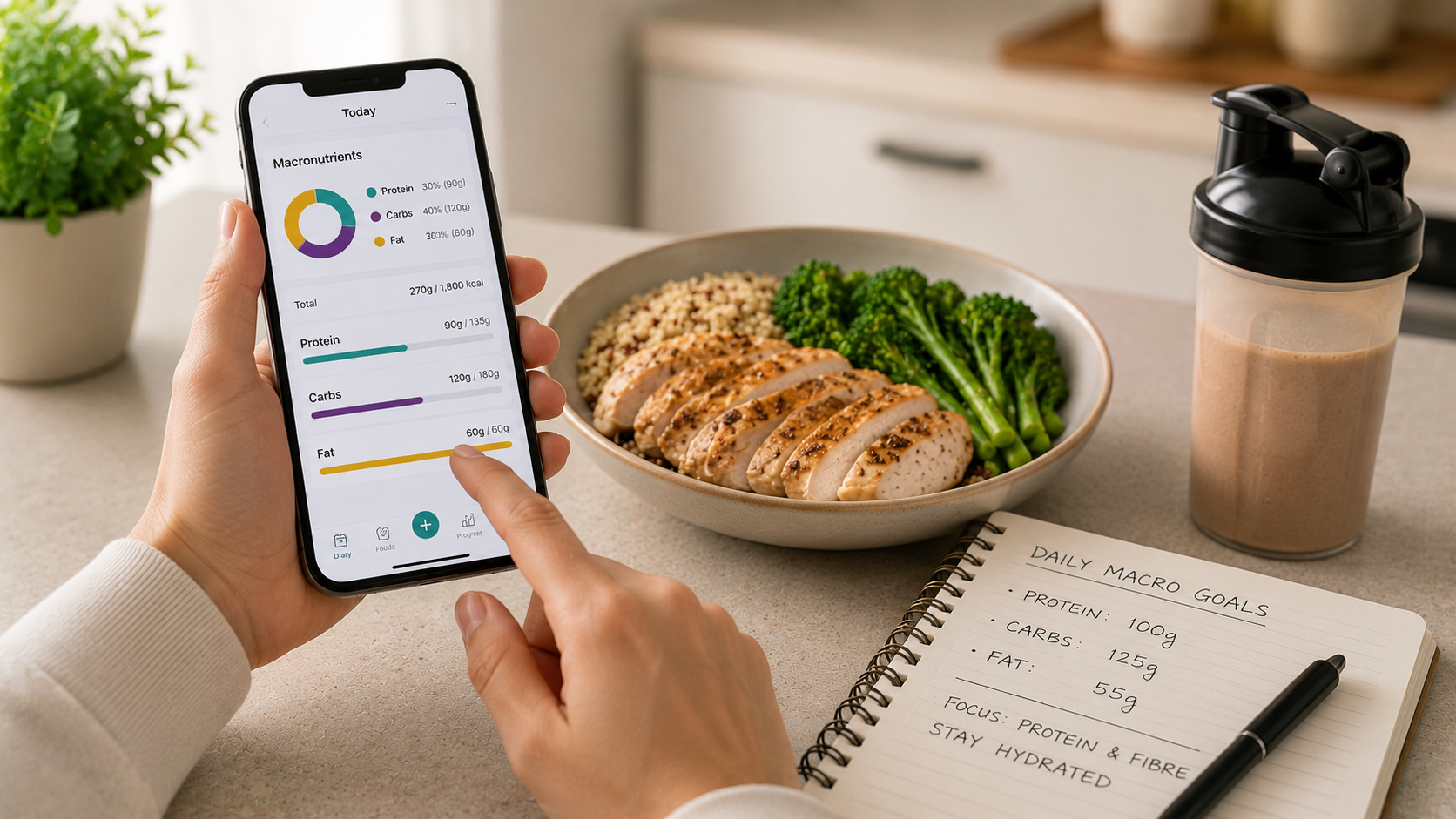
Tracking macros on Mounjaro means one thing above everything else: knowing your daily protein intake. The medication manages your calorie deficit through appetite suppression — you don’t need to obsessively count calories on top of that. What you do need to track is protein, because reduced appetite makes it easy to eat well below the 1.2–1.6g per kg daily target that protects muscle during rapid weight loss. This guide explains exactly how to set up macro tracking for GLP-1 use, why Cronometer is the right tool, and what numbers to aim for.
For the broader nutrition picture: What to Eat on Mounjaro UK and How to Get Enough Protein on GLP-1 UK.
Why macro tracking on GLP-1 is different from standard calorie counting
Standard weight loss advice says track calories to create a deficit. On Mounjaro, the medication creates the deficit for you — your appetite suppression does the calorie-reduction work automatically. Adding aggressive calorie counting on top of that is both unnecessary and counterproductive (it adds mental burden and often leads to under-eating protein).
The GLP-1 macro tracking philosophy is different:
- Track protein as your primary metric — hit your target, don’t fall below it
- Track fibre secondarily — essential for gut health on slowed gastric emptying
- Watch total calories as a check, not a target — make sure you’re not accidentally under-eating to the point of significant muscle loss
- Track micronutrients periodically — iron, zinc, B12, magnesium all commonly become depleted on reduced food volume
Setting up Cronometer for GLP-1 macro tracking
Cronometer is the right tool for this because it tracks all 84 nutrients simultaneously — so your protein, fibre, iron, zinc, and B12 are visible in the same place. The database is verified rather than user-submitted, which matters when you’re relying on accurate protein counts to make decisions.
Step 1: Create your account and set your goal
After creating a free account at Cronometer, go to Profile → Goals. Set your goal to “Maintain Weight” rather than weight loss — Mounjaro is already creating your deficit. You don’t need Cronometer to restrict you further; you need it to help you eat enough of the right things.
Step 2: Set your protein target in grams
Go to Profile → Targets → Macronutrients. Override the default percentage-based protein target with a gram-based one:
| Current body weight | Minimum protein daily | Optimal protein daily |
|---|---|---|
| 80kg | 96g | 112–128g |
| 100kg | 120g | 140–160g |
| 120kg | 144g | 168–192g |
| 140kg | 168g | 196–224g |
The formula: minimum = 1.2g × body weight in kg; optimal = 1.4–1.6g × body weight in kg. Use your current body weight, not your target weight, and adjust monthly as you lose weight.
Step 3: Set your fibre target
Still in Targets, set fibre to 25g minimum (30–35g is better). GLP-1 slows gastric emptying — inadequate fibre causes or worsens constipation significantly. Most users are under 15g when they first track.
Step 4: Run a two-week baseline diagnostic
Don’t change anything about your eating for the first two weeks. Just log honestly — every meal, every snack, every drink with calories. The goal is to find out what you’re actually eating, not to perform for the app. Most users are surprised by the gap between perceived and actual protein intake.
Step 5: Review patterns, not individual days
Use Cronometer’s weekly averages rather than judging each day in isolation. One low-protein day isn’t a problem; a consistently low weekly average is. The trends view (available in the Gold subscription) shows these patterns clearly over time.
What your Cronometer diary should look like on a typical day
Example for a 100kg GLP-1 user targeting 140g protein:
Breakfast (small — appetite is low):
2 scrambled eggs + 200g Greek yoghurt + berries
Protein: ~32g | Calories: ~380
Mid-morning snack (if hungry):
Protein shake (25g powder) with water
Protein: ~25g | Calories: ~130
Lunch:
150g grilled chicken breast + large salad + olive oil dressing
Protein: ~45g | Calories: ~480
Dinner (HelloFresh High Protein meal):
Salmon fillet + roasted vegetables + small portion grains
Protein: ~40g | Calories: ~550
Total: ~142g protein, ~1,540 calories
This is achievable on a GLP-1-reduced appetite, delivers adequate protein for muscle preservation, and keeps total calories in a moderate deficit without artificial restriction. Cronometer shows each of these in real time as you log.
The micronutrients worth checking monthly
Protein is the daily focus. Every four to six weeks, review these in Cronometer’s nutrient breakdown:
Iron (especially women): target 14.8mg daily for women, 8.7mg for men. Below this consistently predicts deficiency within months on reduced food volume. See Best Iron Supplement UK.
Zinc: target 7mg (women) to 9.5mg (men) daily. Consistently low zinc explains many cases of hair loss and taste changes on GLP-1s. See Zinc on GLP-1 UK.
Vitamin B12: target 1.5mcg daily. Reduced meat and dairy intake plus lower total food volume creates B12 depletion risk over months. See Vitamin B12 on GLP-1 UK.
Magnesium: target 270mg (women) to 300mg (men) daily. Commonly low in UK diets generally; worse on reduced food volume. See Magnesium on GLP-1 UK.
Fibre: already set as a daily target but worth reviewing the trend — constipation is one of the most common GLP-1 complaints and the most diet-addressable.
How often to track
You don’t need to log every meal forever. A sustainable approach:
- First two weeks: log everything, every day. Diagnostic phase.
- Months 1–6: log 4–5 days per week. Enough data to catch patterns without becoming obsessive.
- Ongoing: one full logging week every four to six weeks as a check-in. Catches drift before it becomes a problem.
- After dose steps: log for a week. Appetite changes at new doses often alter intake in ways you don’t notice.
- During a plateau: log every day until the cause is identified. See Mounjaro Plateau UK.
Common mistakes in macro tracking on Mounjaro
Tracking calories instead of protein as the primary metric. Leads to under-eating protein while staying within a calorie target. Protein is the metric that determines body composition outcome; calories are secondary on a GLP-1.
Not tracking drinks. Protein shakes, milk in coffee, high-calorie beverages all count and are easy to miss. The most common source of unrealised calorie intake on a GLP-1.
Using MyFitnessPal for GLP-1 tracking. User-submitted database means protein figures for the same food can vary by 30–50% between entries. When you’re making decisions based on hitting a specific protein target, this inaccuracy matters. Cronometer’s verified database is more appropriate for this use case.
Logging aspirationally rather than accurately. Logging what you planned to eat rather than what you actually ate. The point of the log is information, not performance.
Stopping tracking when things feel like they’re going well. This is exactly when drift begins. A brief logging check every month or two catches the slow creep before it becomes a stall.
Cronometer Gold: worth it for serious GLP-1 tracking?
The free version of Cronometer covers everything in this guide. The Gold subscription adds:
- Trends view — protein, micronutrient, and fibre averages over weeks and months, invaluable for seeing the slow changes that daily views miss
- Oracle suggestions — Cronometer recommends specific foods to fill identified gaps
- Blood test syncing — log your results and see dietary correlations
- No adverts
For users actively managing a deficiency (iron, zinc, B12) or wanting to understand their nutritional trajectory over the course of treatment, Gold is worth the cost. For general protein tracking, free is sufficient.
Frequently asked questions
Should I track calories or macros on Mounjaro?
Track macros — specifically protein as your primary daily metric, fibre as secondary. Calories are a check rather than a target. The medication handles your calorie deficit; your job is ensuring the food you eat contains adequate protein and nutrients.
What’s the best free macro tracking app for GLP-1 users?
Cronometer free tier. The verified database gives accurate protein figures, and it tracks 84 nutrients including the micronutrients most commonly depleted on GLP-1s. MyFitnessPal’s larger but user-submitted database has accuracy issues that matter when tracking to a specific protein target.
How much protein do I actually need on Mounjaro?
1.2–1.6g per kg of current body weight daily. This sounds like a lot — and it is, relative to typical UK intake. Tracking in Cronometer typically reveals most users are 30–50g below this target without realising it.
Do I need to track macros if I’m losing weight fine on Mounjaro?
Losing scale weight and losing fat while preserving muscle are different outcomes. Without tracking protein, you can lose scale weight successfully while losing significant muscle alongside the fat — which compromises your long-term metabolic health and the durability of your results. Tracking protein costs ten minutes a day and protects against this.
Disclosure: this post contains affiliate links to Cronometer. The free version is fully functional. A small commission is earned if you upgrade to Gold through these links.
What a month of Cronometer data actually reveals
After one full month of logging, most GLP-1 users discover patterns they couldn’t have identified without the data:
The protein gap is always larger than expected. Users who estimate they’re eating 100g of protein daily are typically hitting 65–80g when they track honestly. The gap tends to cluster around lunch — easy GLP-1-friendly lunches (salad, soup, crackers and cheese) are often low protein unless specifically engineered otherwise.
Injection day eating is significantly worse nutritionally. Nausea and low motivation on injection days mean protein intake often drops to 40–60g. Identifying this pattern means you can prepare specifically for injection days — protein shakes, pre-prepped Greek yoghurt, boiled eggs ready to grab — rather than defaulting to whatever requires least effort.
Fibre is almost always low. The UK average dietary fibre intake is around 18g daily against a recommended 25–30g. On GLP-1-reduced food volume, most users are hitting 10–14g. Given that fibre is the most impactful single dietary change for GLP-1 constipation, seeing this number clearly motivates the specific additions (flaxseed, beans, lentils, wholegrain swaps) that address it.
One meal drives most of the micronutrient variation. Most people eat very similarly for breakfast and lunch but vary their dinners. Cronometer often reveals that your dinner choices account for the majority of weekly iron, zinc, and B12 variation — meaning choosing higher-quality dinner proteins has a disproportionate nutritional impact. This makes the investment in higher-protein dinner options (see Best Meal Kits UK) particularly valuable.
Discover more from Healthy Weight Loss GLP1
Subscribe to get the latest posts sent to your email.