
⚕️ Medical Disclaimer
This content is for informational purposes only and does not constitute medical advice. Always consult your GP or prescribing clinician before making changes to your medication, diet, or supplement regimen.
⚡ QUICK ANSWER
Is berberine the same as Ozempic or Mounjaro?
No — berberine is a plant-derived compound with metabolic effects, not a GLP-1 medication. It activates AMPK (a cellular energy sensor) and improves insulin sensitivity in a different way from semaglutide or tirzepatide. Berberine produces modest weight loss of 1-3kg over 12 weeks in clinical trials — significantly less than GLP-1 medications which produce 10-22% body weight loss. ‘Natural Ozempic’ is a marketing label, not a scientific description.
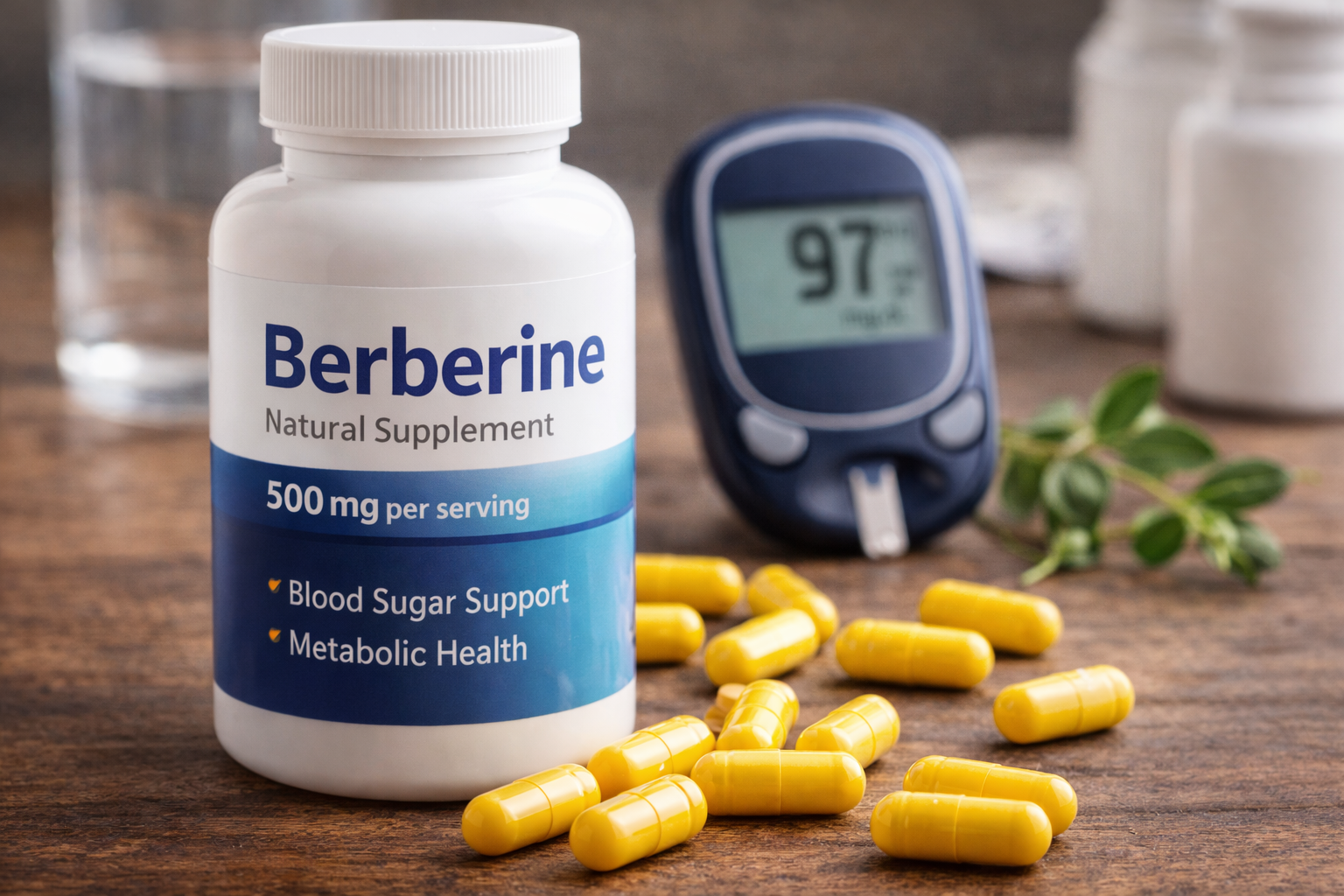
Berberine has become one of the most searched weight loss supplements in the UK following viral social media claims that it is a natural alternative to Ozempic. The reality is more nuanced — berberine has genuine metabolic evidence, but it is not equivalent to GLP-1 medication. This guide covers what it actually does, what the evidence shows, and who it might be useful for.
What Is Berberine and How Does It Work?
Berberine is a yellow alkaloid compound found in several plants including barberry (Berberis vulgaris), goldenseal, and Oregon grape. It has been used in traditional Chinese and Ayurvedic medicine for centuries, primarily for blood sugar management and gut infections.
Its primary mechanism in metabolic health: berberine activates AMPK (AMP-activated protein kinase) — an enzyme that acts as a cellular energy sensor. When AMPK is activated, the body responds by increasing glucose uptake, reducing glucose production in the liver, and improving insulin sensitivity. This mechanism is different from GLP-1 medications but has meaningful metabolic overlap.
| Mechanism | Berberine | GLP-1 Medications (Mounjaro/Wegovy) |
|---|---|---|
| Appetite reduction | Modest — mainly indirect via blood sugar stabilisation | Strong — direct action on hypothalamic appetite centres |
| Insulin sensitivity | Yes — via AMPK activation | Yes — via GLP-1 receptor activation |
| Gut hormone effects | Some GLP-1 secretion increase | Direct GLP-1 and GIP receptor agonism |
| Blood sugar management | Clinically meaningful — comparable to metformin in some studies | Very strong — significant HbA1c reduction |
| Weight loss evidence | 1-3kg over 12 weeks in trials | 10-22% body weight over 52-72 weeks in trials |
What the Clinical Evidence Actually Shows
Berberine’s evidence base is real — but often overstated by supplement marketers:
- A 2012 meta-analysis of 14 randomised trials found berberine (typically 500mg three times daily) reduced fasting blood glucose by 19.35 mg/dL and HbA1c by 0.72% — comparable to some oral diabetes medications
- A 2020 systematic review found average weight loss of 1.36-3.6kg over 8-24 weeks — meaningful but significantly below GLP-1 medication outcomes
- Studies on lipid profiles show consistent reductions in LDL cholesterol and triglycerides
- Berberine has evidence as an adjunct to lifestyle changes, not as a standalone weight loss solution
- Most studies are relatively small and of variable quality — the evidence base is less robust than for licensed medications
⚠️ Berberine Is Not a GLP-1 Replacement
Berberine may support weight loss as part of a broader metabolic health approach. It is not a replacement for GLP-1 medications and produces significantly less weight loss. If you meet the criteria for Mounjaro or Wegovy, berberine is not a comparable alternative.
Safety and Interactions
Berberine is generally considered safe at standard doses (500mg 2-3 times daily with meals), but has important interaction considerations:
- CYP3A4 inhibitor: Berberine inhibits a key liver enzyme involved in metabolising many medications — can increase blood levels of statins, some blood thinners, and other drugs. Always disclose to your GP.
- Blood sugar lowering: Berberine lowers blood sugar — in people on diabetes medications (including insulin) or GLP-1 medications, this could cause hypoglycaemia. Requires monitoring.
- Pregnancy: Not recommended during pregnancy or breastfeeding
- Gastrointestinal side effects: Nausea, constipation, and stomach cramps are common at the start — particularly relevant for GLP-1 users who already have gut side effects
- Not regulated as a medicine in the UK: Sold as a food supplement; quality and dosage can vary significantly between brands
Who Berberine Might Be Useful For
- People who do not qualify for GLP-1 medication but want metabolic support alongside lifestyle changes
- As an adjunct to GLP-1 medication for additional blood sugar management — only under medical supervision due to hypoglycaemia risk
- People with pre-diabetes who want to try a supplement approach before pharmaceutical treatment
- Post-GLP-1 maintenance — berberine may help maintain insulin sensitivity after stopping medication
How to Take Berberine — UK Dosing Guide
Standard dose from clinical trials: 500mg taken 2-3 times daily with meals. Taking with food reduces gastrointestinal side effects. Cycling (12 weeks on, 4 weeks off) is sometimes recommended to prevent AMPK adaptation, though evidence for this is limited.
UK sources: Berberine 500mg UK — widely available on Amazon. Look for products with third-party testing. The price range is £15-£30 for 60-120 capsules — significantly less expensive than prescription GLP-1 medication.
Berberine vs Metformin vs GLP-1 — A Realistic Comparison
| Berberine | Metformin | GLP-1 (Mounjaro/Wegovy) | |
|---|---|---|---|
| Availability | Over the counter — no prescription | Prescription only | Prescription only |
| Weight loss | 1-4kg typical | 2-5kg typical | 12-25kg typical |
| Blood sugar effect | Moderate | Moderate-strong | Very strong |
| Side effects | Mainly GI — generally mild | Mainly GI — generally mild | GI side effects common; more significant |
| Cost (UK/month) | £15-30 | Very low (NHS prescribed free) | £150-£250 private |
| Evidence quality | Moderate — smaller trials | Very strong — decades of data | Very strong — large Phase 3 trials |
RECOMMENDED SUPPLEMENTS
Lily & Loaf — Quality Supplements for GLP-1 Users
Combining berberine with a quality probiotic and magnesium supports gut health and metabolic function — key factors in any weight loss strategy.
📚 RELATED READING
Some links in this post are affiliate links. If you purchase through them, I may earn a small commission at no extra cost to you. I only recommend products I use myself. Use code ALAN10 for 10% off Lily & Loaf. This post is for informational purposes only — always consult your GP for medical advice.
Berberine Alongside GLP-1 — Is the Combination Safe?
Some people taking GLP-1 medication ask whether berberine can be added for additional metabolic benefit. The honest answer: it can be, but with monitoring:
- The primary risk is additive blood sugar lowering — if you are on a GLP-1 medication, insulin, or sulphonylurea, adding berberine may cause excessive blood glucose reduction
- If you are on GLP-1 for weight management only (not diabetes), without other blood sugar medications, berberine addition is lower risk
- Start at 250mg once daily and monitor energy levels and any symptoms of low blood sugar before increasing
- Always inform your prescribing GP if you are adding berberine to your medication stack
Sources: Yin et al., 2012: Berberine in type 2 diabetes meta-analysis · Kong et al., 2008: Berberine and insulin sensitisation · BNF: berberine herb interactions summary
Discover more from Healthy Weight Loss GLP1
Subscribe to get the latest posts sent to your email.