
⚕️ Medical Disclaimer
This content is for informational purposes only and does not constitute medical advice. Always consult your GP or prescribing clinician before making changes to your medication, diet, or supplement regimen.
⚡ QUICK ANSWER
Can you lose weight using a walking pad?
Yes — a walking pad can meaningfully contribute to weight loss by making it easy to accumulate daily step counts without leaving your home. Walking at 4-5 km/h on a walking pad burns 200-350 kcal per hour depending on body weight. Used consistently alongside a calorie deficit, a walking pad creates 1,500-3,000 kcal of additional weekly calorie burn — enough to produce 0.5-1kg of fat loss per week.
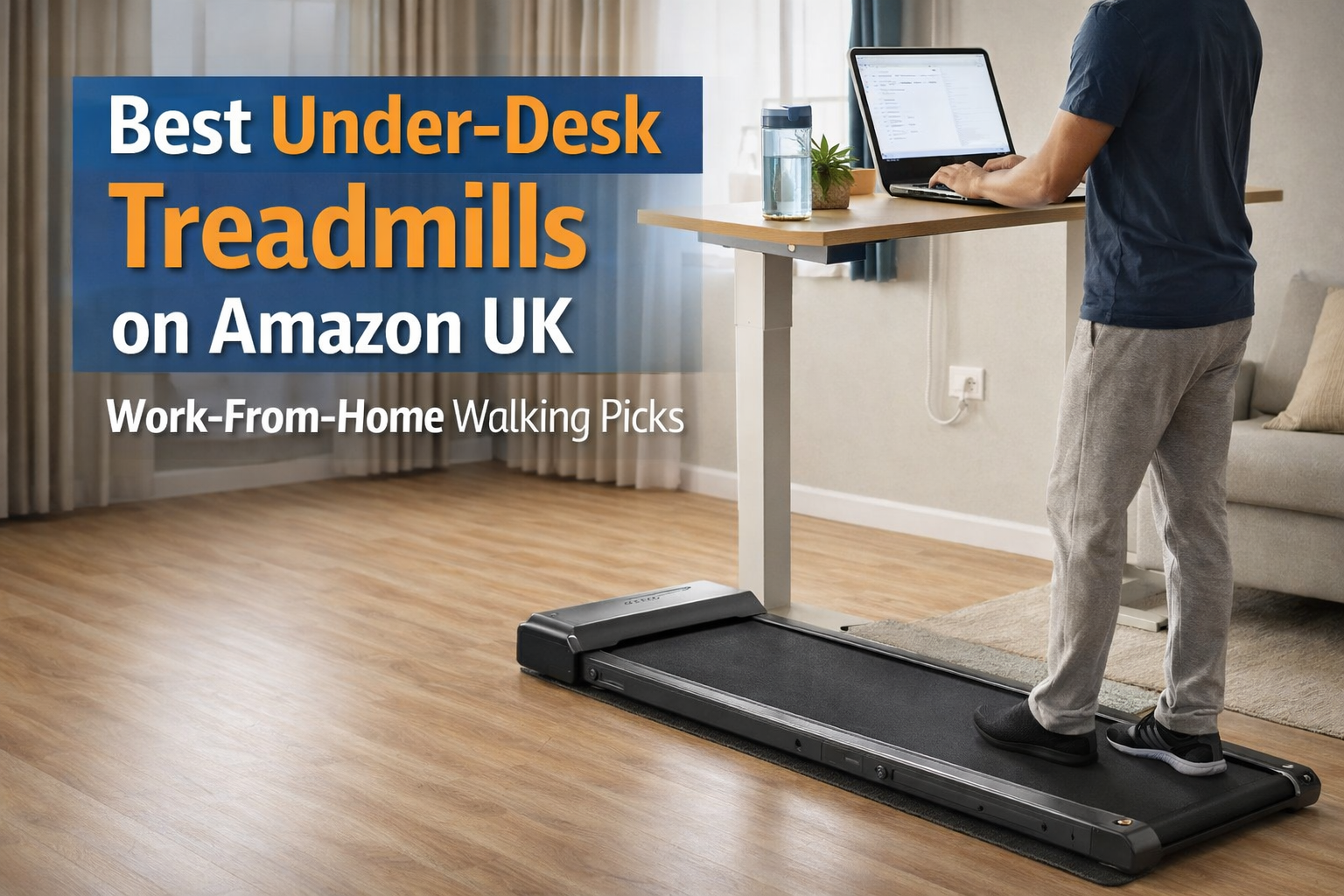
Walking pads have become one of the most popular home fitness investments in the UK — particularly for home workers, people managing joint conditions, and GLP-1 medication users who want low-impact daily movement without gym access. This guide covers the honest numbers and the best options. For the full buying guide: Best Walking Pads UK Guide (2026) and Best Under-Desk Treadmills UK.
The Calorie Burn Reality — Honest Numbers
| Walking Speed | Intensity | Calories/Hour (75kg) | Calories/Hour (100kg) | Calories/Hour (120kg) |
|---|---|---|---|---|
| 2.5 km/h | Easy stroll | 145 kcal | 195 kcal | 235 kcal |
| 3.5 km/h | Comfortable pace | 190 kcal | 255 kcal | 310 kcal |
| 5.0 km/h | Brisk walk | 255 kcal | 340 kcal | 415 kcal |
| 6.0 km/h | Fast walk / slow jog | 310 kcal | 415 kcal | 505 kcal |
If you walk for 45 minutes at 4 km/h (a comfortable working pace), a 95kg person burns approximately 220-250 kcal. Across 5 sessions per week, that is 1,100-1,250 additional kcal — roughly equivalent to 0.15-0.17kg of fat per week from walking alone. Combined with a dietary deficit, total weekly fat loss is significantly more.
The NEAT Effect — Why Walking Pads Add More Than the Numbers Show
NEAT (Non-Exercise Activity Thermogenesis) is the calorie burn from all movement that is not formal exercise. For desk workers, NEAT can account for only 15-20% of total daily energy expenditure — far lower than people with physically active lifestyles. A walking pad during work hours targets this specifically.
Research from the Mayo Clinic and others shows that sedentary individuals who replace sitting with low-intensity walking (even at 1.5-2 km/h) can increase their total daily energy expenditure by 350-600 kcal — a meaningful contribution to weight loss that compounds over weeks and months.
Realistic Weight Loss Expectations — Walking Pad Only vs Combined
| Scenario | Weekly Calorie Burn Added | Expected Monthly Fat Loss | Notes |
|---|---|---|---|
| Walking pad 30 min/day, 5 days | ~1,000-1,250 kcal | ~0.3-0.4 kg from walking alone | Low but meaningful as a supplement to diet |
| Walking pad 45-60 min/day, 5 days | ~1,500-2,500 kcal | ~0.5-0.8 kg from walking | Significant contribution; most people can achieve this with a standing desk setup |
| Walking pad + calorie deficit 500 kcal/day | ~4,500-5,500 kcal combined | ~1.2-1.6 kg per month | Realistic sustained fat loss pace |
| Walking pad + GLP-1 medication + calorie deficit | Variable — GLP-1 amplifies all components | ~1.5-2.5 kg per month | The combination most GLP-1 users aiming for maximum results should target |
Is Mounjaro or GLP-1 a Reason to Buy a Walking Pad?
Yes — and here is why. Muscle loss on GLP-1 is a significant concern. Walking does not build significant muscle, but it maintains the activity level that prevents the complete metabolic slowdown that can occur during rapid GLP-1-driven weight loss. Additionally, many GLP-1 users experience fatigue — particularly in the first 2-3 months. A walking pad allows movement during desk work without requiring the energy expenditure of a dedicated exercise session.
Which Walking Pad — Best Value UK Picks
Budget (Under £250)
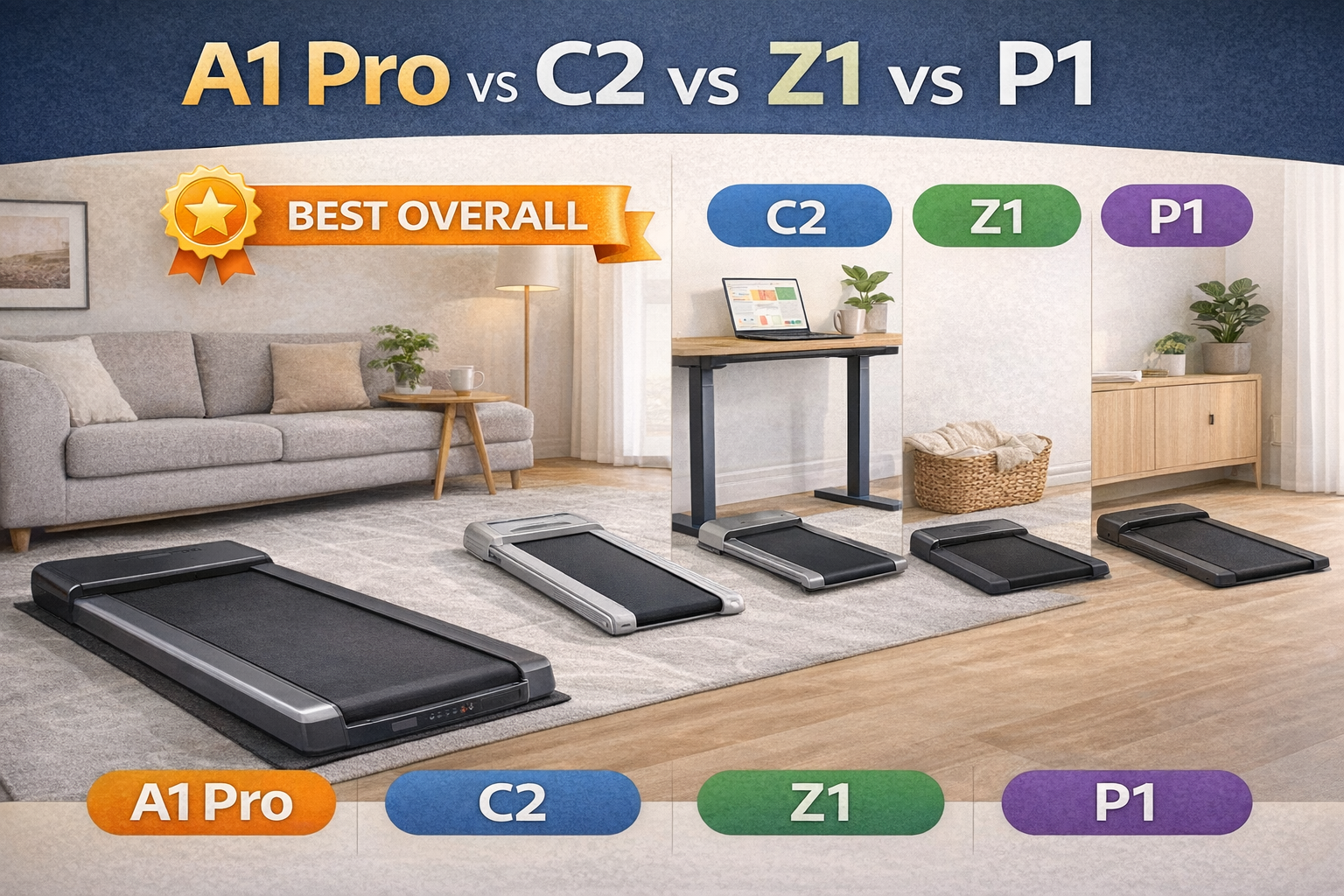
Walking pad under £250 UK — The WalkingPad A1 Pro and similar compact flat-fold units offer reliable performance at this price point. Suitable for speeds up to 6 km/h; quiet enough for video calls at 3-4 km/h; folds flat under a desk.
Mid-Range (£250-£500)
Walking pad £250-500 UK — Better motor, longer warranty, and usually a wider belt at this price. The WalkingPad C2, Xiaomi UREVO, and Walkingpad R2 are worth considering. Look for at least a 1.0 HP motor and 400mm belt width for comfortable use.
Premium (£500+)
Under-desk treadmill UK premium — Full under-desk treadmill models with higher speed ranges (up to 12 km/h), more robust motors, and longer warranties. Suitable for jogging intervals as well as walking. The Lifespan TR1200-DT and LifeFitness are benchmarks at this level.
Setting Up a Walking Pad Desk Routine
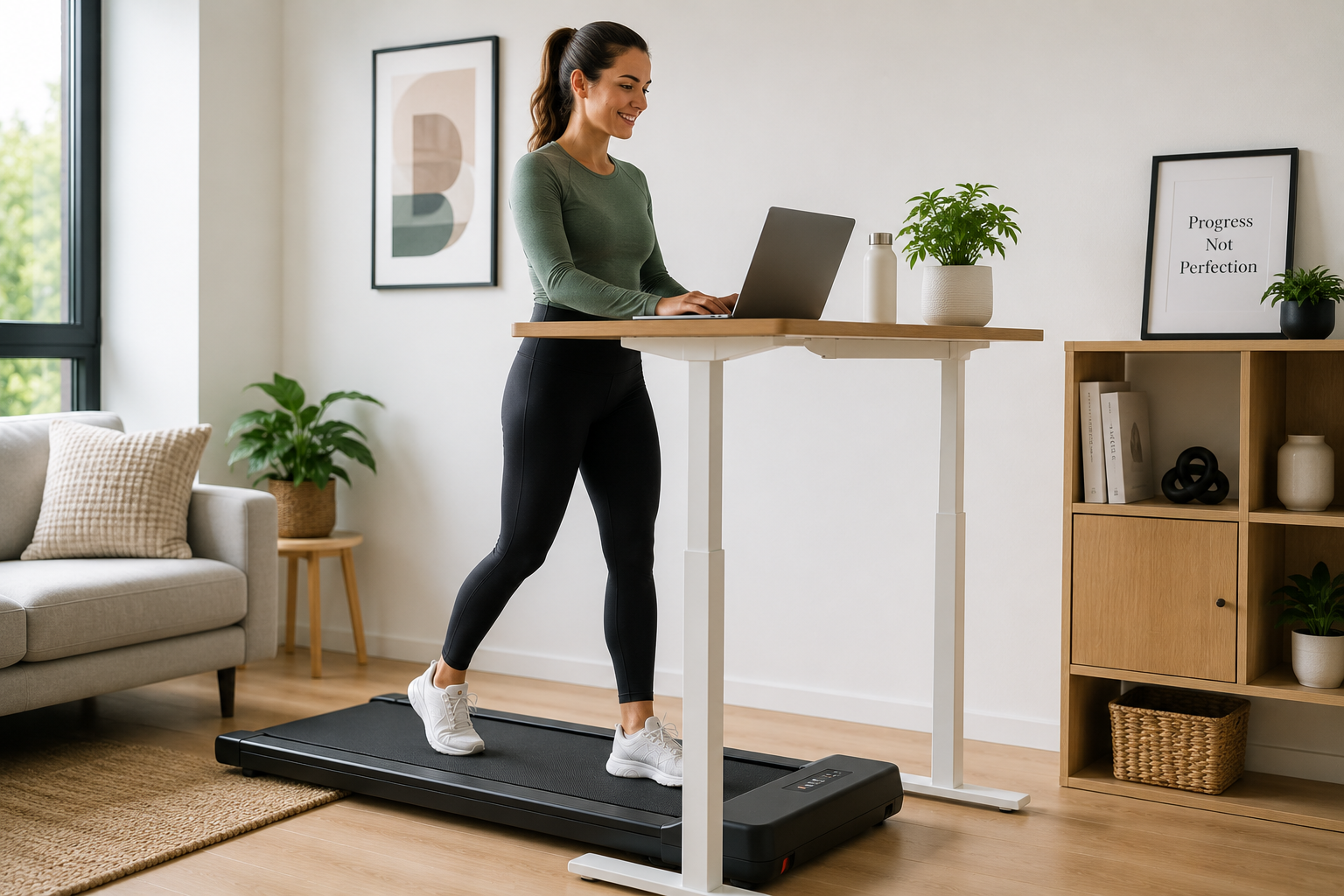
- Desk height: Your elbows should be at roughly 90 degrees when typing at walking pace. An adjustable desk or desk riser allows you to switch between sitting and walking without disruption.
- Speed during work: 2.5-4.0 km/h is the range where most people can type, write emails, and take calls without concentration suffering. Higher speeds for non-work movement sessions.
- Footwear: Wear supportive trainers, not socks alone. A good pair of cushioned walking trainers UK makes long sessions significantly more comfortable.
- Build up gradually: Start with 30 minutes per session in week 1; add 15 minutes per week until you reach your target duration
RECOMMENDED SUPPLEMENTS
Lily & Loaf — Quality Supplements for GLP-1 Users
Supporting daily walking with electrolytes and magnesium — Lily & Loaf covers hydration and muscle recovery for active GLP-1 users.
📚 RELATED READING
Some links in this post are affiliate links. If you purchase through them, I may earn a small commission at no extra cost to you. I only recommend products I use myself. Use code ALAN10 for 10% off Lily & Loaf. This post is for informational purposes only — always consult your GP for medical advice.
Walking Pad and GLP-1 Fatigue — Managing the Combination
GLP-1 medications often cause significant fatigue particularly in the first 6-12 weeks. This creates an apparent paradox: you need to move more, but the medication makes you more tired. The walking pad at low intensity resolves this for many users — 2-3 km/h while working does not require significant energy expenditure and does not worsen nausea, but maintains NEAT (non-exercise activity thermogenesis) levels that would otherwise collapse on a work-from-home sedentary day.
The combination of GLP-1 medication, reduced food intake, and reduced movement can significantly reduce total daily energy expenditure — which is why many people hit plateaus at 3-4 months despite continued medication compliance. A walking pad maintains the activity component that prevents this metabolic adaptation from accelerating.
Sources: Levine et al., Mayo Clinic: NEAT and obesity · Church et al., 2011: Exercise and weight loss maintenance data
Discover more from Healthy Weight Loss GLP1
Subscribe to get the latest posts sent to your email.