
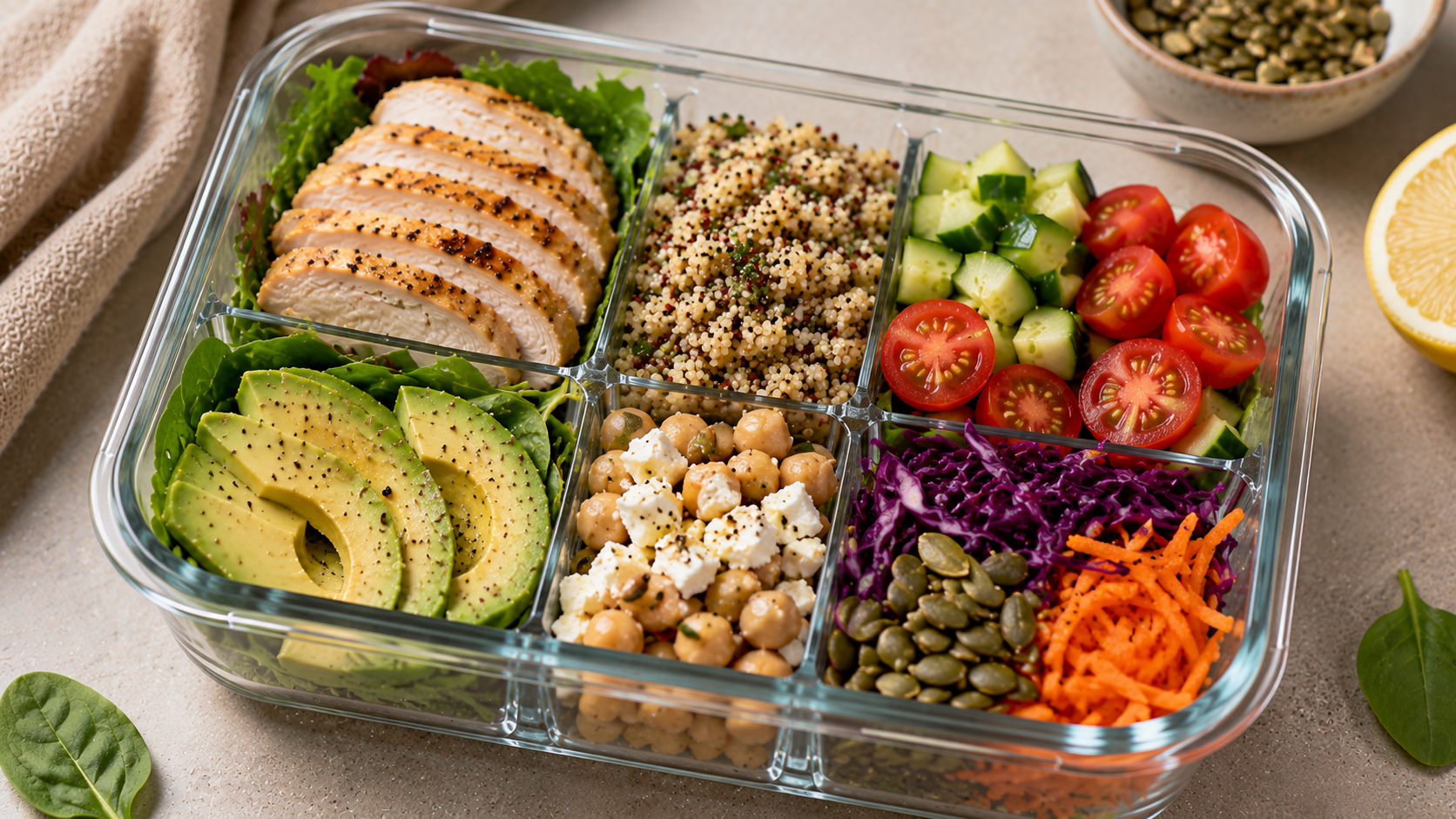
This is not so much a recipe as a system, and it is one of the most useful things I can share for staying on track at work. The ultimate salad box is a build-your-own template for a packed lunch that delivers around 20g of protein and 9g of fibre for 350 calories, beats any shop-bought meal deal hands down, and takes the daily lunchtime decision out of your hands entirely.
A quick word first: I am not a doctor or a dietitian, just someone who lived this. None of these foods or supplements are medication, and if you are on a GLP-1, check anything new with your GP or pharmacist. Right, let us get to it.
For the full approach to eating on the jab, see my complete GLP-1 guide, and for hitting protein, how much protein per day.
Why a salad box system works
The magic here is in having a repeatable system rather than a single recipe.
It kills the meal-deal habit. A proper packed lunch waiting in the fridge means you never have to rely on a shop, which is where most people’s diets quietly fall apart at lunchtime.
It is balanced by design. Built around a protein, complex carbs, veg and a dressing, a good salad box hits 20g of protein and 9g of fibre without you having to think about it each time.
It removes decision fatigue. When lunch is already made and in a box, there is no daily decision to get wrong. On a GLP-1, that reliability is priceless.
How the salad box saved my working lunches
I have said it before but it bears repeating: lunch at work was where I always slipped. The meal deal, the canteen, the vending machine — all of it conspired against me every single day. The thing that finally fixed it was not willpower, it was a system. Once I started building salad boxes at the start of the week, the daily battle simply disappeared. There was no decision to make, because lunch was already sorted and sitting in the fridge, better and cheaper than anything I could buy.
That is the real lesson here. Relying on willpower to make the right choice every single lunchtime is exhausting and it eventually fails. Building a system that makes the right choice automatic is what actually works. The salad box is that system for me, and it turned my single biggest weak point into a non-issue. If work lunches are your struggle, this is the answer — not trying harder, but removing the decision.
The macros that matter
Here is roughly what one serving gives you. Treat these as a guide rather than gospel, since it depends on your exact ingredients and portions:
| Approx per serving | Amount |
|---|---|
| Calories | ~350 kcal |
| Protein | 20g |
| Carbohydrate | 28g |
| Fat | 18g |
| Fibre | 9g |
The protein figure is the one I watch on a GLP-1. As a rough guide I aim for somewhere around 1.2 to 1.6g of protein per kilo of body weight across the day to protect muscle while losing fat, and I judge every meal by how much of that it contributes. I log meals like this in Cronometer (it is free) so I know I am actually hitting my targets rather than hoping. The first time I tracked properly I realised I was eating far less protein than I thought, so if you have never done it, give it two weeks.
What you need (serves 1)
- A protein: 100g cooked chicken, a tin of tuna, 2 boiled eggs, or chickpeas
- A complex carb: 60g cooked quinoa, a few new potatoes, or a little brown rice
- Plenty of veg: cucumber, tomatoes, peppers, grated carrot, whatever you like
- Leafy greens: a handful of spinach or rocket
- A healthy fat: ¼ avocado, olives or a few nuts
- Dressing: 1 tsp olive oil, lemon or balsamic, salt and pepper — kept separate
How to make it
- Choose your protein and add it to one section of the box — this is the priority, so do not skimp.
- Add your cooked complex carb in another section.
- Fill the rest with plenty of raw veg and leafy greens.
- Add your healthy fat — a little avocado, some olives or a scatter of nuts.
- Pack the dressing in a separate little pot so nothing goes soggy.
- Keep it in the fridge, and dress and toss it just before eating.
- Repeat with a few boxes at the start of the week for grab-and-go lunches.
Tuning your box
The system flexes to your goals:
Higher protein. Double the protein portion, or combine two — chicken and eggs, say — for a 35g-plus box.
Lower carb. Skip the grains and potatoes and load up on veg and protein instead.
More fibre. Add beans or chickpeas to the mix for an easy protein and fibre boost. See fibre on GLP-1.
The kit that makes it effortless
A system is only as good as how easy it is to stick to, and the right container makes a genuine difference here. A compartment or bento-style lunch box keeps everything separate, so your leaves stay crisp, your dressing stays off the salad until you want it, and nothing turns to mush by lunchtime. A little leakproof pot for dressing is the other key bit. It sounds trivial, but the reason most packed lunches fail is that they arrive soggy and unappealing, and good kit solves that completely. Invest a few pounds in a decent box and you remove the last excuse. It is the single cheapest upgrade you can make to your working-day eating, and it pays for itself against one week of skipped meal deals.
The whole point is the prep
This recipe is meal prep — that is its entire reason for existing. Cook a batch of protein and a batch of a complex carb at the start of the week, keep cut veg ready, and you can assemble several boxes in one go or build one each morning in two minutes. It is the absolute cornerstone of my meal prep ideas for Mounjaro, and getting into this rhythm is probably the single most impactful habit for staying on track during the working week.
How it fits a full day of eating
A well-built salad box at 20g of protein does a solid share of the day’s work, and if you double the protein it does even more. It sits comfortably alongside a protein-solid breakfast from my high-protein breakfasts and a proper high-protein dinner to see me well over my daily target.
Because the box is balanced by design — protein, carbs, veg, fats — it keeps me full and steady all afternoon, so I rarely need much after it, with a protein shake as a backstop. This is exactly the kind of reliable, balanced lunch that makes the whole-day target easy. My complete GLP-1 guide explains the framework.
No appetite today?
Because a salad box is built in sections, it is easy to scale to your appetite — just eat the protein and a bit of veg on a low day, leave the rest. Even that keeps your protein up. When even that is too much, HelloFresh keeps ready meals coming. More in what to eat with no appetite.
Supplements that pair well
A balanced box like this is a sign your eating is on track, so supplements can focus on filling gaps — a daily Super Supplemental and Super Omega-3 EPA cover the common ones. If you are building fibre with beans and veg, a probiotic like Pre + Pro 15 helps. The free Lily & Loaf lifestyle analysis matches a routine to you.
Frequently asked questions
What makes a good salad box?
Balance — a proper protein, some complex carbs, plenty of veg, a healthy fat and a separate dressing. Get those five and you have a satisfying, balanced lunch every time.
How do I stop it going soggy?
Keep the dressing in a separate pot and add it just before eating, and use a compartment box so wet ingredients do not sit against the leaves. This is the number one trick.
How much protein should it have?
Aim for at least 20g — a good portion of chicken, tuna, eggs or chickpeas. Double up or combine two proteins for a 35g-plus box on a hungrier day.
Is it really cheaper than a meal deal?
Far cheaper, especially if you batch-cook. A homemade box costs a fraction of a daily meal deal and is far more nutritious, so it saves money and improves your diet at once.
How many can I prep at once?
Two or three days’ worth keeps well if the dressing is separate and the ingredients are sturdy. For longer, prep the components and assemble each morning so leaves stay crisp.
The bottom line
The ultimate salad box is a system, not a recipe — a build-your-own template that delivers 20g of protein and 9g of fibre, beats any meal deal, and removes the daily lunchtime decision that derails so many people. The secret to work lunches is not willpower, it is a system that makes the right choice automatic. Invest in a good compartment box and you remove the last excuse. To match your supplements to a balanced routine, the free Lily & Loaf lifestyle analysis is a quick, no-pressure check.
The tools I lean on
If you are putting a GLP-1 routine together, this is the order I would do it in, free tools first:
- Track a fortnight of food in Cronometer so you can see your real protein and calories.
- Take the free Lily & Loaf lifestyle analysis to find the supplements actually worth buying.
- Start an Audible trial for something to listen to while you cook or walk.
- Keep HelloFresh on standby for the weeks cooking from scratch just is not happening.
A bit about me
I am Alan Spicer. I lost around seven stone on Mounjaro and filmed the whole thing, warts and all, on my YouTube channel. Simple, protein-first lunches like this were a real part of how I held onto muscle and kept the weight off.
This article shares my personal experience and general information only. It is not medical advice. Food and supplements support a balanced diet and healthy lifestyle and do not replace it or any treatment prescribed by your doctor. Speak to your GP or pharmacist before making changes, especially while on a GLP-1 medication. Nutrition figures are approximate and will vary with the exact ingredients and brands you use.
Inspired by the kind of fresh, wholefood lunches in the Lily & Loaf lunches collection. This is my own version, written from my own kitchen.
Discover more from Healthy Weight Loss GLP1
Subscribe to get the latest posts sent to your email.