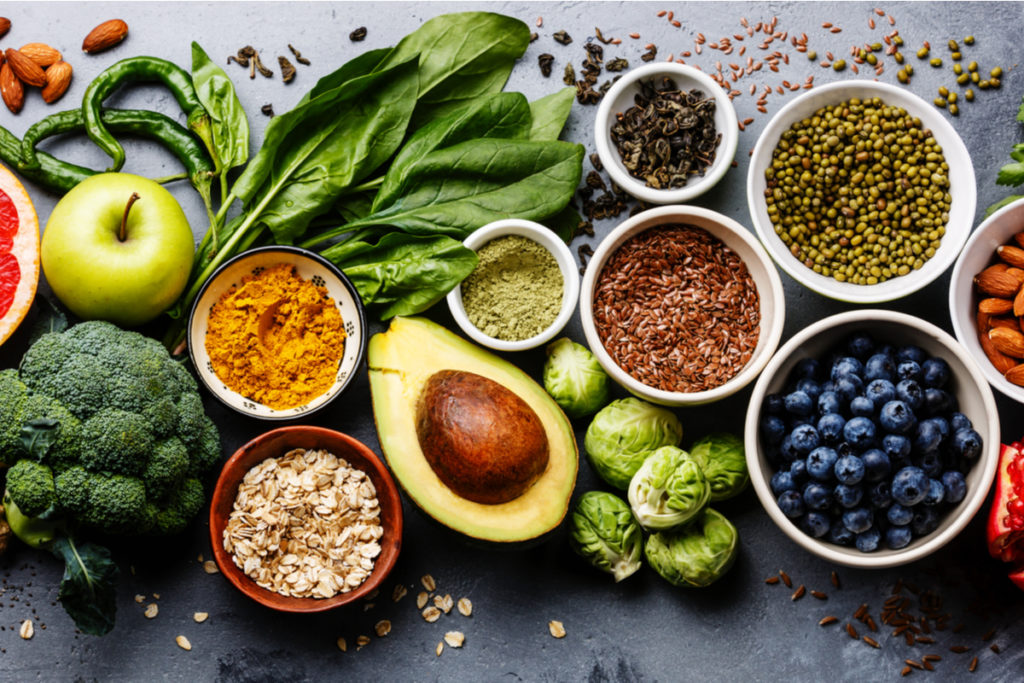

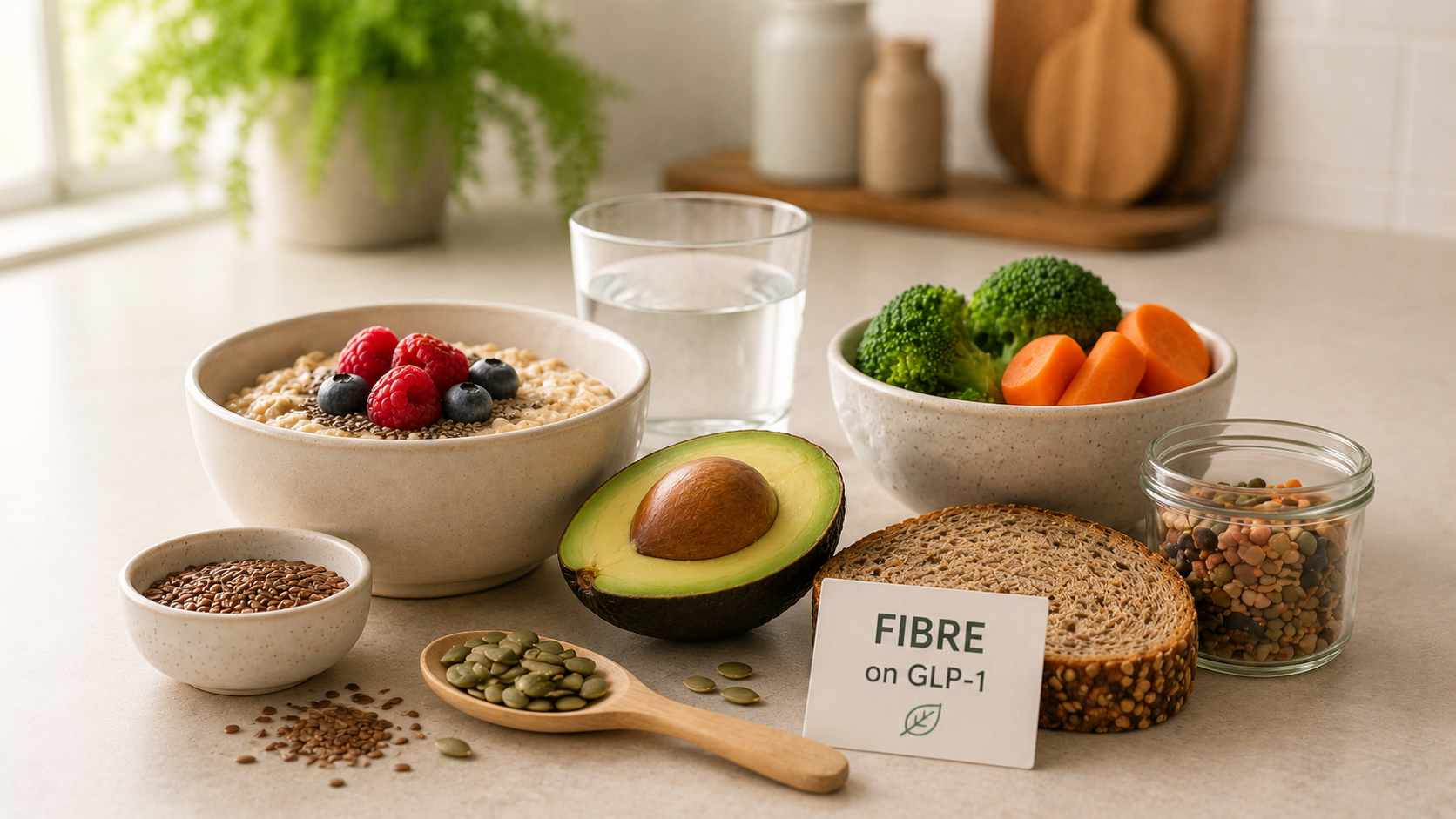
Most UK adults eat 18–20g of fibre a day. The official NHS recommendation is 30g. On a GLP-1, where you’re eating meaningfully less total food and gastric transit is slowed, hitting 30g is harder AND more important than it used to be — for constipation prevention, blood sugar stability, satiety, and long-term gut health. This is the honest UK guide to fibre on a GLP-1: why it matters, where to get it from, how to hit 30g consistently, and which supplements are worth considering if food alone isn’t getting you there.
For constipation specifically see Constipation on GLP-1. For the broader nutrition stack: The Nutrition Stack in the Complete Guide.
Why fibre matters more on a GLP-1
Four distinct reasons:
1. Constipation prevention. Slowed gastric emptying plus reduced food volume plus reduced water intake creates the conditions for constipation. Adequate fibre (particularly soluble fibre) maintains bowel motility and transit regularity.
2. Blood sugar smoothing. Fibre — particularly soluble fibre — slows carbohydrate absorption, which smooths post-meal blood sugar peaks. Even for non-diabetic users, this translates to better energy stability through the day and reduced afternoon crashes.
3. Satiety amplification. The medication suppresses appetite via central mechanisms. Fibre adds physical fullness via stomach distension and prolonged gastric time. The combination means smaller meals feel more satisfying.
4. Gut microbiome support. Reduced food intake affects gut flora diversity. Adequate prebiotic fibre (inulin, resistant starch, certain oligosaccharides) feeds beneficial bacteria, partially counterbalancing the diversity loss.
In short: fibre isn’t just a general health recommendation; it addresses several specific GLP-1-related issues simultaneously.
Types of fibre and what they do
Soluble fibre
Dissolves in water to form a gel-like substance. Slows digestion, feeds gut bacteria, can modestly lower cholesterol. Sources: oats, barley, beans, lentils, chia seeds, flaxseed, apples, pears, psyllium husk.
Insoluble fibre
Doesn’t dissolve in water; passes through largely intact, adding bulk to stool. Sources: whole grains (wholemeal bread, brown rice), bran cereals, wheat bran, vegetables (especially leafy greens and skin-on root veg), nuts.
Prebiotic fibre
Specific fibres that selectively feed beneficial gut bacteria. Sources: inulin (found in onions, garlic, leeks, Jerusalem artichokes, chicory root), resistant starch (found in cooled cooked potatoes, rice, oats, legumes, green bananas).
For GLP-1 users, the balanced combination of all three types is ideal — soluble for motility, insoluble for stool bulk, prebiotic for microbiome support.
Reading the UK labels
UK food labels give fibre content per 100g and per serving. NHS target: 30g per day for adults (15g+ specifically for kids).
High-fibre claim thresholds (used in marketing):
- “Source of fibre”: at least 3g per 100g
- “High in fibre”: at least 6g per 100g
Many foods marketed as “high fibre” are relative to their category but still modest in absolute terms. Porridge oats at 9g per 100g is legitimate high-fibre; a cereal bar at 2g per serving labelled “with added fibre” is marketing.
Best fibre-dense UK foods
In descending order of fibre per typical serving:
- 1 tbsp (15g) chia seeds: 5g fibre
- 1 tbsp (14g) ground flaxseed: 4g fibre
- 1 cup (180g) cooked black beans: 15g fibre
- 1 cup (180g) cooked lentils: 15g fibre
- 1 cup (180g) chickpeas: 12g fibre
- 50g oats (dry weight): 5g fibre
- 1 medium apple (with skin): 4g fibre
- 1 medium pear: 6g fibre
- 1 medium avocado: 10g fibre
- 1 cup (90g) raspberries: 8g fibre
- 1 cup (150g) blackberries: 8g fibre
- 1 medium sweet potato (skin on): 4g fibre
- 1 cup (90g) broccoli: 5g fibre
- 100g whole wheat pasta (dry): 8g fibre
- 2 slices Burgen seeded bread: 6g fibre
- 1 tbsp psyllium husk: 5g fibre
- 30g almonds: 3.5g fibre
- 50g dried figs: 5g fibre
- 1 cup (40g) All-Bran: 10g fibre
Mix these through meals and hitting 30g becomes very achievable even at reduced total food intake.
A realistic 30g-fibre day on a GLP-1
Demonstrating 30g is achievable without needing supplements:
Breakfast: Greek yogurt bowl with 1 tbsp chia seeds, 1 cup raspberries, 30g granola with oats. Fibre: ~12g
Morning snack: 1 medium apple with skin. Fibre: ~4g
Lunch: Grilled chicken salad with 80g chickpeas, mixed greens, avocado (half), seeds. Fibre: ~10g
Afternoon snack: 30g almonds. Fibre: ~3.5g
Dinner: Salmon with 100g cooked wholemeal pasta and steamed broccoli. Fibre: ~7g
Total: ~36g fibre. Comfortably over target without any supplements.
Realistically, most people miss target because they skip at least one of these fibre-dense elements. The fix is usually adding just 1–2 specific things: chia or flaxseed on breakfast, legumes in one meal, or fruit with skin as a snack.
The fibre ramp-up rule
If your current intake is 15g/day, jumping straight to 30g/day will make you miserable. Bloating, gas, cramping, worsened digestion for 2–3 weeks as your gut adapts.
The correct approach: increase by 3–5g per day every 7–10 days until you reach target. Takes 4–6 weeks to ramp from 15g to 30g.
Pair with increased fluid intake. Fibre + inadequate water = worse constipation, not better. Aim for 2.5–3L of fluid daily once you’re at higher fibre intake.
Fibre supplements: when to use them
For people who genuinely can’t hit 30g through food alone (very small total food intake, travel, specific restrictions), supplements help. The main options:
Psyllium husk (Fybogel or generic)
5g soluble fibre per 5g dose. Around £5–£8 for 30 sachets.
The classic. Mostly soluble fibre. Helps with both constipation and loose stools (it normalises). Mix in water or juice; drink quickly before it gels. Works particularly well as an overnight fibre-up — 1 tbsp before bed with a glass of water. Fybogel is the UK pharmacy standard but generic psyllium husk is cheaper and identical.
Buy from: Psyllium Husk on Amazon UK.
Ground flaxseed
4g fibre per 14g tbsp. Around £4–£6 for 500g.
Cheaper than chia, similar fibre content, plus ALA omega-3 and lignans. Sprinkle on yogurt, stir into oats, add to smoothies. Must be ground rather than whole for fibre to be accessible (whole seeds pass through largely undigested).
Buy from: Ground Flaxseed on Amazon UK.
Chia seeds
5g fibre per 15g tbsp. Around £8–£12 for 500g.
Higher fibre per gram than flaxseed. Doesn’t need grinding. Mix with liquid (yogurt, milk, water) and wait 10+ minutes for texture to develop, or stir through oats. Can be eaten dry too but more effective when hydrated.
Buy from: Chia Seeds on Amazon UK.
Prebiotic-specific supplements (inulin, FOS)
5g fibre per scoop, prebiotic-focused. Around £15–£25 for 500g.
Specifically targets beneficial gut bacteria. Mixes easily into drinks. Worth considering if gut microbiome support is a specific goal — some GLP-1 users find this helps with bloating that isn’t just constipation. Note: can cause gas during the first 1–2 weeks of adaptation; start with half dose and build up.
Buy from: Inulin Prebiotic Fibre on Amazon UK.
Protein powders with added fibre
Two birds, one stone: protein powders that include fibre (like Lily & Loaf Super Protein with Fibre) add 5g fibre per scoop while hitting your protein target. Useful if you’re having 1–2 shakes a day anyway.
Buy from: Lily & Loaf Super Protein with Fibre.
What not to treat as fibre
Several things are marketed as high-fibre but deliver less than the label suggests in meaningful form:
- Fibre bars (Nutri-Grain, cereal bars) — often 2–3g per bar; the label “source of fibre” is technically correct but nutritionally underwhelming for 150–200 calories.
- White bread marketed “with added fibre” — usually 2g per slice vs 3–4g in genuine wholemeal bread. The “added” fibre is often isolated fibres that may not have the same effects as whole-food fibre.
- Fruit juice — removes most of the fruit’s fibre during juicing. Whole fruit is the fibre source, not juice.
- “Fibre” yogurts — often 2–3g per pot, with substantial added sugar. Plain Greek yogurt with chia seeds added gives more fibre with less sugar.
- Gummy fibre supplements — usually 2–3g per 2-gummy serving with added sugar. The supplement forms above (psyllium, ground flaxseed) are cheaper and more effective.
Fibre and gas/bloating
Some fibre-rich foods produce more gas than others, particularly during the ramp-up period. High-gas foods: beans, lentils, broccoli, cabbage, onions, artichokes. Lower-gas high-fibre options: oats, berries, chia, flaxseed, pears, apples.
If you’re bloated and gassy during fibre increases, slow the ramp and lean toward lower-gas sources. Your gut adapts over 2–4 weeks; what’s initially gas-producing usually becomes tolerable.
Fibre and iron absorption
High-fibre meals can slightly reduce iron absorption from plant sources (phytic acid in whole grains and legumes binds iron). For most users this isn’t meaningful; for vegetarians or vegans, or people with known iron deficiency, consider:
- Pair iron-rich foods with vitamin C sources (boosts absorption)
- Don’t combine iron supplement with high-fibre meal; separate by 2 hours
- Get periodic ferritin blood tests if you’re in an at-risk group
The one-week fibre upgrade protocol
If you’re currently at 15–20g fibre and want to get to 30g without upsetting your gut:
Week 1: Add 1 tbsp chia seeds to breakfast yogurt or oats daily. Increases fibre by ~5g. Drink an extra 500ml water.
Week 2: Add a side of legumes (1/2 cup) to one meal daily. Increases fibre by another ~7g. Monitor digestion; slow down if uncomfortable.
Week 3: Switch white bread/pasta/rice to wholemeal versions. Adds another 3–5g.
Week 4: Add 1 skin-on apple or pear as a snack daily. Another 4–6g.
Week 5 onwards: Stable at roughly 30g. Adjust based on comfort and bowel function.
The whole ramp takes about a month. Gentle enough that your gut adapts; fast enough that you see benefit within weeks.
Fibre timing: does it matter?
Not dramatically, but:
- Morning fibre tends to help bowel regularity if you’ve been constipated — gives the fibre all day to move through.
- Evening fibre (e.g. psyllium before bed) can also work, particularly if morning digestion is rushed.
- Fibre with every meal smooths blood sugar consistently through the day.
- Fibre with protein-rich meals can slow protein absorption modestly; for most users this is trivial, but those specifically chasing post-workout protein timing may want to separate them.
Most people are best served by spreading fibre across all meals rather than loading one time slot.
When to worry
Signs that fibre intake isn’t going well:
- Persistent severe bloating for weeks rather than days
- Worsening constipation despite increased fibre and fluid
- Abdominal pain
- Blood in stool
- Unexpected weight changes beyond what your GLP-1 predicts
These aren’t fibre issues specifically but can be surfaced by fibre changes. See GP if any persist.
The summary
Fibre is one of the most underrated levers for a better GLP-1 experience. 30g daily, mostly from food, with supplements as backup if needed. Ramp up slowly, drink plenty of water, spread across meals. The difference between 15g days and 30g days is meaningful for constipation, energy, and appetite management.
For the rest of the nutrition picture: The Nutrition Stack. For constipation specifically: Constipation on GLP-1. For everything else: Complete GLP-1 Weight Loss Guide.
Nutrition note: general guidance for most adults. People with specific GI conditions (IBS, IBD, diverticular disease) may need tailored fibre advice — consult a registered dietitian. Disclosure: some links are affiliate links; the site earns a small commission at no extra cost to you.
Discover more from Healthy Weight Loss GLP1
Subscribe to get the latest posts sent to your email.