
Dinner is the trickiest meal of the day on a GLP-1 — your appetite is at its lowest, yet dinner is typically the biggest social meal, often family-shared, and the one where “just eat less of what everyone else is having” turns into “barely eat anything” if you don’t plan. This post is 12 high-protein dinner ideas that work for GLP-1 users, scale down gracefully for appetite-suppressed evenings, and, importantly, work for the rest of the household too — not separate portions or compromise meals.
For breakfast and lunch ideas see High-Protein Breakfast and High-Protein Lunch. For the framework: The Nutrition Stack in the Complete Guide.
Why dinner is the hardest meal
By dinnertime, four things have worked against your appetite:
- The medication has had all day to suppress appetite
- You’ve eaten breakfast and lunch already (even if small)
- Your gastric emptying is slow, so lunch may still be sitting there
- Evening cortisol is low, which further reduces hunger signals
The result: you sit down with the family, there’s a lovely dinner, and you can eat three forkfuls before you’re genuinely full. The mistake most people make is trying to force a bigger portion for the sake of nutrition targets, which just causes reflux and discomfort. The better strategy is protein-dense, portion-smart dinners where even a small serving hits your targets.
The 12 dinners
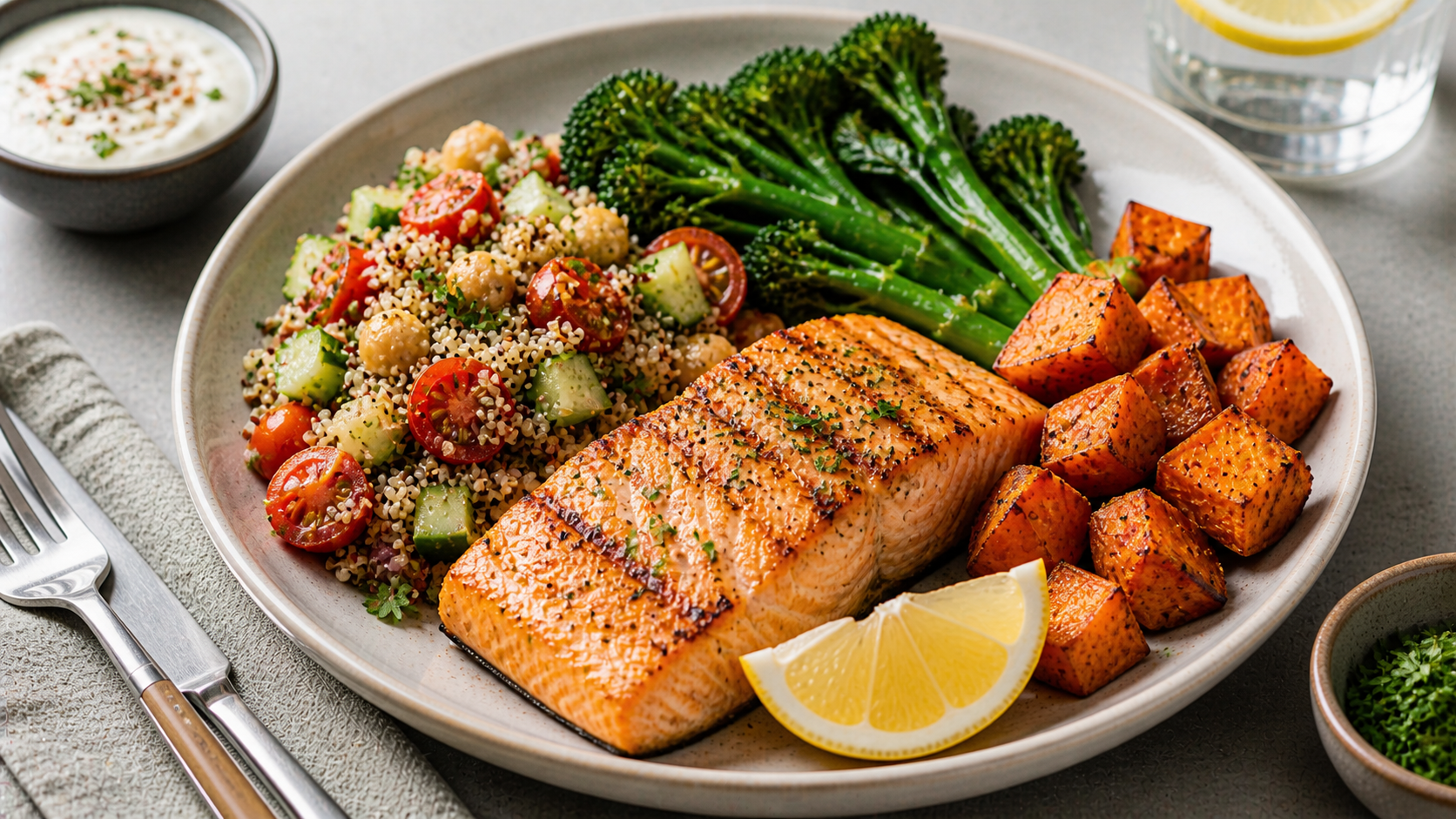
1. Oven-baked salmon with greens and quinoa
150g salmon fillet (33g protein) + steamed broccoli or tenderstem + 80g cooked quinoa (3g). Total: ~38g protein, ~450 cal.
Salmon is the perfect GLP-1 dinner: dense in protein, rich in omega-3s (which help with inflammation during rapid weight loss), and feels light on a slow-emptying stomach. Bake with lemon, dill, salt, pepper, olive oil at 200°C for 12–15 minutes. Steam the greens. Quinoa cooks in 15 minutes separately or can be pre-made and reheated.
2. Grilled chicken with Mediterranean traybake
150g grilled chicken breast (37g protein) + tray-roasted peppers, courgettes, red onion, aubergine, cherry tomatoes + 30g feta sprinkled on top (5g). Total: ~42g protein, ~420 cal.
One tray in the oven; minimal washing up. Coat chicken with olive oil, garlic, oregano, salt, pepper. Chop vegetables into chunks, toss with olive oil and herbs. Roast together at 200°C for 25 minutes. Crumble feta over at the end. The traybake format is family-friendly — everyone helps themselves, you take a smaller chicken portion and more veg.
3. Steak with roasted sweet potato and asparagus
150g sirloin or rump steak (35g protein) + 200g roasted sweet potato (4g) + 100g grilled asparagus. Total: ~40g protein, ~500 cal.
Saturday night dinner. Steak cooks in 6–8 minutes in a hot pan. Sweet potato takes 30 minutes in the oven — cube it, toss with oil, salt, paprika. Asparagus: 5 minutes grilled or pan-fried. Rest the steak for 5 minutes before slicing. A slightly more calorific dinner, but almost all the calories are protein and complex carbs; easy to scale down to a smaller steak portion (100g is still 24g protein) if appetite is light.
4. Turkey mince lettuce wraps
150g lean turkey mince cooked with garlic, ginger, soy, chilli (36g protein) + baby gem lettuce cups + spring onion, peanuts, lime. Total: ~40g protein, ~380 cal.
Asian-inspired, light-feeling, properly high-protein. Brown the turkey mince in a pan, add minced garlic, grated ginger, soy sauce, chilli flakes, a splash of fish sauce, lime juice. Serve in baby gem lettuce leaves with crushed peanuts and fresh coriander. Family portion scales easily. Genuinely delicious and not heavy — perfect GLP-1 evening food.
5. Roast chicken Sunday dinner (leftovers for 3 days)
150g roast chicken breast (38g protein) + 200g roast vegetables + 30g Brussels sprouts or cabbage. Total: ~42g protein, ~450 cal.
Sunday roast, scaled down on potatoes and dressed up on protein. Roast a whole chicken (1.6–2kg) with the usual treatment; skip or halve the roast potatoes; double the vegetables. Leftovers fuel Monday’s lunch salad and Tuesday’s lunch wrap, so the Sunday cooking effort pays off across three meals.
6. Thai-style prawn curry
200g king prawns (40g protein) + Thai green or red curry paste + coconut milk (half-fat) + vegetables + small portion basmati rice. Total: ~44g protein, ~480 cal.
Quick curry: sauté 2 tablespoons of Thai green or red paste in a pan, add 200ml light coconut milk, add chopped vegetables (pak choi, mangetout, peppers, baby corn), simmer 5 minutes, add prawns, cook for 4 minutes until pink. Small portion rice (60g uncooked) as a side. Prawns are brilliant GLP-1 protein — very high protein, very low calorie, easy to digest.
7. Cod with lentils and greens
150g baked cod fillet (30g protein) + 150g cooked Puy lentils (15g) + wilted spinach with garlic. Total: ~45g protein, ~400 cal.
Mediterranean comfort. Puy lentils hold their shape and bring earthy flavour plus meaningful protein — Merchant Gourmet pouches are 2 minutes in the microwave if you don’t want to cook from dry. Pan-wilt spinach with crushed garlic and olive oil. Cod bakes in 15 minutes at 200°C with lemon and dill. Light, digestible, filling.
8. Vegetarian: paneer and vegetable curry
150g paneer cubed (27g protein) + spinach or pea curry + 60g basmati rice. Total: ~34g protein, ~480 cal.
Paneer is one of the highest-protein vegetarian options available in UK supermarkets (most are 18g protein per 100g, similar to feta but holds cooking heat). Pan-fry cubes until golden, set aside. Make a sauce: onion, garlic, ginger, tinned tomatoes, spices (cumin, coriander, turmeric, chilli, garam masala), add spinach at the end. Return paneer. Small portion rice. Genuinely excellent.
9. Bolognese with lentils (protein-boosted)
150g portion of beef-and-lentil bolognese (28g protein) + high-protein pasta 80g cooked (15g). Total: ~43g protein, ~500 cal.
Family dinner classic, protein-boosted. Make bolognese with lean beef mince plus a tin of green lentils added in the last 20 minutes — bulks it out, adds protein and fibre, the kids won’t notice. Serve over high-protein pasta (Barilla High Protein or similar). A meaningful upgrade over standard bolognese on white pasta (~18g protein) with no taste compromise.
10. Greek-style chicken with tzatziki and feta
150g grilled chicken thigh or breast (36g protein) + Greek salad (tomato, cucumber, olive, red onion, 50g feta — 8g protein) + 100g tzatziki (5g). Total: ~49g protein, ~450 cal.
No cooked carbs — the meal is protein-dense enough without. Grill or pan-fry chicken with oregano, lemon, garlic. Chop vegetables into a chunky Greek salad with feta and olives. Tzatziki: Greek yogurt, grated cucumber, garlic, mint, lemon. Light, Mediterranean, feels summery even in January.
11. Tofu and vegetable stir-fry with noodles
200g extra-firm tofu (22g protein) + vegetables + 60g cooked rice noodles + 30g cashews or peanuts (5g protein). Total: ~28g protein, ~480 cal. Add edamame 80g shelled for extra 9g to clear 35g.
Plant-based option. Press tofu, cube, pan-fry until golden on all sides (high heat, oil, don’t move it too much). Stir-fry mixed vegetables (broccoli, peppers, mangetout, spring onion, pak choi). Sauce: soy, sesame oil, rice vinegar, garlic, ginger, chilli. Combine, serve over rice noodles with crushed nuts. Edamame on the side pushes protein over 35g.
12. Slow-cooker shredded chicken chilli
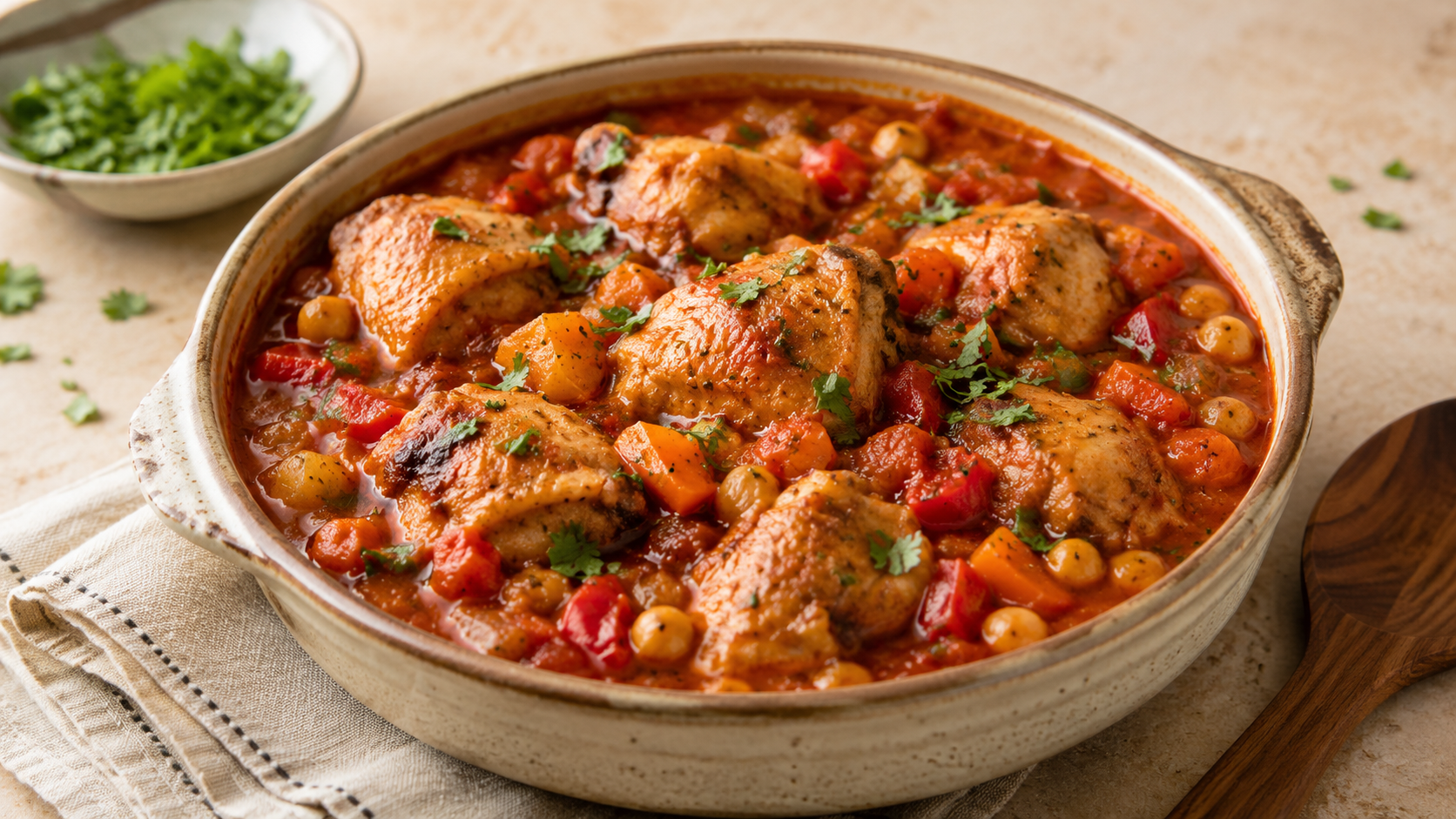
150g portion of shredded chicken chilli (35g protein) with beans, peppers, tomato + small portion of rice or topped with crumbled feta and coriander. Total: ~40g protein, ~400 cal.
For busy weeknights when you want dinner to be ready when you walk in. 4 chicken breasts in the slow cooker with a tin of black beans, a tin of chopped tomatoes, a tin of kidney beans, chopped peppers, onion, garlic, cumin, smoked paprika, chilli powder. 6 hours on low, shred the chicken at the end with two forks. Feeds the family, lunches for two days, genuinely high protein.
Portion strategy when your appetite is small
On a GLP-1, your dinner plate will often have food left on it. Two rules that help:
1. Protein first. Eat the chicken/fish/tofu portion before touching rice, pasta, bread, or potato. If you’re full after 70% of the plate, you’ve still hit your protein target; the carbs are optional.
2. Portion smaller from the start. Plating a smaller serving rather than a full portion and leaving half is mentally easier and reduces food waste. A 100g piece of chicken on your plate is still 25g+ protein; no need to plate 200g you won’t finish.
Sharing practical guidance: most households find it works to serve dinner “family-style” where everyone helps themselves, rather than pre-plating individual portions. The GLP-1 user takes a smaller serving without it being commented on, kids get their full portions, and everyone eats the same meal.
What to avoid as dinner
- Heavy pasta dishes with meat sauce as a side. Standard spaghetti bolognese is carb-dominant, 15–20g protein for 500–600 cal. Use high-protein pasta and more meat/lentils in the sauce.
- Pizza nights without a strategy. A standard 12″ pizza slice is 10–14g protein for 300 cal. Protein-poor. If pizza is dinner, add a big grilled chicken or prawn side salad.
- Takeaway Indian/Chinese dominated by carbs. Rice + naan + poppadoms + a small portion of curry = mostly carbs, modest protein. Flip the ratio: smaller rice, bigger portion of grilled protein (tandoori chicken, saag paneer, prawn biryani with extra prawns, stir-fried beef without much rice).
- Salad-for-dinner trap. A big leaf salad dressed with vinaigrette is great but 8–12g protein without significant animal protein or pulses. Make sure there’s real protein on the salad.
- “Just a toast” or “just a soup” dinners. Sometimes your appetite is so minimal these are tempting. If so, rescue with a protein shake or a side Babybel to hit at least 20g.
Cooking once, eating multiple meals
The highest-ROI dinner habit on a GLP-1 is cooking once and eating 2–3 times. Recipes that scale:
- Chilli (makes 6 portions; freezes; lunches for 3 days)
- Turkey or chicken curry (4–5 portions)
- Roast chicken (dinner + two lunches + soup from carcass)
- Bolognese (4–6 portions; freezes)
- Traybake chicken + veg (dinner + next day’s lunch)
If you cook one of these on Sunday evening, Monday and Tuesday’s meals are solved, which is particularly useful when you’re still in the energy-adjusting phase of a GLP-1.
Dinner and the evening routine
Three behavioural notes that make dinner go better on a GLP-1:
1. Eat at least 2 hours before bed. Slow gastric emptying means a late dinner lies heavy overnight and causes reflux. A 7pm dinner is ideal; 9pm is pushing it.
2. Sit upright for 30 minutes after. Don’t lie down on the sofa straight after eating. Gravity helps the meal move through.
3. Short walk after dinner is a superpower. 10–15 minutes of walking after dinner aids digestion, helps the meal move through faster, reduces reflux risk, adds 1,000–1,500 steps, and is a pleasant way to wind down the day. If you do one thing on this list, do this one.
Eating out at dinner
Same framework as the lunch version: order protein-forward, go for grilled over fried, look at the starters section for smaller protein portions, and don’t feel obligated to finish the plate. UK dinner portions are typically larger than you’ll eat on a GLP-1; leaving food is fine. Ask for a box.
Most UK restaurants will happily do “steak with vegetables instead of chips” or “chicken without the bread.” Just ask.
The one habit that matters most
Plan your dinner before 4pm. Not “I’ll figure it out at 6pm” planning — actual “this is what’s happening tonight” planning. Weight loss consistency on a GLP-1 is less about discipline in the moment and more about not finding yourself at 7pm with no plan, tired, suppressed appetite, and a takeaway menu in your hand. A meal prepped, a plan made, a batch of chilli in the fridge — the dinner is decided before the tired evening version of you has to decide it.
For the week’s worth of meal planning: How to Create a GLP-1 Meal Plan UK. For the broader nutrition stack: The Nutrition Stack in the Complete Guide.
Nutrition note: general suggestions for most adults on a weight loss journey. Specific medical conditions may change protein needs; consult your GP or registered dietitian for personalised advice.
Discover more from Healthy Weight Loss GLP1
Subscribe to get the latest posts sent to your email.