
Weight loss costs between nothing and tens of thousands of pounds in the UK, depending entirely on which path you take. A self-managed dietary change costs only food (potentially less food than before). Private Mounjaro for 12 months costs £2,200–2,800. Bariatric surgery costs £8,000–15,000. This guide gives the honest cost breakdown for every major weight loss approach available to UK adults in 2026, what each produces in terms of results, and how to assess which represents the best value for your specific situation.
The complete cost comparison: weight loss in the UK 2026
| Method | 12-month cost (typical) | Expected weight loss | Cost per kg lost | Maintenance cost |
|---|---|---|---|---|
| Self-managed diet | £0–200 | 3–8kg | £0–67 | £0 |
| Slimming World membership | £230–300 | 5–10kg | £30–60 | £200–300/yr |
| WW (WeightWatchers) | £180–250 | 4–8kg | £30–63 | £180–250/yr |
| NHS Tier 2 programme | £0 (via referral) | 4–6kg | £0 | £0 |
| Private dietitian (12 sessions) | £600–1,200 | 6–12kg | £70–200 | £400–800/yr |
| NHS Wegovy (where available) | ~£120 (prescription charges) | 12–16kg | £8–10 | ~£120/yr ongoing |
| Private Wegovy (semaglutide) | £1,800–2,400 | 12–17kg | £130–190 | £1,000–1,500/yr (maintenance dose) |
| Private Mounjaro (tirzepatide) | £2,200–2,800 | 18–25kg | £100–145 | £900–1,800/yr (maintenance dose) |
| NHS Mounjaro (Cohort 1) | ~£120 (prescription charges) | 18–25kg | £6–7 | ~£120/yr ongoing |
| Bariatric surgery (sleeve) | £8,000–12,000 | 35–50kg | £200–340 | £0 (one-time) |
| Bariatric surgery (bypass) | £10,000–15,000 | 40–60kg | £170–375 | £0 (one-time) |
What the cost-per-kg-lost figure actually means
Cost per kilogram lost is the most honest unit of comparison — it normalises both the cost and the result into a single figure. Key observations:
NHS GLP-1 medication is by far the best value available — £6–10 per kilogram lost at prescription charge cost. The challenge is access (limited by cohort eligibility and availability). See Can I Get Mounjaro on the NHS UK.
Private GLP-1 is cost-competitive with surgical options per kg lost — £100–145 per kg for Mounjaro versus £170–375 per kg for bariatric surgery, with reversibility and no surgical risk. For medically appropriate surgical candidates, this comparison matters.
Traditional diet programmes have poor cost-per-result value — not because the membership cost is high, but because results are modest. £250 for Slimming World to lose 8kg is £31/kg; the same money applied to a Cronometer subscription and protein powder achieves better results through self-managed approaches.
The supporting costs: often overlooked
The direct treatment cost is only part of the picture. Most weight loss programmes have supporting infrastructure costs:
| Supporting tool | Cost | Impact |
|---|---|---|
| Cronometer free | £0 | High — tracks protein and micronutrients |
| Cronometer Gold | ~£80/year | Moderate — adds trend data and blood test sync |
| Protein powder (monthly) | £20–30/month | High — closes protein gap on reduced appetite |
| Supplement stack (L&L) | £30–50/month | High — addresses nutrient depletion |
| Walking pad | £199–499 one-off | High — daily NEAT accumulation |
| Kettlebell/dumbbells | £25–100 one-off | High — muscle preservation |
| HelloFresh (3 meals/week) | ~£160/month (50% off first) | Moderate — reduces decision fatigue |
| Audible | £7.99/month or free trial | Moderate — habit support and education |
A well-equipped GLP-1 user spending on supporting infrastructure: approximately £80–120/month on top of medication cost. This may seem high but the outcomes data shows users with the full toolkit (protein tracking, training, supplement foundation) maintain results at substantially higher rates than those relying on medication alone.
The cost of inaction
The costs above are the treatment costs. The costs of not treating significant obesity are larger:
| Obesity-related cost | Annual estimate |
|---|---|
| Type 2 diabetes medications and management | £800–2,000 |
| Blood pressure medications | £150–400 |
| Sleep apnea CPAP machine and supplies | £200–500 initially, £50–150/year ongoing |
| Joint pain medications (NSAIDs, physiotherapy) | £500–1,500 |
| Productivity loss (sick days, reduced performance) | Variable but estimated £2,000–5,000/year |
| Increased life insurance premiums | £200–600/year extra at BMI 35+ |
For many adults with obesity-related conditions, the £2,200–2,800 annual cost of private Mounjaro replaces several of these ongoing costs within 12–18 months of successful treatment.
How to reduce costs without reducing outcomes
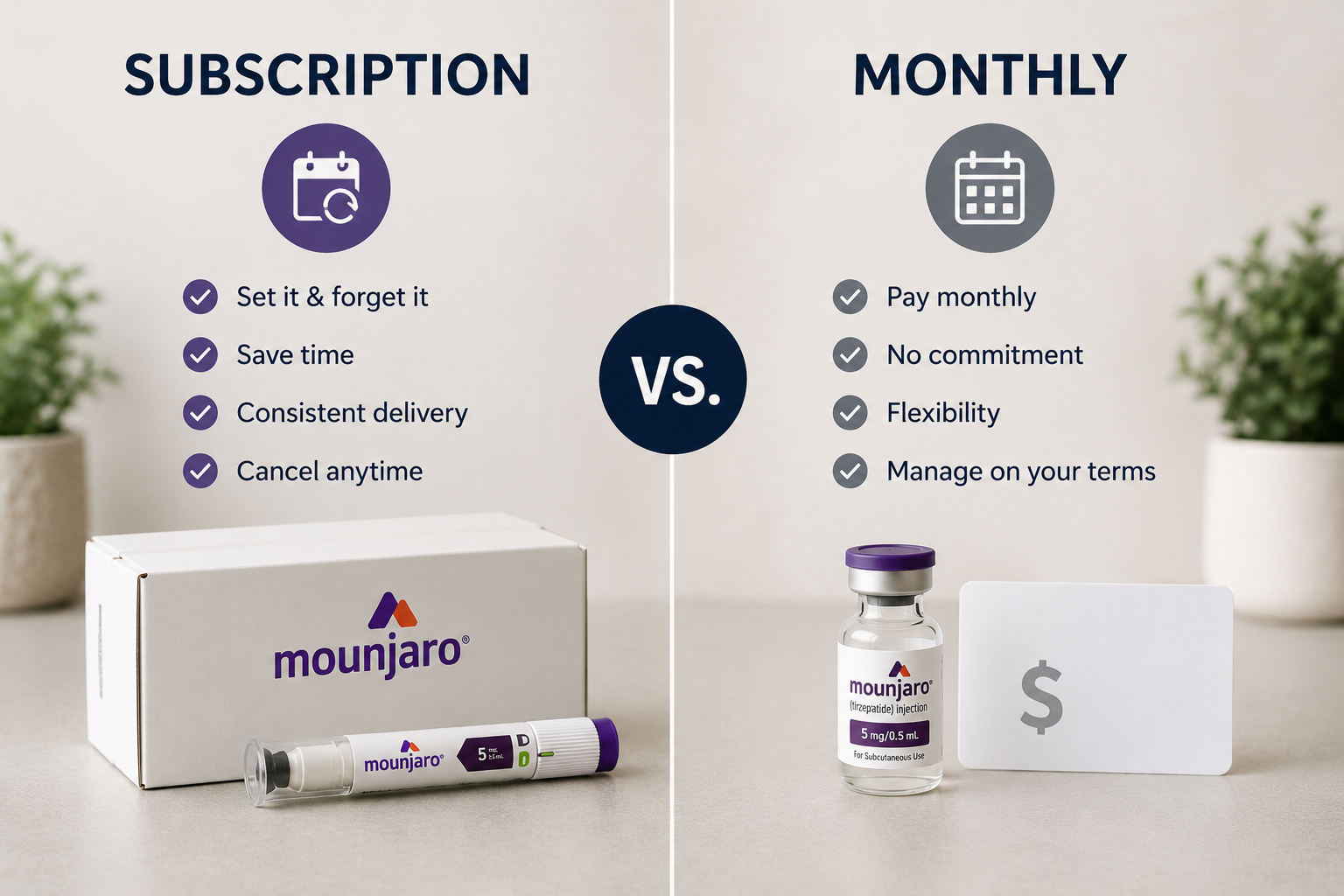
Switch to subscription billing. Monthly billing on Mounjaro typically costs 15–20% more than 3-month subscription billing. Switching after month 2 (once you’ve confirmed tolerance) saves £200–400 annually.
Use free tools first. Cronometer free, L&L lifestyle analysis free, Audible free trial. These three free resources address the main supporting needs without adding to monthly costs.
Transition to NHS when eligible. If your treatment is progressing well and NHS cohort criteria broaden to include your profile, transitioning reduces medication cost from £150–300/month to ~£10/month in prescription charges.
Reduce food spend (offset calculation). GLP-1 medication typically reduces food expenditure by £50–120/month as portion sizes decrease and appetite-driven snacking reduces. The net monthly cost of treatment is lower than the medication cost alone.
The free audit: where your money actually goes
Audible’s free trial includes finance and self-improvement titles that cover budgeting your health journey — download one while you plan your approach. And before adding any paid supplement product, take the free Lily & Loaf lifestyle analysis to ensure you’re spending on products that specifically address your gaps rather than buying a generic stack.
Frequently asked questions
How much does it cost to lose weight on Mounjaro for one year?
On private prescription: £2,200–2,800 for medication, plus £60–120/month supporting costs (protein powder, supplements). Total approximately £2,800–4,000 for a fully supported 12-month programme. NHS prescription reduces medication cost to approximately £120/year in prescription charges.
Is private Mounjaro cheaper than bariatric surgery?
For 1–2 years of treatment, yes — and with no surgical risk, reversibility, and comparable weight loss per kg-cost in most cases. For 5+ years of ongoing treatment, bariatric surgery becomes cost-competitive as a one-time cost. The right comparison depends on the planned treatment duration and individual medical circumstances.
The smartest way to allocate a weight loss budget
If you have a fixed monthly budget for weight loss support, here’s the evidence-based allocation order:
| Budget level | What to prioritise |
|---|---|
| £0/month | Cronometer free + L&L lifestyle analysis (free) + Audible free trial + NHS resources |
| £20–30/month | Protein powder to hit targets + Cronometer free |
| £50–60/month | Add L&L magnesium + D3+K2 from the analysis results |
| £80–100/month | Full L&L supplement stack based on analysis + HelloFresh 2 meals/week |
| £150–200/month | Add maintenance Mounjaro dose (if stepping down from active treatment) |
The zero-cost tier is more valuable than most people realise. Cronometer free, the L&L lifestyle analysis, and an Audible free trial together provide the tracking infrastructure, supplement guidance, and education that underpin the best-outcome GLP-1 users. These are free regardless of which treatment path you’re on.
Free tools, in order of impact:
The long-term cost perspective
Weight loss cost is most usefully viewed over a five-year horizon rather than a one-year snapshot. On a five-year view:
| Approach | 5-year cost estimate | 5-year outcome (typical) |
|---|---|---|
| NHS programme only | ~£0–600 | 5–8kg lost, often regained |
| Private GLP-1, 2 years active + maintenance | £5,500–7,000 | 18–25kg lost, ~50% maintained |
| Private GLP-1, ongoing | £8,000–12,000 | 18–25kg maintained |
| Bariatric surgery + aftercare | £9,000–17,000 | 40–60kg lost, ~65% maintained |
On a five-year basis, GLP-1 medication and bariatric surgery are similar in cost for many patients — with the key difference being reversibility, risk profile, and eligibility. The free tools (Cronometer, L&L analysis, Audible trial) remain free regardless of which path you take. Take the free lifestyle analysis →
Frequently asked questions
What is the cheapest way to lose weight in the UK?
NHS resources (Tier 2 weight management referral, NHS Weight Loss Plan app) cost nothing. Self-managed dietary change with free tracking (Cronometer free, L&L lifestyle analysis free) and a one-off walking pad investment represents the lowest cost active approach at approximately £200–500 total. See The Ultimate GLP-1 Toolkit UK for the free-first approach.
Is Mounjaro covered by health insurance in the UK?
Most UK private health insurance policies don’t cover weight management medications. Some policies cover Mounjaro when prescribed for type 2 diabetes. Business health insurance increasingly includes weight management benefits — check your employer scheme’s policy wording. NHS access (at prescription charge cost only) is available for Cohort 1 eligible patients: see Can I Get Mounjaro on the NHS UK.
Does weight loss save money long term?
Yes — the medication cost table above and the downstream savings table show that significant weight loss typically reduces ongoing costs for diabetes medication, blood pressure medication, CPAP equipment, and joint pain management over a 3–5 year horizon. The net cost of treatment over 5 years is often lower than the gross medication cost when these downstream savings are included.
The most accurate personal cost assessment combines the tables above with your specific situation: current medications that might reduce, current health costs, available NHS access, and your timeline. Alan’s detailed cost breakdown across his own 12-month Mounjaro year — including medication, supplements, equipment, and food spend — is documented on the YouTube channel and on alanspicer.com.
For anyone starting out and trying to make the cost work: the free tools first, every time. Cronometer free for tracking. Lily & Loaf lifestyle analysis free for supplement guidance. Audible free trial for the education layer. These three free resources provide the foundation that makes every other investment — whether medication, supplements, or equipment — more effective. The walking pad (£199–499 one-off) then adds the daily movement component. The full toolkit is operational within weeks, and most of the ongoing monthly cost is medication — which produces by far the largest weight loss of any component.
Discover more from Healthy Weight Loss GLP1
Subscribe to get the latest posts sent to your email.