

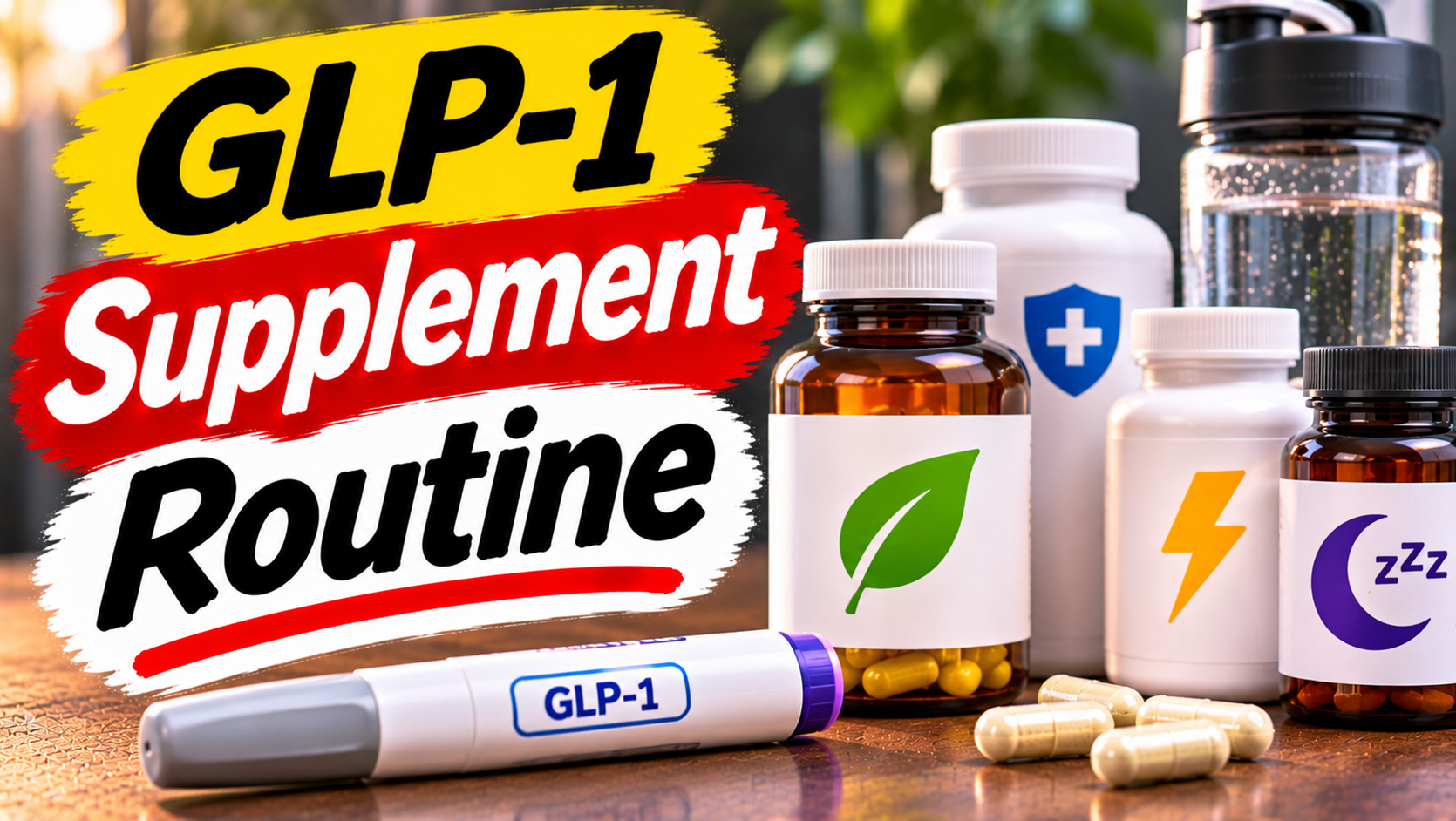
The question most GLP-1 users ask about supplements isn’t which ones to take — it’s when to take them and how to build a routine that actually happens every day. The timing of supplements matters: fat-soluble vitamins absorb better with meals containing fat, magnesium is most effective before bed, and iron should be separated from calcium and coffee by at least two hours. This guide gives the complete daily supplement routine for GLP-1 users in two versions — a minimum essential stack and a comprehensive stack — with specific timing for every item.
Get your personalised stack first: take the free Lily & Loaf lifestyle analysis →
Why timing matters for GLP-1 supplement routines
Several supplement interactions are relevant specifically for GLP-1 users:
Slowed gastric emptying changes absorption timing. Mounjaro delays gastric emptying — food and supplements sit in the stomach longer than before medication. This generally increases the contact time available for absorption of fat-soluble vitamins (good) but also extends the window during which interactions between supplements and food components occur.
Fat-soluble vitamins need fat. Vitamins D3, K2, A, and E require dietary fat for absorption. On a GLP-1 where meal sizes have reduced, ensuring at least some fat is present at the meal when these are taken is important.
Iron competes with several minerals. Calcium, zinc, and magnesium all compete with iron for absorption. Iron supplements should be separated from these by two or more hours, taken with vitamin C (enhances absorption), and taken away from coffee and tea (tannins bind iron).
The minimum essential stack: timing
For GLP-1 users who want the highest-impact supplements in the simplest possible routine:
| Supplement | Product | Time | With food? | Why this timing |
|---|---|---|---|---|
| Vitamin D3+K2 | L&L D3+K2 | Breakfast | Yes — with fat | Fat-soluble; morning consistency |
| Omega-3 EPA+DHA | L&L Omega | Largest meal | Yes — reduces GI upset | Fat-soluble; reduces fish-taste reflux with food |
| Magnesium glycinate | L&L Triple Magnesium | 30–60 min before bed | Not required | Sleep benefit requires evening timing |
This three-supplement routine covers the three most common GLP-1 deficiencies (D3, omega-3, magnesium) in a routine that takes under 2 minutes daily and requires no special preparation.
The comprehensive stack: full daily timing
For users addressing multiple identified deficiencies:
On waking (before breakfast, 30 minutes)
- Sublingual B12 (500–1000mcg): dissolve under the tongue for maximum absorption. Takes 30 seconds. Can be taken fasted — absorption isn’t food-dependent via this route.
- Iron (if deficient, on GP’s recommendation): best absorbed fasted, with a glass of orange juice (vitamin C enhances uptake). Avoid coffee or tea for one hour after.
With breakfast
- D3+K2 — fat-soluble; breakfast should contain some fat (eggs, yoghurt, butter)
- Multivitamin (if using) — with food reduces GI upset from the vitamin mix
- Vitamin C (500mg) — if separate from D3 combination; pairs well with iron on iron-deficient days
With largest meal (typically lunch or dinner)
- Omega-3 EPA+DHA — fat-soluble, reduces fish reflux risk when taken with food
- Zinc (15mg elemental) — with food reduces nausea; separate from iron by 2 hours
- Collagen peptides (10–15g) — can be added to food or drink; timing flexible
30–60 minutes before bed
- Magnesium glycinate (200–400mg) — sleep benefit is the primary reason for this supplement; evening timing is essential
- Ashwagandha (if using) — cortisol-lowering effect compounds with the evening timing. L&L Ashwagandha KSM-66 →
Building the habit: anchor points
Supplement routines fail when they depend on remembering. The most reliable routines are anchored to existing daily habits that already happen automatically:
- Breakfast anchor: supplements placed on the kitchen table (visible) with the breakfast foods. D3, omega-3, and multivitamin taken as a group with breakfast. Seeing them while preparing breakfast is the cue.
- Meal anchor: omega-3 and zinc placed with the dinner prep area. Taken when food is served, before eating.
- Bedtime anchor: magnesium and ashwagandha placed on the bedside table next to a glass of water. Taken when teeth are brushed — an anchor that happens without exception.
This three-anchor approach means supplements are never remembered from scratch — they appear in the context of an existing automatic behaviour.
Tracking your routine in Cronometer
Log your supplement routine in Cronometer‘s supplement diary. Two benefits: it confirms whether supplements are actually being taken consistently (easy to think you are when you’re not), and it gives a complete nutritional picture — dietary intake plus supplemental — when reviewing your overall nutrition status at monthly check-ins.
The personalisation layer
This guide gives timing principles. The specific supplements you need depend on your individual symptom profile and dietary gaps. Take the free Lily & Loaf lifestyle analysis → before setting up your routine — it identifies your specific priorities so you’re not taking everything on the comprehensive list regardless of need.
For the science behind why these specific timings matter — the absorption pharmacology, the sleep-magnesium connection, the iron-vitamin C interaction — start your free Audible trial → and search for functional nutrition audiobooks. Understanding the mechanism makes the routine feel purposeful rather than arbitrary.
Supplement routine for injection day
Injection day requires one small modification: avoid taking iron supplements on or the day before injection day. Iron can occasionally increase GI sensitivity, which compounds nausea on injection day. Everything else in the routine continues unchanged. Magnesium on injection night is particularly useful — sleep quality on injection day is often disrupted by nausea and discomfort; magnesium helps maintain sleep depth despite this.
Frequently asked questions
When should I take supplements on Mounjaro?
Morning (with breakfast): D3+K2, multivitamin, vitamin C, iron if needed. Largest meal: omega-3, zinc. Evening (30–60 minutes before bed): magnesium glycinate, ashwagandha if using. B12 sublingual: any time, fasted or fed.
Can I take all my supplements together at once?
Not ideally. Iron and calcium compete for absorption; iron and zinc compete; fat-soluble vitamins need fat and food that may not always be present. Splitting into morning, mealtime, and bedtime groups takes the same total time (under 5 minutes daily) and produces meaningfully better absorption for several key nutrients.
What supplements does Lily & Loaf recommend for GLP-1 users?
The recommendation depends on your specific symptom profile. Take the free lifestyle analysis → for a personalised recommendation. The most commonly recommended L&L products for GLP-1 users are: Triple Magnesium, D3+K2, Daily Balance Omega, Daily Flora Probiotic, and Collagen Plus.
Adapting the routine as treatment progresses
The supplement routine that’s right at month one won’t be identical to the right routine at month six. As GLP-1 treatment progresses, two things change: dietary intake stabilises (making some dietary gaps smaller), and long-developing deficiencies like B12 become more relevant as stores deplete over months.
A practical three-monthly review cycle:
- Month 1–3: foundation stack — D3+K2, omega-3, magnesium. These address the immediate and near-universal GLP-1 gaps.
- Month 3–6: add B12 sublingual. Start monitoring iron (especially women) if not already tested. Consider zinc if hair loss or taste changes are present.
- Month 6+: full micronutrient audit in Cronometer. Add collagen for skin and joint support if losing large amounts of weight. Retake the lifestyle analysis to confirm the stack still matches your evolving symptom profile.
The lifestyle analysis is worth repeating every three to six months because the supplement priorities at month one (sleep, energy) differ from the priorities at month nine (maintenance, skin, long-term bone health). The free analysis adapts its recommendations to your current symptom picture, not the snapshot from when you first started. Take or retake the analysis →
For understanding the evolving nutrient needs across a full year of GLP-1 treatment: start your free Audible trial → and search for functional nutrition or sports nutrition titles that cover the longitudinal nutrient picture.
Frequently asked questions
What is the most important supplement to take on Mounjaro?
Magnesium glycinate — it addresses the most common GLP-1 deficiency (sleep-relevant magnesium depletion), is safe at recommended doses, shows improvement within two weeks, and costs under £1 per day. Start with this before adding any other supplement. Lily & Loaf Triple Magnesium →
Can I take all my GLP-1 supplements at once?
For most people, splitting into morning (D3+K2, multivitamin, zinc), dinner (omega-3), and bedtime (magnesium) produces better absorption than taking everything at once. The exception is people who genuinely won’t take supplements unless it’s one dose at one time — in which case, all at the largest meal of the day is better than not taking them. Compliance beats perfect timing.
A supplement routine that happens reliably is worth ten times a perfect routine that gets forgotten. Build the anchor points described above, keep the supplements visible where the anchors happen, and the routine takes care of itself within two weeks. The free Lily & Loaf lifestyle analysis → confirms which specific products belong in your routine based on your symptom profile — ensuring the time you spend on the routine is addressing your actual gaps rather than a generic list. And Audible’s free trial → gives the knowledge layer that converts supplement compliance from obligation into informed practice.
Consistency over twelve months of GLP-1 treatment produces an entirely different nutritional outcome than sporadic supplementation. The users who maintain the daily supplement routine from month one to month twelve arrive at their goal weight with better energy, better hair, better sleep, and better body composition than those who supplement only during difficult periods. The routine described here takes under five minutes daily — a trivially small investment for the nutritional protection it provides throughout treatment.
Discover more from Healthy Weight Loss GLP1
Subscribe to get the latest posts sent to your email.