
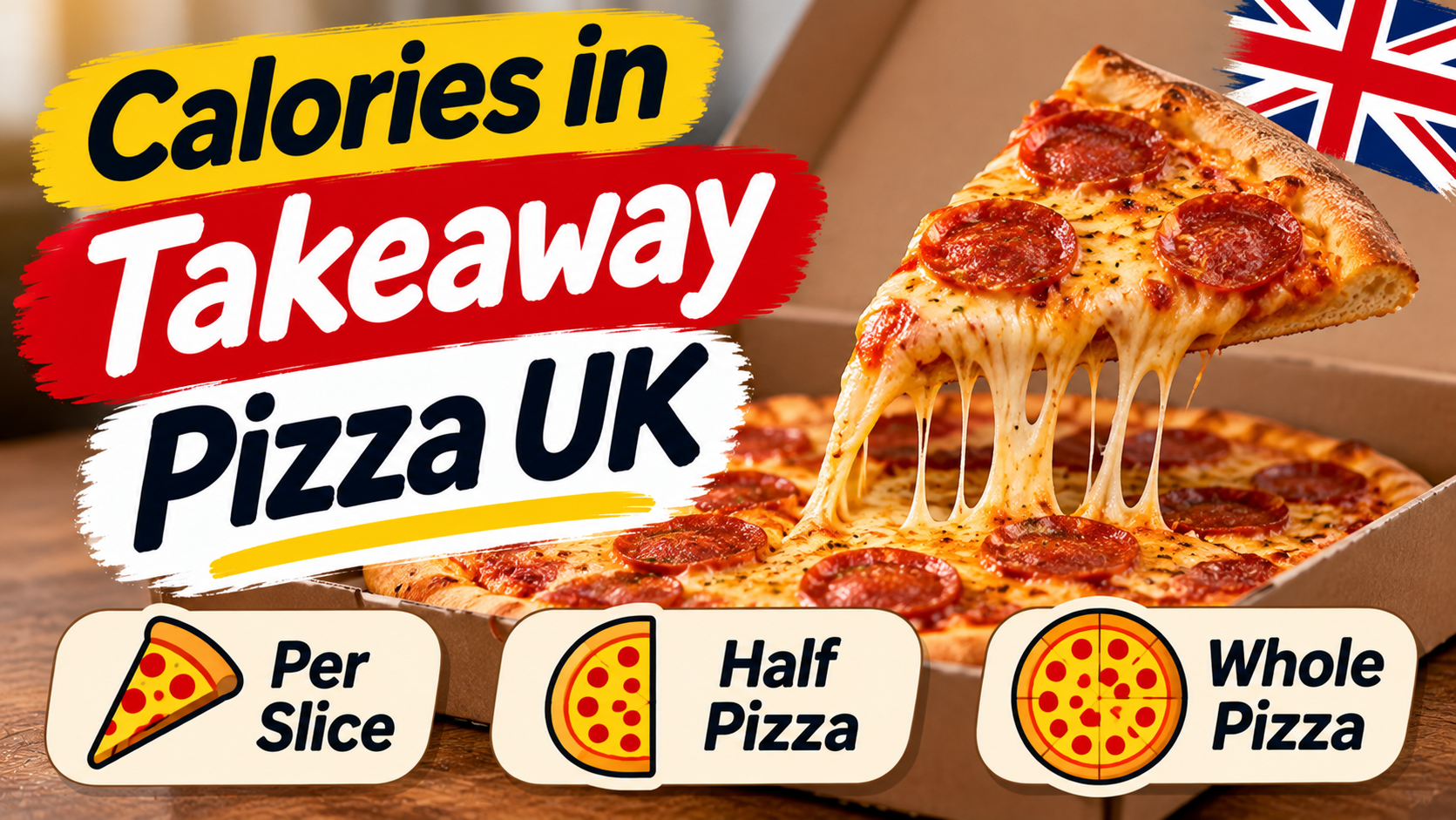
Takeaway pizza is about 216 to 272 calories per 100g in UK government food data, depending on the topping. That means a 200g quarter of a large pizza is roughly 430 to 545 calories, and a whole 800g pizza can pass 2,000. Vegetarian toppings are lowest; cheese and tomato is highest per 100g.
Last updated: 10 November 2026 · By Alan Spicer
Not medical advice. I share what has worked for me on GLP-1 medication and link the evidence. Talk to your GP or prescriber before changing your diet, medication or activity.
If you have, or have had, an eating disorder, speak to your GP before counting calories. Beat offers UK support.
Pizza night doesn’t have to wreck your week. Knowing roughly what a slice costs makes it easier to decide how much to have and what to have with it. I’ve used the UK government’s official food data to work out pizza calories per 100g, per slice and per pizza, so you can log it without guessing.
Why listen to me
I have been on GLP-1 medication since January 2024 and lost 7 stone in 18 months. I’m not a doctor or dietitian: I share what worked for me, what didn’t, and the evidence behind it. My day job is YouTube consulting, which you can read about on alanspicer.com.
⚡ QUICK ANSWER
Takeaway pizza is about 216 calories per 100g for vegetarian toppings, 246 for chicken, 255 for meat and 272 for cheese and tomato, using UK government food data. A 100g slice is roughly 220 to 270 calories, and a 200g portion (a quarter of an 800g pizza) about 430 to 545.
How many calories are in a takeaway pizza?
Takeaway pizza is about 216 to 272 calories per 100g in the UK government’s official food composition data (CoFID), depending on the topping. A whole pizza can easily pass 2,000 calories, so the number of slices matters more than the topping.
| Pizza type (CoFID) | kcal per 100g | 100g slice | 200g (quarter of 800g) | 400g (half) | 800g (whole) |
|---|---|---|---|---|---|
| Vegetarian, retail and takeaway | 216 | 216 | 432 | 864 | 1,728 |
| Chicken topped | 246 | 246 | 492 | 984 | 1,968 |
| Meat topped, retail and takeaway | 255 | 255 | 510 | 1,020 | 2,040 |
| Cheese and tomato | 272 | 272 | 544 | 1,088 | 2,176 |
Source: McCance and Widdowson’s Composition of Foods Integrated Dataset 2021 (Public Health England). Portion columns are our worked maths.
For context, the NHS says an average woman needs about 2,000 calories a day and an average man about 2,500. Half a large pizza is around half of that.
How many calories are in a slice of pizza?
A 100g slice of takeaway pizza is roughly 220 to 270 calories, but slice sizes vary a lot between shops and pizza sizes. The quickest way to know is to weigh one slice once, or use the chain’s own calorie figure.
| Slice size | Vegetarian (216 per 100g) | Meat (255 per 100g) | Cheese and tomato (272 per 100g) |
|---|---|---|---|
| Small slice, 70g | 151 | 179 | 190 |
| Medium slice, 100g | 216 | 255 | 272 |
| Large slice, 130g | 281 | 332 | 354 |
Source: CoFID 2021 per-100g figures; slice weights are worked examples.
Do pizza chains show calories?
Yes. Since 6 April 2022, food businesses in England with 250 or more employees have had to display calorie information on menus, including online menus and apps. That covers the big pizza chains, so you can check the exact figure for your pizza and size.
Chain figures are better than a general estimate because they reflect their own dough and toppings. Search the chain and pizza name in your calorie app, or note the figure from the menu.
Log pizza night in seconds
Search the chain’s pizza, type “pizza 300” if you know the number, or snap a photo in CaveCals and check the estimate. It’s free to download with no account needed.
Free on iPhone and Android. iPhone code ALANSPICER: one month free on the yearly plan.
How many calories do sides add?
Sides can add as many calories as the pizza itself. Garlic and herb bread is about 348 calories per 100g in UK government data, which is more per gram than any pizza topping.
| Side (CoFID) | kcal per 100g | 100g portion |
|---|---|---|
| Garlic and herb bread | 348 | 348 |
| Chips from a fast-food outlet (fine cut) | 290 | 290 |
| Chicken pieces, coated, takeaway | 267 | 267 |
Source: CoFID 2021 (Public Health England).
Dips vary from light to very rich, so check the chain’s figures and log them separately. Fizzy drinks and desserts add more again.
How does pizza compare with other takeaways?
Pizza is in the same range as most takeaways per portion, and the totals depend on how much you eat. A 2018 BMJ study of 13,396 main meals at 27 UK restaurant chains found the average main was 977 calories, and only 9% met the public health recommendation of 600 calories or less.
Half a large pizza (around 1,000 calories) is in line with that average. A quarter of a pizza with a side salad is closer to the 600-calorie mark.
How can you have pizza and still lose weight?
You can fit pizza into weight loss by choosing the topping and portion before you order. These swaps cut calories without cutting pizza:
- Choose vegetable, chicken or seafood toppings rather than extra cheese (nidirect’s healthier takeaway advice says the same).
- Have two or three slices and fill up with a side salad.
- Skip garlic bread, or share one portion between several people.
- Try thin crust if the chain lists it as lower in calories.
- Put the rest in the fridge before you start eating.
Watch the “just one more slice” effect. A Cochrane review found people eat more when served larger portions. Plate your slices instead of eating from the box.
How do you log a takeaway pizza accurately?
The most accurate way to log a takeaway pizza is to use the chain’s own calorie figure for your exact pizza and size. For independent shops, weigh one slice and multiply by the per-100g figure, then count your slices.
- Search the chain and pizza name in your calorie app.
- If it’s not listed, use the calorie figure from the chain’s menu or app.
- For an independent shop, weigh one slice and use the per-100g figure above.
- Log sides and dips separately.
- Or take a photo with Meal Scan and check the portion before saving.
In CaveCals, you can also just say what you had: Voice Log turns “three slices of pepperoni pizza and some garlic bread” into entries with calories and macros, ready to check. Voice Log is my favourite feature for meals like this.
Is pizza a problem on GLP-1 medication?
Pizza isn’t off limits on GLP-1 medication, but rich, greasy food can sit heavily when digestion is slower. Smaller portions, eaten slowly, with a salad, tend to go down better.
If particular foods make you feel sick or uncomfortable, talk to your prescriber. My post on eating out on Mounjaro has more tips for takeaways and restaurants.
Know the number, enjoy the slice
CaveCals logs takeaways by search, photo, voice or typing. Download it free and log your next pizza night without guessing.
Free on iPhone and Android. iPhone code ALANSPICER: one month free on the yearly plan.
A sensible pizza night
- Decide on two or three slices before you order
- Pick a vegetable or chicken topping and add a side salad
- Log the chain’s calorie figure or snap a photo
- Carry on with your normal meals the next day
People also ask
How many calories are in one slice of pizza?
A 100g slice of takeaway pizza is about 216 to 272 calories depending on the topping, using UK government food data. Slices vary in size, so weigh one or check the chain’s menu, which large chains in England must show calories on.
How many calories in a whole takeaway pizza?
It depends on size and topping. At UK government figures of 216 to 272 calories per 100g, an 800g pizza comes to roughly 1,730 to 2,180 calories.
Which pizza topping has the fewest calories?
Vegetarian toppings, at about 216 calories per 100g in UK government data, compared with 246 for chicken, 255 for meat and 272 for cheese and tomato.
How many calories are in garlic bread?
Garlic and herb bread is about 348 calories per 100g in UK government data, so a 100g side adds roughly as much as a 130g slice of pizza.
Frequently asked questions
Why is cheese and tomato pizza higher in calories than meat pizza?
UK government data lists cheese and tomato pizza at 272 kcal per 100g and meat-topped at 255 kcal, a small difference that depends on the recipes analysed. For a whole pizza, size, crust and extra cheese matter far more than the topping.
Do takeaway chains show pizza calories?
Large food businesses in England (250 or more employees) have had to show calories on menus and apps since 6 April 2022, so the big pizza chains list them. Use the chain’s figure where you can.
Is thin crust lower in calories?
Usually, because there’s less dough per slice. Check the chain’s menu for exact figures, as cheese and toppings can make up the difference.
How can I have pizza and still lose weight?
Choose a vegetable or chicken topping, skip extra cheese, have two or three slices with a salad instead of half the pizza, and leave garlic bread and dips. Log it and carry on with your week.
How many calories in a pizza dip?
Dips vary a lot, from light tomato-based options to garlic and herb dips that are mostly oil. Check the chain’s calorie information and log the dip separately.
Is pizza bad on GLP-1 medication?
Pizza isn’t banned, but rich, greasy food can sit heavily if your digestion is slower. Many people find a smaller portion with a side salad works better. Speak to your prescriber if foods give you side effects.
How do I log a takeaway pizza accurately?
Search the chain and pizza name in your app, or use the chain’s calorie figure. If you made it or bought it from an independent shop, weigh a slice and multiply by the per-100g figure, or take a photo and check the estimate.
How many calories in a supermarket pizza?
Supermarket pizzas list calories on the box, so scan the barcode. UK government data puts retail cheese and tomato pizza at about 272 calories per 100g.
Final thoughts
Takeaway pizza is about 216 to 272 calories per 100g, so a 200g portion is roughly 430 to 545 calories and a whole large pizza can pass 2,000. Vegetarian and chicken toppings are lowest, and garlic bread adds more than people expect.
Have the pizza, just decide your portion before the box opens. Search the chain’s figure or snap a photo in CaveCals so it’s logged in seconds, and add a salad to fill the gap.
About Alan Spicer
I have been on GLP-1 medication since January 2024 and lost 7 stone in 18 months. I write about what works day to day: protein, calorie tracking, walking and side effects, with the evidence linked. I’m not a medical professional, so please speak to your GP before making changes. Away from this site I’m a YouTube consultant (alanspicer.com) and I film my progress on Alan Spicer is Losing It.
Related reading
- How to Count Calories for Beginners (UK Guide)
- How Many Calories in a Christmas Dinner? UK Breakdown
- Best Calorie Tracker App UK (2026): Free and Paid Apps Compared
- Photo Calorie Counter App UK: Log Food by Taking a Picture
- Free Barcode Scanner Calorie Counter UK
- Mounjaro and Eating Out UK: How to Handle Restaurants and Takeaways
SNAP IT. SAY IT. SCAN IT. FIND IT.
The calorie counter I use
CaveCals is free to download with no account needed. Barcode scanning, search and Quick Add are free, and you get 10 free photo and voice logs to try.
Get it on iPhone Get it on Android
iPhone code ALANSPICER: one month free on the yearly plan. Calorie plans and AI results are estimates, not medical advice.
Sources: [1] McCance and Widdowson’s Composition of Foods Integrated Dataset 2021 (CoFID), Public Health England. [2] Calorie labelling in the out of home sector: implementation guidance (DHSC). [3] nidirect: Healthier takeaways. [4] Robinson E et al. (Over)eating out at major UK restaurant chains, BMJ 2018. [5] NHS: Understanding calories.
Disclosure: some links on this page are affiliate links (including CaveCals). If you sign up or buy, I may earn a commission at no extra cost to you. I only recommend what I use or would use. Programme terms change, so check current terms on each site.
Discover more from Healthy Weight Loss GLP1
Subscribe to get the latest posts sent to your email.