
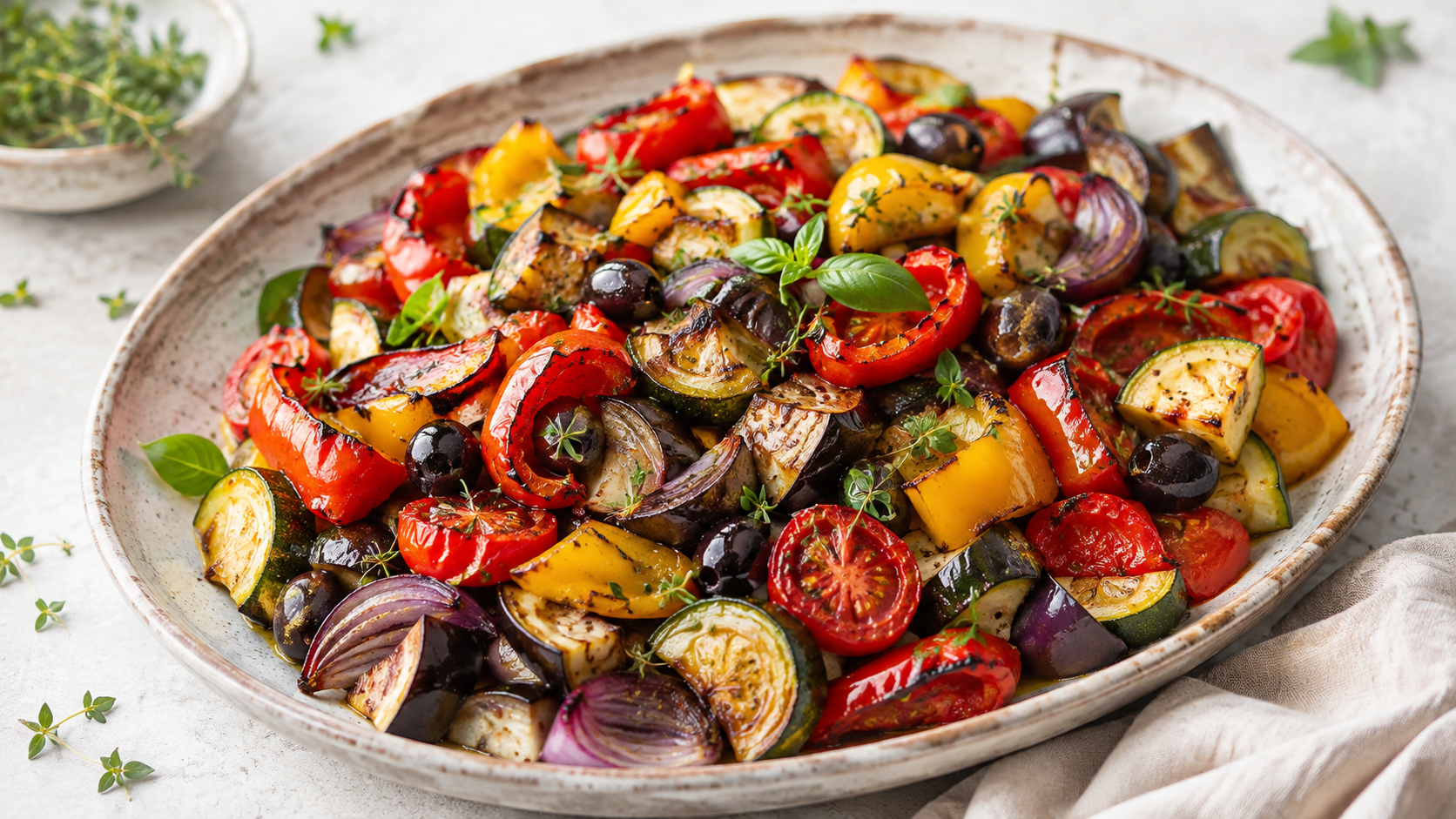
A tray of roasted Mediterranean vegetables is one of the most useful sides you can master — peppers, courgette, aubergine, red onion and tomatoes, roasted until sweet and caramelised. It goes with almost any protein, adds a load of fibre and nutrients for around 120 calories a serving, and it batch-cooks brilliantly. If there is one vegetable side worth having in your repertoire on a GLP-1, this is it.
A quick word first: I am not a doctor or a dietitian, just someone who lived this. None of these foods or supplements are medication, and if you are on a GLP-1, check anything new with your GP or pharmacist. Right, let us get to it.
For why fibre matters so much when you eat less, see fibre on GLP-1, and for the wider plan, my complete GLP-1 guide.
Why roasted veg is a GLP-1 staple
Roasting is the single best way to make vegetables genuinely delicious, and this tray proves it.
Roasting makes veg irresistible. The high heat caramelises the natural sugars, turning ordinary vegetables sweet, golden and full of flavour — far more appealing than boiled or steamed.
A big fibre and nutrient hit. A generous serving of mixed roasted veg brings real fibre, vitamins and antioxidants for very few calories, which is exactly what a GLP-1 diet needs more of.
It goes with everything and batch-cooks. Roast a big tray and it partners any protein all week, hot or cold — endlessly useful and almost no effort.
Why roasting is the key to loving your vegetables
If you think you do not like vegetables, I would bet you have mostly eaten them boiled or steamed, and I would gently suggest you try roasting them before you write them off. Roasting genuinely transforms vegetables, and learning to do it well was one of the biggest steps in my journey to eating more veg without it feeling like a chore. The magic is in the caramelisation: when you roast vegetables at a high heat, their natural sugars caramelise and their edges turn golden and crisp, developing a deep, sweet, savoury flavour that boiling simply cannot produce. Boiled courgette is watery and dull; roasted courgette is sweet and golden. Boiled peppers are limp; roasted peppers are soft, sweet and almost jammy. The same vegetable, a completely different experience.
This matters enormously on a GLP-1, because getting enough vegetables and fibre in is a real challenge when your appetite is smaller, and you will only eat plenty of veg if it actually tastes good. Roasting is the cheat code that makes vegetables genuinely delicious, so you want to eat them rather than forcing them down out of duty. A big tray of roasted Mediterranean veg alongside a simple protein turns a plain, dutiful meal into something you look forward to. And it could not be easier — chop, toss with a little oil and seasoning, and let the oven do the work. Once you get into the habit of roasting a tray of veg to go with your meals, your vegetable intake, and your fibre, climbs effortlessly, because you are eating veg you actually enjoy rather than tolerating. It genuinely can turn a self-professed veg-hater into someone who piles their plate high. Master roasting, and you have solved the eat-more-veg problem for good.
The macros that matter
Here is roughly what one serving gives you. Treat these as a guide rather than gospel, since it depends on your exact ingredients and portions:
| Approx per serving | Amount |
|---|---|
| Calories | ~120 kcal |
| Protein | 3g |
| Carbohydrate | 15g |
| Fat | 6g |
| Fibre | 5g |
The protein figure is the one I watch on a GLP-1. As a rough guide I aim for somewhere around 1.2 to 1.6g of protein per kilo of body weight across the day to protect muscle while losing fat, and I judge every meal by how much of that it contributes. I log meals like this in Cronometer (it is free) so I know I am actually hitting my targets rather than hoping. The first time I tracked properly I realised I was eating far less protein than I thought, so if you have never done it, give it two weeks.
What you need (serves 1)
- 1 red pepper, cut into chunks
- 1 courgette, chunked
- 1 aubergine, chunked
- 1 red onion, cut into wedges
- A handful of cherry tomatoes
- 2 cloves garlic, whole
- 1 tbsp olive oil
- 1 tsp dried oregano or mixed herbs
- Salt and black pepper
- To finish: fresh basil and a splash of balsamic vinegar
How to make it
- Heat the oven to 200C (fan 180C).
- Spread all the chopped vegetables and whole garlic cloves over a large roasting tray in a single layer — do not overcrowd, or they steam instead of roasting.
- Drizzle with the olive oil, scatter with oregano, salt and pepper, and toss to coat.
- Roast for 25–30 minutes, giving the tray a shake halfway, until the veg are tender and caramelised at the edges.
- Add the cherry tomatoes for the last 10 minutes so they burst but do not collapse.
- Finish with fresh basil and a splash of balsamic, and serve hot or cold.
Adapting it
Roasted veg is endlessly flexible:
Use any veg that roasts well. Peppers, courgette, aubergine, onion, squash, broccoli, fennel — whatever you have.
Add protein to make it a meal. Crumble feta over, add chickpeas, or roast chicken or halloumi on the same tray.
Change the flavour. Swap the herbs for cumin and paprika, or add chilli for a spicier tray. See fibre on GLP-1.
The two rules for properly roasted veg
There are two simple rules that make the difference between beautifully caramelised roasted vegetables and a disappointing tray of pale, soggy, steamed ones, and once you know them you will never get it wrong. The first rule is do not overcrowd the tray. This is the mistake almost everyone makes. When you pile too many vegetables onto one tray, they sit close together and release steam as they cook, and that steam traps them in moisture so they stew and go soggy rather than roasting and caramelising. The vegetables need space and air around them, in a single layer, so the moisture can escape and the surfaces can brown. If you are roasting a lot of veg, use two trays rather than cramming them onto one — it genuinely makes all the difference. The second rule is use a high enough heat. Roasting is about caramelisation, and that needs proper heat, so around 200C is the sweet spot. Too low and the vegetables dry out and go leathery without browning; at the right heat they caramelise beautifully at the edges while staying tender inside. A couple of supporting tips help too: cut the vegetables into similar-sized pieces so they cook evenly, toss them in just enough oil to coat lightly (too much makes them greasy, too little and they dry out), and give the tray a shake halfway through so they colour on more than one side. Denser vegetables like carrots, parsnips and squash take longer, so either cut them smaller or give them a head start before adding quicker-cooking veg like courgette and tomatoes. Follow the two main rules — space and heat — and you get sweet, golden, caramelised vegetables every time, the kind that make you actually want to eat your veg. Overcrowd a cool tray, and you get sad, grey, soggy veg that reinforces every negative idea about vegetables. It really is that simple a difference.
A batch-cook superstar
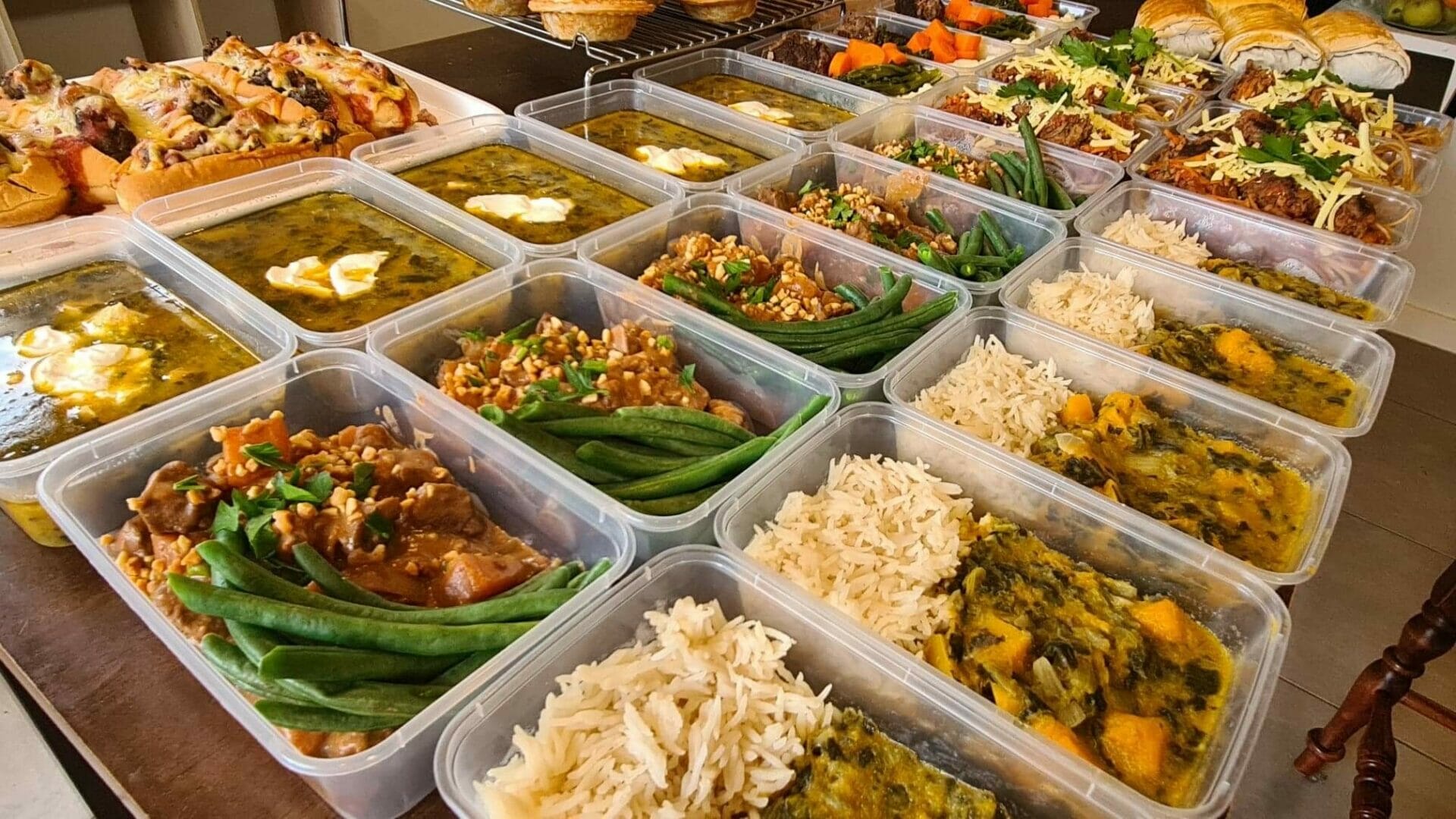
Roasted veg is one of the best sides for batch cooking. Roast a big tray, or two, and it keeps for four to five days in the fridge, ready to go with any meal — hot alongside a protein, cold in a salad or wrap, or blended into a soup. It is one of the most useful things to have prepped, and a genuine cornerstone of my meal prep ideas for Mounjaro. Leftover roasted veg makes a brilliant addition to a next-day high-protein lunch.
How I use it alongside my meals
Roasted Mediterranean veg is my most-used side by a mile. It goes with practically any protein — grilled chicken, fish, lamb, or the traybakes and casseroles from my high-protein dinner ideas — adding a big serving of vegetables, real fibre and a load of flavour to the plate. It turns a plain protein into a proper, colourful, satisfying meal.
It brings little protein itself, so I always pair it with a proper protein source — the veg is there for fibre, nutrients and flavour. But add feta, chickpeas or halloumi and it becomes a meal in its own right. Having a tray of this ready is one of the single best things for getting my veg and fibre in effortlessly. My complete GLP-1 guide explains how the whole plate fits together.
When your appetite is low
On a low-appetite day, a few pieces of sweet, caramelised roasted veg can be more appealing than plain vegetables, and they get fibre and nutrients in gently alongside a little protein. Having a batch already roasted means no effort on a rough day. When cooking is beyond you, HelloFresh keeps proper meals coming. More in what to eat with no appetite.
Supplements that pair well
As a high-fibre, veg-rich side this fits a gut-friendly routine well, so a probiotic like Pre + Pro 15 pairs naturally. It is low in omega-3, so I top up with Super Omega-3 EPA, and if you are increasing your fibre, do it gradually — see my constipation on GLP-1 guide. The free Lily & Loaf lifestyle analysis matches a routine to your goals.
Frequently asked questions
How do I stop roasted veg going soggy?
Do not overcrowd the tray — spread the veg in a single layer with space around each piece so steam escapes and they caramelise rather than stew. Use a high heat, around 200C, and two trays if you have a lot.
What vegetables roast well?
Peppers, courgette, aubergine, onion, squash, carrots, parsnips, broccoli, fennel and tomatoes all roast beautifully. Cut them to similar sizes, and give denser veg like carrots a head start as they take longer.
Can I batch-cook it?
Brilliantly — roast a big tray and it keeps four to five days in the fridge, ready to go with any meal hot or cold, or blended into soup. It is one of the most useful sides to have prepped.
How do I make it a full meal?
Add protein — crumble over feta, stir in chickpeas, or roast chicken or halloumi on the same tray. On its own it is a veg side; with protein it becomes a complete meal.
Is roasted veg healthy given the oil?
Yes — you only need a little oil to coat the veg lightly, and the nutrients and fibre far outweigh that. Use just enough to coat rather than drowning them, and it stays a genuinely healthy, high-fibre side.
The bottom line
Roasted Mediterranean vegetables are the one veg side worth mastering — sweet, caramelised and genuinely delicious, adding a big hit of fibre and nutrients to any plate for around 120 calories. Roasting is the cheat code that makes vegetables irresistible, so you eat plenty because you want to, not out of duty. Follow the two rules — space and heat — batch-cook a big tray, and pair it with any protein. To match your supplements to a high-fibre diet, the free Lily & Loaf lifestyle analysis is a quick, no-pressure check.
The tools I lean on
If you are putting a GLP-1 routine together, this is the order I would do it in, free tools first:
- Track a fortnight of food in Cronometer so you can see your real protein and calories.
- Take the free Lily & Loaf lifestyle analysis to find the supplements actually worth buying.
- Start an Audible trial for something to listen to while you cook or walk.
- Keep HelloFresh on standby for the weeks cooking from scratch just is not happening.
A bit about me
I am Alan Spicer. I lost around seven stone on Mounjaro and filmed the whole thing, warts and all, on my YouTube channel. Simple, nutrient-packed sides like this helped me eat more veg, add fibre, and keep my meals interesting while the weight came off.
This article shares my personal experience and general information only. It is not medical advice. Food and supplements support a balanced diet and healthy lifestyle and do not replace it or any treatment prescribed by your doctor. Speak to your GP or pharmacist before making changes, especially while on a GLP-1 medication. Nutrition figures are approximate and will vary with the exact ingredients and brands you use.
Inspired by the kind of fresh, wholefood sides in the Lily & Loaf sides collection. This is my own version, written from my own kitchen.
Discover more from Healthy Weight Loss GLP1
Subscribe to get the latest posts sent to your email.