
I want to be upfront about something: when I started my weight-loss journey at 375lbs, I could barely walk to the end of the street without stopping. The idea of 10,000 steps felt like a joke. A cruel one.
What I learned over the following 12 months — losing 6 stone, dealing with gallbladder surgery, and building back up from almost nothing — is that the number of steps matters far less than people think. The consistency matters far more than anyone tells you. This guide is everything I wish I’d been told at the start: the real research, the honest targets, and a practical plan that actually works for people starting from a low base.
📋 On this page
- Does walking actually help you lose weight?
- How many steps do you actually need?
- The truth about 10,000 steps
- How many calories does walking burn?
- 8-week step-building plan
- Practical ways to add steps without a dedicated workout
- Walking pads and step count
- Supporting your walking with the right nutrition
- What to do when steps stop producing results
- Do you need a step tracker?
- NEAT: why background movement matters
- Common mistakes that stop steps from producing results
- Walking from different starting points
- Incline walking — the most underrated upgrade
- Walking and appetite
- Walking in the UK
- FAQs
Does walking actually help you lose weight?
Yes — but with an important caveat. Walking alone, without any change to what you eat, produces results more slowly than combining it with a calorie-aware diet. The reason most people give up on “just walking more” is that they expect faster results than walking can realistically deliver on its own.
That said, walking is one of the most underrated weight-loss tools available because:
- It is free
- It requires no fitness base to start
- It is low-impact enough for people with knee, back, or joint issues
- It can be done on a walking pad while working, so it does not require dedicated workout time
- It produces consistent, compounding results when done daily
- It has benefits beyond calorie burn — including improved insulin sensitivity, better mood, reduced cortisol, and improved sleep quality.
For anyone who has been largely sedentary, going from 2,000 to 8,000 steps per day is a meaningful metabolic shift. The calorie deficit that creates — combined with better appetite regulation from increased activity — is enough to produce real weight change over time.
How many steps a day do you actually need to lose weight?
The honest answer is that it depends on three things: your starting weight, your current activity level, and what you are eating. But here are the ranges that the research and lived experience consistently point to.
| Daily Steps | Activity Level | Weight Loss Impact | Best For |
|---|---|---|---|
| Under 3,000 | Sedentary | Minimal on its own | Starting baseline to know where you are |
| 3,000–5,000 | Low active | Small but real if the diet is managed | People with mobility limitations or post-surgery recovery |
| 5,000–7,000 | Lightly active | Moderate — contributes meaningfully to a calorie deficit | Realistic daily target for most people building a habit |
| 7,000–10,000 | Moderately active | Significant — around 300–500 calories per day, depending on weight | The sweet spot for consistent weight loss over 8–12 weeks |
| 10,000–15,000 | Active | Strong — can drive 0.5–1lb per week loss alongside a managed diet | People who have built the habit and want to accelerate |
The truth about 10,000 steps
The 10,000-step target has become so embedded in fitness culture that most people assume it has deep scientific roots. It does not. The figure originated from a 1960s Japanese marketing campaign for a pedometer called “Manpo-kei”, which translates as “10,000 steps meter.” It was a catchy round number, not a clinically derived target.
That does not mean 10,000 steps is useless — it is a reasonable and achievable daily target for most reasonably fit adults. But it is important to understand that:
- 7,000 steps per day produces most of the health and weight loss benefits associated with 10,000 steps
- For very overweight or deconditioned people, 5,000 consistent steps per day is a more meaningful goal than 10,000 sporadic ones
- . Research consistently shows that the biggest benefits come from going from sedentary to lightly active — not from going from active to very active
If you are currently doing 2,000–3,000 steps per day, getting to a consistent 7,000 steps per day is a more impactful change than someone fit going from 10,000 to 15,000. Focus on your own improvement, not an arbitrary number.
NEAT: why your background movement matters as much as your walks
Most people think about exercise in blocks — a walk, a gym session, a swim. But the research on weight loss and daily movement consistently points to something far less glamorous and far more impactful: Non-Exercise Activity Thermogenesis, or NEAT.
NEAT is everything your body burns through movement that is not formal exercise. Standing rather than sitting. Fidgeting. Carrying shopping. Climbing stairs. Pacing while on the phone. These micro-movements collectively account for between 15% and 50% of total daily calorie burn in active people — and close to nothing in sedentary ones.
The reason NEAT matters so much for step count is this: two people can both walk 8,000 steps per day, but if one of them sits completely still for the remaining 16 hours and the other is regularly standing, shifting, walking to the kitchen, or pacing during calls, their total daily calorie burn can differ by 300–500 calories. That gap — sustained over months — is the difference between slow weight loss and frustrating stagnation.
How to increase NEAT without thinking about it
- Stand more than you sit — a standing desk or standing during television adds calorie burn even when you are not moving.
- Pace during phone calls — 80–100 steps per minute while on a call adds 1,000–1,500 steps to a 15-minute conversation
- Carry shopping bags rather than using a trolley where possible — the added load significantly increases energy expenditure.
- Take the longer route instinctively — park further away, use the stairs, walk to the printer rather than emailing to print
- Household tasks count — hoovering, mopping, and gardening all generate meaningful NEAT steps.
- Shift position regularly — simply changing posture and position every 20–30 minutes increases total daily NEAT.
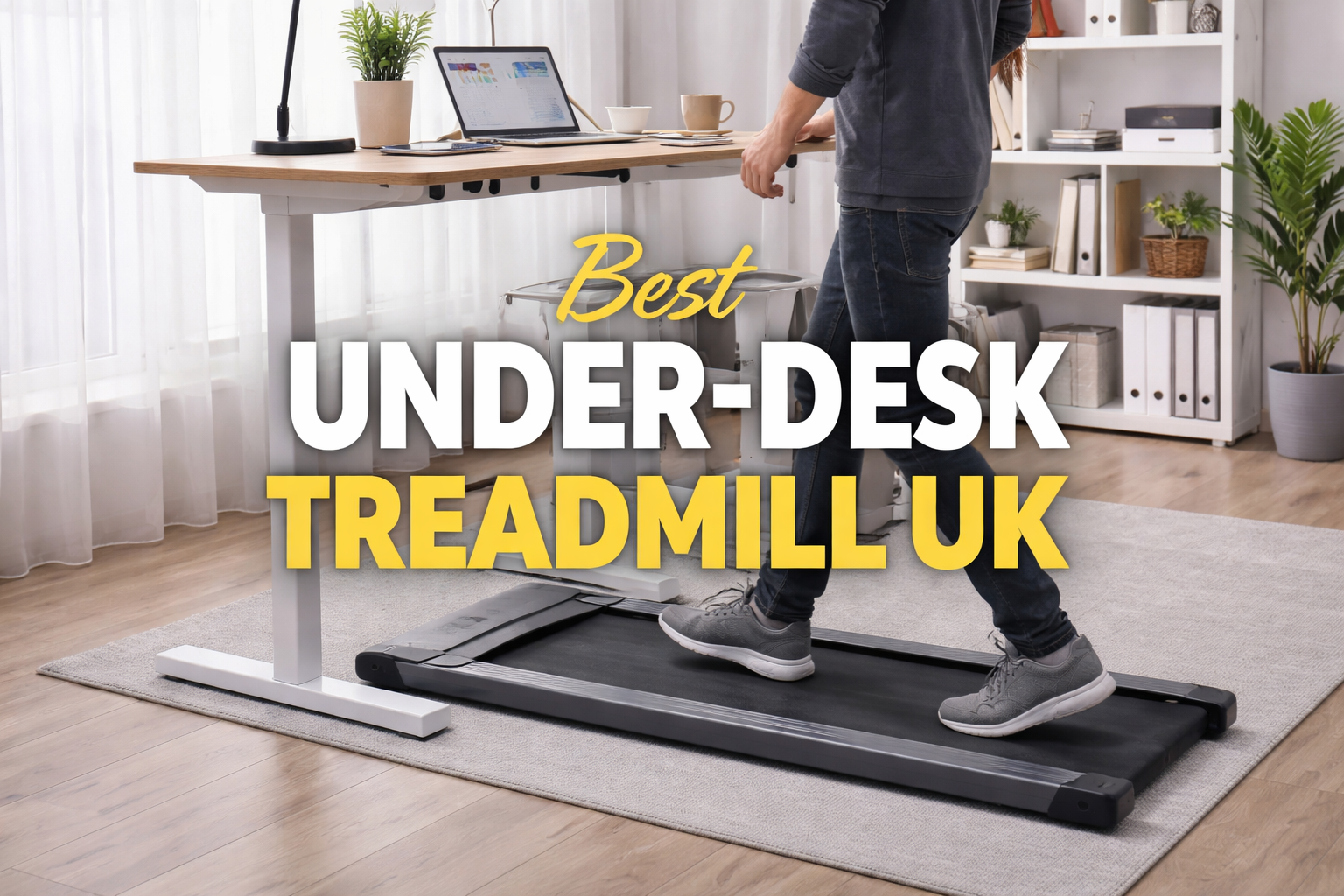
A walking pad at a standing desk is one of the most effective ways to build NEAT into a workday without conscious effort. At 1.5 km/h, you are not exercising — you are simply not sitting still — and the cumulative daily impact is significant. See the full guide on working while using a walking pad for the practical setup.

How many calories does walking burn?
The number of calories burned by walking varies significantly based on your weight, pace, and terrain. Heavier people burn more calories per step because they are moving more mass. Here is a practical guide.
| Body Weight | 5,000 steps | 7,500 steps | 10,000 steps | 12,500 steps |
|---|---|---|---|---|
| 11 stone (70kg) | ~175 kcal | ~262 kcal | ~350 kcal | ~437 kcal |
| 14 stone (89kg) | ~222 kcal | ~333 kcal | ~444 kcal | ~555 kcal |
| 17 stone (108kg) | ~270 kcal | ~405 kcal | ~540 kcal | ~675 kcal |
| 20 stone (127kg) | ~317 kcal | ~476 kcal | ~635 kcal | ~794 kcal |
| 25 stone (159kg) | ~397 kcal | ~595 kcal | ~793 kcal | ~992 kcal |
| 27 stone (171kg) | ~427 kcal | ~640 kcal | ~853 kcal | ~1067 kcal |
Estimates based on flat walking at a moderate pace (~3 mph). Incline, speed and individual fitness level will affect actual burn.
How many steps are there to burn a pound of fat?
One pound of body fat contains approximately 3,500 calories. Using the calorie estimates above:
- At 17 stone: around 6,500 steps per day above your maintenance creates a weekly deficit of roughly 3,500 calories — about 1lb of fat loss per week
- At 25 stone, around 5,000 additional steps per day creates a similar weekly deficit
The maths is straightforward — the challenge is consistency. A week of 10,000 steps followed by a week of 2,000 steps produces far worse results than 7,000 consistent steps every day. Consistency beats intensity every time for walking-based weight loss.
8-week step-building plan — starting from the beginning
This is the approach I would use if I were starting again. Gradual progression prevents injury, builds the habit, and avoids the burnout that comes from going too hard too fast.
| Week | Daily Target | How to get there | Notes |
|---|---|---|---|
| 1 | Baseline + 500 | One extra 5-minute walk per day | Do not overthink this. Just add one small walk. |
| 2 | Baseline + 1,000 | Two 5-minute walks or one 10-minute walk | Start noticing when you naturally move and add to those moments |
| 3 | Baseline + 2,000 | One 20-minute walk or two 10-minute walks | Morning or lunchtime walking is often easier to stick to than evening |
| 4 | 5,000 minimum | Whatever combination gets you there | A walking pad makes this target very achievable without dedicated workout time |
| 5 | 6,000 | Add an extra 10 minutes to your regular walk | By now, it should feel like a routine, not an effort |
| 6 | 7,000 | One 30-minute walk or distributed steps across the day | 7,000 is your primary long-term target — most benefits are here |
| 7 | 8,500 | One longer walk plus background activity | At this point, your energy and fitness will have improved noticeably |
| 8 | 10,000 | One 45-minute walk or consistently active day | Celebrate getting here — this is a genuinely significant achievement if you started sedentary |
🌿 Supporting your walking with Lily & Loaf Electrolytes
As you increase your daily step count, especially in warmer weather or during longer walks, your body loses electrolytes through sweat. Low electrolyte levels are among the most common causes of mid-walk fatigue, muscle cramps, and the “heavy legs” feeling that makes you want to stop. The Lily & Loaf Electrolyte formula contains sodium, potassium, magnesium, B vitamins, zinc, and vitamin C — supporting hydration, energy metabolism, and normal muscle function without added sugar or artificial colours.
Common mistakes that stop steps from producing results
Most people who try to lose weight by walking more do not fail because they lack willpower. They fail because of a small number of predictable, fixable mistakes. Here are the ones I see most often — and made myself.
Mistake 1: Compensating with food
The most common and least-discussed problem. Walking 10,000 steps and then eating 500 extra calories because “you earned it” eliminates the calorie deficit. Research consistently shows that people overestimate how many calories exercise burns and underestimate how much food they consume in response. A brisk 30-minute walk burns approximately 200–300 calories. A 300ml glass of orange juice is 140 calories. The margin is thinner than it feels.
The solution is not to avoid rewarding yourself — it is to be aware of the pattern and choose non-food rewards when the impulse kicks in.
Mistake 2: Going too hard, too fast, then stopping
Jumping from 3,000 steps to 12,000 in week one feels motivating. By week two, the knee pain, shin splints, and general fatigue combine with life getting in the way, and the habit collapses. Gradual progression — 1,000 additional steps every two weeks — produces far better long-term results than a dramatic burst followed by inconsistency.
Mistake 3: Counting steps but ignoring pace
10,000 very slow steps (1.5 mph shuffle) burns fewer calories than 10,000 brisk steps (3.5 mph), meaningfully. Once you have built the habit of consistent step count, gradually increasing your pace is one of the highest-value adjustments you can make. Aim for a pace where you can hold a conversation but would not be comfortable singing — that is the aerobic zone where fat burn is most efficient.
Mistake 4: Not drinking enough water
Mild dehydration — as little as 1–2% of body weight in fluid loss — measurably reduces exercise performance, increases perceived effort, and blunts fat burning. Many people walk less than they could and feel worse than they should simply because they are chronically under-hydrated. Plain water is the foundation. On longer or brisker walks, electrolytes help your body retain and use that hydration effectively.
Mistake 5: Treating rest days as zero-movement days
Recovery from exercise is important. But “rest” from formal exercise does not mean spending the rest of the day on the sofa. Light background movement on rest days — even 4,000–5,000 gentle steps — maintains metabolic activity and prevents the sharp drop in daily calorie burn that extended inactivity creates.
Mistake 6: Not tracking accurately
Phone-based step counting is significantly less accurate than wrist-worn trackers — particularly if your phone spends time on a desk rather than in your pocket. If you are relying on your phone and wondering why your weight loss is slower than expected, a wrist-based tracker often reveals a significant gap in step count. The difference between what people think they are doing and what they are actually doing is frequently 2,000–3,000 steps per day.
Mistake 7: Waiting until you feel better to start
This one is personal. When I was at my heaviest, I kept telling myself I would start properly once my knee felt better, once I had the right shoes, once the weather improved. The truth is that waiting for perfect conditions is how months turn into years. Starting at 1,000 steps a day — even 500 — begins the adaptation process that eventually makes 10,000 steps feel normal rather than impossible.
Practical ways to add steps without a dedicated workout
The biggest mistake people make when trying to increase their steps is treating it as a workout problem, when it is actually a habit-design problem. Most people cannot carve out an extra 45-minute walk every day — but almost everyone can find ways to accumulate steps throughout the day without rearranging their life.
At home
- Walk while on phone calls — even pacing in a small room adds 80–100 steps per minute.
- Take the longer route to the kitchen, bathroom, or any room when you get up
- Use a walking pad at low speed during television time — 1 hour at 1.5 km/h adds roughly 3,000–4,000 steps.
- Walk to the bottom of the garden and back between tasks — even 100 steps every hour adds up to 1,000+ extra steps per working day.
At work
- A walking pad under your desk at low speed during calls, reading, or email is the most efficient way to add steps without changing your schedule.
- Walk to a colleague’s desk rather than emailing.
- Take your lunch break as a walk — 15 minutes out adds approximately 1,500 steps.
- Park further away or get off the bus one stop earlier
Out and about
- Always take stairs — even short flights accumulate over a day
- Walk to shops within a mile rather than driving
- Walk children to school rather than driving when feasible
- Set a weekend “walk somewhere” goal — a park, a market, anywhere with a natural destination
Walking for different starting points — if you are heavier or have limited mobility
Most walking advice is written for people who are already reasonably fit. If you are significantly overweight, have joint problems, are recovering from surgery, or have been sedentary for years, the standard advice can feel irrelevant at best and discouraging at worst.
This section is written specifically for people starting from a more difficult position — because that is where I started, and because the approach genuinely needs to be different.
If you are over 20 stone
The good news first: heavier people burn significantly more calories per step than lighter people. Every step you take has a greater metabolic impact than the same step taken by someone lighter. The flip side is that the mechanical load on joints is higher, and starting too ambitiously increases the risk of injury that can set you back weeks.
Practical starting approach:
- Start with 10-minute walks, not 30. Two 10-minute walks per day is better than one 30-minute walk that leaves you sore for three days.
- Walking on softer surfaces — grass, paths, carpet — reduces joint impact compared to tarmac or concrete.
- A walking pad at low speed on a flat surface is genuinely lower-impact than outdoor walking on uneven terrain.
- Supportive footwear matters more at higher body weights — wide-fit trainers with good cushioning significantly reduce knee and ankle strain.
- Your first target is not 10,000 steps. It is 3,000 consistent steps per day for two weeks. That alone is a meaningful shift.
If you have bad knees or joint pain
Walking with knee or joint pain is one of the most common barriers to building a step habit, and one of the most under-discussed. The key points:
- Low-speed walking is significantly lower-impact than higher-speed walking — a walking pad at 1.5 km/h creates minimal knee load
- Walking in water (hydrotherapy, aqua walking) provides cardiovascular and step benefits with a fraction of the joint impact. If you have access to a pool, it’s worth considering in the early weeks.
- Anti-inflammatory nutrition matters — omega-3 fatty acids (oily fish, flaxseed, or a supplement) and maintaining adequate magnesium both support joint health over time.
- Sharp pain, swelling that does not resolve within 24 hours, or pain that worsens with each session is a signal to see a physiotherapist before continuing.
- Muscle weakness around the knee is often a bigger factor in pain than the joint itself — gentle strengthening of quads and hamstrings reduces knee strain during walking.
If you are recovering from surgery (including gallbladder removal)
Post-surgical recovery significantly changes the walking equation. Most general surgeons and the NHS recommend gentle walking as part of gallbladder surgery (cholecystectomy) recovery — it supports circulation, prevents clotting, and aids recovery. But the pace and duration in the first two to four weeks must match your actual energy levels, not an abstract step target.
General guidance for post-surgical walking:
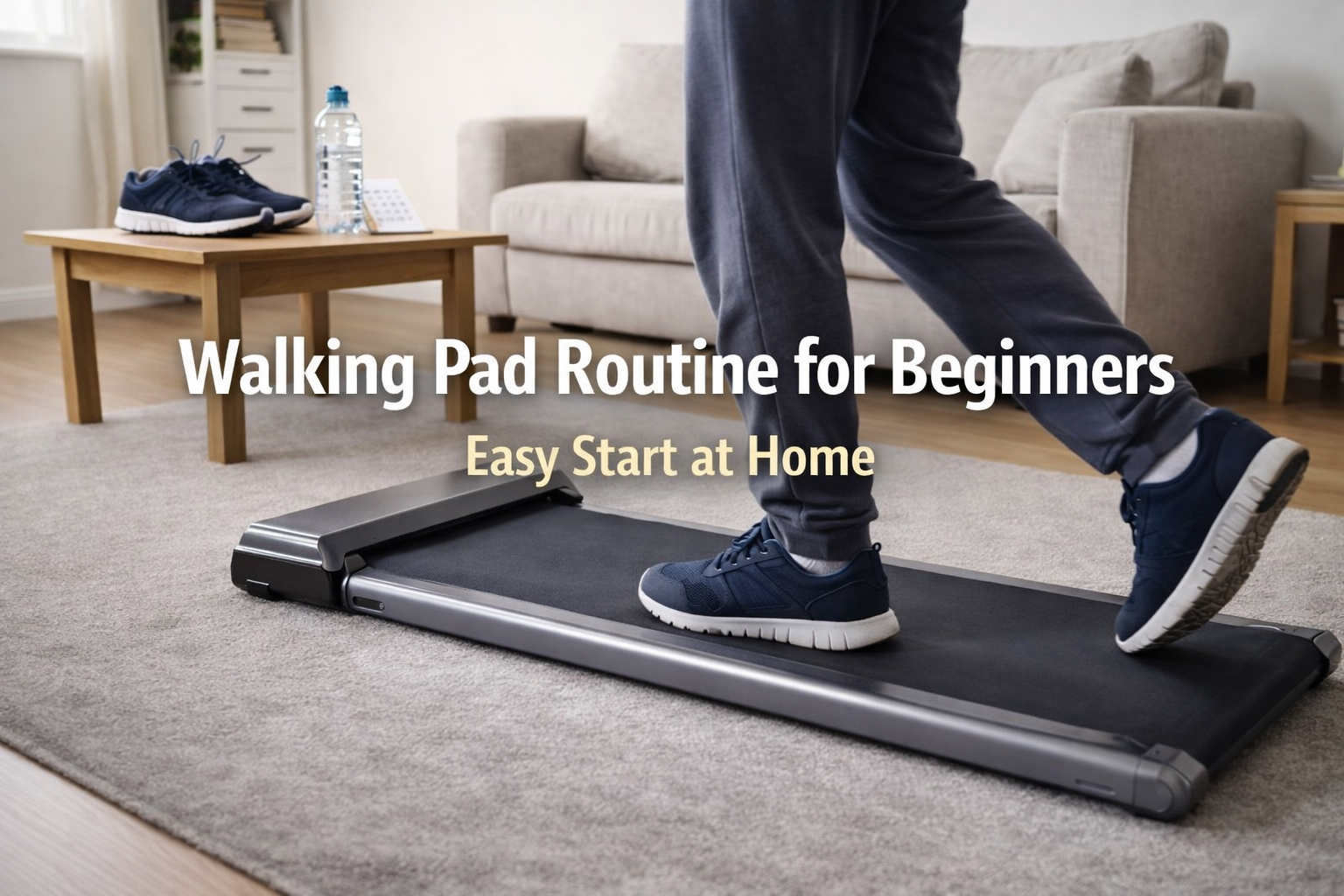
- Weeks 1–2 post-surgery: short, slow, indoor walking only — 5–10 minutes, two to three times per day. A walking pad at 0.5–1 km/h is ideal.
- Weeks 3–4: gradually increase to 15–20 minute walks. Still avoid uneven terrain, hills, or carrying loads.
- Weeks 5–6: normal walking distances can typically resume for keyhole surgery. Open surgery requires a longer recovery.
- Always follow your surgeon’s specific guidance — this is general education, not medical advice for your situation.
For more details on recovery after gallbladder removal, see our complete gallbladder removal guide.
Walking pads and step count — the honest assessment
I use a walking pad at my desk daily. It is one of the most practically useful things I have done for my step count — not because of the intensity, but because of the effortlessness. A walking pad at 1.5–2 km/h requires essentially no conscious effort, fits under any standing desk, and adds 3,000–5,000 steps to my day without any dedicated workout time.
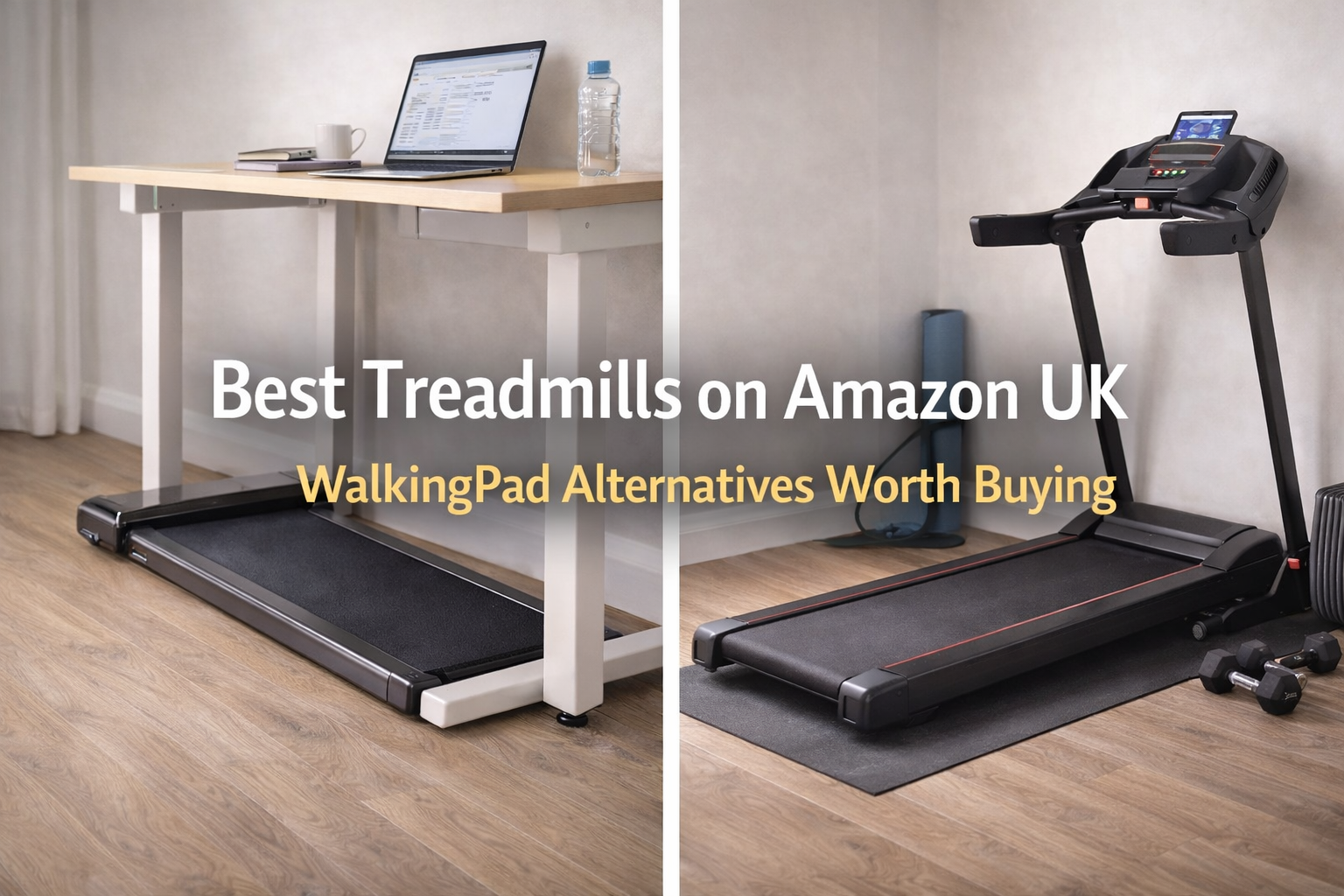
If you are interested in walking pads for weight loss, the key considerations are:
- Weight capacity: check the maximum user weight — not all walking pads support heavier users
- Noise level: if you have downstairs neighbours or work from home with calls, quiet models are worth the premium
- Speed range: for under-desk walking, you need very low speeds (0.5–2 km/h), which not all models support well
- Storage: Check dimensions carefully before buying if space is limited
For the full comparison of models at every budget, see our Best Walking Pads UK guide.
🌿 Feeling tired on your walks? Lily & Loaf Triple Magnesium
One of the most common reasons people find walking harder than it should be — especially in the first few weeks of increasing their step count — is low magnesium. Magnesium supports normal muscle function, helps reduce fatigue, supports normal energy-yielding metabolism, and contributes to better sleep quality (which directly affects how energetic you feel on your walks). Triple Magnesium from Lily & Loaf combines three different forms of magnesium for optimal absorption.
Incline walking — the most underrated upgrade
Once you have built a consistent step habit, incline walking is the single highest-value upgrade available. The difference in calorie burn between flat walking and incline walking at the same pace is dramatic — and the joint impact is not significantly higher for most people.
| Incline | Additional calorie burn vs flat | Muscle groups engaged | Practical feel |
|---|---|---|---|
| 0% (flat) | Baseline | Quads, calves, glutes lightly | Sustainable for hours |
| 3–5% | +20–30% | Glutes and calves are noticeably engaged | Brisk but comfortable |
| 8–10% | +50–70% | Full posterior chain working hard | Challenging — breathing increases |
| 12–15% | +80–100% | Glutes, hamstrings, calves fully loaded | Intense — sustainable only in intervals |
At 17 stone, walking at 3 mph on a 10% incline burns approximately the same calories as jogging at 5 mph on the flat — at a fraction of the joint impact. For people who cannot run due to weight, knee pain, or fitness level, incline walking is the closest functional equivalent.
The 12-3-30 method
If you have spent any time in fitness communities online, you have likely encountered the “12-3-30” treadmill workout: 12% incline, 3 mph speed, 30 minutes. It became popular because it works — the combination produces a serious calorie burn in a relatively short time without the impact of running. At 20 stone, 30 minutes at this setting burns approximately 400–500 calories.
It is not a routine to jump straight into. But building toward it over 8–12 weeks, starting from a flat walking base, is a realistic and impactful goal.
Incline walking outdoors
You do not need a treadmill to benefit from incline. Any hill walk, even a gentle one, significantly increases calorie burn and muscle engagement. If your regular walk route is flat, deliberately routing it via a hill — even one short climb — adds meaningful metabolic benefit. Bridges, car park ramps, and stairwells all count.
🌿 Joint and bone support for incline walking — Lily & Loaf Vitamin D3+K2
Incline walking loads the bones and joints more than flat walking. Vitamin D3 supports normal bone health and muscle function — both of which matter more when you increase walking intensity. K2 works alongside D3 to direct calcium to bones rather than soft tissues. Particularly important for anyone who is significantly overweight, exercises indoors, or lives in the UK, where sun exposure is limited for much of the year.
Supporting your walking with the right nutrition
Walking more increases your body’s demand for several key nutrients — particularly if you are also eating less as part of a calorie deficit. Here is what matters most and why.
Electrolytes — the most immediate need
Every time you sweat, you lose sodium, potassium, and magnesium. At low activity levels, this is minor. As you build toward 7,000–10,000 steps per day — especially in summer or if you walk briskly — electrolyte loss becomes a real factor. Signs of low electrolytes during or after walks include:
- muscle cramps, especially in calves or feet
- heavy or fatigued legs
- headache despite drinking plenty of water
- feeling dizzy or lightheaded after exercise
Plain water alone does not replace electrolytes. Adding an electrolyte supplement — particularly one containing magnesium, potassium, and sodium — makes a significant practical difference to how you feel during and after walking.
🌿 Lily & Loaf Electrolytes — for hydration and energy during walking
The Lily & Loaf Electrolyte formula delivers sodium, potassium, magnesium, B vitamins, vitamin C, and zinc in a sugar-free, vegan-friendly format. Mix one teaspoon with 200–300ml water once daily, or after exercise, in hot conditions, or on your longer walks. It supports fluid balance, normal muscle function, and energy metabolism — all of which are directly relevant to walking more comfortably and consistently.
Protein — protects muscle while losing fat.
Walking at a calorie deficit risks losing muscle alongside fat — particularly if protein intake is too low. Muscle loss slows your metabolism and makes the weight loss harder to sustain. Aiming for 1.2–1.6g of protein per kilogram of body weight per day is a practical target. If hitting that through food alone is difficult — especially if appetite is suppressed — a quality protein supplement covers the gap.
🌿 Lily & Loaf Daily Fuel — Protein Shake with Vitamins, Minerals and Fibre
Daily Fuel provides 21g of complete protein per serving, with all 8 essential amino acids, plus 15 vitamins and minerals, including iron, B12, and magnesium, and 5g of fibre to support digestion. It is specifically designed for people whose food intake is reduced — whether from appetite-suppressing injections, bariatric surgery, or simply eating less during weight loss. Particularly useful for ensuring adequate nutrition on high-step days when appetite may not reflect actual calorie needs.
Magnesium — muscle, recovery and sleep
Magnesium is one of the most widely deficient nutrients in the UK population, and its deficiency becomes more impactful when you start exercising more. Magnesium contributes to:
- normal muscle function — reduces cramping and post-walk soreness
- normal energy-yielding metabolism — affects how efficiently your body converts food to energy during walking
- reduction of tiredness and fatigue
- normal psychological function — mood and motivation matter for sticking to a walking habit
- Sleep quality — and better sleep directly affects how much energy you have for activity the next day
🌿 Lily & Loaf Double Magnesium
A high-strength magnesium supplement for daily use. Particularly useful for people who are increasing activity levels and finding muscle soreness, fatigue, or disrupted sleep are getting in the way. Best taken in the evening — magnesium supports sleep quality and muscle recovery.
Vitamin D — especially important for UK walkers
If you are walking indoors on a walking pad — or living in the UK and walking in autumn and winter — vitamin D deficiency is a real risk. Vitamin D supports normal muscle, bone, and immune function and has a well-documented association with mood and motivation. Most UK adults are deficient for at least 6 months of the year. If you are significantly overweight, the risk is higher because body fat stores vitamin D rather than making it available in the bloodstream.
🌿 Lily & Loaf Vitamin D3+K2
High-strength vitamin D3 combined with K2 to support absorption and direct calcium to bones rather than soft tissues. Particularly relevant for anyone walking indoors, walking in low-light months, or carrying excess weight. Contributes to normal bone health, muscle function and immune system support.
Daily Essentials Bundle — covering all the bases
🌿 Lily & Loaf Daily Essentials Bundle
Covers the full nutritional safety net in one daily routine — Daily Fuel (protein, fibre, vitamins and minerals), Daily Balance (Omega 3-6-9 for heart and joint health), and Daily Flora (probiotics for gut health and B-vitamin support for energy metabolism). If you want to support your walking with a simple, complete daily routine rather than individual supplements, this is where to start.
Walking and appetite — what actually happens
One of the most common things people notice when they start walking consistently is a change in appetite — but not always in the direction they expect. Walking affects appetite in complex ways, and understanding the pattern helps you work with it rather than against it.
Short term: Walking often suppresses appetite
Moderate aerobic exercise, like walking, temporarily reduces ghrelin levels — the hunger hormone — and increases peptide YY and GLP-1 (the natural versions the body produces), both of which signal fullness. For 30–60 minutes after a brisk walk, many people find they are genuinely less hungry than before.
This is useful: scheduling walks before meals is a practical way to naturally moderate portion size without conscious restriction.
Medium term: adaptation and hunger regulation
After 4–6 weeks of consistent walking, the short-term appetite suppression often becomes less pronounced as the body adapts. At the same time, most people find that their relationship with hunger improves — they eat more regularly, make better food choices, and feel less driven by impulsive snacking. Regular movement appears to improve insulin sensitivity and blood sugar regulation, which smooths out the hunger spikes and crashes that drive overeating.
The compensation trap
Research consistently shows that people who increase exercise without tracking their food often experience what researchers call “energy compensation” — they unconsciously eat more to offset the extra activity. This does not entirely negate the benefits of walking, but it significantly reduces them. The people who lose the most weight from walking are generally those who are at least loosely aware of what they are eating alongside it.
This does not require calorie counting. Simply paying attention — eating slowly, stopping when full, avoiding mindless snacking — is often enough to prevent compensation from erasing your deficit.
Walking and food noise
For people dealing with high levels of food noise — the constant background chatter about eating that many people with obesity experience — regular walking has a meaningful effect. Physical activity appears to reduce obsessive food-related thinking, likely through its effects on dopamine regulation and stress hormones. If you find that food occupies your thoughts disproportionately, building a consistent daily walk into your routine is worth it for this reason alone, regardless of the calorie burn.
What to do when steps stop producing results
After 6–12 weeks of consistently increased steps, some people find their weight loss slows or stalls. This is normal — and it is a sign of success, not failure. Your body has adapted to the new activity level. Here is what to do.
Options when you hit a walking plateau
- Increase pace — brisk walking burns significantly more calories than slow walking for the same number of steps. Going from 2.5 mph to 3.5 mph increases calorie burn by approximately 30%
- Add incline — even a 5% gradient dramatically increases the calorie cost of walking. Treadmill incline walking is one of the most effective low-impact calorie-burning tools available.
- Increase total steps—adding 2,000 steps above your current plateau creates a new stimulus.
- Add a new movement type — swimming, cycling, or resistance training two to three times per week, alongside walkin,g produces significantly better fat loss results than walking alo.ne
- Review diet — for most people, plateaus are partly a walking issue and partly a diet issue. A sustainable small reduction in portion size is often enough to restart momentum.
For more details on breakiweight-loss plateaus, see our guide to weight-loss plateaus and what actually helps.

Walking in the UK — practical advice for the actual conditions
Most walking-for-weight-loss content is written for California. The UK reality is darker, wetter, and colder for eight months of the year, and involves footpaths that are frequently muddy, narrow, or poorly lit. Here is how to keep your step count consistent across British seasons.
Walking in winter and low light
The biggest obstacle to consistent walking in the UK is not motivation — it is darkness. Between October and March, most working adults in the UK leave home and return home in the dark. This makes outdoor walking genuinely less safe and less appealing.
Solutions that work:
- A head torch or clip-on running light — cheap, effective, and makes evening walks feel far safer. Running head torches on Amazon start from around £10–£15.
- High-visibility clothing — a simple hi-vis vest over your coat takes seconds to put on and significantly improves road safety in low light
- Lunchtime walking — if you have any flexibility in your working day, a 20-minute lunchtime walk in daylight is easier to maintain through winter than evening walks.
- A walking pad for winter months — having an indoor alternative for genuinely bad days means you never lose your step habit entirely. One bad weather week should not break a month-long routine.
Walking in the rain
The answer to walking in UK rain is not a better attitude — it is better kit. A waterproof jacket, waterproof trousers for longer walks, and waterproof walking shoes or wellies transform a miserable experience into a perfectly manageable one. Once you are dry, a rainy walk is frequently more pleasant than a dry one — quieter paths, cooler air, and a genuine sense of having done something the majority of people did not.
The mental barrier to wet-weather walking is almost eliminated by having the right equipment on a peg by the door, ready to go.
Walking in the heat
UK summers occasionally produce genuinely hot days, and walking in the heat poses specific risks — particularly for heavier people, whose thermoregulation is less efficient at higher body weights.
- Walk in the morning (before 10 am) or evening (after 6 pm) on hot days — not midday.
- Increase water intake significantly on hot days — the general rule is an additional 500ml per hour of walking in warm conditions.
- Electrolyte supplementation becomes more important when heat — sweat losses are higher, and plain water alone does not replace what is lost
- Wear light, breathable clothing — moisture-wicking fabrics rather than cotton, which holds sweat against skin
- If you feel dizzy, nauseous, or stop sweating on a hot day, stop walking immediately and cool down — these are early signs of heat exhaustion.ion
Maintaining step counts through illness.
A cold, a bout of flu, or any infection that leaves you genuinely unwell is a legitimate reason to reduce steps, not a failure of commitment. The rule of thumb in sports medicine is that if symptoms are above the neck (runny nose, mild sore throat), light walking is generally fine. If symptoms are below the neck (chest, stomach, fever, fatigue), rest fully and let the illness pass. Pushing through illness to hit a step target is counterproductive and extends recovery time.
Once you recover, restart at 50–60% of your pre-illness step count for three to five days, then build back up. Do not try to make up for missed days — resume the programme from where you are.
🌿 Immune support for year-round walkers — Lily & Loaf Multi-Vits & Minerals
Walking consistently through UK winters means more exposure to cold and damp conditions. The Lily & Loaf Multi-Vits & Minerals formula includes vitamin D, vitamin C, zinc, and folate to support immune function, as well as B vitamins and magnesium to support energy metabolism. A practical daily baseline is particularly important to maintain during the winter months, when sun exposure — and therefore natural vitamin D production — is minimal.
The psychological dimension of walking in the UK
There is a reason Scandinavian countries, which have climates similar to the UK’s, have a concept called “friluftsliv” — the practice of outdoor life in all weathers as a positive cultural value rather than a hardship to be avoided. Research on mood, mental health, and exercise consistently shows that outdoor walking in natural settings produces greater psychological benefit than equivalent indoor exercise — even in grey or rainy conditions.
Building a “whatever the weather” walking habit is one of the most durable things you can do for long-term weight-loss consistency. The people who maintain step counts year-round are not more disciplined than those who stop in winter — they have stopped negotiating with the weather.
Do you need a step tracker?
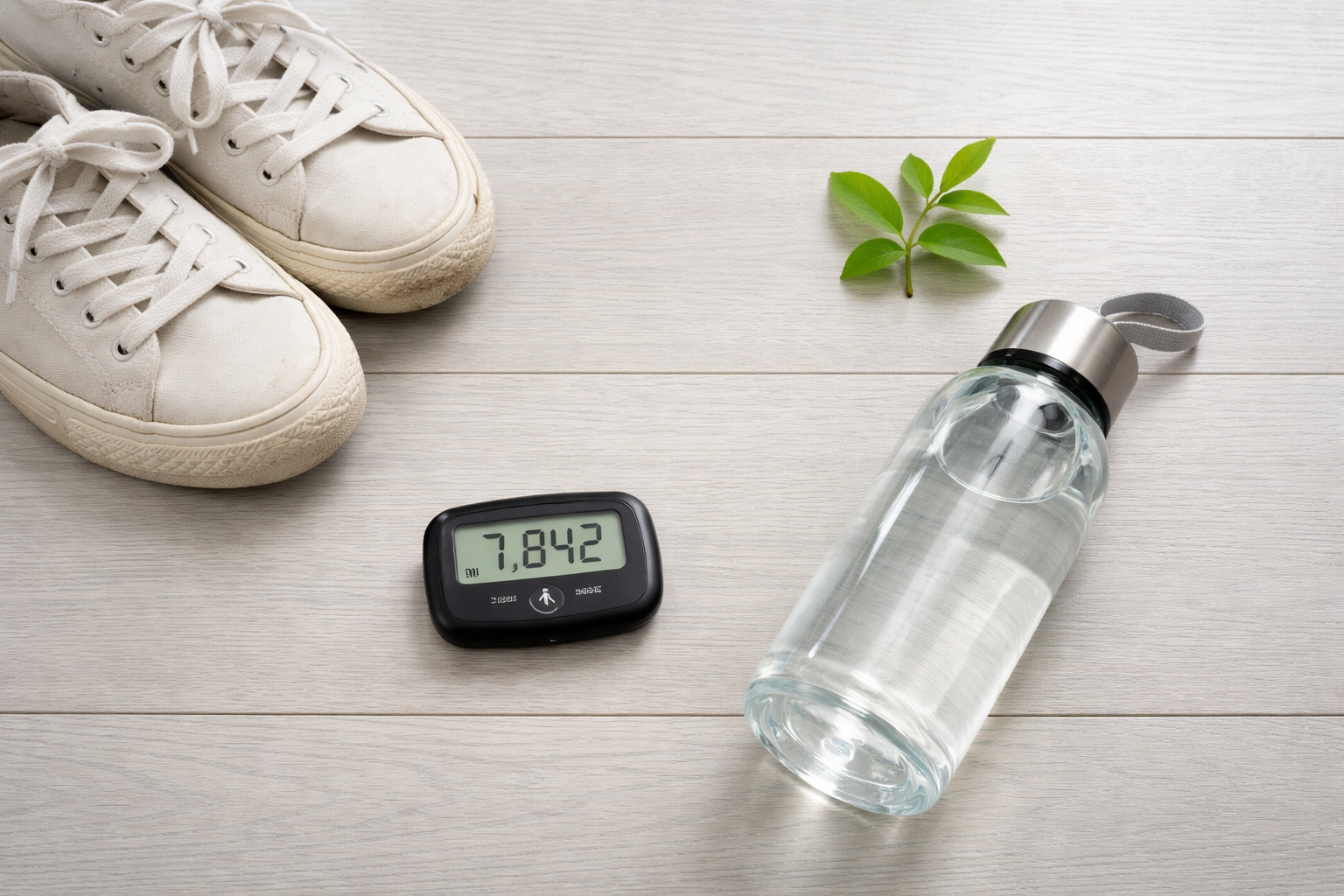
Not strictly, but having one makes a significant practical difference to how likely you are to hit your targets. When you can see your step count in real time, you naturally make different decisions: taking the stairs, pacing during a phone call, adding a short walk before bed to close the gap.
Smartphones have built-in pedometers (e.g., Apple Health and Google Fit), which are reasonably accurate. Dedicated fitness trackers are more accurate and can track sleep, heart rate, and calorie burn in addition to steps.
Best step trackers for weight loss — Amazon picks
- Fitbit Inspire 3 (~£70–£90) — excellent step accuracy, sleep tracking, free app with calorie tracking—best all-rounder at mid-range price.
- Garmin Vivosmart 5 (~£100–£120) — strong step and activity tracking, long battery life, accurate calorie estimates.
- Xiaomi Smart Band 8 (~£30–£40) — best budget option, accurate step counting, 16-day battery life.
- Basic clip-on pedometer (~£8–£15) — no smartphone needed, simple step counter, completely adequate if you just want the number.
- Apple Watch SE (~£180–£220) — most accurate step tracking available on a wearable, full health suite, best if you are already in the Apple ecosystem.
Walking more when you are on GLP-1 medication
If you are using GLP-1 medication like tirzepatide (Mounjaro) or semaglutide (Wegovy/Ozempic) while increasing your steps, there are a few things to keep in mind.
- Fatigue is more likely — GLP-1 medication significantly reduces calorie intake. At a lower calorie intake, your energy for exercise is reduced. Starting walks shorter and slower than you think you need to is smart, not weak.
- Electrolyte needs increase — reduced food intake plus increased activity means your electrolyte intake from food drops while your loss from sweat increases. Supplementing electrolytes becomes more important, not less.
- Muscle preservation matters more — the combination of calorie restriction from GLP-1 and increased activity creates good conditions for fat loss, but also some muscle loss risk. Prioritising protein and considering a protein supplement is worth the effort.
- Dehydration is easier on GLP-1 — appetite suppression often affects thirst. Walking while mildly dehydrated feels harder and produces less benefit. Drinking to a schedule rather than to thirst is a better approach.
Related reading: Why am I so tired on GLP-1? | Electrolytes for GLP-1 users | How to reduce muscle loss on GLP-1
Summary — the practical version
| If you currently do… | Your first goal is… | How to get there |
|---|---|---|
| Under 3,000 steps | 5,000 per day | One 20-minute walk or walking for 30 minutes daily |
| 3,000–5,000 steps | 7,000 per day | Add two 15-minute walks or a walking pad for 45 minutes daily |
| 5,000–7,000 steps | 8,500–10,000 | One longer walk plus distributed background movement |
| Already at 10,000 | Increase pace or add incline | Same steps, higher intensity — or add a second activity |
The research is consistent: taking more daily steps than you currently do will help you lose weight, improve your metabolic health, and feel better across the board. The number 10,000 is a fine target but not a sacred one. Start where you are, improve consistently, and let the compound effect do its work.
Related reading on this site
- Best Walking Pads UK Guide 2026
- Can a Walking Pad Help You Lose Weight?
- Walking Pad vs Outdoor Walking for Weight Loss
- Beginner Walking Pad Routine: A Simple Home Plan
- Electrolytes for GLP-1 Users
- Why Am I So Tired on GLP-1?
- How to Reduce Muscle Loss on GLP-1
- Weight Loss Plateau: What Actually Helps

Frequently asked questions
How many steps a day do I need to lose weight in the UK?
Research consistently points to 7,000–10,000 steps per day as the range at which meaningful weight-loss contribution begins. If you are currently sedentary (under 3,000 steps), getting to 5,000 consistently is a more important first step than worrying about 10,000.
Will 10,000 steps a day help me lose weight?
Yes — 10,000 steps burns approximately 300–800 calories, depending on your weight, which contributes meaningfully to a calorie deficit. Combined with a diet-aware approach, 10,000 consistent daily steps can produce 0.5–1lb of weight loss per week at a moderate pace.
How long does it take to lose weight by walking?
Most people who consistently walk 7,000–10,000 steps per day and manage their diet see noticeable weight change within 4–8 weeks. The rate depends on starting weight, food choices, and consistency. Walking alone without any dietary awareness produces slower but still real results over 12–16 weeks.
Is a walking pad good for losing weight?
Yes — a walking pad is one of the most practical tools for increasing daily step count for people who work from home, have limited mobility, or live somewhere with poor walking conditions. Walking at low speed during desk work or television time adds 3,000–5,000 steps to a day without requiring dedicated workout time.
How many steps are there to burn a pound of fat?
Approximately 35,000–40,000 steps above your maintenance level burn roughly 3,500 calories — equivalent to about 1 pound of fat. Spread over a week, that is around 5,000–6,000 additional steps per day.
What should I do if my legs ache from walking more?
Muscle soreness when increasing step count is normal in the first two to three weeks. Magnesium supports normal muscle function and helps reduce cramping. Lily & Loaf Triple Magnesium or Double Magnesium taken in the evening supports both muscle recovery and sleep quality. Also, ensure you are staying properly hydrated with electrolytes, not just plain water.
Does walking speed matter for weight loss?
Yes — brisk walking at 3–4 mph burns significantly more calories than a stroll for the same number of steps. However, any pace is better than no steps at all. Build consistency and duration first, then gradually increase speed as your fitness improves.
Can I use a walking pad to hit my daily step target?
Yes — a walking pad at 1.5–2 km/h, either under a standing desk or while watching television, adds 3,000–5,000 steps per hour without any dedicated workout time. For the full comparison, see our Best Walking Pads UK guide.
Discover more from Healthy Weight Loss GLP1
Subscribe to get the latest posts sent to your email.