
⚕️ Medical Disclaimer
This content is for informational purposes only and does not constitute medical advice. Always consult your GP or prescribing clinician before making changes to your medication, diet, or supplement regimen.
⚡ QUICK ANSWER
Do you gain weight back after stopping Mounjaro?
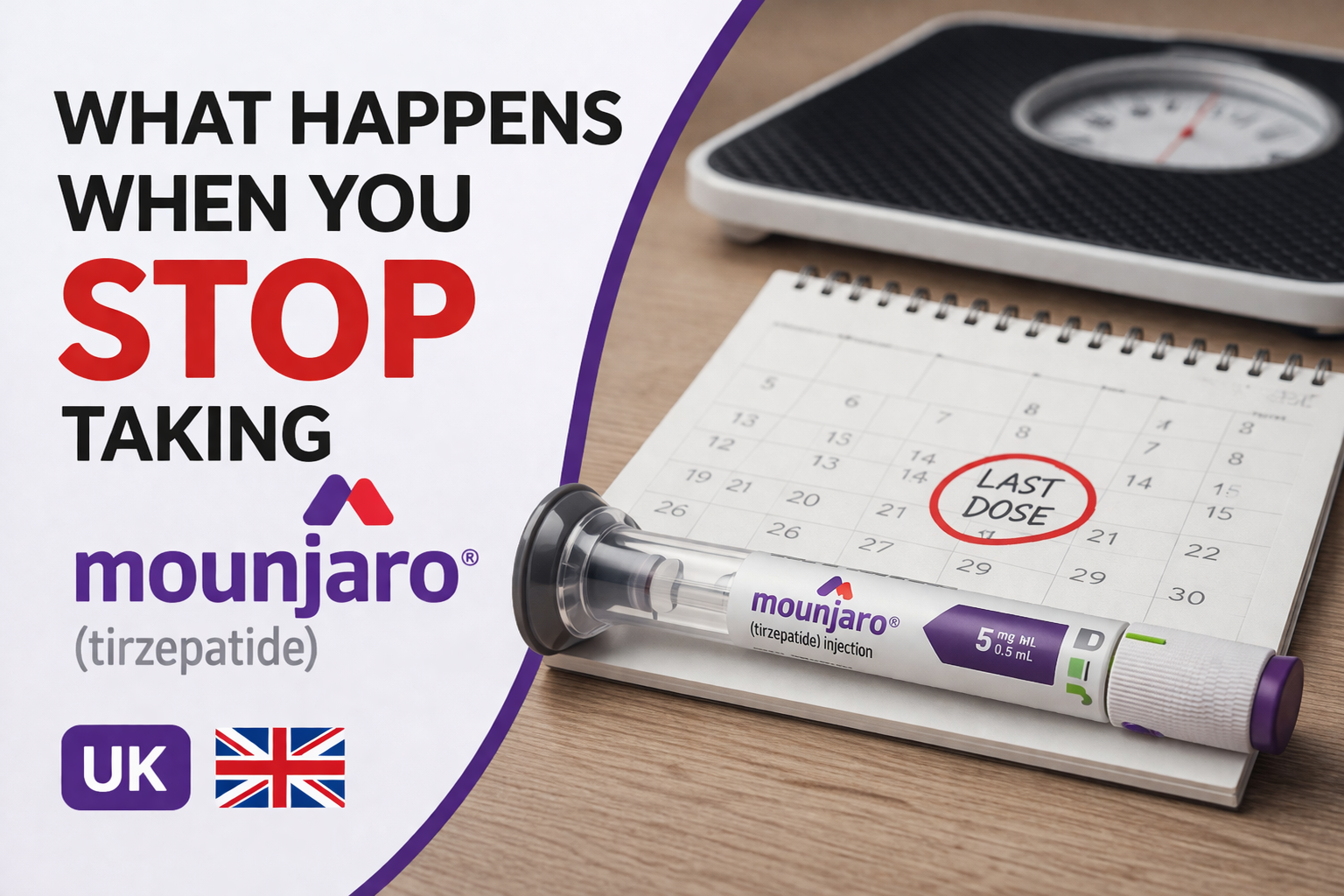
Yes — most people regain significant weight after stopping Mounjaro (tirzepatide) if they do not have sustainable lifestyle changes in place. The SURMOUNT-4 trial showed participants who stopped tirzepatide regained approximately two-thirds of their weight loss within 88 weeks. The medication addresses appetite and metabolic signals while you take it; stopping removes those signals without replacing them unless habits have been built.
This is the question most people on Mounjaro are quietly asking but rarely get a straight answer to. The data is clear and worth understanding before you stop — whether that is your choice or your circumstances force it. This guide covers what the evidence shows, how to minimise regain, and what the realistic long-term picture looks like. See My First 12 Months on Mounjaro for a personal account of the journey.
What the Clinical Trial Data Actually Shows
The SURMOUNT-4 trial specifically examined what happens after stopping tirzepatide. Participants who completed 36 weeks of active tirzepatide treatment were then randomised to either continue or switch to placebo for a further 88 weeks.
| Outcome | Continued Tirzepatide | Switched to Placebo (stopped) |
|---|---|---|
| Additional weight change at 88 weeks | +6.7% further weight loss | −14.8% weight regained (two-thirds of original loss) |
| Cardiometabolic markers | Continued improvement | Returned toward baseline |
| Waist circumference | Continued reduction | Increased significantly |
| Glycaemic markers | Continued benefit | Deteriorated in people with pre-diabetes |
⚠️ Regain Is Normal — Not a Personal Failure
Weight regain after stopping GLP-1 medications is a predictable biological response, not a character flaw. The medications change the hormonal signals that control appetite and metabolism. When you remove the medication, those signals return to their pre-treatment state — unless the time on medication has been used to build sustainable habits that compensate.
Why Weight Regain Happens — The Biological Mechanism
GLP-1 medications work by mimicking a hormone your gut naturally produces after eating. This hormone signals fullness to the brain, slows gastric emptying, and improves insulin sensitivity. The problem: people with obesity typically have reduced natural GLP-1 signalling — a biological predisposition, not a lifestyle choice.
When you stop the medication, your natural GLP-1 signalling returns to its baseline — which, for most people, means the hunger, cravings, and reduced satiety signals that existed before treatment come back. The medication did not fix the underlying signalling; it supplemented it while present.
The Habits That Reduce Regain — What the Evidence Supports
Not everyone regains all their weight. The people who maintain the most of their loss after stopping GLP-1 medication share common characteristics:
- Established a protein-first eating pattern. High protein intake supports satiety and muscle preservation independently of medication. Aim for 1.2-1.6g/kg of target body weight daily.
- Built a regular exercise habit. Particularly resistance training, which preserves the muscle mass that keeps metabolic rate elevated. Muscle preservation guide.
- Addressed emotional eating and food relationships. Emotional eating patterns return strongly when the appetite suppression of medication is removed.
- Created a structured eating pattern. Regular meal timing, not grazing, with protein at every meal. The appetite regulation the medication provided needs to be replicated through structure.
- Maintained movement as a non-negotiable habit. 10,000 steps or equivalent daily as a baseline regardless of other exercise.
How to Stop Mounjaro — Tapering vs Abrupt Stop
There is no clinical protocol requiring a taper for Mounjaro — you can technically stop at any dose without a formal weaning process. However, many users and prescribers recommend reducing to the previous dose for 4-8 weeks before stopping entirely, for two reasons:
- The appetite change when stopping cold is significant for some people — coming off a lower dose is less jarring
- A slower step-down gives you time to test and adjust your eating habits without the full force of returning hunger
Discuss the stopping plan with your prescriber. If you are stopping due to cost, ask about temporary dose reduction to the minimum effective dose rather than stopping completely — the 2.5mg or 5mg dose is significantly cheaper and may maintain some benefit.
Maintenance Supplements After Stopping GLP-1
After stopping Mounjaro, certain supplements can support the transition:
- Lily & Loaf Triple Magnesium (use code ALAN10 for 10% off) — supports sleep quality, which is critical for appetite regulation once the medication’s direct suppression is removed
- Lily & Loaf Pre+Pro 15 Probiotic (use code ALAN10 for 10% off) — gut health supports satiety signalling; a healthy microbiome produces some natural GLP-1
- Lily & Loaf Omega-3 (use code ALAN10 for 10% off) — anti-inflammatory; supports metabolic health during the transition period
- Berberine UK — natural compound with evidence for insulin sensitisation; sometimes used as a partial GLP-1 alternative for metabolic maintenance
- Lily & Loaf Pea Protein (use code ALAN10 for 10% off) — maintaining protein intake is the single most important nutritional strategy for appetite management after stopping medication
If You Regain Weight — What to Do Next
Weight regain after stopping GLP-1 medication does not mean the treatment failed. It means the condition (obesity, with its underlying biological drivers) is chronic and likely to need ongoing management — in the same way that stopping blood pressure medication causes blood pressure to return. If significant regain occurs, speak to your prescriber about restarting, considering a different medication, or exploring the NHS pathway if you have not already. See the MedExpress review for private prescribing options, and the NHS vs Private GLP-1 guide if not already explored.
RECOMMENDED SUPPLEMENTS
Lily & Loaf — Quality Supplements for GLP-1 Users
The Daily Essentials Bundle supports the transition off GLP-1 medication — gut health, sleep, energy, and metabolic support all in one stack.
📚 RELATED READING
Some links in this post are affiliate links. If you purchase through them, I may earn a small commission at no extra cost to you. I only recommend products I use myself. Use code ALAN10 for 10% off Lily & Loaf. This post is for informational purposes only — always consult your GP for medical advice.
The Long-Term Prescription Question — Is Mounjaro a Lifetime Medication?
This is the question many people on Mounjaro are reluctant to ask. The honest answer: for many people with obesity as a chronic metabolic condition, long-term or indefinite treatment may produce the best outcomes — in the same way that hypertension medication is often taken indefinitely. The SURMOUNT-4 data showing significant regain after stopping supports this framing.
However, the goal of the treatment period should be to build the habits (protein intake, resistance training, sleep, stress management) that reduce the dependence on medication over time. Some people successfully maintain significant weight loss after stopping; others do better with continued or intermittent treatment. This is an individual clinical decision best made with your prescriber — not something to be ashamed of.
Sources: SURMOUNT-4 trial data: tirzepatide withdrawal and weight regain · Obesity Society position statement: obesity as a chronic disease · NICE TA1026: tirzepatide for long-term weight management
Discover more from Healthy Weight Loss GLP1
Subscribe to get the latest posts sent to your email.