
⚕️ Medical Disclaimer
This content is for informational purposes only and does not constitute medical advice. Always consult your GP or prescribing clinician before making changes to your medication, diet, or supplement regimen.
⚡ QUICK ANSWER
Does swimming help with weight loss?
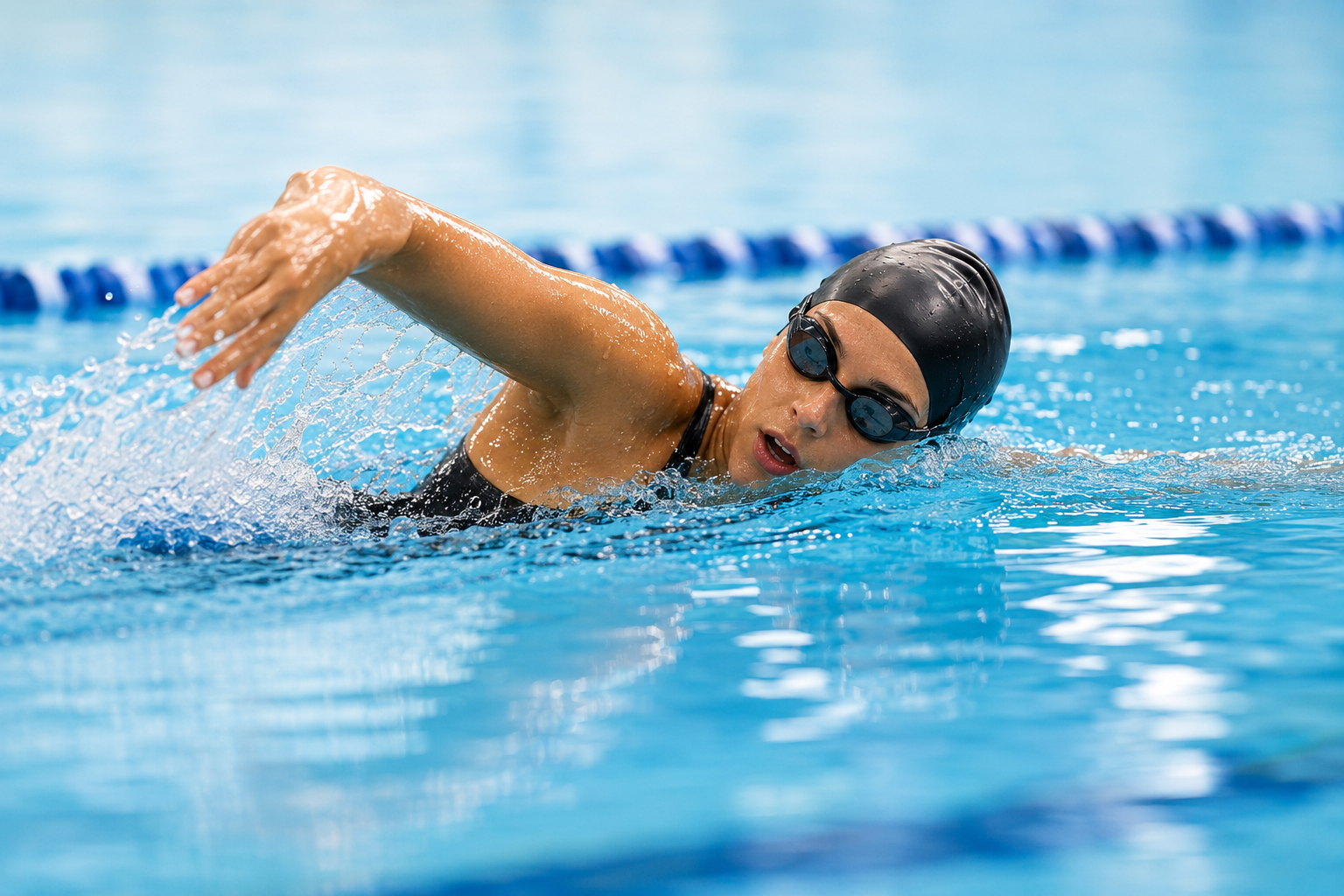
Yes — swimming is an effective weight loss exercise. A 30-minute moderate-intensity swim burns approximately 250-350 kcal for a 90kg person, comparable to cycling or brisk walking. Swimming is particularly valuable for people with joint pain, obesity-related mobility limitations, or GLP-1 side effects that make high-impact exercise difficult. The resistance of water also provides a muscle-building stimulus alongside cardiovascular benefit.
Swimming is one of the most frequently recommended exercises for weight loss in the UK — particularly for people who are significantly overweight, have joint problems, or find land-based exercise uncomfortable. But does it actually work, and how much do you need to do? This guide covers the evidence and the practical numbers. For the full low-impact exercise comparison: Best Low Impact Exercise for Weight Loss UK.
How Many Calories Does Swimming Burn?
| Swim Style | Intensity | Calories Burned (per 30 min) — 80kg Person | Calories Burned (per 30 min) — 100kg Person |
|---|---|---|---|
| Leisurely breaststroke | Low | 180-220 kcal | 220-270 kcal |
| Moderate front crawl | Moderate | 280-330 kcal | 340-400 kcal |
| Vigorous front crawl | High | 380-440 kcal | 460-540 kcal |
| Mixed styles (lengths) | Moderate | 240-290 kcal | 290-360 kcal |
| Aqua aerobics class | Moderate | 200-280 kcal | 240-340 kcal |
For comparison: 30 minutes of brisk walking burns approximately 150-200 kcal (same person). Swimming’s calorie burn advantage comes from the higher muscle engagement required to overcome water resistance.
How Many Lengths to Lose Weight?
The ‘how many lengths’ question depends on pool length and swim intensity. Standard UK public pools are 25 metres:
| Goal | Lengths (25m pool) | Duration | Frequency | Estimated Weekly Calorie Burn |
|---|---|---|---|---|
| Active movement (beginner) | 20-30 lengths | 20-30 mins | 3x/week | ~1,500-2,000 kcal |
| Weight loss | 40-60 lengths | 35-50 mins | 3-4x/week | ~2,500-3,500 kcal |
| Significant weight loss | 60-80 lengths | 50-70 mins | 4-5x/week | ~4,000-5,500 kcal |
💡 You Don’t Need to Be a Strong Swimmer
Beginners can start with as little as 10 lengths of comfortable breaststroke and build gradually. The key is getting in the water consistently — technique and distance improve naturally with regular practice. Many UK leisure centres offer adult swimming lessons if you want to improve your stroke.
Why Swimming Is Particularly Good for GLP-1 Users
For people on Mounjaro or Wegovy, swimming has specific advantages over land-based exercise:
- Reduced joint stress: Water supports 90% of your body weight — people who find walking painful due to joint load can often swim comfortably from day one
- Cooling effect reduces nausea: Some GLP-1 users find that cold pool water reduces the nausea associated with medication — particularly useful for morning swimmers
- Full body resistance: Water provides resistance in all directions — swimming is simultaneously cardiovascular and resistance training, supporting muscle preservation on GLP-1
- No equipment needed: Unlike walking pads or gym memberships, a swim costs £3-8 per session at most UK leisure centres
Swimming vs Walking for Weight Loss
| Factor | Swimming | Walking | Verdict |
|---|---|---|---|
| Calorie burn per hour | 400-700 kcal | 200-350 kcal | Swimming wins significantly |
| Joint impact | Very low — water supports body weight | Low-moderate — some joint load | Swimming wins for joint conditions |
| Accessibility | Requires pool access (£3-8/session) | Free — no equipment needed | Walking wins for accessibility |
| Muscle building | Good — water resistance works all muscles | Low — primarily cardiovascular | Swimming wins |
| GLP-1 nausea tolerance | Often better — cool water helps | Variable | Swimming often better on bad side effect days |
| Daily step count | Does not contribute to step goals | Directly contributes | Walking wins for step targets |
The ideal is to combine both. Daily step targets provide a consistent baseline of activity; swimming 2-3 times per week adds significant calorie burn and resistance training. For home-based water alternatives: walking pads provide low-impact cardio without pool access.
Getting Started With Swimming in the UK
- Find your nearest pool: Swimming.org Pool Finder (swimming.org)
- Leisure centre membership vs pay-as-you-go: If swimming 3x/week, a monthly membership typically costs £25-45 and pays off after 6-10 sessions
- Equipment: Swimming goggles UK (£8-20), swimwear UK — that is all you need to start
- Session structure for beginners: Alternate 2 lengths swimming with 30 seconds rest; build to continuous swimming over 4-6 weeks
- Timing on GLP-1 medication: Avoid swimming immediately after your weekly injection when nausea may be at its peak — typically 12-24 hours post-injection. Mid-week sessions are often best tolerated
Aqua Aerobics — The Overlooked Option
UK leisure centres typically offer aqua aerobics classes (sometimes called aqua fit or hydrofit) — instructor-led group sessions in a pool, usually non-swimmers welcome as the depth is manageable. Calorie burn is lower than continuous swimming but motivation and social element are higher. An excellent entry point for people new to water-based exercise or with mobility limitations.
RECOMMENDED SUPPLEMENTS
Lily & Loaf — Quality Supplements for GLP-1 Users
Supporting your swimming sessions with electrolytes and protein — Lily & Loaf covers post-exercise recovery and hydration.
📚 RELATED READING
Some links in this post are affiliate links. If you purchase through them, I may earn a small commission at no extra cost to you. I only recommend products I use myself. Use code ALAN10 for 10% off Lily & Loaf. This post is for informational purposes only — always consult your GP for medical advice.
Swimming vs Other Exercise for GLP-1 Users — The Full Comparison
For GLP-1 users specifically, the exercise options ranked by combination of accessibility, calorie burn, muscle preservation, and GLP-1 side effect tolerance:
| Exercise | Calorie Burn/Hour | Muscle Preservation | Side Effect Tolerance | Accessibility |
|---|---|---|---|---|
| Resistance training | 200-400 kcal | Highest — primary benefit | Good — low intensity versions available | Home with bands (£15) or gym |
| Swimming | 400-700 kcal | Good — full body resistance | Excellent — cooling water helps nausea | Pool needed (£3-8/session) |
| Cycling (home bike) | 350-600 kcal | Moderate | Good — low impact | Home bike £150-400 |
| Walking (incl. walking pad) | 200-350 kcal | Low | Excellent — gentle, any intensity | Free outdoors; £200-400 for pad |
| High-intensity classes | 500-800 kcal | Moderate | Poor — nausea risk | Gym membership needed |
The optimal combination for most GLP-1 users: walking as the daily baseline (steps) + resistance training 3x/week + swimming 2x/week if joint conditions permit.
Sources: Garber et al., ACSM guidelines: exercise for weight loss · Public Health England: physical activity statistics UK
Swimming stands out among weight loss exercises for one unique combination of properties: high calorie burn, full body resistance, extremely low joint impact, and a tolerance advantage for GLP-1 users that no other exercise matches. If you have access to a pool, building a twice-weekly swim habit alongside your walking or resistance training programme gives your weight loss a significant additional engine. Find your nearest pool at swimming.org/poolfinder and start with whatever distance feels achievable — the habit matters far more than the distance in the first month.
Discover more from Healthy Weight Loss GLP1
Subscribe to get the latest posts sent to your email.