
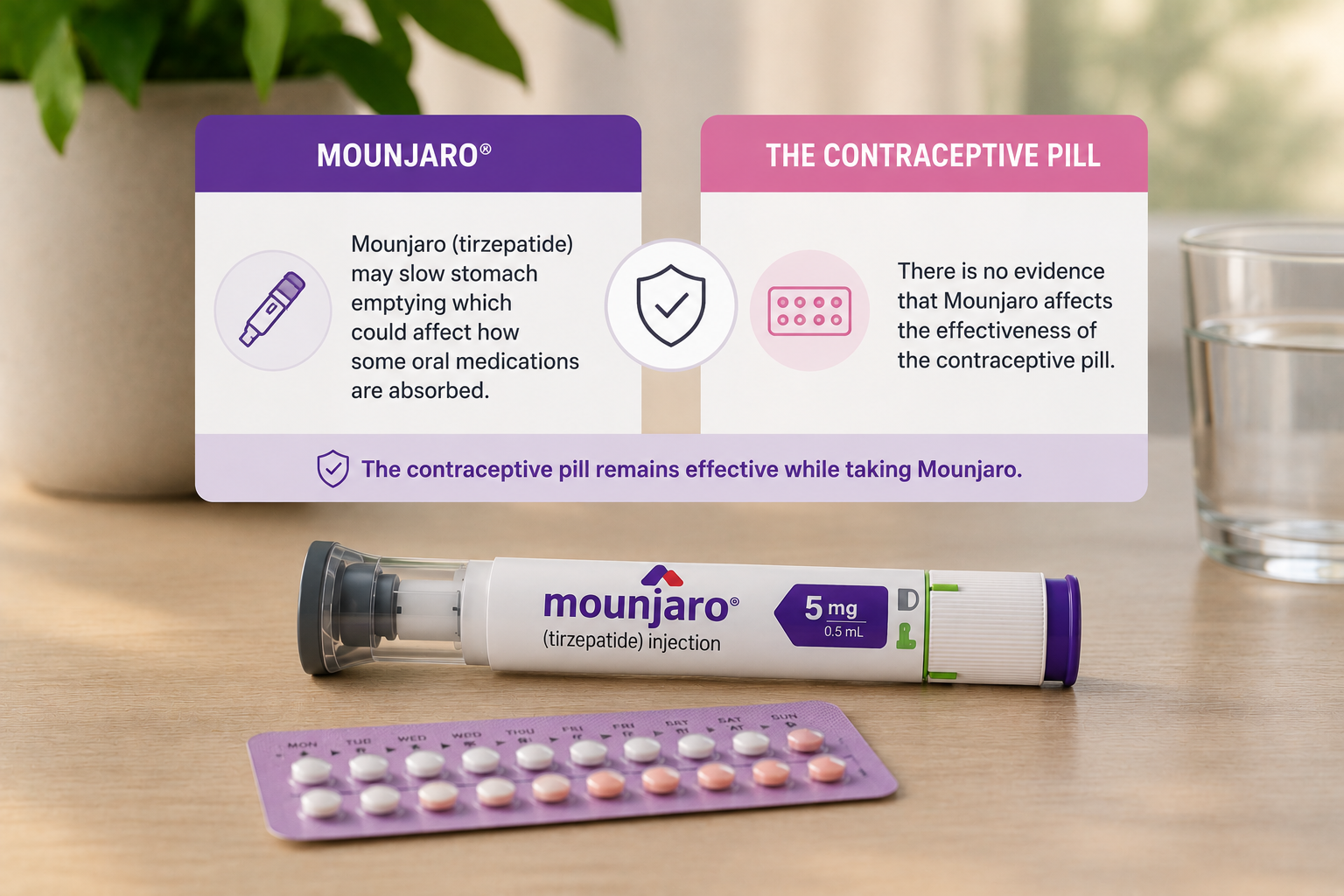
The MHRA has issued specific guidance that Mounjaro may reduce the effectiveness of oral contraceptives. The mechanism is tirzepatide’s effect on gastric emptying — slowed absorption of the pill means lower blood levels of the contraceptive hormones, which can reduce protection. The practical recommendation from UK prescribers is to use additional contraception (such as a condom) for four weeks after each dose change, and to discuss long-term options with your GP. This guide explains what’s known, what the actual risk is, and your options.
For medication interaction context: GLP-1 Medication Interactions UK. For fertility questions: GLP-1 Fertility and Pregnancy UK.
What the MHRA actually says
The Mounjaro UK Summary of Product Characteristics states that tirzepatide may lower the exposure of oral contraceptives due to its effect on gastric emptying. The MHRA advises women taking oral contraceptives to switch to a non-oral method of contraception, or add a barrier method (condom) for at least four weeks after starting Mounjaro and for four weeks after each dose increase.
This isn’t a theoretical warning — it reflects a measurable pharmacokinetic effect that has been studied. The concern is real enough that it appears in the official prescribing information, not just general caution.
Why does Mounjaro affect the pill?
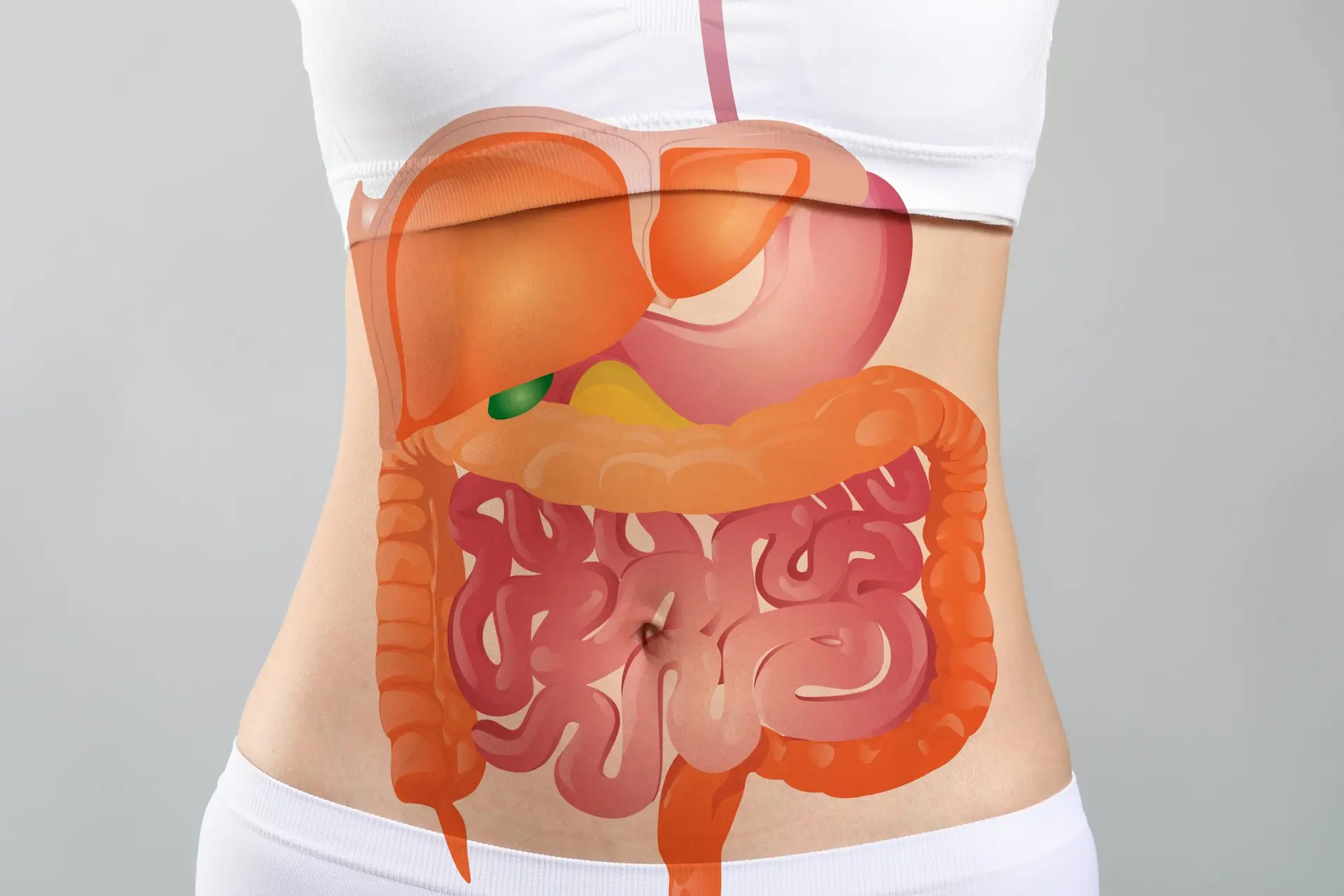
Oral contraceptives are absorbed in the small intestine. The speed at which a tablet reaches the small intestine depends on gastric emptying rate. Mounjaro slows gastric emptying — this is part of its mechanism for weight loss and blood sugar control.
When gastric emptying slows:
- The contraceptive pill spends longer in the stomach before moving to the small intestine
- Absorption may be delayed and potentially incomplete
- Peak blood levels of contraceptive hormones (estrogen and/or progestogen) may be lower than expected
- Lower hormone levels mean potentially reduced contraceptive protection
The effect is most significant during dose changes (when gastric emptying is most altered) and potentially less significant once stable at a dose the body has adapted to.
Which contraceptives are affected
Affected:
- Combined oral contraceptive pill (COCP) — both estrogen and progestogen components
- Progestogen-only pill (POP/mini pill)
- Emergency contraception (morning-after pill) — if you’ve missed regular contraception, this is a concern
Not affected:
- Contraceptive injection (Depo-Provera) — injected directly, no oral absorption
- Contraceptive implant (Nexplanon) — subdermal, not orally absorbed
- Hormonal IUS/coil (Mirena, Kyleena) — intrauterine, not orally absorbed
- Copper IUD — no hormones, no absorption issue
- Vaginal ring (NuvaRing) — absorbed vaginally, not orally
- Contraceptive patch — absorbed transdermally, not orally
- Condoms — barrier method, completely unaffected
What to do if you’re on the pill and starting Mounjaro
The practical steps, in order:
Step 1: Tell your prescriber you’re on oral contraception. They should flag this and advise accordingly. If they haven’t, raise it yourself. This should be part of your initial consultation.
Step 2: Use additional contraception for four weeks from your first Mounjaro dose. Condoms are the simplest additional barrier. This four-week window covers the initial period of strongest gastric emptying effect.
Step 3: Repeat the four-week additional cover at every dose increase. Each step up (2.5mg → 5mg → 7.5mg etc.) triggers a new period of altered gastric emptying. The MHRA guidance applies to each dose change, not just the start.
Step 4: Consider switching to a non-oral method long-term. If you’re going to be on Mounjaro for 12+ months (likely, given it’s a long-term treatment), the cumulative extra contraception requirement and the ongoing absorption uncertainty make a non-oral method worth considering. Book an appointment with your GP to discuss options.
Long-term contraception options worth discussing with your GP
Several highly effective options are completely unaffected by Mounjaro:
Contraceptive implant (Nexplanon) — a small rod inserted under the skin of the upper arm; lasts 3 years; 99%+ effective; insertion takes 10 minutes under local anaesthetic. No daily pill to remember. Not affected by gastric emptying.
Hormonal IUS (Mirena/Kyleena/Jaydess) — fitted in the uterus; lasts 3–8 years depending on type; 99%+ effective; may reduce or stop periods. Not affected by gastric emptying. Requires a fitting appointment.
Copper IUD — non-hormonal option lasting up to 10 years; highly effective; no hormonal side effects. Good option if you want to avoid additional hormones on top of Mounjaro’s systemic effects.
Contraceptive injection (Depo-Provera) — injected every 12 weeks; not affected by gastric emptying. Some women experience irregular periods or temporary fertility delay after stopping.
All of these are available free on the NHS. Your GP or sexual health clinic can advise on the best option for your circumstances.
If you’re not currently sexually active
The contraceptive pill is sometimes prescribed for reasons other than contraception — period regulation, endometriosis management, PCOS symptom management, or acne. If this is your situation, the contraceptive efficacy concern is less relevant, but discuss with your GP whether a non-oral hormone option might work better for your specific condition given the absorption issue.
Mounjaro and pregnancy planning
Mounjaro is not recommended during pregnancy. If you’re planning to conceive, you should stop Mounjaro at least two months before trying. This is both because tirzepatide hasn’t been studied in pregnancy and because the rapid weight loss phase is not an appropriate time to be pregnant.
Positive note: for women with PCOS or obesity-related fertility difficulties, weight loss on Mounjaro often improves fertility. This is documented and worth being aware of — improved fertility while on the medication is an argument for reliable contraception, not a reason to relax it. See GLP-1 Fertility and Pregnancy UK.
Emergency contraception on Mounjaro
If you’ve had unprotected sex while on Mounjaro and need emergency contraception:
- The emergency contraceptive pill (levonorgestrel — Levonelle, Morning After Pill) is also an oral tablet, and the same gastric emptying concern applies
- The copper IUD (emergency fitted within 5 days) is the most effective emergency contraception and is not affected by Mounjaro
- If using the pill option, take it as early as possible (effectiveness reduces with time) and consider that absorption may be altered
- Discuss with a pharmacist or sexual health clinic for personal advice
Emergency contraception is available free from NHS sexual health clinics and most pharmacies (Levonelle free on NHS prescription, ellaOne free via NHS).
What to tell your prescriber
When you start Mounjaro, your prescriber should ask about all current medications — oral contraceptives included. If they don’t, volunteer the information. The conversation you need to have:
“I’m currently on the combined/mini pill. I understand Mounjaro can affect its absorption — what do you recommend for contraception during treatment?”
A good prescriber will either:
- Advise you to use additional barrier contraception during dose changes and recommend a GP review of your long-term method
- Refer you to your GP specifically for contraceptive review
- Flag it in your notes and send a message to your GP
If your prescriber doesn’t address this, raise it with your GP directly. This isn’t a niche concern — it’s in the official Mounjaro prescribing information and should be part of every consultation for women on oral contraception.
Tracking cycle changes on GLP-1
Weight loss of more than 5–10% of body weight commonly affects hormonal balance, which can alter cycle regularity even for users who aren’t on hormonal contraception. Changes to expect:
- Shorter or longer cycles than usual, particularly in the first 3–6 months
- Lighter periods as hormones shift
- For users with PCOS: improved cycle regularity is common as weight and insulin resistance improve
- Spotting or breakthrough bleeding if on hormonal contraception (may reflect altered absorption)
Track your cycle during Mounjaro treatment — apps like Clue or Natural Cycles work well. If you want to go a step further, tracking your nutrition in Cronometer during this period helps flag the micronutrient gaps (particularly iron and zinc) that commonly open up when eating less and that can exacerbate hormonal symptoms. If you notice significant cycle changes, mention them at your next GP or prescriber appointment. Cycle changes in themselves are rarely a concern; they’re worth monitoring rather than ignoring.
Frequently asked questions
Does Mounjaro stop the contraceptive pill from working?
It may reduce its effectiveness by slowing gastric emptying and reducing hormone absorption. The MHRA recommends additional contraception for four weeks after starting Mounjaro and after each dose increase. It doesn’t make the pill useless, but the reduced reliability warrants additional protection.
Do I need to use condoms on Mounjaro?
During the four-week periods after starting Mounjaro and after each dose increase, yes — or switch to a non-oral contraceptive method. On a stable long-term dose, the ongoing risk is less clear but switching to a non-oral method is generally recommended if you rely on contraception.
Which contraceptive is best to use on Mounjaro?
Any non-oral method: implant, IUS, copper IUD, patch, ring, or injection. These are unaffected by gastric emptying. The implant and IUS are the most convenient long-term options for most women.
I’m on the pill and just started Mounjaro — what should I do?
Use additional contraception (condoms) for the next four weeks and book an appointment with your GP to discuss switching to a non-oral method. Don’t stop the pill immediately — use both in the transition period.
Does this apply to the mini pill as well as the combined pill?
Yes. Both combined oral contraceptive pills and progestogen-only pills (mini pills) are orally absorbed and subject to the same gastric emptying effect. The same recommendations apply to both.
Can Mounjaro affect periods?
Indirectly — significant weight loss affects hormonal balance, which can alter cycle regularity. This typically normalises as weight stabilises. Irregular periods in the first 6 months of Mounjaro are relatively common and usually not a concern, but any significant changes are worth discussing with your GP.
Medical disclaimer: always discuss contraceptive choices with your GP or prescriber. This guide reflects current UK guidance but individual circumstances vary. Sexual health clinics offer free confidential advice on contraceptive options.
Discover more from Healthy Weight Loss GLP1
Subscribe to get the latest posts sent to your email.