
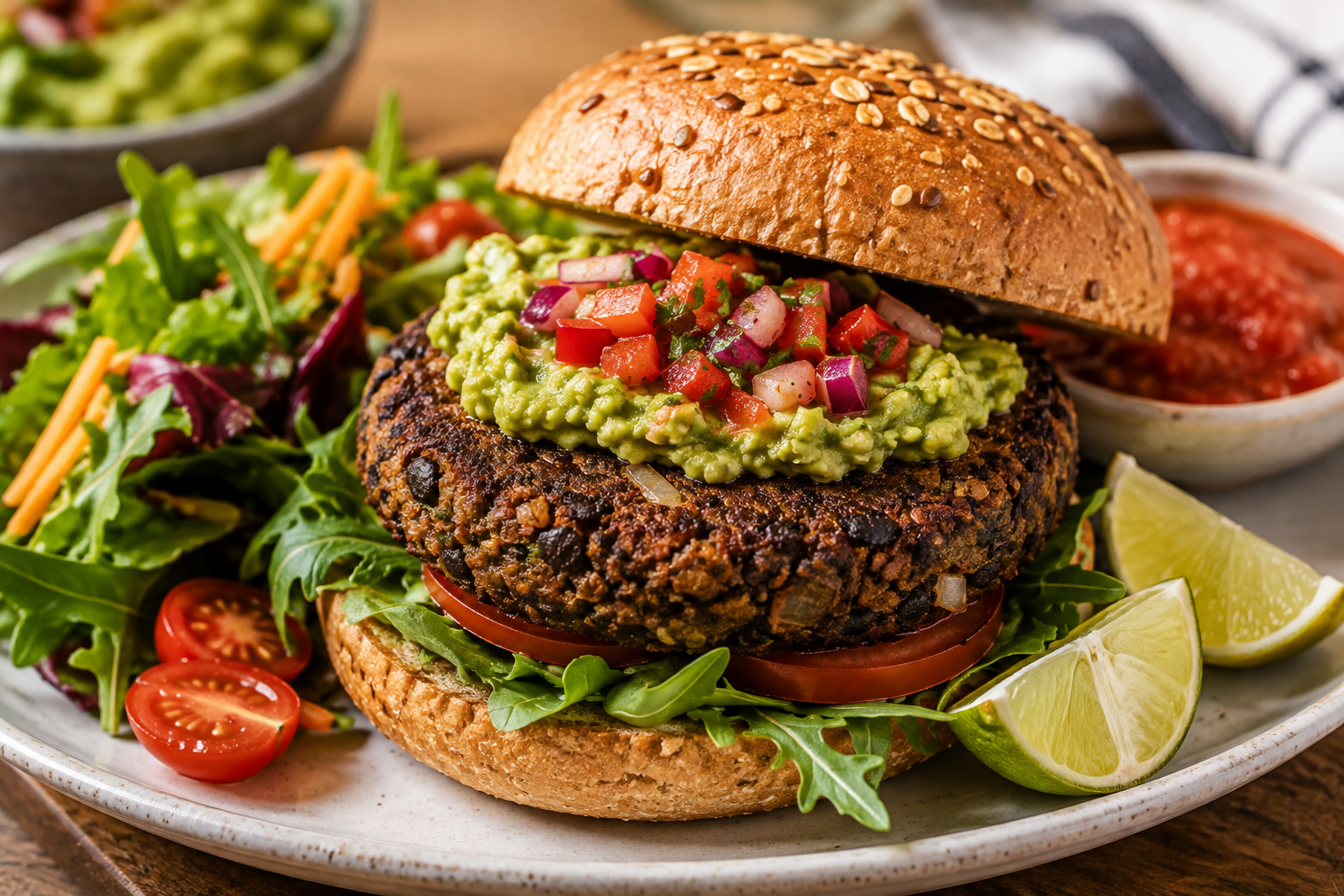
A good veggie burger is a beautiful thing, and these black bean patties are streets ahead of anything you will buy frozen. Spiced black beans mashed with oats and aromatics, then cooked until crisp outside and tender within, deliver 12g of fibre and 16g of plant protein for around 360 calories. They are cheap, satisfying, brilliant for batch cooking, and a genuinely tasty meat-free dinner the whole family will eat.
A quick word first: I am not a doctor or a dietitian, just someone who lived this. None of these foods or supplements are medication, and if you are on a GLP-1, check anything new with your GP or pharmacist. Right, let us get to it.
For plant protein and fibre on the jab, see how much protein per day and fibre on GLP-1, and for the full plan, my complete GLP-1 guide.
Why homemade bean patties beat the shop-bought kind
Making your own veggie patties is easier than you think and far better than the freezer versions.
12g of fibre and 16g of protein. Black beans bring a genuinely good hit of both, so these patties fill you up in a way many shop-bought veggie burgers, which are often mostly filler, simply do not.
You control what goes in. Many frozen veggie burgers are surprisingly processed and low in actual veg or beans; homemade ones are real food you can be proud of.
Cheap and freezer-friendly. A batch costs pennies and freezes brilliantly, so you always have a quick, satisfying meat-free dinner ready to go.
Why I stopped buying processed veggie substitutes
When I first started having more meat-free meals, I leaned heavily on the processed veggie substitutes in the supermarket — the fake burgers, sausages and mince. There is nothing wrong with them as an occasional convenience, but I gradually realised two things. First, many of them are highly processed, with long ingredient lists, plenty of salt and additives, and not always much in the way of actual vegetables or beans. Second, they are expensive, often more so than the meat they replace. For someone trying to eat well and cheaply on a GLP-1, that was not adding up.
So I learned to make my own, and these black bean patties are a perfect example of how easy and rewarding that is. They are real, whole food — beans, oats, spices, a bit of veg — that I can see and understand, they cost a fraction of the processed alternatives, and they taste genuinely better. Making your own also means you control the protein and fibre, avoiding the mystery-filler problem entirely. I am not against convenience food, and there are nights a shop-bought option saves the day, but learning to make simple things like veggie patties from scratch was a real step up in both the quality and the cost of my meat-free eating. It is far less effort than it sounds, it batch-cooks and freezes beautifully, and the result is something you can feel genuinely good about eating.
The macros that matter
Here is roughly what one serving gives you. Treat these as a guide rather than gospel, since it depends on your exact ingredients and portions:
| Approx per serving | Amount |
|---|---|
| Calories | ~360 kcal |
| Protein | 16g |
| Carbohydrate | 40g |
| Fat | 12g |
| Fibre | 12g |
The protein figure is the one I watch on a GLP-1. As a rough guide I aim for somewhere around 1.2 to 1.6g of protein per kilo of body weight across the day to protect muscle while losing fat, and I judge every meal by how much of that it contributes. I log meals like this in Cronometer (it is free) so I know I am actually hitting my targets rather than hoping. The first time I tracked properly I realised I was eating far less protein than I thought, so if you have never done it, give it two weeks.
What you need (serves 1)
- 1 tin black beans, drained and well dried
- 40g rolled oats
- ½ onion, finely chopped
- 1 clove garlic, crushed
- 1 tsp smoked paprika
- 1 tsp ground cumin
- 1 egg (to bind)
- Fresh coriander, chopped
- 1 tsp olive oil for cooking
- Salt and black pepper
- To serve: a big salad, or in a bun or lettuce cup with avocado and salsa
How to make it
- Mash the drained black beans in a bowl with a fork, leaving some texture rather than a smooth paste.
- Stir in the oats, onion, garlic, spices, egg, coriander, salt and pepper until well combined.
- If the mixture is too wet, add a few more oats; if too dry, a splash of water.
- Shape into 4 patties with your hands.
- Heat the olive oil in a pan and cook the patties for 3–4 minutes each side until crisp and golden, handling gently as they are more delicate than meat.
- Serve with a big salad, or in a bun or lettuce cup with avocado, salsa and yoghurt.
Adjusting it to your goals
These are high in fibre and flexible:
Boost the protein. Serve with a dollop of Greek yoghurt, some cheese, or an egg on top to lift the protein further.
Go lower carb. Serve in lettuce cups instead of a bun, with a big salad.
Make them vegan. Use a flax egg (1 tbsp ground flaxseed with water) instead of the egg to bind. See how much protein per day.
The secret to patties that hold together
The number one frustration with homemade veggie burgers is that they fall apart, and once you know why, it is easy to fix. There are three keys. First, dry your beans properly — wet beans make a wet, sloppy mixture that will not hold, so drain them well and pat them dry, or even spread them on a tray for a few minutes to dry out. Second, do not over-mash. You want to mash enough that the mixture binds, but leaving some beans whole and some texture gives the patties structure; a completely smooth paste turns to mush. Third, use a proper binder. The egg here holds everything together as it cooks, and the oats absorb moisture and add structure; between them they give the patties the stability they need. If you are going vegan, a flax egg does a similar binding job. Beyond those three, handle the patties gently — they are more delicate than meat burgers, so flip them carefully and do not press them down in the pan. Chilling the shaped patties in the fridge for half an hour before cooking also helps them firm up and hold together. Get these basics right and your veggie patties will be crisp outside, tender inside, and hold together perfectly, rather than crumbling into the pan. It is genuinely not difficult once you understand what makes them work.
A brilliant batch-cook and freezer meal
These patties are made for batch cooking. Shape a big batch and either cook them all and reheat, or freeze them raw or cooked with baking paper between them, so you can pull out a couple whenever you fancy. They keep several days in the fridge and freeze for months. Cooked patties are also great cold in a next-day high-protein lunch salad or wrap. A cheap, satisfying staple of my meal prep ideas for Mounjaro.
How it fits a full day of eating
At 16g of protein and 12g of fibre, these patties are a solid, filling meat-free dinner. They are a little lighter on protein than a big meat dish, so I make sure the rest of my day carries more — a solid high-protein breakfasts and high-protein lunch.
Serve them with a dollop of yoghurt, some cheese or an egg to lift the protein, and in lettuce cups to keep the carbs down. a protein shake covers any gap. With good fibre here, plenty of water helps — see my constipation on GLP-1 guide. My complete GLP-1 guide explains how I balance the day.
No appetite today?
These are fairly substantial and a bit effortful to cook, so on a genuinely low-appetite evening a simpler option or a freezer portion reheated may suit better. On a slightly-off day, one patty with some salad still delivers good protein and fibre. When cooking is beyond you, HelloFresh keeps proper meals coming. More in what to eat with no appetite.
Supplements that pair well
High in fibre, these pair well with a probiotic like Pre + Pro 15, and being plant-based they are low in omega-3, so I add Super Omega-3 EPA. A daily Super Supplemental covers general gaps. The free Lily & Loaf lifestyle analysis matches a routine to your goals.
Frequently asked questions
Are homemade veggie burgers healthier than shop-bought?
Usually yes — you control what goes in, avoiding the fillers, salt and additives in many processed versions, and they are cheaper. These are real food: beans, oats, spices and veg, with a genuine hit of protein and fibre.
How do I stop them falling apart?
Dry the beans well, do not over-mash them, use a binder like egg and oats, and handle them gently. Chilling the shaped patties before cooking also helps them hold together. Those basics fix the crumbling problem.
Can I make them vegan?
Yes — use a flax egg (1 tablespoon ground flaxseed mixed with 3 tablespoons water, left to thicken) instead of the egg to bind. The rest is naturally plant-based.
Can I bake them instead of frying?
Yes — bake at 200C for about 20–25 minutes, turning halfway, for a lower-fat version. Frying gives a crisper crust, but baking is easier for a big batch and uses less oil.
Do they freeze well?
Brilliantly — freeze them raw or cooked with baking paper between them, and cook or reheat from frozen. Having a stash in the freezer makes a quick meat-free dinner effortless.
The bottom line
Black bean patties are homemade veggie burgers streets ahead of the frozen kind — 12g of fibre and 16g of plant protein for around 360 calories, made from real, cheap, whole ingredients. Learning to make simple things like these from scratch beats the processed substitutes on cost, quality and nutrition. Master the three keys to patties that hold together, and batch them for the freezer. To match your supplements to a plant-forward, high-fibre routine, the free Lily & Loaf lifestyle analysis is a quick, no-pressure check.
The tools I lean on
If you are putting a GLP-1 routine together, this is the order I would do it in, free tools first:
- Track a fortnight of food in Cronometer so you can see your real protein and calories.
- Take the free Lily & Loaf lifestyle analysis to find the supplements actually worth buying.
- Start an Audible trial for something to listen to while you cook or walk.
- Keep HelloFresh on standby for the weeks cooking from scratch just is not happening.
- Batch-cook and freeze portions in a set of freezer-safe containers so there is always a healthy dinner a few minutes away.
A bit about me
I am Alan Spicer. I lost around seven stone on Mounjaro and filmed the whole thing, warts and all, on my YouTube channel. Simple, protein-first dinners like this were a real part of how I held onto muscle and kept the weight off.
This article shares my personal experience and general information only. It is not medical advice. Food and supplements support a balanced diet and healthy lifestyle and do not replace it or any treatment prescribed by your doctor. Speak to your GP or pharmacist before making changes, especially while on a GLP-1 medication. Nutrition figures are approximate and will vary with the exact ingredients and brands you use.
Inspired by the kind of fresh, wholefood dinners in the Lily & Loaf evening meals collection. This is my own version, written from my own kitchen.
Discover more from Healthy Weight Loss GLP1
Subscribe to get the latest posts sent to your email.