
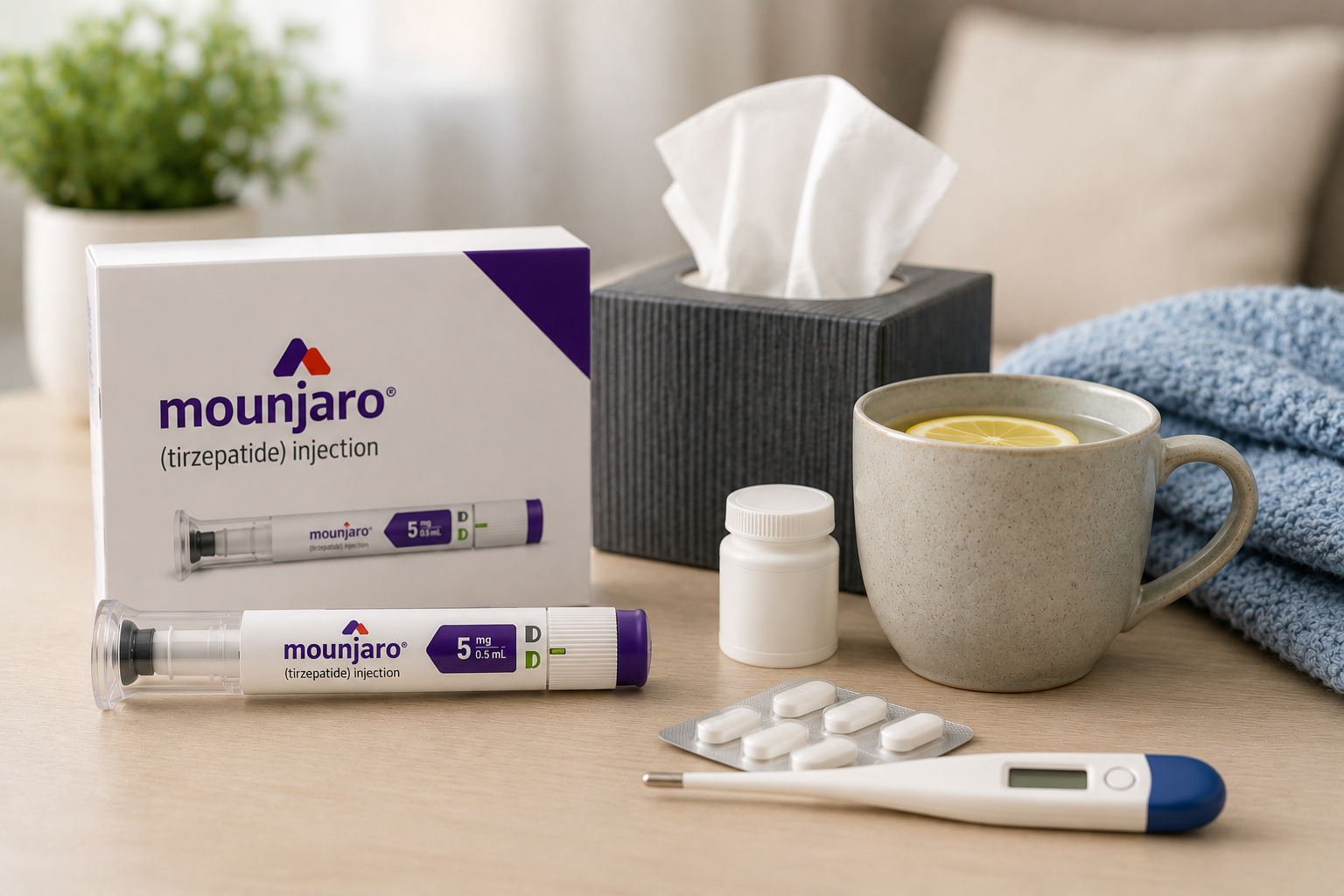
Catching flu, a cold, a stomach bug, or another acute illness while on Mounjaro is usually manageable — most users continue their normal injection schedule. The specific situations that warrant pausing or adjusting: severe vomiting or diarrhoea (dehydration risk compounds), any illness requiring hospital treatment, and any illness where you can’t hold down fluids for 24+ hours. This is the practical UK guide to managing Mounjaro through an acute illness, when to contact your prescriber, and how to restart afterwards.
For broader first-month context see First Month on Mounjaro UK. For electrolytes and hydration: Electrolytes on GLP-1 UK.
The basic principles
Three things to understand upfront:
1. Mounjaro doesn’t suppress your immune system. You’re not more likely to catch infections on the medication. Tirzepatide doesn’t act on immune cells.
2. Mounjaro side effects can overlap with mild illness. Nausea, fatigue, slight appetite change — all normal on Mounjaro, all common in viral infections. Sometimes the first signal that you’re actually getting sick (rather than having a rough medication day) is fever or specific symptoms like sore throat.
3. The same principles that apply to other medications in illness apply here. Hydration, rest, don’t stop prescription medications without clinical guidance.
Common cold, mild flu, general viral illness
For standard cold/flu symptoms (runny nose, sore throat, cough, mild fever, body aches, fatigue):
Continue your normal Mounjaro schedule. No need to skip injection day. The medication doesn’t affect immune response; the illness doesn’t affect medication efficacy.
Take OTC symptom relief as you normally would, following the Paracetamol on Mounjaro UK guidance. Paracetamol first, NSAIDs with food and caution.
Focus on hydration. Illness plus reduced appetite on Mounjaro can quickly tip into dehydration. Aim for clear to pale yellow urine through the day. Electrolytes if you’re sweating with fever.
Eat whatever you can manage. Appetite is usually lower during illness and lower on Mounjaro. Small, frequent, bland meals. Protein still matters but small amounts count — yoghurt, soup, a protein shake.
Rest. Your recovery needs energy; don’t train hard or push through.
Return to normal once symptoms pass. Most viral illnesses resolve in 5–10 days; Mounjaro routine doesn’t change.
Stomach bugs and food poisoning
This is the category where Mounjaro users need more care because:
- Vomiting plus slowed gastric emptying amplifies dehydration risk
- Electrolyte loss from diarrhoea can be severe on reduced intake
- Severe dehydration can trigger or worsen AKI (acute kidney injury) — GLP-1s carry some kidney-effect risk that’s amplified by dehydration
If you’re actively vomiting or having severe diarrhoea
Immediate priorities:
- Small frequent sips of fluid, even if just 10–20ml every few minutes. Water, diluted squash, oral rehydration salts (Dioralyte, Electrolyte Plus). Large volumes at once often come back up.
- Avoid solid food until vomiting stops for at least 4–6 hours. Then reintroduce slowly — plain toast, crackers, plain rice.
- Don’t take your Mounjaro injection if your injection day falls during active vomiting. Delay by 1–2 days until you can hold fluids.
- Watch for dehydration signs: dark urine, dizziness when standing, dry mouth, very reduced urine output, confusion.
When to get medical help
Contact NHS 111 or GP if:
- Can’t keep any fluids down for 12+ hours
- Blood in vomit or stool
- Severe abdominal pain (not just cramps)
- Fever above 39°C / 102°F
- Symptoms not improving after 48–72 hours
- Signs of severe dehydration (very little urine, dizziness, confusion)
- Any concern about AKI: reduced urination plus back/side pain
Attend A&E or call 999 for:
- Persistent vomiting with signs of shock (pale, clammy, fast heart rate, very low BP)
- Severe persistent abdominal pain — particularly upper-right (gallbladder) or upper-central radiating to back (pancreas)
- Confusion, unresponsiveness
- Rigid or very tender abdomen
Pancreatitis is a known (rare) risk on GLP-1s; severe unusual upper abdominal pain warrants urgent assessment rather than “wait and see.”
Fever and Mounjaro
Fever increases fluid loss through sweating and increased breathing. On Mounjaro:
- Increase fluid intake compared to normal
- Paracetamol for fever control is fine
- Monitor hydration carefully
- Continue normal Mounjaro schedule unless illness is severe
- Very high fever (39.5°C+) with systemic symptoms warrants GP/NHS 111 contact
Chest infections, bronchitis, pneumonia
Bacterial or viral chest infections can be serious. General principles:
- Continue Mounjaro unless advised otherwise by a clinician
- Antibiotics (if prescribed) don’t interact with Mounjaro — take as prescribed
- Prioritise rest, hydration, and completing the antibiotic course
- If pneumonia requires hospital admission, inform hospital staff you’re on Mounjaro for their medication records
- If oral intake is significantly reduced during severe illness, your Mounjaro dose may need to be paused temporarily — discuss with treating team
Urinary tract infections (UTIs)
No direct interaction. Continue Mounjaro, take prescribed antibiotics, increase fluids. Normal UTI management.
COVID-19
For mild to moderate COVID:
- Continue normal Mounjaro schedule
- Manage symptoms with paracetamol as needed
- Prioritise hydration and rest
- Watch for respiratory worsening; seek help if breathing becomes difficult
For severe COVID requiring hospitalisation, follow the inpatient team’s guidance on medication schedule. COVID-specific treatments (like Paxlovid or molnupiravir if still prescribed) don’t have direct Mounjaro interactions.
Skipping an injection due to illness
If you decide (or your clinician advises) to skip an injection due to illness:
1. Missing one week is generally fine. The half-life of tirzepatide is approximately 5 days, so medication effect persists beyond a single missed dose. Appetite suppression may reduce slightly in week 2 after the miss.
2. Resume at your next scheduled dose once recovered. Don’t “double up” to catch up — give yourself a single dose on your normal day of the week.
3. If you’ve missed 3+ weeks: contact your prescriber before restarting. Many clinicians recommend restarting at a lower dose (e.g. drop from 10mg back to 7.5mg or 5mg) because tolerance can reduce with extended absence.
4. Make a note in your log so your prescriber has accurate information at the next review.
Medications for illness: interactions to know
Most common illness medications are fine alongside Mounjaro:
- Paracetamol: fine; see Paracetamol on Mounjaro UK
- Ibuprofen, naproxen: fine with food, caution if reflux or stomach issues
- Cough suppressants (dextromethorphan): fine
- Expectorants (guaifenesin): fine
- Decongestants (pseudoephedrine, phenylephrine): fine but can cause jitteriness or raise blood pressure
- Antihistamines (cetirizine, loratadine, diphenhydramine): fine; diphenhydramine causes drowsiness
- Antibiotics: generally fine; some may cause nausea that compounds with Mounjaro effects — take with food
- Oseltamivir (Tamiflu): no specific Mounjaro interaction
- Anti-diarrhoeal (loperamide): fine; don’t use if bacterial infection suspected
- Anti-emetics (cyclizine, metoclopramide, ondansetron): prescribed for severe nausea; work fine alongside Mounjaro
Steroids (prednisolone, budesonide) for asthma/COPD exacerbations: fine alongside Mounjaro but can raise blood glucose, which might affect Mounjaro’s glucose-lowering effect if you have diabetes. Discuss with prescribing doctor if you’re on both.
Appetite during illness
Viral illness reduces appetite naturally. Mounjaro also reduces appetite. Combined, you may have very little desire for food during an illness week.
Priorities if appetite is minimal:
- Fluids first. Water, ORS, broth, diluted juice — whatever goes down.
- Carbohydrate second. Simple carbs maintain blood glucose during illness — bread, crackers, rice, potato. Small amounts.
- Protein third. When you can tolerate it, add protein — yoghurt, cheese, eggs, protein shake, small amount of lean meat.
- Don’t worry about optimal meals during acute illness. Recovery first; nutritional perfection later.
A few days of lower food intake won’t undo your weight loss progress. Illness is not the time to push macros; let your body recover.
Training during illness
The general rules for all adults apply:
- Above the neck only (runny nose, sore throat, head cold): light exercise is probably fine if you feel up to it
- Below the neck (fever, body aches, chest symptoms, GI symptoms): rest until recovered
- Resume gradually: don’t come back to heavy training the day after a fever breaks
Muscle preservation is important on a GLP-1, but a week of rest during illness doesn’t cost you meaningful muscle. Pushing through severe illness does risk prolonging recovery or worsening the illness.
Vaccines during Mounjaro
Standard adult vaccines (flu, COVID, pneumococcal, shingles, tetanus boosters) are all compatible with Mounjaro. No need to pause the medication for vaccination. You may experience normal post-vaccine effects (sore arm, mild fever, tiredness for 24–48 hours); these are vaccine-related, not Mounjaro-related.
If you’re getting vaccines on the same week as a Mounjaro dose-step (new higher dose), consider whether the compound side effect window is manageable. Many users time vaccines for a “stable dose” week rather than a step-up week.
Gallbladder attacks and Mounjaro
A specific illness category worth mentioning because GLP-1s have a slightly elevated gallbladder issue rate (rapid weight loss is itself a gallbladder stone risk factor):
- Pain upper right abdomen, especially after fatty meals
- Nausea and vomiting
- Pain radiating to right shoulder or back
- Fever or jaundice (yellowing of skin/eyes)
Can feel like bad indigestion initially but typically worsens and becomes more constant. If you experience these, seek medical attention. Alan’s gallbladder episode started with a bad “reflux” episode that escalated over hours into sharp upper-right pain; by morning it was clearly surgical.
See the Gallbladder Health on GLP-1s section of the complete guide for more detail.
When illness might signal stopping treatment
Some conditions warrant reconsidering GLP-1 treatment altogether:
- Confirmed pancreatitis: most prescribers stop GLP-1 permanently after a pancreatitis episode
- Severe persistent vomiting that doesn’t resolve when stopping the medication
- Persistent kidney function deterioration not explained by dehydration
- Gallbladder issues requiring surgery — restart usually possible post-recovery but sometimes prescribers recommend lower doses or different medication
- Pregnancy or pregnancy planning — stop immediately on positive pregnancy test
These are conversations for your prescriber, not self-decisions. If you’re unsure, call them for guidance.
Returning to full schedule
After a week or two of illness, returning to normal Mounjaro routine:
- If you didn’t miss injection doses: continue normal schedule; expect to feel a bit weaker than usual for 1–2 weeks as you fully recover
- If you missed 1 dose: resume at next scheduled injection day; most people notice a smooth return to normal appetite pattern within 1–2 doses
- If you missed 2+ doses: contact prescriber for restart guidance, possibly at a lower dose
- Training: return gradually over a week or two; don’t try to catch up on missed sessions
- Food: gradually normalise; don’t overcompensate for the days of low intake
The summary
Most acute illness can be managed alongside Mounjaro without pausing the medication. Focus on hydration, rest, and normal illness management. Severe vomiting/diarrhoea is the main scenario where skipping a dose makes sense. Contact your prescriber for persistent severe symptoms, concerning abdominal pain, or extended periods of reduced intake. Restart normal schedule once recovered; contact prescriber if more than 2 doses have been missed.
For related topics: Can I Take Paracetamol on Mounjaro UK, Electrolytes on GLP-1 UK, Mounjaro and Surgery UK.
Medical note: this is general information. Always contact your GP, prescriber, or NHS 111 for medical concerns. Call 999 for emergencies. Report adverse events to the MHRA Yellow Card Scheme.
Discover more from Healthy Weight Loss GLP1
Subscribe to get the latest posts sent to your email.