
Hydration is one of the most commonly underestimated factors in GLP-1 treatment outcomes — dehydration worsens nausea, causes headaches that mask as side effects, slows weight loss through water retention and constipation, and in more serious cases risks acute kidney injury. A smart water bottle that tracks intake and sends reminders genuinely helps because GLP-1 users lose their thirst signal alongside their hunger signal. These are the best options currently available in the UK, what features actually matter, and the cases where a smart bottle earns its premium price.
For the hydration science: Electrolytes on GLP-1 UK. For a fuller side-effects picture: GLP-1 Side Effects Guide UK.
Why smart bottles matter more on a GLP-1
Most adults rely on thirst as their primary hydration cue. On a GLP-1 medication, appetite suppression is the headline effect — but it also broadly reduces the body’s hunger and thirst signalling. Users frequently report not feeling thirsty even when adequately or mildly dehydrated.
The consequences stack:
- Constipation (the most diet-addressable GLP-1 side effect) is directly worsened by dehydration
- Headaches attributed to Mounjaro are often dehydration headaches
- Fatigue is amplified by dehydration, compounding GLP-1 early-treatment tiredness
- Nausea is worse on an empty and dehydrated stomach
- Weight loss slows as the body retains water in response to perceived dehydration
A bottle that reminds you to drink decouples hydration from thirst, which is exactly what’s needed when the thirst signal isn’t reliable.
What features actually matter
Smart bottle marketing includes a lot of features of limited real-world value. What genuinely helps GLP-1 users:
Must-have:
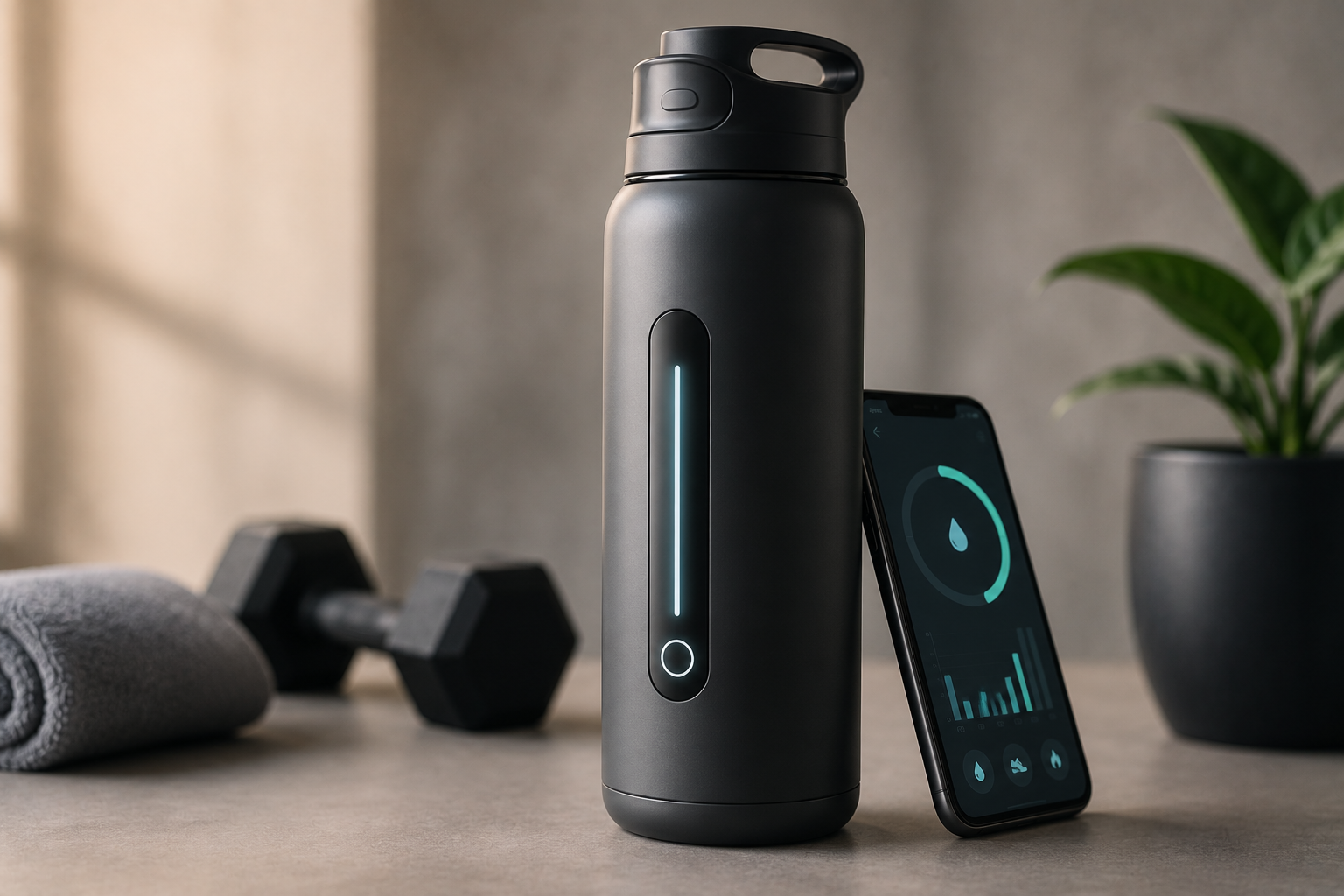
- Visual hydration tracking (glowing ring, LED indicators, or clear volume markings you can read at a glance)
- App or phone reminders at set intervals — passive prompts that don’t require remembering to check
- Large enough capacity (500ml minimum; 650–750ml is more practical for all-day hydration without constant refilling)
- Insulation — cold water is more palatable for most people, increasing actual consumption
Nice to have:
- Sync with health apps (Apple Health, Fitbit, Samsung Health)
- Temperature display
- Customisable reminder timing
Largely irrelevant:
- Ultra-precision volume tracking to the millilitre
- AI personalisation based on weather or activity (adds cost, minimal practical benefit)
- Social sharing features
Best smart water bottles UK 2026
Best overall: HidrateSpark PRO Steel
Insulated stainless steel with a sensor puck in the base that tracks water via Bluetooth, syncing to the HidrateSpark app and Apple Health/Fitbit. The glowing LED ring changes colour as your daily target approaches and flashes as a reminder. Genuinely accurate tracking (within 5–10ml). Battery life approximately 5 weeks per charge. 620ml capacity. Leak-proof flip lid. Robust build quality — holds temperature well. Around £50–60.
Verdict: the most accurate hydration tracker in the consumer space. Worth the premium if you want data integration and reliable reminders. The best choice for GLP-1 users who want to track alongside Cronometer-style nutrition data.
Check HidrateSpark PRO pricing on Amazon UK.
Best budget smart option: Thermos Connected
Insulated stainless steel, Bluetooth-connected, companion app with reminders. Less sophisticated than HidrateSpark (no LED ring, app-only reminders) but at roughly half the price (£25–35). Accurate enough for practical tracking. Good for users who want reminder functionality without paying for tracking precision.
Best for simplicity: DYLN Alkaline Water Bottle
Not a Bluetooth tracker — instead has a diffuser cartridge and marked time intervals printed on the side showing when you should be at each level throughout the day. No app required, no charging. Zero faff. About £30. Good for users who find app-connected products more annoying than helpful but want a prompt to drink regularly.
Best insulated without smart features: Chilly’s Series 2
No tracking at all, but the best everyday insulated bottle at any price point. UK brand, wide range of sizes (260ml to 1L), keeps cold 24+ hours. Set your own reminder alarm on your phone. If you want a good bottle and prefer to handle tracking separately (in Cronometer, Apple Health, or a simple alarm), this is what to buy. £30–50 depending on size.
Browse Chilly’s Series 2 bottles on Amazon UK.
Best app integration: LARQ Bottle PureVis
UV-C light self-purification (kills bacteria in the bottle), insulated, tracks via LARQ app. More expensive (£80–95) and the purification feature is its primary selling point rather than hydration tracking. Useful for users who travel frequently and want water safety alongside tracking. Overkill for home/office use.
Do you actually need a smart bottle?
Honest answer: no. What you need is to drink 2–2.5 litres per day. This is achievable with a standard insulated bottle and a phone alarm set for every 90 minutes.
A smart bottle adds friction reduction — it makes the tracking automatic and the reminder passive. For users who consistently forget to drink and suffer the resulting headaches and nausea, the £50 investment in a HidrateSpark is worth it. For users who manage hydration fine with simpler prompts, a Chilly’s bottle and a recurring phone alarm achieves the same outcome for less.
Where smart bottles genuinely earn their cost: during early Mounjaro treatment (weeks 1–8) when side effects and reduced thirst signals coincide, making passive hydration prompts particularly valuable. Many users who buy a smart bottle for this period continue using it long-term out of habit even when the acute need has passed.
Electrolytes: what to add to your water
Plain water is fine for most daily hydration. Electrolyte additions are worth considering:
- On injection day and the day after (higher risk of dehydration)
- After exercise, particularly in hot weather
- When constipation or muscle cramps suggest electrolyte imbalance
- During nausea phases when fluid intake is borderline
See Electrolytes on GLP-1 UK and Best Electrolyte Drink for Weight Loss UK for product recommendations. Most users don’t need electrolytes daily — supplementing on the days listed above is enough.
Tracking hydration in Cronometer
If you’re already logging food in Cronometer, the diary section includes a water tracking module. Logging water intake alongside food provides a complete picture of daily consumption and correlates with energy and symptom patterns.
A useful practice: log your first glass of water when you wake up, one with each meal, and one mid-afternoon. These four fixed logs represent most of your target intake and take ten seconds each.
How much water to drink on Mounjaro
General targets:
- Minimum 2 litres daily (8 standard glasses)
- 2.5 litres on hot days, exercise days, or injection days
- Check urine colour — pale yellow is well-hydrated; dark yellow means drink more; clear means you’re probably over-hydrated
Coffee and tea count toward fluid intake (despite the old myth that caffeine is dehydrating — at normal consumption levels, the net hydration from caffeinated drinks is positive). Diet sodas count too, though still water is better for gut motility on a GLP-1.
Frequently asked questions
Do I need a smart water bottle on Mounjaro?
Useful, not essential. GLP-1 medications reduce thirst signals alongside appetite, making passive hydration reminders more valuable than for most people. A smart bottle or a recurring phone alarm both solve this problem — the bottle is more convenient and automatic.
How much water should I drink per day on Mounjaro?
Aim for 2–2.5 litres daily. More on hot days, exercise days, and injection days. Pale yellow urine throughout the day is the simplest real-time indicator of adequate hydration.
Can dehydration cause Mounjaro side effects?
Dehydration worsens several common Mounjaro side effects including nausea, headache, fatigue, and constipation. Before attributing these symptoms to the medication, ensure you’re drinking adequately — it’s one of the most commonly overlooked factors in GLP-1 side effect management.
What’s the best water bottle for GLP-1 users?
For tracking and reminders: HidrateSpark PRO Steel. For simplicity with good insulation: Chilly’s Series 2. For budget smart option: Thermos Connected. All available through Amazon UK.
Product links in this post are Amazon affiliate links (tag=mrh04-21). Prices correct at time of writing but subject to change.
Building a hydration routine that sticks
The most sophisticated smart bottle fails if the routine behind it isn’t embedded. Simple structures that work for GLP-1 users:
The anchor method: link drinking to existing habits. A full glass of water when you wake up. A glass with each of your three meals. A glass at 3pm. A glass before bed. These six anchored glasses total approximately 1.2–1.5 litres before any additional drinking — a solid base.
The bottle method: fill a 750ml bottle in the morning. Finish it by noon. Refill. Finish it by 5pm. Refill. Finish it by 8pm. Three fills of a 750ml bottle = 2.25 litres — within your target range without counting individual glasses.
The colour check: check urine colour once mid-morning and once mid-afternoon. Pale yellow = well-hydrated. Dark yellow = drink now. Clear = slightly over-hydrated (not harmful, but you can ease off). This passive check takes no effort and gives accurate real-time feedback without technology.
For users who struggle with plain water, light alternatives that help hit targets: herbal tea (chamomile, mint, fruit teas all count as hydration with no caffeine or calories), sparkling water with a squeeze of lemon or lime, diluted squash at very low concentration, or commercial flavoured water without added sugar. Variety prevents the monotony that causes people to stop drinking adequately.
If you’re tracking nutrition in Cronometer, log water intake in the diary section — it takes five seconds and helps you see whether hydration patterns correlate with the energy and symptom fluctuations that affect GLP-1 treatment days differently.
Discover more from Healthy Weight Loss GLP1
Subscribe to get the latest posts sent to your email.