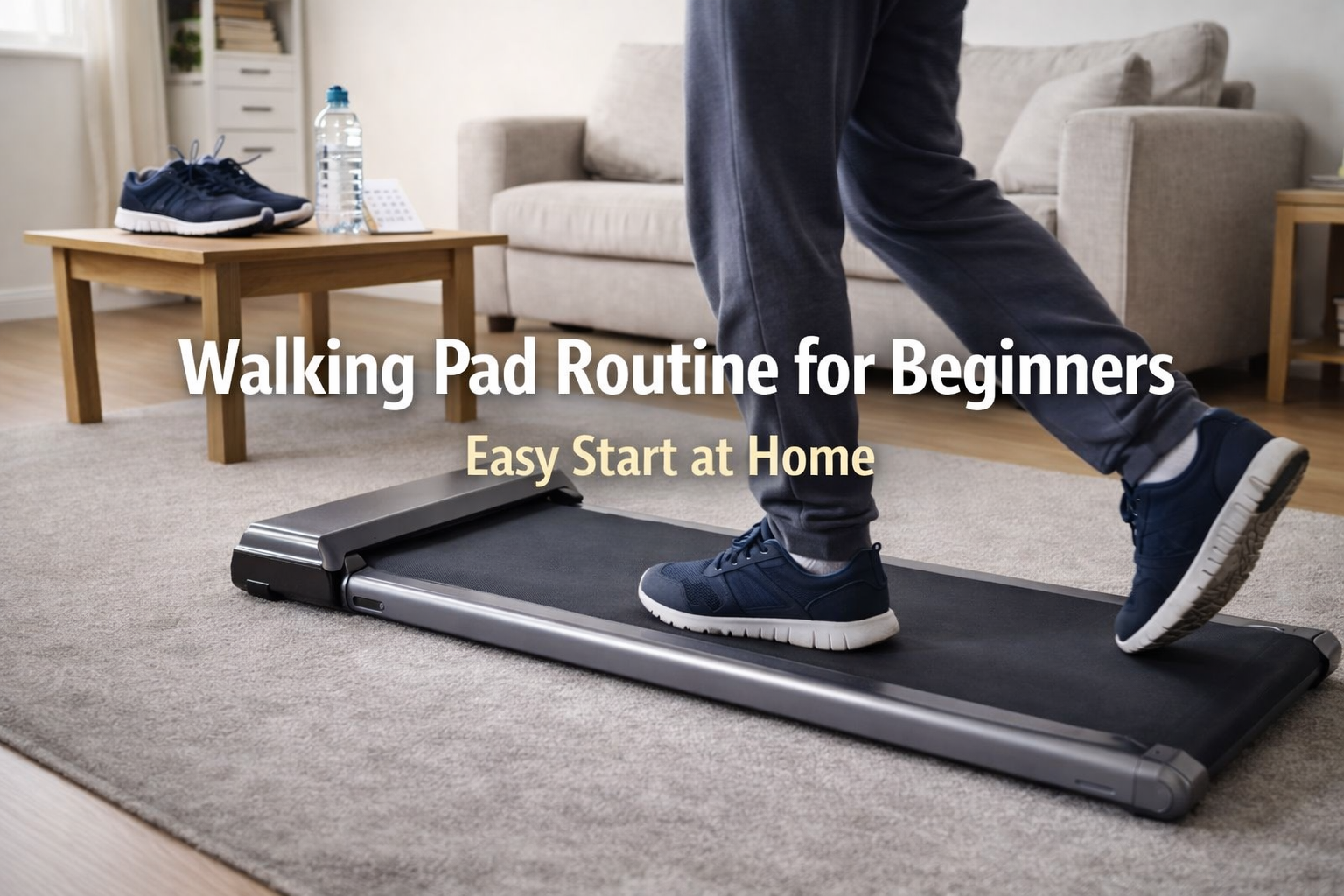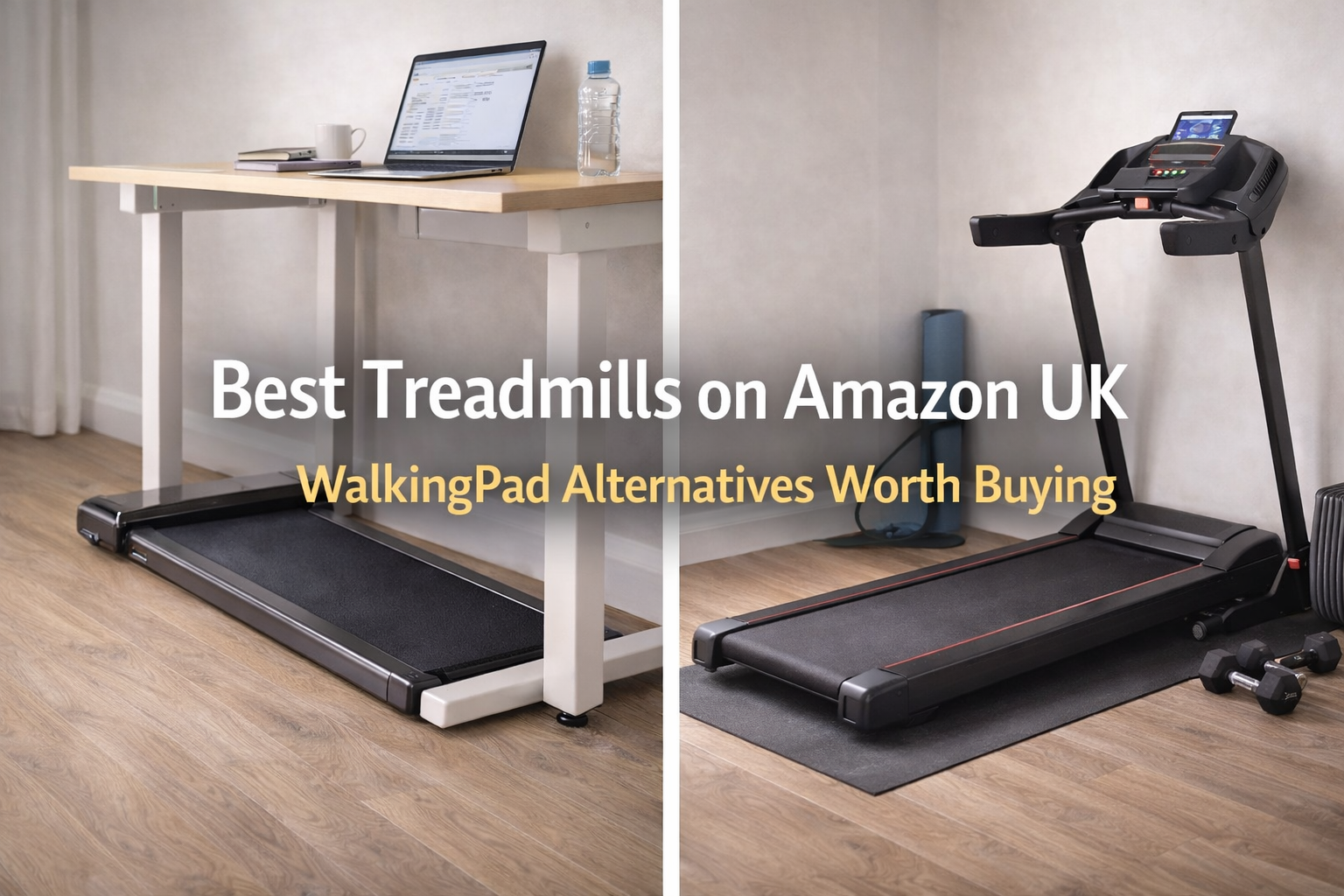

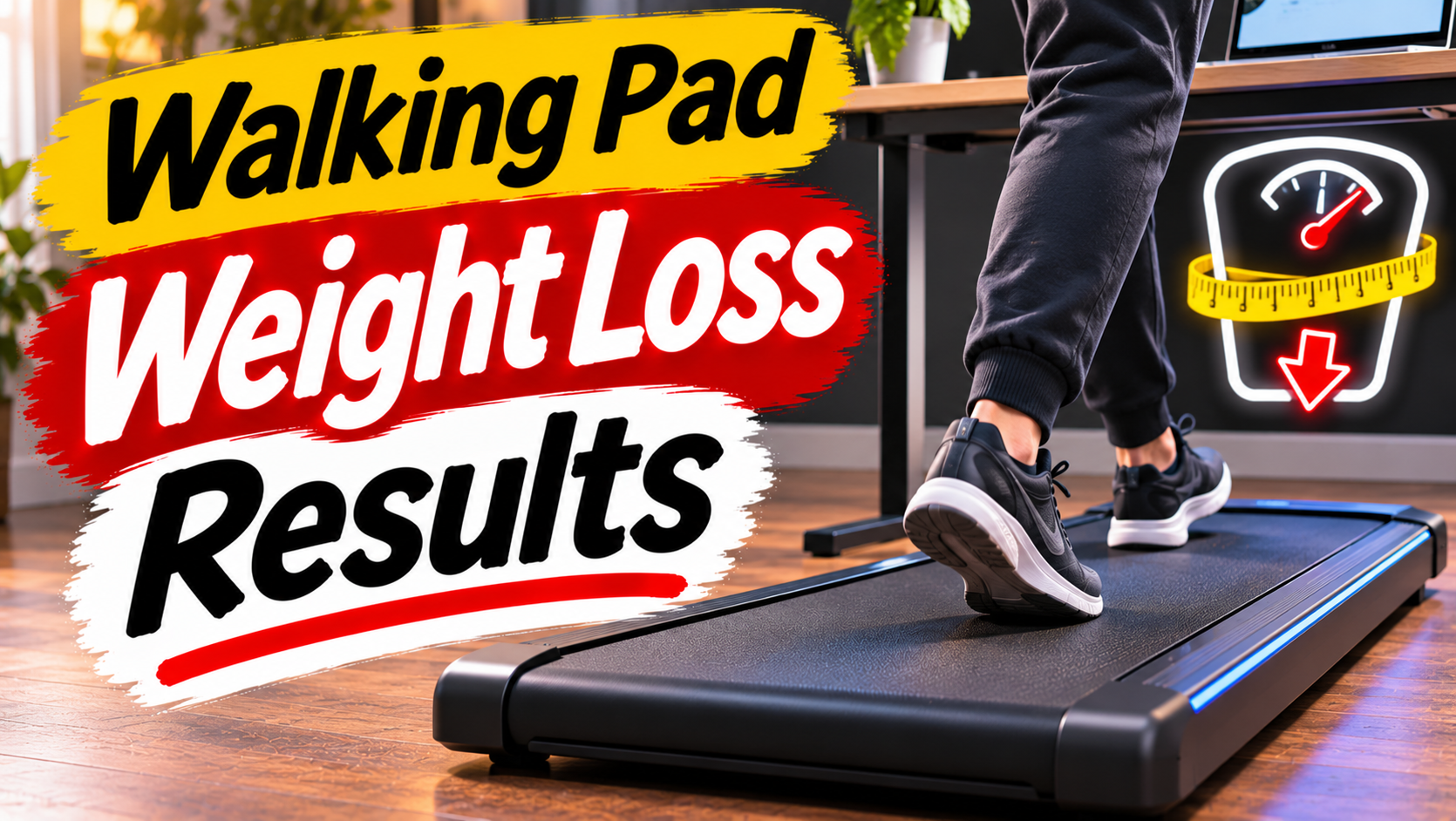
A walking pad produces real, measurable weight loss when used consistently — but the mechanism is cumulative rather than dramatic. At 45 minutes daily at 2.5km/h, a 90kg user burns approximately 169 extra calories per session. That sounds modest. Over 12 months, it accumulates to approximately 61,000 extra calories — equivalent to nearly 8kg of fat loss from walking alone, without any change to diet. Add a GLP-1 medication and the combination becomes one of the most effective non-surgical weight management approaches currently available in the UK.
Get your walking pad: WalkingPad UK → Full brand comparison: Best Walking Pads UK.
What the research says about walking and weight loss
Walking is one of the most extensively researched forms of physical activity for weight management. Key data points relevant to UK walking pad users:
| Research finding | Practical implication |
|---|---|
| 8,000 steps daily reduces all-cause mortality by 51% vs 4,000 steps | The step target matters beyond weight loss |
| Walking 30+ minutes daily produces 2.5–5kg average weight loss over 12 months | Confirms walking pad results at population level |
| Walking combined with dietary change produces 3× more weight loss than diet alone | The walking pad amplifies GLP-1 medication results |
| NEAT (incidental activity) accounts for 15–30% of daily energy expenditure | Desk walking specifically targets the largest controllable component |
| UK adults average 3,825 daily steps — half the recommended amount | There’s a large available gain for most UK users |
Real walking pad weight loss results: what to expect
Expected results from walking pad use alone (no dietary change, no medication):
| Daily walking duration | Speed | 90kg user calories/day | Estimated fat loss/year |
|---|---|---|---|
| 20 minutes | 2.5 km/h | ~56 kcal | ~2.6 kg |
| 45 minutes | 2.5 km/h | ~127 kcal | ~5.9 kg |
| 60 minutes | 2.5 km/h | ~169 kcal | ~7.9 kg |
| 2 × 30 minutes | 3.0 km/h | ~203 kcal | ~9.4 kg |
These figures assume daily consistency and no compensatory eating increase. In practice, most users achieve 5–6 days per week rather than 7, and some dietary drift is common — the realistic figure for most consistent users is 60–75% of the theoretical maximum, or approximately 4–6kg per year from walking alone.
Walking pad results combined with GLP-1 medication
The combination of walking pad and Mounjaro addresses the two primary drivers of body weight from different angles:
- Mounjaro: reduces calorie intake through appetite suppression; improves insulin sensitivity; reduces food noise
- Walking pad: increases calorie expenditure; improves insulin sensitivity through exercise; maintains NEAT
Both mechanisms improve insulin sensitivity — they reinforce rather than duplicate each other. Users who combine both consistently show better body composition outcomes (higher proportion of fat lost versus muscle) than users on either intervention alone.
Expected combined annual outcomes (walking pad + Mounjaro at therapeutic dose):
| Starting weight | Mounjaro alone (typical) | Mounjaro + daily walking pad |
|---|---|---|
| 100 kg | 15–22 kg | 18–26 kg |
| 120 kg | 18–26 kg | 22–31 kg |
| 140 kg | 21–31 kg | 25–37 kg |
The walking pad adds approximately 3–6kg to medication-only results at consistent daily use — not the headline number, but meaningful over a full year.
Why the walking pad outperforms the gym for most GLP-1 users
The gym produces higher calories per session. The walking pad produces higher total weekly calories because it happens every day. This adherence advantage is the key:
| Gym (3×/week average) | Walking pad (daily) | |
|---|---|---|
| Weekly sessions | 2–3 (realistic average) | 6–7 |
| Calories per session (90kg) | 300–450 | 130–200 |
| Total weekly calories | 600–1,350 | 910–1,400 |
| Annual total | 31,200–70,200 | 47,320–72,800 |
The walking pad matches or exceeds the gym’s annual calorie expenditure for most real-world users — because real-world gym attendance averages 2–3 sessions per week while walking pad sessions average 5–7 per week when integrated into the working day.
Maximising results: the complete walking pad protocol
- Build the habit first: 30-Day Walking Pad Challenge UK creates the consistency before focusing on intensity
- Target 7,000–10,000 steps daily: the step count target matters more than the calorie calculation
- Add audio: Audible free trial → for walking sessions converts dead time into learning — the habit becomes intrinsically rewarding
- Pair with protein: walking without adequate protein accelerates muscle loss; track in Cronometer
- Support the nutritional needs: daily walking slightly elevates magnesium and electrolyte requirements. Take the free Lily & Loaf lifestyle analysis → to ensure your supplement foundation matches your increased activity
Alan’s walking pad results over 12 months
Alan went from approximately 2,000 average daily steps at the start of his Mounjaro year to consistently 8,000–10,000 through walking pad integration. The setup was a WalkingPad under a standing desk running during work calls and email — approximately 90–120 minutes daily total. The step count accumulation from this habit, combined with Mounjaro at therapeutic dose, contributed to a 7-stone loss over 12 months.
The full breakdown of what the walking pad added versus the medication is documented week by week on the YouTube channel. The honest answer: the medication would have produced most of the weight loss regardless. The walking pad produced better body composition (more fat lost, less muscle lost) and faster cardiovascular recovery.
Frequently asked questions
How much weight can I lose with a walking pad?
At consistent 45–60 minutes daily, approximately 4–8kg per year from walking alone. Combined with GLP-1 medication, the walking pad adds 3–6kg to medication-only results. The larger benefit is in body composition — walking preserves muscle during GLP-1 fat loss better than a sedentary GLP-1 programme.
How long does it take to see weight loss results from a walking pad?
The scale typically shows the combination effects of diet, medication, and walking together — it’s difficult to isolate walking pad results specifically. Most users notice improved energy and stamina within 2–4 weeks. Scale weight changes attributable partially to walking become visible at 6–12 weeks of consistent daily use.
Is a walking pad enough exercise on its own for weight loss?
As a standalone intervention without medication, walking pad is most effective combined with resistance training (for muscle preservation) and dietary improvement (protein-first eating). On its own, it produces modest but real weight loss. As a complement to GLP-1 medication, it’s among the highest-value daily habits available. See Strength Training on GLP-1 UK for the full training picture.
The body composition advantage: why walking pad results look better than the scale
Scale weight is the bluntest possible measure of walking pad results. The more revealing metric is body composition — the ratio of fat to muscle in the total weight lost. Walking, particularly daily low-intensity walking, has a specific advantage over higher-intensity exercise for preserving muscle during calorie deficit: it burns fat without creating the muscle stress that demands additional recovery resources.
For GLP-1 users at a significant calorie deficit, this matters considerably. Resistance training preserves muscle by stimulating it directly. Walking preserves the energy budget for muscle maintenance by burning fat through a lower-cost activity. The two work together: resistance training provides the stimulus, walking provides the calorie expenditure without competing for recovery resources.
Users who combine daily walking pad sessions with two to three resistance training sessions weekly consistently show better body composition at equivalent total weight loss than those who do only one or the other. See Strength Training on GLP-1 UK for the resistance training component.
Track your body composition alongside scale weight in Cronometer‘s body measurements section. Monthly measurements — weight, waist circumference, and body fat percentage if you have a composition scale — tell the full story of what the walking pad is contributing that the scale alone misses.
The nutritional foundation that makes walking pad results most visible: protein at target (muscle preservation), omega-3 and anti-inflammatory nutrients for recovery, and the micronutrient baseline identified by the free Lily & Loaf lifestyle analysis → For the scientific detail of why walking specifically (versus running or HIIT) is the most appropriate primary activity for GLP-1 users: start your free Audible trial → and search for exercise physiology titles covering NEAT, fat oxidation, and sustainable activity.
Frequently asked questions
Does a walking pad actually work for weight loss?
Yes — at consistent daily use of 45–60 minutes, a walking pad produces 4–8kg of fat loss per year from the walking alone. Combined with GLP-1 medication, it adds 3–6kg to medication-only results. The bigger benefit is body composition: daily walking preserves more muscle during rapid GLP-1 weight loss than a sedentary GLP-1 programme. See the full calorie data at Walking Pad Calories Burned UK.
How long until you see results from a walking pad?
Energy improvements typically appear within 1–2 weeks. Scale weight changes from walking become measurable at 6–12 weeks of consistent daily use. Body composition improvements (more fat lost, less muscle lost) are visible at monthly measurements from week 4. Don’t judge the walking pad by scale weight — the body composition change is happening regardless of what the scale shows in any given week.
The walking pad isn’t a shortcut — it’s a consistency engine. At 5–7 sessions per week versus a gym’s 2–3, the cumulative annual calorie expenditure is comparable or better, with zero additional time cost and zero weather dependency. Over a full year of GLP-1 treatment, that consistency is the difference between medication results and medication-plus-movement results. Get your WalkingPad →
Discover more from Healthy Weight Loss GLP1
Subscribe to get the latest posts sent to your email.