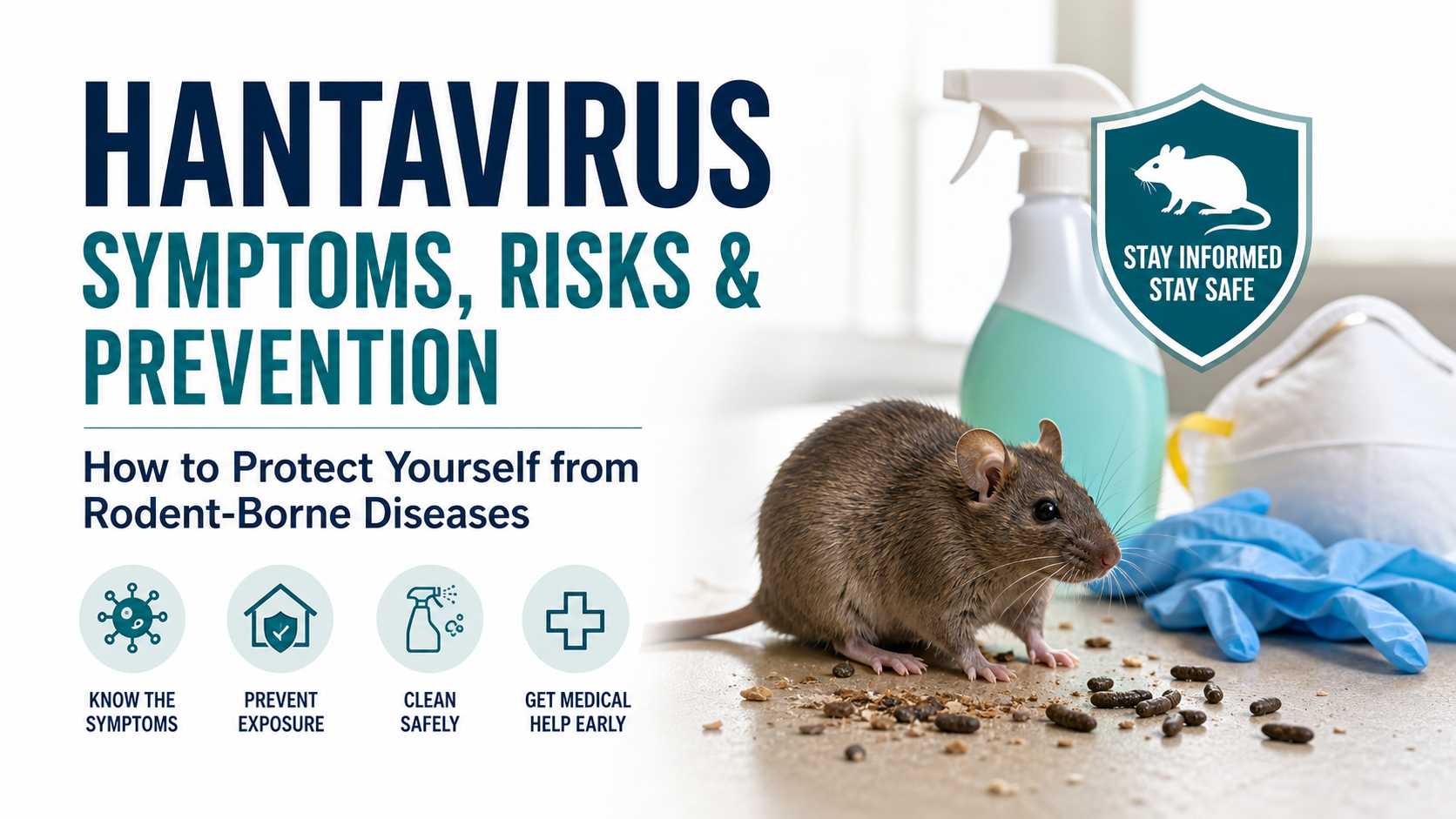

Medical note: This article is for general education only and does not replace medical advice. If you have severe symptoms, breathing difficulty, chest pain, dehydration, confusion, blood in stool, persistent fever, or symptoms after possible rodent exposure, seek urgent medical help.
Hantavirus vs Plague: Symptoms, Death Rates and Rodent Risk Compared
Quick answer: Hantavirus and plague are both associated with rodents, but they are not the same disease. Hantavirus is viral and usually spreads through contaminated rodent dust, urine, droppings, saliva or nesting material. Plague is bacterial, caused by Yersinia pestis, and usually spreads through infected fleas, contact with infected animals, or respiratory droplets in pneumonic plague.
This comparison supports our main hantavirus and rodent-borne disease pillar and the wider rodent-borne disease statistics guide.
Hantavirus vs plague comparison table
| Question | Hantavirus | Plague |
|---|---|---|
| Type | Virus | Bacteria |
| Main cause | Hantaviruses carried by certain rodents | Yersinia pestis |
| Typical human exposure | Breathing contaminated dust from rodent urine, droppings, saliva or nesting material | Flea bites, contact with infected animal tissues, or respiratory droplets in pneumonic plague |
| Symptoms | Fever, fatigue, muscle aches, headache, gut symptoms, coughing, shortness of breath | Fever, chills, swollen lymph nodes in bubonic plague, severe pneumonia symptoms in pneumonic plague |
| Fatality statistic | CDC says 38% of people who develop HPS respiratory symptoms may die. | WHO says untreated bubonic plague has a 30% to 60% case-fatality ratio; untreated pneumonic plague is always fatal. |
| Treatment | Supportive hospital care; no specific cure | Antibiotics can be effective when given early |
| Prevention | Rodent control, safe cleaning, avoid contaminated dust | Flea control, rodent control, avoid sick/dead animals, early diagnosis |
Why plague is famous, but hantavirus still deserves respect
Plague is historically infamous because of pandemics such as the Black Death. Modern plague still exists but is treatable with antibiotics when recognised early. CDC says the United States has averaged about seven human plague cases per year in recent decades.
Hantavirus is less famous, but it can be severe because early symptoms can look like flu or a stomach bug, and there is no specific cure. CDC reports 890 US hantavirus cases from 1993 to the end of 2023, and 35% of reported US cases resulted in death.
How symptoms differ
Hantavirus symptom pattern
- Early fever, fatigue and muscle aches
- Headache, dizziness, chills
- Nausea, vomiting, diarrhoea or abdominal pain
- Later coughing and shortness of breath in HPS
Plague symptom pattern
- Sudden fever and chills
- Headache, weakness and muscle pain
- Painful swollen lymph nodes in bubonic plague
- Coughing, chest pain and severe pneumonia symptoms in pneumonic plague
Rodents: the link and the misunderstanding
People often talk about “rats spreading plague”, but the route is usually more complex. Plague can involve fleas, wild rodents and other animal reservoirs. Hantavirus is more closely tied to contaminated rodent waste and dust. Both prove the same practical point: rodents in human environments are not just a nuisance.
What prevention overlaps?
- Keep rodents out of homes, sheds, garages and food stores.
- Seal gaps and entry points.
- Store food and animal feed in sealed containers.
- Reduce clutter and nesting opportunities.
- Do not touch sick or dead wild animals.
- Clean rodent waste safely using wet disinfection.
- Call pest control for infestations.
Buyer-intent prevention tools
| Product type | Use | Affiliate link |
|---|---|---|
| Rodent proofing mesh | Seal small gaps and stop repeat entry. | View on Amazon UK |
| Airtight storage boxes | Reduce food sources in cupboards, garages and sheds. | View on Amazon UK |
| Disposable gloves | Protect hands during cleanup. | View on Amazon UK |
| Disinfectant spray | Wet-clean contaminated surfaces before wiping. | View on Amazon UK |
Final takeaway
Plague has the darker history. Hantavirus has the quieter modern risk. The smart response is the same: control rodents, avoid contaminated dust, treat unexplained symptoms after exposure seriously, and get medical help early.
FAQs
Is hantavirus the same as plague?
No. Hantavirus is viral, while plague is bacterial and caused by Yersinia pestis.
Which is more deadly?
Both can be fatal. Hantavirus pulmonary syndrome has a high fatality rate among severe respiratory cases, while untreated pneumonic plague is considered almost always fatal.
Can plague still happen today?
Yes. Plague still exists in several parts of the world, though human cases are rare in many countries.
Do rats directly cause plague?
Plague is usually linked to infected fleas and animal reservoirs, not simply touching a rat.
Discover more from Healthy Weight Loss GLP1
Subscribe to get the latest posts sent to your email.