
⚕️ Medical Disclaimer
This content is for informational purposes only and does not constitute medical advice. Always consult your GP or prescribing clinician before making changes to your medication, diet, or supplement regimen.
⚡ QUICK ANSWER
How do you get Mounjaro on the NHS?
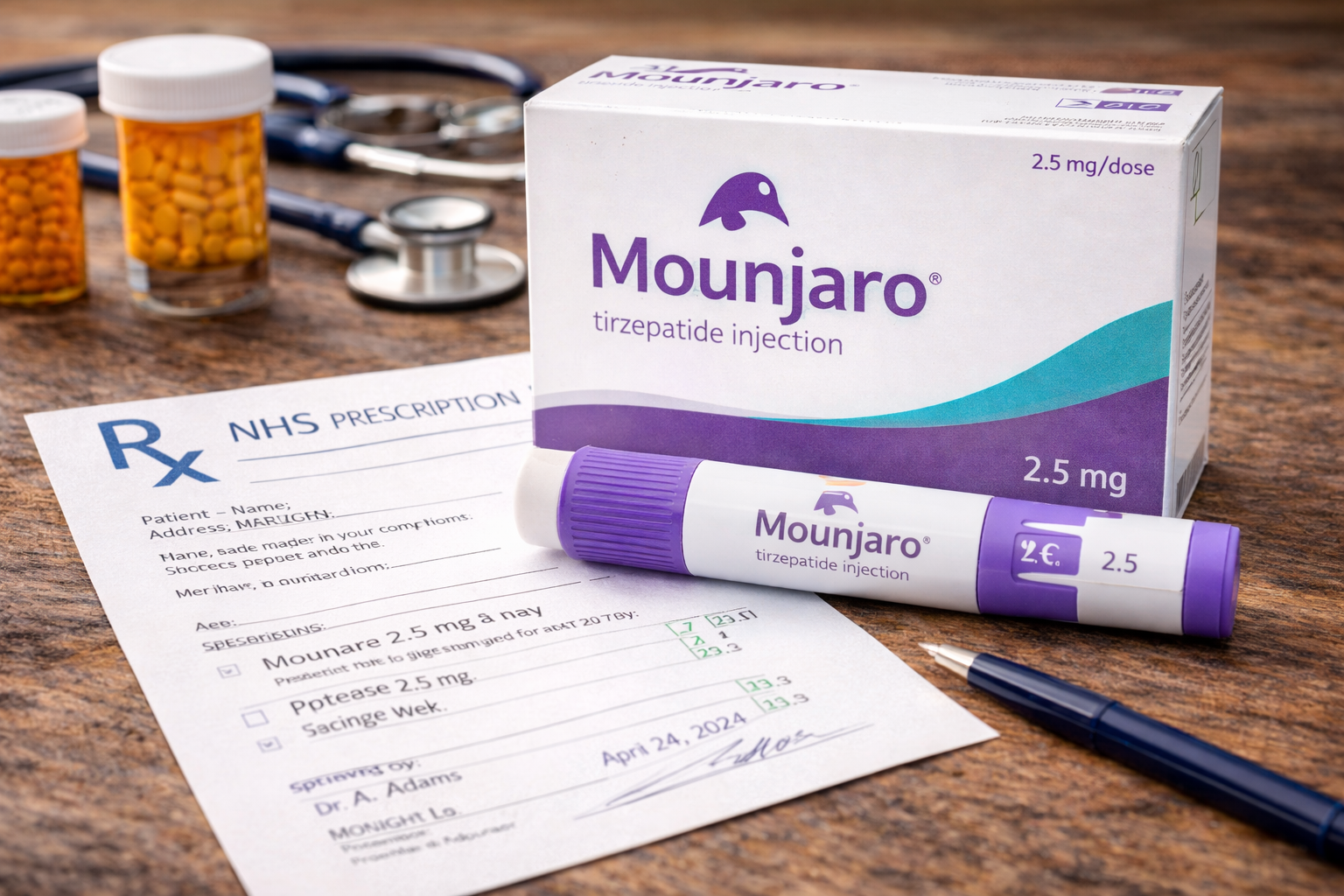
To get Mounjaro on the NHS for weight management, you need: a BMI of 35+ (or 32.5+ for certain ethnic groups), at least one weight-related health condition, and a referral from your GP to a specialist weight management service. The NICE TA1026 guidance means GPs are obliged to consider referral for eligible patients — you can reference this directly in your appointment.
NICE approved Mounjaro (tirzepatide) for NHS weight management in 2023, but awareness among both patients and GPs remains inconsistent. Many eligible people do not know they qualify; some GPs are unaware of the full referral pathway. This guide gives you the exact criteria, the language to use, and what to do if the process stalls. For the private alternative: MedExpress Weight Loss Clinic review.
The NICE TA1026 Criteria — Know These Before Your GP Appointment
NICE Technology Appraisal TA1026 (published December 2023) approved tirzepatide for adults with obesity under the following conditions:
| Criterion | Requirement | Your Checklist |
|---|---|---|
| BMI | ≥35 kg/m² (or ≥32.5 kg/m² for South Asian, Chinese, Black African, African-Caribbean, or other Black heritage) | Calculate your BMI at nhs.uk/bmi-calculator before the appointment |
| Weight-related health condition | At least one of: pre-diabetes or type 2 diabetes, hypertension, dyslipidaemia, obstructive sleep apnoea, non-alcoholic fatty liver disease, cardiovascular disease | Have documentation of your diagnosed condition(s) |
| Service | Must be prescribed and monitored via a specialist weight management service or Tier 3 service | Your GP makes the referral — you do not need to find the service yourself |
| Prior interventions | Should have engaged with lifestyle interventions | This does not mean you must have tried everything — it means prior attempts should be documented |
What to Say to Your GP — The Exact Language
Many patients are uncertain how to raise this topic. Here is language you can use directly:
📋 What to Say to Your GP
“I have done some research and I believe I may be eligible for Mounjaro (tirzepatide) under NICE Technology Appraisal TA1026 for weight management. My BMI is [X] and I have [condition]. Could you check whether I meet the criteria for a referral to a specialist weight management service?”
Key points to make in the appointment:
- State your BMI clearly — if you have calculated it in advance, mention the number
- Name your weight-related health condition(s) — hypertension, pre-diabetes, sleep apnoea etc
- Reference NICE TA1026 by name — this is the approved guidance your GP should follow
- Ask specifically for a referral to a ‘Tier 3 weight management service’ or ‘specialist weight management service’ — this is the NHS pathway
- If your GP is unfamiliar with TA1026, offer to note the reference number and ask them to check the NICE guidance
What Happens After the GP Referral
- GP makes a referral to the local specialist weight management service (Tier 3)
- You receive a letter or call from the service — waiting time varies (3 months to 18+ months by area)
- Initial assessment appointment with the specialist team
- If tirzepatide is recommended, prescription is issued by the specialist service
- Ongoing monitoring every 3-6 months — weight, blood pressure, relevant blood tests
- Prescription can be continued as long as you are responding (typically defined as 5% or more weight loss at 6 months)
What If Your GP Says No?
- Ask for the reason in writing. A GP declining to refer an eligible patient is making a clinical decision — they should be able to document why. This often prompts reconsideration.
- Ask to see a different GP. Within the same practice, a different GP may be more familiar with TA1026.
- Raise a formal complaint or escalation. If your BMI and condition clearly meet criteria and you are being refused, you can escalate to the practice manager or write to your ICB (Integrated Care Board).
- Consider the private route in the meantime. Private clinics can prescribe immediately for eligible patients while NHS processes are pursued.
NHS Access for Type 2 Diabetes — A Different Route
If you have type 2 diabetes, your GP can prescribe Mounjaro directly (without specialist referral) as part of your diabetes management — this is the licensed indication. This is a faster route than the weight management pathway for T2D patients. Ask your GP specifically about tirzepatide as an add-on to your current diabetes regimen.
The Supply Reality in 2026
NHS supply of tirzepatide has been more consistent than semaglutide (Ozempic), which has faced ongoing supply constraints. However, local formulary decisions vary — some ICBs have prioritised specific medications or brands. Your GP will advise on current local availability. If your preferred medication is temporarily unavailable, discuss alternatives with your GP rather than stopping treatment without a substitute plan.
RECOMMENDED SUPPLEMENTS
Lily & Loaf — Quality Supplements for GLP-1 Users
While waiting for NHS access or during private prescribing — these supplements support the GLP-1 journey from day one.
📚 RELATED READING
Some links in this post are affiliate links. If you purchase through them, I may earn a small commission at no extra cost to you. I only recommend products I use myself. Use code ALAN10 for 10% off Lily & Loaf. This post is for informational purposes only — always consult your GP for medical advice.
The 2025-2028 NHS Rollout — What Is Changing
NHS England announced a phased rollout plan for GLP-1 weight management treatment that aims to significantly expand access between 2025 and 2028. The key stages:
- Phase 1 (2024-2025): Specialist weight management services prescribing tirzepatide and semaglutide to highest-need patients
- Phase 2 (2025-2026): Expanded access via primary care in areas with established specialist oversight pathways
- Phase 3 (2026-2028): Broader prescribing via GP surgeries for eligible patients — removing the specialist referral requirement
The phase 3 changes — if implemented as announced — will make access significantly easier for eligible patients. Check with your GP what the current access situation is in your ICB area, as implementation timelines vary significantly across England.
Sources: NHS England: obesity treatment and GLP-1 access plan · NHSE: tirzepatide commissioning guidance · NICE TA1026: implementation guidance for NHS England
The bottom line: NHS access is possible, takes persistent advocacy, and is worth pursuing if you meet the criteria. The private route provides faster access at a cost. Neither is the wrong choice — the right choice depends on your waiting time, budget, and urgency of treatment need. NHS vs Private GLP-1 covers the comparison in full to help you decide.
Discover more from Healthy Weight Loss GLP1
Subscribe to get the latest posts sent to your email.