
Breakfast is the easiest protein win of the day on a GLP-1 — your appetite is at its weakest in the morning and a solid 30g protein breakfast sets up the whole day. This is 12 specific high-protein breakfast ideas that work when appetite is suppressed, each hitting 30g+ protein, with realistic UK ingredient sources and honest notes on which ones actually taste good when your stomach is being difficult.
For the context on why 1.6–2.0g/kg/day protein matters, see The Nutrition Stack in the Complete Guide. For snack-sized protein ideas between meals, High-Protein Snacks UK for GLP-1 Users.
Why breakfast matters specifically on a GLP-1
Three reasons breakfast earns special attention:
1. Your stomach is emptiest and your appetite is strongest in the morning. Slowed gastric emptying on a GLP-1 means yesterday’s dinner may still be sitting around; overnight fasting is the longest food-free window your body gets. A proper breakfast capitalises on that window when you’re actually hungry.
2. Protein at breakfast correlates with better satiety through the day. Multiple studies (including classic work from Leidy and colleagues) have shown that 30g+ protein at breakfast reduces mid-afternoon snacking compared to a carb-heavy or low-protein start. On a GLP-1 this effect stacks with the medication’s appetite suppression, making the day’s nutrition easier.
3. It’s the lowest-friction protein target. By lunchtime you might be in meetings, between errands, or on the go; evening meals often shrink on a GLP-1 because your appetite has tailed off by then. Breakfast, eaten at home on your own timeline, is where protein hits are easiest to engineer.
The 30g protein target: why that number?
Research on muscle protein synthesis suggests that ~25–35g of high-quality protein per eating occasion is the threshold for maximally stimulating protein synthesis in most adults. Below that threshold you’re still getting amino acids, but you’re not fully triggering muscle-building machinery. Aiming for 30g per feeding hits the sweet spot without overshooting into wasted protein.
For a person targeting 150g daily protein (a 75kg person at 2g/kg), hitting 30g across 5 eating occasions is more effective than hitting 75g twice. Breakfast is the first of those 5 opportunities.
The 12 breakfasts
1. Greek yogurt bowl (classic)
200g 0% Greek yogurt (20g protein) + 30g protein powder stirred in (22g protein) + berries, chia. Total: ~42g protein, ~250 cal.
The easiest 40g+ breakfast that exists. Stir a half-scoop of vanilla whey through plain 0% Greek yogurt, top with handful of frozen berries and a tablespoon of chia seeds. 90 seconds to make, no cooking, eats cold. Lily & Loaf’s Super Protein with Fibre works particularly well here because the fibre stacks with the chia.
2. Skyr with granola and nut butter
170g plain Skyr (17g protein) + 30g high-protein granola (5–8g protein depending on brand) + 15g peanut butter (4g protein) + handful of berries. Total: ~28–30g protein, ~320 cal.
Texture variety, genuinely delicious. High-protein granolas worth looking at: Lizi’s Protein Granola, PROPER Protein Granola, Eat Natural Protein Granola. Watch for ones dressed as “protein” that are really sugar-bombs; look for 10g+ protein per 100g granola.
3. Three-egg omelette with cheese and smoked salmon
3 large eggs (18g protein) + 30g mature cheddar (7g protein) + 50g smoked salmon (13g protein). Total: ~38g protein, ~450 cal.
If you have 10 minutes and a frying pan, this is the gold standard protein breakfast. Whisk the eggs, pour into hot non-stick pan, add cheese once eggs are setting, add salmon at the last moment to just warm through. Fold in half, serve. Adds a fair few calories but almost all of them are protein or fat; the carbs are trivial.
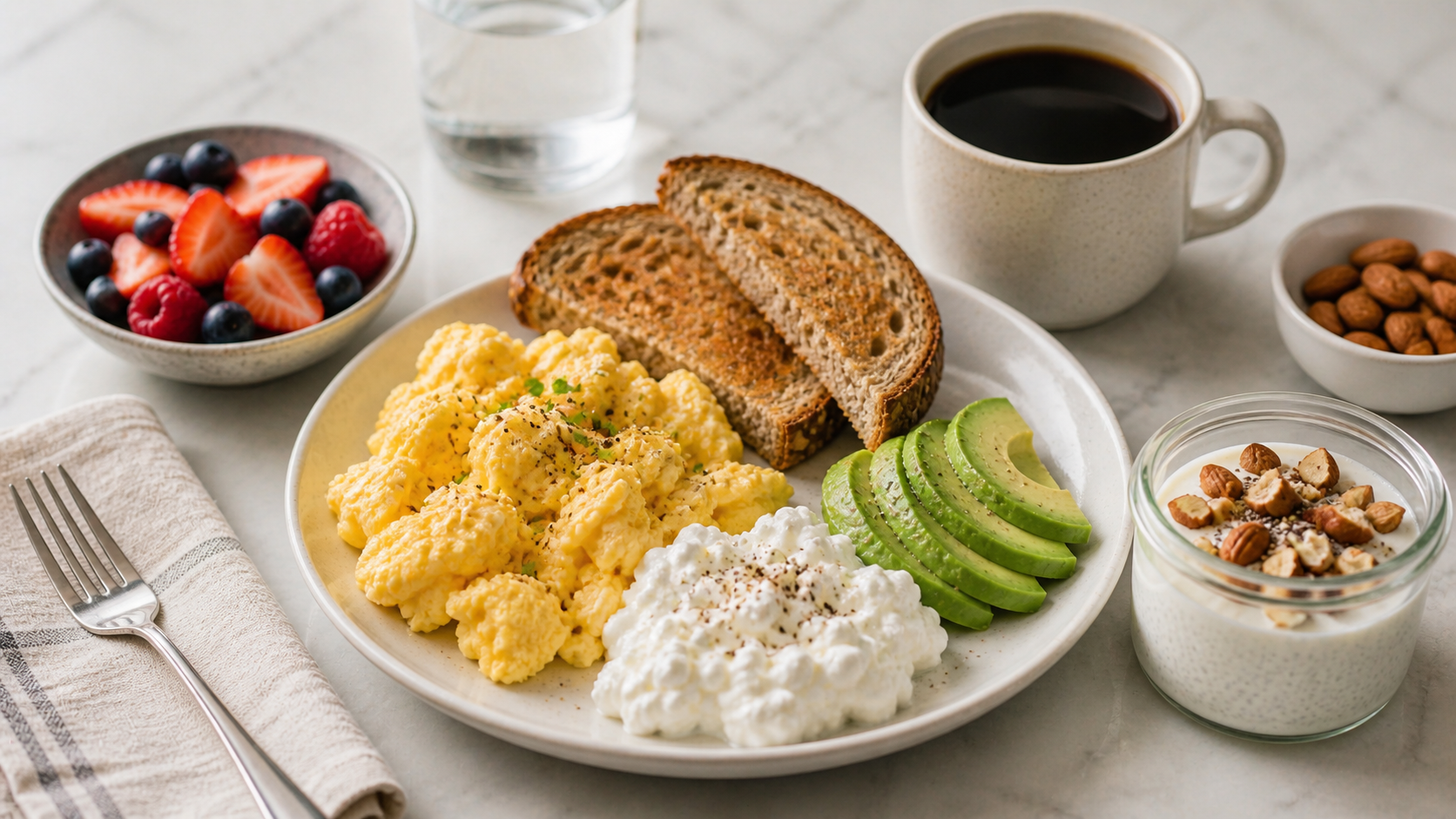
4. Cottage cheese scramble
2 eggs (12g protein) + 100g cottage cheese scrambled through (10g protein). Total: ~22g protein, ~280 cal.
Sounds odd, works beautifully. Whisk 2 eggs, stir in 100g cottage cheese, scramble in a hot pan. The cottage cheese gives the scrambled eggs a creamier, almost risotto-like texture. Season with salt, black pepper, and chives. Eat on 1 slice of wholegrain toast to push protein up further and add fibre.
5. Overnight oats (protein version)
40g rolled oats (5g protein) + 250ml milk (8g protein) + 1 scoop protein powder (22g protein) + 1 tbsp chia (2g). Total: ~37g protein, ~380 cal.
Mix the night before; ready to eat in the morning. The protein powder is the key ingredient — without it, oats give you 13g protein for 380 calories, which is a lot of calories for not much protein. With 22g whey added, it becomes one of the best protein-per-calorie breakfasts in the list. Add berries on top in the morning.
6. Protein smoothie
1 scoop protein powder (22g) + 250ml semi-skimmed milk (8g) + 1 small banana + handful spinach + 1 tbsp peanut butter. Total: ~32g protein, ~380 cal.
Drinkable when your stomach is being difficult. The combination of protein powder + milk base gets you over 30g without effort. Adding the banana and spinach for potassium and micronutrients; peanut butter for fat and flavour. Blend and drink. Takes 2 minutes.
7. Smoked salmon on protein seed bread
2 slices high-protein bread (10g protein) + 80g smoked salmon (20g protein) + light cream cheese (2g). Total: ~32g protein, ~340 cal.
High-protein breads (Burgen Soya & Linseed, M&S Super Seed Loaf, Warburtons Seeded Batch) are 5g protein per slice rather than 2–3g for standard bread. Combined with smoked salmon you’re at a solid 32g without needing to cook. Under 10 minutes, no cooking required.
8. Baked beans on protein bread with egg
2 slices high-protein bread (10g protein) + 200g baked beans (10g protein) + 1 poached egg (6g protein). Total: ~26g protein, ~450 cal.
The British classic, protein-boosted. Baked beans are an underrated protein source (around 5g per 100g). Add a poached egg for another 6g. Not as dense as the others on protein-per-calorie but genuinely filling and cheap.
9. Tofu scramble (plant-based)
150g extra-firm tofu (17g protein) crumbled and fried with turmeric, nutritional yeast, black salt (kala namak for the egg flavour), spinach. Total: ~20g protein, ~250 cal. Add a scoop of protein powder in a glass of milk alongside (~30g total) to hit target.
Plant-based option that scratches the scrambled-egg itch. Kala namak salt gives the sulphury, egg-yolk flavour that tofu scrambles can lack. Nutritional yeast adds a cheesy umami note plus B12. Not quite 30g on its own — pair with a small protein shake to finish the target.
10. High-protein pancakes
1 scoop protein powder (22g) + 1 whole egg (6g) + 1 egg white (4g) + 40g oats (5g) + 150ml milk (5g) blended, cooked as pancakes. Total: ~42g protein, ~420 cal.
For weekend mornings when you want a treat that’s also a 40g+ protein meal. Blend all ingredients. Pour small pancakes into a non-stick pan. Flip once. Top with berries, Greek yogurt, or a teaspoon of maple syrup. Genuinely satisfying; the protein powder/oats combo gives them a pancake-like texture that pure protein pancakes lack.
11. Pre-made high-protein porridge pot
1 Quaker Oats So Simple Super Protein sachet (made with 200ml milk): ~18g protein, ~250 cal. Add a small protein shake to hit target.
For work-from-office mornings or travel. Oats So Simple Super Protein or Fuel10K Protein Porridge ranges hit around 15–20g per pot — below target. Pair with a 10–15g protein drink or Babybel to reach 30g+. Not gourmet but functional.
12. Savoury cottage cheese toast
2 slices high-protein bread (10g) + 100g cottage cheese (10g) + 2 eggs poached or fried (12g) + black pepper, hot sauce. Total: ~32g protein, ~380 cal.
Cottage cheese on toast sounds dubious but with good bread and good seasoning it’s excellent. Spread cottage cheese on toasted high-protein bread, top with a poached or fried egg, crack of black pepper, a splash of hot sauce or Marmite if you like it. Hearty, quick, properly satisfying.
What to avoid as a “protein breakfast”
Several things marketed as protein breakfasts don’t actually hit meaningful protein targets:
- Standard cereal with milk. Most cereals are 2–4g protein per 40g serving; add 8g from milk and you’re at 10–12g total. Below target. Even “protein” cereals often land around 15g.
- Toast with jam and butter. Classic, but 6–8g protein for 350+ calories. Poor ratio.
- Smoothie bowls with mostly fruit. Looks healthy, often 10–15g protein for 500 calories. Add protein powder or a Greek yogurt base to make it count.
- Pastries and bakery items. Croissants, muffins, pain au chocolat — 5g protein if you’re lucky, 400–500 calories. Treat, not breakfast.
- Porridge with fruit alone. Porridge with water or milk and banana is 10–12g protein. Add protein powder, Greek yogurt, or nut butter to get over 25g.
Pairing breakfast with your coffee
If coffee is non-negotiable for you (it is for me), add protein to it when you can. Options:
- Cappuccino or latte with semi-skimmed milk — 8g protein from the milk
- Protein coffee: 1 scoop vanilla whey blended with hot coffee and a splash of milk — 25g+ protein in a morning drink
- Collagen peptides (10g) stirred into black coffee — small boost, good for skin/joints during rapid weight loss
Caveat: some GLP-1 users find coffee tastes different or amplifies early-day nausea. If you’re in the first few weeks and struggling with nausea, try herbal tea first and reintroduce coffee when symptoms settle. See Mounjaro and Coffee UK.
Meal prep for mornings
What to batch on a Sunday to make weekday breakfasts low-friction:
- 6–8 boiled eggs in a tub in the fridge
- Jar of overnight oats mixed (5 days’ worth in separate portions)
- Portioned cottage cheese tubs
- Smoothie ingredient bags in the freezer (pre-portioned banana, spinach, berries)
- Stock of protein bread and high-protein granola in the cupboard
- One big Tupperware of protein pancakes reheat-ready
Morning decision-making is where good plans die; having things pre-portioned removes that friction.
What a week of high-protein breakfasts might look like
A realistic week:
- Monday: Greek yogurt bowl with protein powder and berries
- Tuesday: Three-egg omelette with cheese and salmon
- Wednesday: Overnight oats (made Sunday night)
- Thursday: Protein smoothie (quick commute day)
- Friday: Baked beans on protein bread with egg
- Saturday: High-protein pancakes (slow morning treat)
- Sunday: Cottage cheese scramble with chives
Every single one hits 30g+ protein. Total cost for the week’s breakfasts: roughly £15–£20 if you shop supermarket own-brand, £25–£30 for premium ingredients. Compared to £5 for a Costa medium cappuccino and pastry (with 10g protein), it’s a bargain.
The one breakfast habit that changed everything for me
Eat breakfast before drinking your first coffee. Not as health dogma — as a practical trick. Caffeine on an empty stomach amplifies any mild GLP-1 nausea in early months and can leave you with an hour of wobbliness before you’ve eaten. A protein breakfast first, then coffee, and the whole morning is smoother. Takes nothing extra and removes one of the most common week-one complaints.
For broader nutrition context: Complete GLP-1 Weight Loss Guide. For the other meals: high-protein lunch and dinner sister posts coming next.
Nutrition note: these are general suggestions for most adults on a weight loss journey. Individual needs vary. If you have specific medical conditions affecting protein or calorie needs (kidney disease, specific metabolic conditions), talk to your GP or a registered dietitian before making major changes.
Discover more from Healthy Weight Loss GLP1
Subscribe to get the latest posts sent to your email.