
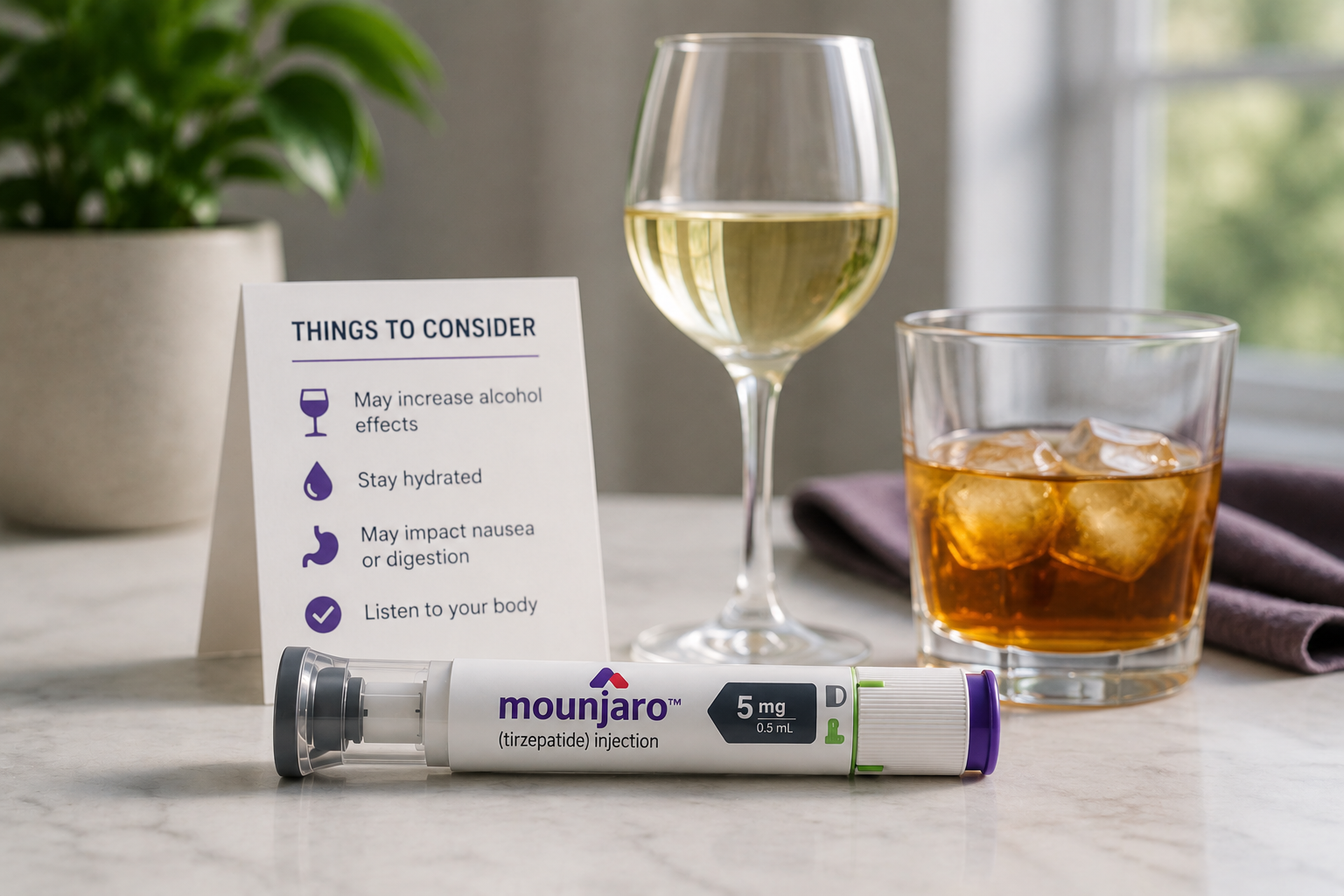
Alcohol and Mounjaro don’t have a direct drug interaction — tirzepatide doesn’t metabolise alcohol differently or make it dangerous. What changes is everything around it: alcohol tolerance drops on GLP-1s, meaning smaller amounts hit harder; nausea compounds; blood sugar effects are amplified; and the calories in alcohol are invisible to your medication’s appetite suppression. This guide covers the safe limits, the real risks, and what actually happens when you drink on Mounjaro.
For related questions: Alcohol on Mounjaro UK and What to Drink on Mounjaro UK.
The direct answer on safety
Mounjaro does not have a clinically significant interaction with alcohol at moderate consumption levels. The Mounjaro UK prescribing information does not list alcohol as a contraindicated combination.
That said, “no direct interaction” is not the same as “no effect.” Several indirect effects are worth understanding before your next drink.
What actually changes when you drink on Mounjaro
Tolerance drops — sometimes significantly
This is the most commonly reported change. Users who could previously drink two or three pints with no issue find themselves notably affected after one. Several factors explain this:
- You’re eating less, so less food in your stomach slows alcohol absorption
- Mounjaro slows gastric emptying — alcohol that used to move quickly into the small intestine now sits in the stomach longer, then enters the bloodstream faster
- Lower body weight means blood alcohol concentration (BAC) reaches a higher level per unit consumed
Practically: if you drank two glasses of wine pre-Mounjaro and felt fine, one glass may now produce the same effect. Plan accordingly — especially if driving.
Nausea compounds
If you’re in an early dose phase or post-step-up week when nausea is already a factor, alcohol almost always makes it worse. Alcohol irritates the gastric lining; slowed gastric emptying means that irritation lingers. Even users with no medication-related nausea often find alcohol triggers it.
Most UK users who drink on Mounjaro find wine and spirits are better tolerated than beer and fizzy drinks — carbonation amplifies nausea via the same mechanism as diet sodas. See Can I Drink Diet Coke on Mounjaro UK for the carbonation context.
Blood sugar effects
Alcohol initially raises blood glucose (from carbohydrate content in beer, wine, mixers) and then causes a delayed drop in blood glucose as the liver prioritises processing the alcohol over releasing glucose. On a GLP-1 with its own glucose-lowering effects, this pattern can produce more pronounced low blood sugar feelings — shakiness, lightheadedness, sweating — particularly several hours after drinking.
For users with type 2 diabetes, this is especially relevant. See Shaky and Low Blood Sugar Feelings on GLP-1 UK.
Calories bypass the appetite effect
Mounjaro suppresses appetite through GLP-1 and GIP receptor pathways. Liquid calories — including alcohol — largely bypass this suppression mechanism. You don’t feel full from drinking alcohol the way you do from eating solid food.
This means alcohol calories are effectively invisible to the medication’s weight management mechanism. A glass of wine is 120–160 calories. A pint of lager is 180–220 calories. Three drinks at a work event can add 400–600 calories that generate no fullness signal.
This is one of the less obvious reasons alcohol slows weight loss on Mounjaro — not because of some special interaction, but because the medication doesn’t compensate for it.
UK safe limits: the standard guidance
The NHS recommends no more than 14 units per week for both men and women, spread over at least three days, with several alcohol-free days per week.
On Mounjaro, the practical guidance is lower than this for most users:
- During titration (weeks 1–16): minimise alcohol. Side effects are most active; alcohol compounds them.
- On stable dose: occasional moderate drinking (1–3 units per occasion) is manageable for most users
- Weekly limit: staying under 7–10 units per week is more appropriate than the full 14-unit NHS guideline given the amplified BAC effect
- Never drink to previous levels without reassessing tolerance first
Which drinks are better tolerated
General hierarchy from best to worst tolerated based on common UK user experience:
Better tolerated:
- Still wine (red or white), small measures
- Spirits with still mixers (soda water, tonic)
- Low-alcohol beer or wine (<2.5% ABV)
Worse tolerated:
- Fizzy/carbonated drinks (beer, prosecco, champagne, cider)
- Sweet cocktails and mixers (high sugar compounds blood sugar swings)
- Shots and high-ABV spirits consumed quickly
- Alcohol on an empty stomach (significantly worsens nausea and BAC spike)
Before you drink: practical preparation
- Eat a protein-containing meal beforehand — food in the stomach slows alcohol absorption. Don’t drink on an empty stomach on Mounjaro.
- Choose injection day carefully — avoid drinking on the same day as your injection (peak side effect window). Wait at least 48 hours after injecting before a social occasion involving alcohol.
- Tell whoever you’re with that your tolerance has changed. If you’re driving any part of the evening, account for the lower BAC threshold.
- Plan non-alcoholic alternatives — sparkling water with lime, alcohol-free gin and tonic, Seedlip. UK supermarkets now carry excellent low/no options.
- Hydrate before and during — alternate alcoholic and non-alcoholic drinks. Dehydration worsens nausea on Mounjaro.
If you’ve had a big night
Hangover on Mounjaro tends to be worse than pre-medication because:
- Lower tolerance means higher BAC for the same intake
- Dehydration compounds GLP-1 dehydration effects
- Nausea on top of nausea is unpleasant
Recovery basics: water and oral rehydration salts first (Dioralyte, or an electrolyte drink), plain food when nausea allows, paracetamol for headache if needed (paracetamol is safe on Mounjaro). Don’t skip the next injection because you feel rough — resume your normal schedule.
Alcohol and weight loss progress
If your weight loss has stalled, alcohol is one of the first variables worth reviewing. Not because it has a special blocking effect on Mounjaro, but because:
- The calories aren’t suppressed by the medication
- Post-drinking hunger (the day after a night out) temporarily overrides appetite suppression for many users
- Alcohol disrupts sleep, which raises cortisol and reduces fat loss
- It impairs recovery from training
A two-week complete break from alcohol is one of the more reliable ways to break a plateau. If you want to understand how much alcohol is actually contributing to your weekly calorie total, log it honestly in Cronometer for a fortnight — most people are surprised by the number. See Mounjaro Plateau UK for other causes.
Low and no-alcohol alternatives in the UK
The UK market for low and no-alcohol alternatives has genuinely improved. These options let you participate in social drinking situations without the calorie or tolerance implications:
Beer/lager alternatives: Heineken 0.0, Peroni Nastro Azzurro 0.0, Lucky Saint (0.5%), Brewdog Nanny State. Most taste noticeably different to regular beer, but have improved considerably in the past two to three years.
Wine alternatives: Torres Natureo (0.5%), Eisberg range. Lower sugar than regular wine; flavour profiles vary widely. Worth trying a couple before committing to a case.
Spirits alternatives: Seedlip (non-alcoholic distilled spirit), Gordon’s 0.0, Tanqueray 0.0. Serve with tonic or mixer exactly as you would the alcoholic version. Flavour is good; the social ritual of ordering a “gin and tonic” is preserved.
Ready-to-drink: Nozeco (sparkling wine alternative), Lucky Saint, Nirvana range. All widely available in major UK supermarkets.
These count as hydration, contain minimal calories, and allow you to hold a drink at social occasions without explanation. Many Mounjaro users find switching to these for the majority of social events — keeping occasional alcoholic drinks for genuinely special occasions — works well both for weight loss and for managing the reduced tolerance.
Social situations and managing expectations
Drinking less than you used to on a night out is one of the social adjustments that GLP-1 treatment brings. Most users find this easier than expected once they accept that their tolerance has changed and stop trying to drink the same amounts as before.
Useful social strategies:
- Order smaller measures — half pint instead of pint, small wine instead of large
- Keep a non-alcoholic drink in hand between alcoholic ones
- Arrive slightly late to events to reduce the total drinking window
- Be honest with close friends: “I’m on medication that means I can’t drink like I used to”
Nobody needs the full pharmaceutical explanation. Most people accept “medication” as a reasonable reason without questions.
Frequently asked questions
Can I drink alcohol while on Mounjaro?
Yes, in moderation. There is no direct drug interaction. The main practical concerns are lower tolerance, amplified nausea, and hidden calories that don’t trigger the medication’s appetite suppression.
Why does alcohol hit harder on Mounjaro?
Multiple factors: lower body weight, less food in your stomach (slowed gastric emptying and reduced overall intake), and potentially more rapid alcohol absorption through the stomach lining given the changed gastric environment.
Can alcohol cause weight gain on Mounjaro?
Yes, through calorie intake that bypasses the medication’s appetite suppression, post-drinking hunger, and sleep disruption. It doesn’t block the medication directly, but it can significantly slow progress.
Is it safe to drink on injection day?
It’s not recommended. Injection day is when side effects peak. Adding alcohol on top of potential nausea and fatigue typically makes both worse. Wait at least 48 hours after injecting for a planned social occasion.
What’s the safest alcohol to drink on Mounjaro?
Still wine and spirits with still mixers are generally better tolerated than carbonated drinks. Low-ABV options reduce the BAC and hangover risk while allowing participation in social situations.
Medical disclaimer: this is general information. If you have type 2 diabetes, liver conditions, or take additional medications, discuss alcohol consumption with your prescriber. The NHS Better Health app includes alcohol tracking tools if you want to monitor your intake.
Discover more from Healthy Weight Loss GLP1
Subscribe to get the latest posts sent to your email.