
Ashwagandha is an adaptogenic herb with decent evidence for stress reduction, modest evidence for cortisol lowering, and limited direct evidence for weight loss. For GLP-1 users, its real value is indirect: lower cortisol and better sleep support the broader weight-loss picture without doing the weight loss itself. This is the honest 2026 UK guide to whether ashwagandha is worth adding to your supplement stack, how to pick one, and what to actually expect.
For the broader supplement stack see Supplements Worth Taking in the Complete Guide. For the psychological side of weight loss see Food Noise Explained.
What ashwagandha actually is
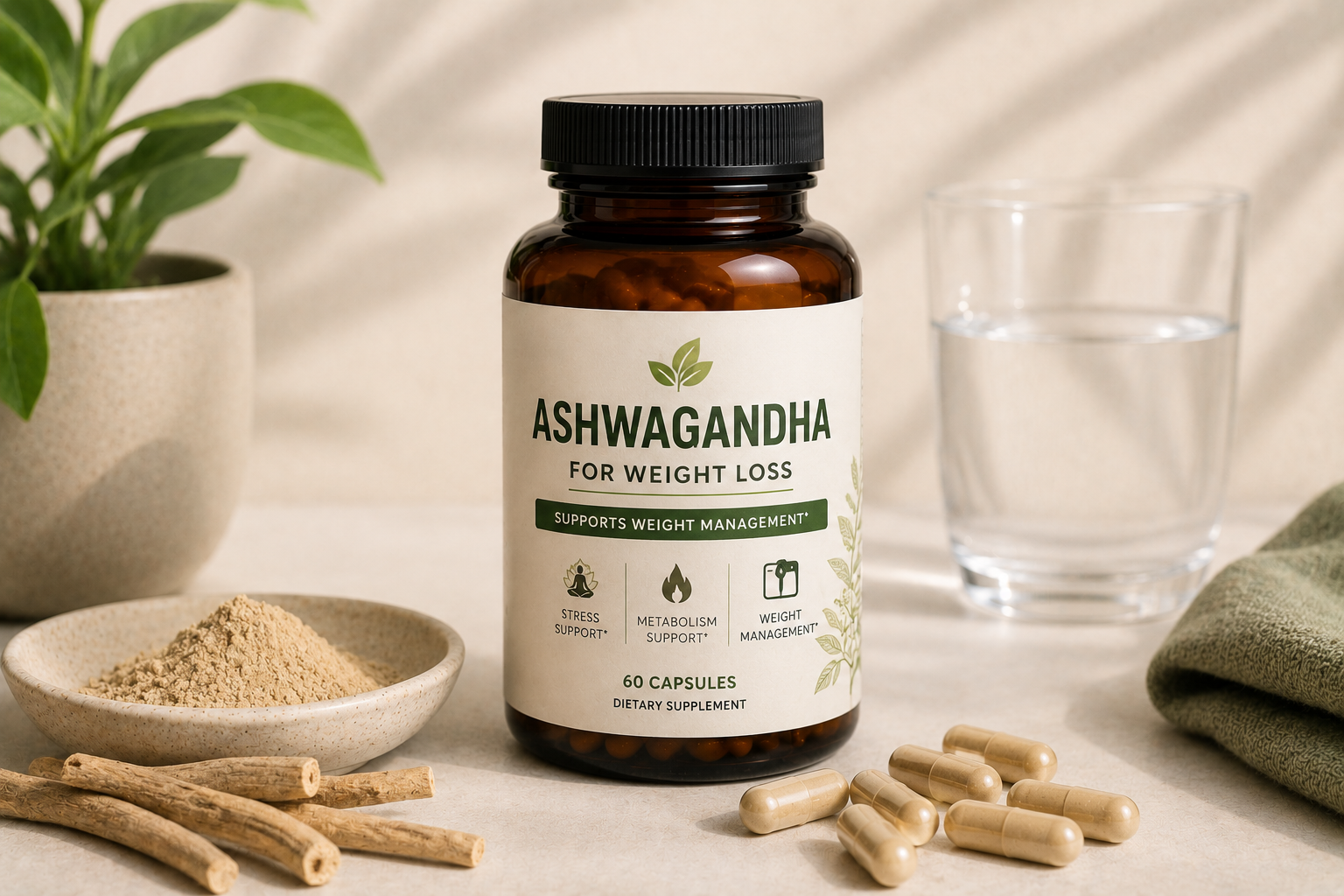
Ashwagandha (Withania somnifera) is a small evergreen shrub native to India, the Middle East, and parts of Africa. Its root has been used in Ayurvedic medicine for thousands of years, labelled a “rasayana” (rejuvenative). In modern supplement use it’s classified as an adaptogen — a loose pharmacological category of plants claimed to help the body resist and recover from stress.
The active compounds are a group of steroidal lactones called withanolides. Standardised extracts (like the widely-studied KSM-66 and Sensoril formulations) specify a withanolide content, typically 5% for KSM-66 and 10% for Sensoril. If a supplement doesn’t specify withanolide content or uses “full-spectrum root powder” without standardisation, you’re buying a less reliable product.
What the evidence actually shows
Honestly summarised, avoiding both overhype and dismissal:
Moderate evidence: ashwagandha reduces perceived stress and anxiety scores in multiple randomised trials. Effect sizes are small-to-moderate but consistent across several well-designed studies at doses of 300–600mg KSM-66 daily.
Moderate evidence: ashwagandha modestly lowers cortisol in chronically stressed adults. Several trials show 15–30% reductions in morning cortisol over 8–12 weeks of supplementation.
Moderate evidence: ashwagandha improves sleep quality in adults with insomnia, particularly sleep onset latency (time to fall asleep) and subjective sleep quality scores.
Weaker evidence: small but positive effects on strength training outcomes, testosterone in men, and V02 max in athletes. Effect sizes are modest; ashwagandha is not a performance-enhancing substance in any meaningful way.
Limited direct evidence for weight loss: a 2017 trial by Choudhary et al. showed small reductions in body weight and BMI in stressed adults, but this is one study and effect sizes are small. Weight-loss-specific claims for ashwagandha are overstated.
Takeaway: ashwagandha is a genuine stress-and-sleep supplement with real effects. It is not a weight-loss supplement in any direct sense.
Why it might still matter for a GLP-1 user
Three indirect mechanisms relevant to weight loss:
1. Cortisol and abdominal fat. Chronically elevated cortisol is associated with increased visceral (abdominal) fat storage. If stress-driven cortisol is contributing to weight-loss plateau or slow progress, moderating that may help.
2. Sleep and weight loss. Poor sleep consistently predicts poorer weight loss outcomes. If ashwagandha improves sleep quality meaningfully, the downstream effect on appetite regulation, energy, and adherence is real.
3. Stress and emotional eating. Some GLP-1 users find food noise quiets while the underlying emotional triggers of previous eating patterns remain. For people with stress-driven eating patterns, supporting the stress axis is a reasonable adjunct.
Notice these are indirect. Ashwagandha isn’t doing the weight loss; it’s supporting conditions that make weight loss easier. That’s a legitimate role but should be framed honestly.
Dosing: what actually works
The trial dosing that generated the evidence base:
- KSM-66 extract: 300–600mg daily, typically split into morning and evening doses
- Sensoril extract: 125–250mg daily (higher withanolide % means lower doses)
- Full-spectrum root powder: 1,000–3,000mg daily — higher doses needed because of lower withanolide density
For most users, 500–600mg daily of KSM-66 for 8–12 weeks is the evidence-based starting protocol. After 12 weeks, evaluate whether you’re getting benefit and decide whether to continue.
Timing: split dose works well. Morning (with breakfast) for daytime stress support, evening (1–2 hours before bed) for sleep support. Some people do better on evening-only dosing; personal variation is real.
UK ashwagandha picks for 2026
Best evidence-based: KSM-66 ashwagandha (multiple brands)
KSM-66 is the specific extract used in most of the clinically-relevant trials. Look for products that explicitly state “KSM-66” on the label, not just “ashwagandha” or “full-spectrum ashwagandha.”
Pick 1: Nu U Nutrition Ashwagandha KSM-66
600mg KSM-66 per capsule. Around £14–£18 for 180 capsules (6 months).
UK-brand, good value, clean formulation, clearly identifies KSM-66 as the extract. Single daily capsule at the upper end of evidence-based dosing. For most UK users this is the sensible default.
Buy from: Nu U Nutrition Ashwagandha KSM-66 on Amazon UK.
Pick 2: Himalaya Organic Ashwagandha
670mg whole-root powder (not KSM-66 standardised) per capsule. Around £12 for 60 capsules.
Traditional full-spectrum preparation rather than a high-withanolide extract. Organic certification, long-established Ayurvedic producer. Lower withanolide per dose than KSM-66 but broader phytochemical profile for users who prefer whole-herb preparations.
Buy from: Himalaya Organic Ashwagandha on Amazon UK.
Pick 3: Viridian Ashwagandha Extract
300mg KSM-66 per capsule, 60 capsules. Around £20–£25.
Premium UK-brand supplement company with strong quality-control reputation. Clean formulation, no unnecessary fillers, vegan capsule shell. Two capsules daily hits the 600mg dose used in most trials.
Buy from: Viridian Ashwagandha Extract on Amazon UK.
Best premium: Lily & Loaf Ashwagandha
KSM-66 standardised extract, 600mg per capsule. UK-formulated.
Lily & Loaf’s ashwagandha uses the KSM-66 extract with the most clinical evidence behind it. Clean capsule, UK brand. Good option for people consolidating their supplement purchases with one UK supplier.
Buy from: Lily & Loaf Ashwagandha.
Ashwagandha products to avoid
Several patterns signal lower-quality products:
- No extract type or standardisation specified. “Ashwagandha root powder 500mg” without telling you the withanolide content is an unknown-strength product.
- Proprietary blends. “Stress relief blend 1,000mg” listing 8 herbs including ashwagandha without telling you how much of each. Marketing, not science.
- “Super strength” claims without third-party verification. Some brands claim 10,000mg equivalents via complex extract ratios that don’t translate to clinical outcomes.
- Ashwagandha gummies. Low doses, added sugar, often below the threshold where ashwagandha would do anything.
- Combination products without transparency. “Ashwagandha with magnesium and zinc” at unknown doses of each — get them separately if you want them, so you can dose each properly.
- Extremely cheap bulk powder from unknown origins. Ashwagandha has been known to be contaminated with heavy metals when sourced from unregulated supply chains. Stick with brands that third-party test.
Ashwagandha and heavy metal contamination
A genuine concern with root-based Ayurvedic supplements: the roots can accumulate heavy metals (particularly lead) from the soil they grow in. The best brands (KSM-66-licensed products, Sensoril-licensed products, major Western supplement brands) test for heavy metals and publish results.
When choosing a product, look for explicit statements about heavy metal testing. This isn’t paranoia — it’s legitimate quality control for this specific category. Any reputable UK supplement seller in 2026 will have this information available on request.
When ashwagandha might not be for you
Contraindications and cautions:
- Pregnancy. Ashwagandha has historically been used in Ayurveda for labour induction in later pregnancy; it’s not considered safe during pregnancy in modern guidelines.
- Breastfeeding. Limited safety data; most clinicians advise caution.
- Hyperthyroidism. Ashwagandha can modestly stimulate thyroid function. People with overactive thyroid conditions or on thyroid-regulating medication should talk to their GP first.
- Autoimmune conditions. As an adaptogen that may modulate immune function, people with autoimmune conditions (particularly those on immunosuppressants) should consult their specialist.
- Sedative medications. Ashwagandha has mild sedative properties; stacking with prescription sedatives or alcohol can compound effects.
- Upcoming surgery. Stop 2 weeks before planned surgery (as with most supplements affecting the nervous system).
- Children. Not well studied; typically recommended for adults only.
For most healthy adults on a GLP-1 without these conditions, ashwagandha at evidence-based doses is well-tolerated.
What to realistically expect
If ashwagandha works for you (it doesn’t for everyone), the typical pattern:
Weeks 1–2: usually no noticeable effect. Don’t expect dramatic changes in the first two weeks.
Weeks 3–4: subtle improvements in perceived stress and sleep quality begin for responders. Not transformational; a gentle easing.
Weeks 5–8: more settled pattern of lower background stress, better sleep onset, slightly better overall resilience to daily hassles. Responders notice it when they forget a few doses and the effect fades.
Weeks 9–12: steady state. Evaluate whether the benefit justifies continuing.
If no effect by week 8: ashwagandha isn’t for you. Discontinue. Not every supplement works for every person; that’s fine.
What to evaluate before adding it to your stack
Honest questions to ask yourself:
- Am I chronically stressed in a way that’s affecting my sleep, mood, or weight-loss progress?
- Have I optimised the free fundamentals first — sleep hygiene, morning sunlight exposure, limiting evening caffeine, alcohol moderation, regular exercise?
- Have I addressed the other basics — adequate protein, vitamin D3, magnesium?
- Would I be willing to give it 8–12 weeks before deciding whether it’s working?
- Am I willing to stop it if it’s not working?
If yes to all five, ashwagandha is a reasonable addition. If no to any of them, fix those first before spending money on a supplement that might not move the needle.
Ashwagandha vs alternatives
Other supplements with some evidence for stress or sleep support:
- Magnesium glycinate — well-evidenced for sleep, cheaper, broader use case. See Electrolytes on GLP-1.
- L-theanine — calming amino acid found in tea; mild effect, pairs well with caffeine.
- Rhodiola rosea — another adaptogen with some evidence for stress and fatigue, different mechanism from ashwagandha.
- Melatonin (prescription in the UK) — for sleep onset specifically, well-evidenced, available via GP.
- Glycine (3g before bed) — small but positive evidence for sleep quality.
My general view: magnesium first, address lifestyle fundamentals, then consider ashwagandha as an addition if stress remains a meaningful issue after those steps.
The one-paragraph summary
Ashwagandha is a legitimate stress and sleep supplement with moderate evidence behind it, not a weight-loss supplement, but its indirect effects on cortisol and sleep quality can support the broader GLP-1 weight-loss picture. For most UK GLP-1 users it’s worth trying 500–600mg of KSM-66-standardised ashwagandha daily for 8–12 weeks if stress and sleep are meaningfully bothering you after you’ve fixed the basics. If it works, continue; if it doesn’t, stop. It’s a modest tool, not a game-changer.
My recommendation in one line
For most UK GLP-1 users considering ashwagandha: Lily & Loaf Ashwagandha or Nu U Nutrition Ashwagandha KSM-66, 500–600mg daily for 8–12 weeks, with realistic expectations about what it will and won’t do.
For the broader supplement stack: Supplements Worth Taking. For the psychological side: Food Noise Explained. For everything else: the Complete GLP-1 Weight Loss Guide.
Disclosure: some links are affiliate links. Medical note: ashwagandha can interact with thyroid medications, sedatives, and immunosuppressants; consult your GP before supplementing if you’re on prescription medications or have autoimmune or thyroid conditions.
Discover more from Healthy Weight Loss GLP1
Subscribe to get the latest posts sent to your email.