
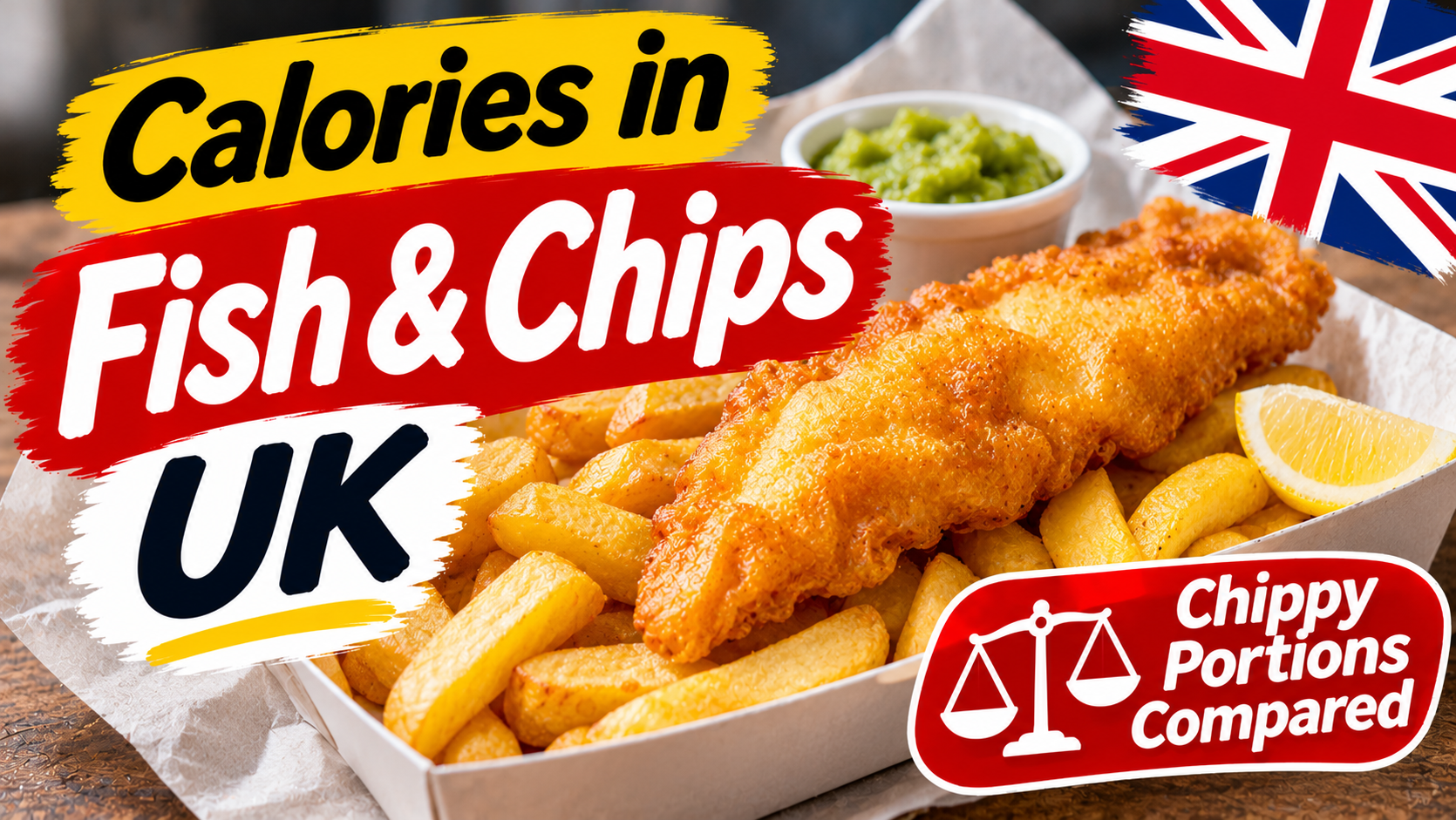
A typical chip-shop fish and chips is about 1,000 to 1,200 calories, based on UK government food data: battered cod is about 240 calories per 100g and chip-shop chips about 214. Mushy peas add around 65 to 80, curry sauce more. Thicker chip-shop chips are lower per 100g than fast-food fries.
Last updated: 11 November 2026 · By Alan Spicer
Not medical advice. I share what has worked for me on GLP-1 medication and link the evidence. Talk to your GP or prescriber before changing your diet, medication or activity.
If you have, or have had, an eating disorder, speak to your GP before counting calories. Beat offers UK support.
Fish and chips is a Friday tradition in a lot of houses, including round Huddersfield. You don’t need to give it up to lose weight, but it helps to know where the calories sit. I’ve worked it out from the UK government’s official food data, with the portion sizes shown so you can match it to your own chippy.
Why listen to me
I have been on GLP-1 medication since January 2024 and lost 7 stone in 18 months. I’m not a doctor or dietitian: I share what worked for me, what didn’t, and the evidence behind it. My day job is YouTube consulting, which you can read about on alanspicer.com.
⚡ QUICK ANSWER
Chip-shop fish and chips is about 1,000 to 1,200 calories for a typical portion: 200g of battered cod is about 480 calories and 300g of chip-shop chips about 642, using UK government food data. Battered haddock is slightly lower than cod per 100g, and mushy peas add about 65 calories per 80g.
How many calories are in fish and chips?
A typical chip-shop fish and chips is about 1,000 to 1,200 calories. Using the UK government’s official food data (CoFID), 200g of battered cod is about 480 calories and 300g of chip-shop chips about 642, which comes to 1,122.
240
calories per 100g of battered takeaway cod
214
calories per 100g of chip-shop chips
1,122
calories in our typical portion (200g cod, 300g chips)
65
calories in an 80g pot of mushy peas
Sources: CoFID 2021 (Public Health England); our worked portions.
The NHS says an average woman needs about 2,000 calories a day and an average man about 2,500, so a full fish supper is roughly half a day’s energy.
Fish and chips calories by portion
Portion sizes vary a lot between chippies, so here are a few realistic combinations worked out from CoFID figures. Swap the grams for your own if you weigh your tea.
| Portion | Fish | Chips | Total calories |
|---|---|---|---|
| Small: 150g cod, 200g chips | 360 | 428 | 788 |
| Typical: 200g cod, 300g chips | 480 | 642 | 1,122 |
| Large: 250g cod, 400g chips | 600 | 856 | 1,456 |
| Fish only, no chips: 200g cod | 480 | 0 | 480 |
| Chips only: 300g | 0 | 642 | 642 |
Source: CoFID 2021: cod in batter, fried, takeaway (240 kcal/100g); potato chips from takeaway fish and chip shops (214 kcal/100g). Portions are worked examples.
Is cod, haddock or plaice lowest in calories?
Battered haddock is slightly lower than cod per 100g in UK government data, and plaice is the highest of the three. The difference is small next to the chips.
| Fish in batter (CoFID) | kcal per 100g | 200g fillet |
|---|---|---|
| Haddock, fried | 232 | 464 |
| Cod, fried, takeaway | 240 | 480 |
| Plaice, fried | 257 | 514 |
Source: CoFID 2021 (Public Health England).
All three are good sources of protein. If you want to cut calories, leaving some of the batter makes more difference than which fish you pick.
Log your chippy tea in seconds
Snap the plate or say “cod and chips with mushy peas” in CaveCals and check the estimate. It’s free to download with no account needed.
Free on iPhone and Android. iPhone code ALANSPICER: one month free on the yearly plan.
Are chip-shop chips lower in calories than fries?
Chip-shop chips are lower in calories per 100g than thin fast-food fries. UK government data lists chip-shop chips at about 214 calories per 100g and fine-cut fast-food chips at about 290, because thicker chips absorb less fat.
| Chips (CoFID) | kcal per 100g | 200g portion |
|---|---|---|
| Chip-shop chips | 214 | 428 |
| Fine-cut fast-food chips | 290 | 580 |
| Oven chips, baked | 189 | 378 |
Source: CoFID 2021 (Public Health England).
nidirect’s healthier takeaway advice says the same: choose thicker chips where you can, because they soak up less fat.
How many calories do peas, sauces and extras add?
Extras can add 100 to 300 calories to a fish supper. Mushy peas are the lightest addition and bring some protein and fibre; sauces and buttered bread add more.
| Extra | Portion | Calories |
|---|---|---|
| Mushy peas | 80g | 65 |
| Mushy peas | 150g | 122 |
| Curry sauce (sweet UK style) | 100g | 92 |
| Buttered bread roll | 1 roll | Check the pack or shop |
Source: CoFID 2021: peas, mushy, canned, re-heated (81 kcal/100g); sauce, curry, sweet, UK type (92 kcal/100g). Shop recipes vary.
How can you make fish and chips lighter?
You can cut a few hundred calories from fish and chips without giving it up. These are the swaps that make the biggest difference:
- Order a small or lunchtime portion of chips, or share a portion.
- Choose mushy peas or baked beans as your side.
- Leave some of the batter, which soaks up a lot of the fat.
- Go easy on curry sauce and gravy, or have it on the side.
- Ask for no salt and add your own if you want it.
Most of these come from nidirect’s official healthier takeaway advice.
How does fish and chips compare with other takeaways?
Fish and chips sits in the same range as most takeaway meals. A 2018 BMJ study of 13,396 main meals from 27 UK restaurant chains found the average was 977 calories, and only 9% met the 600-calorie recommendation.
A typical fish and chips (about 1,122 calories) is a little above that average. Fish with a small portion of chips and mushy peas comes in nearer 850. For comparison, half a large takeaway pizza is around 1,000 calories; see my takeaway pizza calories guide.
How do you log fish and chips accurately?
The most accurate way to log fish and chips is to weigh it at home and use the per-100g figures above. If you’re not weighing, a photo or voice log with a quick portion check gets you close.
- Search “battered cod” (or haddock) and “chip shop chips” in your calorie app.
- Set your portion in grams, or use a photo with Meal Scan and adjust the estimate.
- Log peas and sauces as separate items.
- If it’s from a big chain, use the calories on its menu.
Voice Log is my favourite CaveCals feature for meals like this: I say what I had and it turns it into food entries with calories and macros to check.
Keep the Friday chippy
CaveCals logs takeaways by photo, voice, search or barcode. Download it free and log your next chippy tea in seconds.
Free on iPhone and Android. iPhone code ALANSPICER: one month free on the yearly plan.
Is fish and chips OK on GLP-1 medication?
Fish and chips isn’t off limits on GLP-1 medication, but fried food can sit heavily when digestion slows down. A smaller portion, eaten slowly, often goes down better, and the fish gives you protein.
If fried food makes you feel sick or uncomfortable, talk to your prescriber. My post on eating out on Mounjaro has more takeaway tips, and counting calories for beginners shows how to fit treats into your week.
A lighter chippy tea
- Order fish with a small chips and mushy peas
- Leave some of the batter
- Log it with a photo or by voice
- Carry on with normal meals the next day
People also ask
How many calories in a portion of fish and chips?
A typical chip-shop portion with 200g of battered cod and 300g of chips is about 1,122 calories using UK government food data. Bigger portions and extras like curry sauce push it higher.
How many calories in battered cod?
Battered cod from a takeaway is about 240 calories per 100g in UK government food data, so a 200g fillet is about 480 calories.
Are chip-shop chips lower in calories than fries?
Per 100g, yes. UK government data lists chip-shop chips at about 214 calories per 100g and fine-cut fast-food chips at about 290, because thicker chips absorb less fat.
How many calories in mushy peas?
Mushy peas are about 81 calories per 100g in UK government data, so an 80g pot is about 65 calories, and they add some protein and fibre.
Frequently asked questions
Is haddock or cod lower in calories?
They’re close. UK government data lists battered haddock at about 232 calories per 100g and battered takeaway cod at about 240. Plaice in batter is higher, at about 257.
How many calories in a small fish and chips?
A smaller portion, such as 150g of cod with 200g of chips, is about 790 calories using UK government figures. Many chippies sell smaller or lunchtime portions.
How many calories does curry sauce add?
Curry sauce varies by shop. UK government data lists a sweet UK-style curry sauce at about 92 calories per 100g, so a 100g pot adds roughly 90 calories.
Is fish and chips healthier than other takeaways?
It can be. The fish gives a good amount of protein, and you can lower the calories with thicker chips, a smaller portion and mushy peas. A 2018 BMJ study found the average UK chain restaurant main was 977 calories, so fish and chips is in the same range.
How can I make fish and chips lower in calories?
Share the chips or order a small portion, choose mushy peas or beans, don’t eat all the batter, and skip extra salt and sauces. nidirect’s healthier takeaway advice suggests the same.
Do chippies show calories?
Large chains in England with 250 or more employees must show calories on menus since April 2022. Most independent chippies don’t have to, so use the figures here or a photo estimate.
Is fish and chips OK on GLP-1 medication?
It isn’t banned, but fried, greasy food can sit heavily when digestion is slower. Many people do better with a small portion and mushy peas. Talk to your prescriber if fried food gives you side effects.
How do I log fish and chips in a calorie app?
Search “battered cod” and “chip shop chips” and set your portion, or take a photo and check the estimate. Log sauces and peas separately so nothing is missed.
Final thoughts
A chip-shop fish and chips is about 1,000 to 1,200 calories for a typical portion, with the chips usually carrying more calories than the fish. Haddock and cod are similar, plaice a bit higher, and mushy peas are a cheap win.
You can keep the Friday chippy tea and still lose weight: go for a smaller portion of chips, add mushy peas and log it. In CaveCals you can snap the plate or just say what you had and it’s done.
About Alan Spicer
I have been on GLP-1 medication since January 2024 and lost 7 stone in 18 months. I write about what works day to day: protein, calorie tracking, walking and side effects, with the evidence linked. I’m not a medical professional, so please speak to your GP before making changes. Away from this site I’m a YouTube consultant (alanspicer.com) and I film my progress on Alan Spicer is Losing It.
Related reading
- Calories in Takeaway Pizza UK: Per Slice, Half and Whole
- How Many Calories in a Christmas Dinner? UK Breakdown
- How to Count Calories for Beginners (UK Guide)
- Best Calorie Tracker App UK (2026): Free and Paid Apps Compared
- Photo Calorie Counter App UK: Log Food by Taking a Picture
- Mounjaro and Eating Out UK: How to Handle Restaurants and Takeaways
SNAP IT. SAY IT. SCAN IT. FIND IT.
The calorie counter I use
CaveCals is free to download with no account needed. Barcode scanning, search and Quick Add are free, and you get 10 free photo and voice logs to try.
Get it on iPhone Get it on Android
iPhone code ALANSPICER: one month free on the yearly plan. Calorie plans and AI results are estimates, not medical advice.
Sources: [1] McCance and Widdowson’s Composition of Foods Integrated Dataset 2021 (CoFID), Public Health England. [2] nidirect: Healthier takeaways. [3] Calorie labelling in the out of home sector: implementation guidance (DHSC). [4] NHS: Understanding calories. [5] Robinson E et al. (Over)eating out at major UK restaurant chains, BMJ 2018.
Disclosure: some links on this page are affiliate links (including CaveCals). If you sign up or buy, I may earn a commission at no extra cost to you. I only recommend what I use or would use. Programme terms change, so check current terms on each site.
Discover more from Healthy Weight Loss GLP1
Subscribe to get the latest posts sent to your email.