
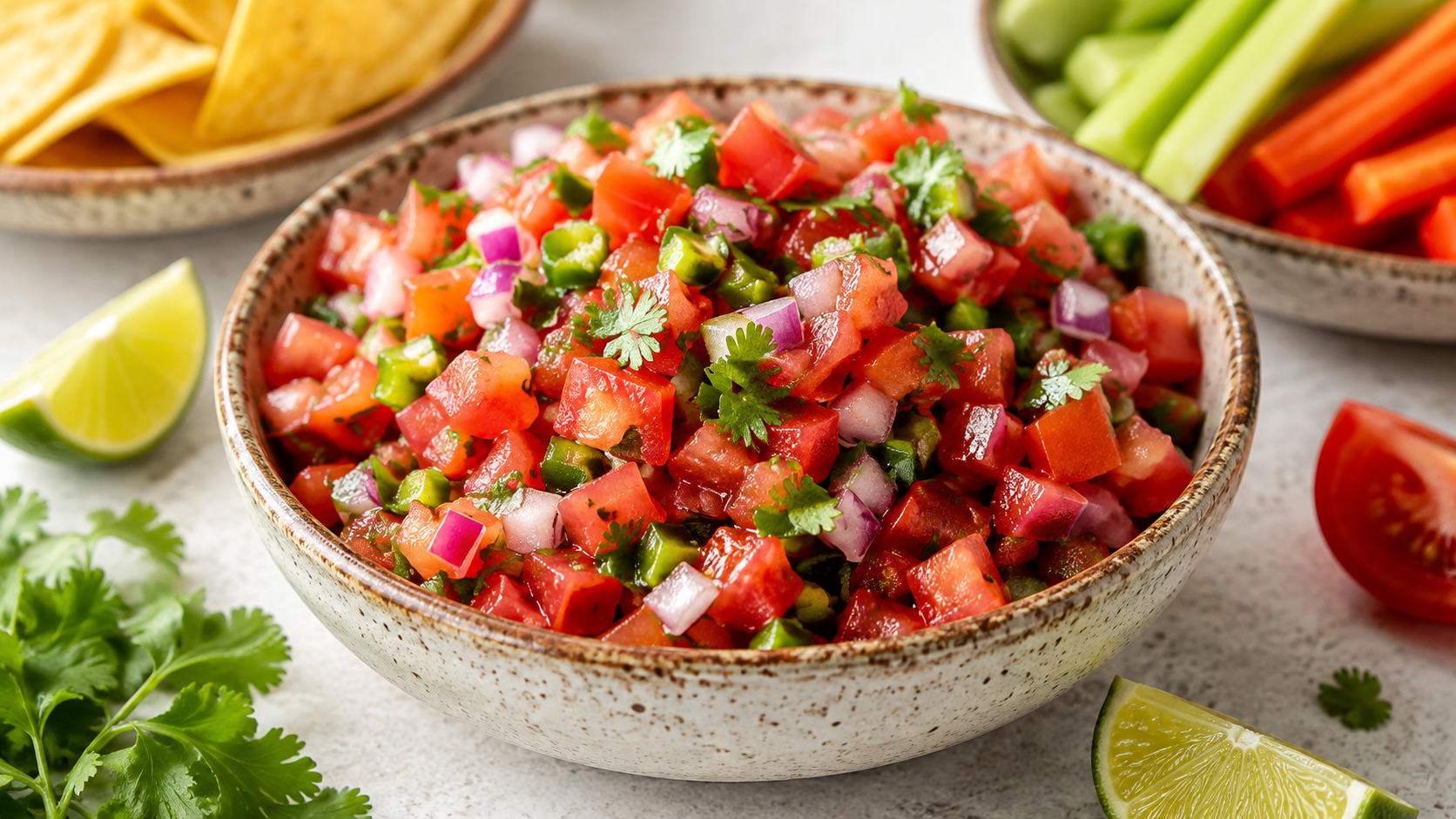
If there is such a thing as a free lunch in the world of eating well, fresh salsa is close to it. Ripe tomatoes, onion, chilli, lime and coriander chopped together make a vibrant, punchy side and dip for around 40 calories a serving, with virtually no fat. It adds a huge hit of flavour to almost anything for next to nothing, which makes it one of the most useful things you can have in the fridge on a GLP-1.
A quick word first: I am not a doctor or a dietitian, just someone who lived this. None of these foods or supplements are medication, and if you are on a GLP-1, check anything new with your GP or pharmacist. Right, let us get to it.
For the wider approach to eating on the jab, see my complete GLP-1 guide, and for hitting your protein, how much protein per day.
Why fresh salsa is a dieter’s best friend
This humble bowl of chopped veg punches so far above its calorie count it is almost unfair.
Massive flavour for almost no calories. At around 40 calories a serving with virtually no fat, salsa adds a huge hit of fresh, zingy flavour to a meal for next to nothing.
It makes lean protein exciting. A spoonful of salsa transforms a plain grilled chicken breast or piece of fish, which is exactly what keeps a high-protein diet from getting boring.
It is basically just vegetables. Fresh tomatoes, onion and herbs mean you are adding nutrients and a little fibre with every spoonful, guilt-free.
Free flavour is the ultimate diet hack
If I had to name the single most useful category of food for staying on a diet, it would be things that add big flavour for almost no calories, and fresh salsa is the poster child. Here is the logic: the hardest part of eating well long-term is not the first week, it is month three, when the novelty has worn off and plain, healthy food starts to feel like a punishment. Bland grilled chicken and steamed veg, night after night, is what breaks people. The answer is not to eat less healthily; it is to make your healthy food taste incredible, and free-flavour foods like salsa are how you do it for nothing.
A spoonful of fresh salsa turns a boring chicken breast into something zingy and exciting. It livens up eggs, tops a jacket potato, brightens a bowl of rice and beans, or serves as a dip for veg. Every time, it is adding flavour, freshness and a little nutrition for around 40 calories, which is a rounding error in your day. The same goes for herbs, spices, lemon, vinegar, chilli, garlic, mustard and hot sauce — a whole armoury of flavour that costs almost nothing calorie-wise. Learning to lean on these is genuinely one of the most important skills for making a weight-loss diet sustainable, because satisfied people stick to their plans and bored, deprived people do not. Keep a bowl of fresh salsa in the fridge and you have delicious, free flavour on tap. It is a small thing that makes a real difference to whether healthy eating feels like a joy or a grind.
The macros that matter
Here is roughly what one serving gives you. Treat these as a guide rather than gospel, since it depends on your exact ingredients and portions:
| Approx per serving | Amount |
|---|---|
| Calories | ~40 kcal |
| Protein | 2g |
| Carbohydrate | 8g |
| Fat | 0g |
| Fibre | 2g |
The protein figure is the one I watch on a GLP-1. As a rough guide I aim for somewhere around 1.2 to 1.6g of protein per kilo of body weight across the day to protect muscle while losing fat, and I judge every meal by how much of that it contributes. I log meals like this in Cronometer (it is free) so I know I am actually hitting my targets rather than hoping. The first time I tracked properly I realised I was eating far less protein than I thought, so if you have never done it, give it two weeks.
What you need (serves 1)
- 4 ripe tomatoes, finely diced
- ½ red onion, finely diced
- 1 red chilli, finely chopped (or to taste)
- 1 clove garlic, crushed
- A big handful of fresh coriander, chopped
- Juice of 1 lime
- Salt to taste
- Optional: a pinch of ground cumin, or a diced avocado to make it more substantial
How to make it
- Finely dice the tomatoes — if they are very watery, scoop out some of the seeds first so the salsa is not too wet.
- Combine the tomatoes, red onion, chilli and garlic in a bowl.
- Stir through the chopped coriander.
- Add the lime juice and a good pinch of salt, and the cumin if using.
- Taste and adjust — more lime, salt or chilli to your liking.
- Let it sit for ten minutes if you can, so the flavours mingle, then serve.
Making it your own
Salsa is endlessly adaptable:
Add fruit. Diced mango, pineapple or peach make a sweet-and-spicy salsa that is brilliant with fish or chicken.
Make it heartier. Stir in black beans and sweetcorn for a more substantial salsa that is almost a side salad.
Char it. Griddle the tomatoes and onion first for a smoky, roasted salsa. See how much protein per day for pairing it with protein.
Why letting salsa rest makes it better
There is a simple step that takes fresh salsa from good to great, and it costs nothing but a little patience: let it rest before you eat it. When you first chop everything together, the individual ingredients are still quite distinct — sharp raw onion, separate bursts of tomato, the lime sitting on top. Give the salsa ten to fifteen minutes to sit, ideally at room temperature, and something lovely happens. The salt draws a little juice out of the tomatoes, creating a light dressing at the bottom of the bowl. The lime and salt mellow the raw bite of the onion and garlic. The flavours mingle and marry into a cohesive whole rather than a collection of separate ingredients. It is the same principle as letting a curry or a chilli sit — time lets the flavours develop. If you have longer, half an hour or even an hour in the fridge is even better, though very fresh herbs are best added towards the end so they stay vibrant. This resting trick applies to loads of fresh, chopped dishes — salsas, dressings, marinated salads, ceviche. It is a genuinely useful thing to know: often the best way to improve a fresh dish is simply to make it a little ahead and let time do the work. So resist the urge to serve your salsa the second it is chopped, give it a few minutes to come together, and it will taste noticeably better for it.
Make ahead and keep
Salsa actually benefits from being made a little ahead, as the flavours meld as it rests. It keeps well in the fridge for two to three days in a sealed tub, though it does get a touch wetter over time as the tomatoes release their juice — just drain off any excess. A batch in the fridge is a brilliant flavour boost to have on hand all week, and a genuinely useful part of my meal prep ideas for Mounjaro.
How I use it alongside my meals
Salsa is the ultimate flavour side — I use it to make lean protein exciting and to add freshness and a little nutrition to almost anything. A spoonful over grilled chicken or fish, on eggs, on a jacket potato, stirred through rice and beans, or as a dip for veg sticks. It brings almost no calories but transforms the meal, which is exactly what keeps my protein-first eating enjoyable.
It brings very little protein itself, so it is purely a flavour and freshness booster rather than a source of protein — that comes from the main event, guided by my high-protein dinner ideas. But as a way to make healthy food taste vibrant for essentially nothing, it is hard to beat. My complete GLP-1 guide explains how the whole plate fits together.
When your appetite is low
Fresh, light and zingy, salsa can genuinely help when your appetite has gone — a spoonful over a small piece of protein or some eggs can make them appealing when plain food does not, and the acidity can wake up your appetite. When cooking feels like too much, HelloFresh keeps proper meals coming. More in what to eat with no appetite.
Supplements that pair well
Salsa is basically vegetables, so it is a genuinely healthy addition that needs no supplement to justify it. A daily Super Supplemental covers general gaps when you are eating light, and the free Lily & Loaf lifestyle analysis can fine-tune the rest of your routine.
Frequently asked questions
Is salsa good for weight loss?
Brilliant — at around 40 calories a serving with virtually no fat, it adds big flavour to a meal for next to nothing. It makes lean protein exciting, which is exactly what keeps a diet sustainable. It is close to a free flavour hit.
How long does fresh salsa keep?
Two to three days in a sealed tub in the fridge, and it actually improves as the flavours meld. It gets a little wetter over time as the tomatoes release juice, so just drain off any excess before serving.
Should I make it ahead?
Yes, a little — letting it rest for even ten or fifteen minutes lets the flavours mingle and mellows the raw onion. Add fresh herbs towards the end so they stay vibrant.
How do I stop it being watery?
Scoop out some of the tomato seeds and watery pulp before dicing, and drain off any excess liquid before serving. Firmer, meatier tomatoes make a less watery salsa.
Can I make it milder or spicier?
Easily — the chilli is entirely to taste. Remove the seeds and membrane for milder heat, use less chilli, or leave it out. For more heat, add more chilli or a dash of hot sauce.
The bottom line
Fresh tomato salsa is about as close to a free lunch as eating well gets — huge, zingy flavour for around 40 calories and virtually no fat, basically just vegetables. Free-flavour foods like salsa are the ultimate diet hack, because they make lean, healthy food genuinely exciting, and satisfied people stick to their plans. Keep a batch in the fridge and spoon it over everything. To match your supplements to a light, veg-rich diet, the free Lily & Loaf lifestyle analysis is a quick, no-pressure check.
The tools I lean on
If you are putting a GLP-1 routine together, this is the order I would do it in, free tools first:
- Track a fortnight of food in Cronometer so you can see your real protein and calories.
- Take the free Lily & Loaf lifestyle analysis to find the supplements actually worth buying.
- Start an Audible trial for something to listen to while you cook or walk.
- Keep HelloFresh on standby for the weeks cooking from scratch just is not happening.
A bit about me
I am Alan Spicer. I lost around seven stone on Mounjaro and filmed the whole thing, warts and all, on my YouTube channel. Simple, nutrient-packed sides like this helped me eat more veg, add fibre, and keep my meals interesting while the weight came off.
This article shares my personal experience and general information only. It is not medical advice. Food and supplements support a balanced diet and healthy lifestyle and do not replace it or any treatment prescribed by your doctor. Speak to your GP or pharmacist before making changes, especially while on a GLP-1 medication. Nutrition figures are approximate and will vary with the exact ingredients and brands you use.
Inspired by the kind of fresh, wholefood sides in the Lily & Loaf sides collection. This is my own version, written from my own kitchen.
Discover more from Healthy Weight Loss GLP1
Subscribe to get the latest posts sent to your email.