
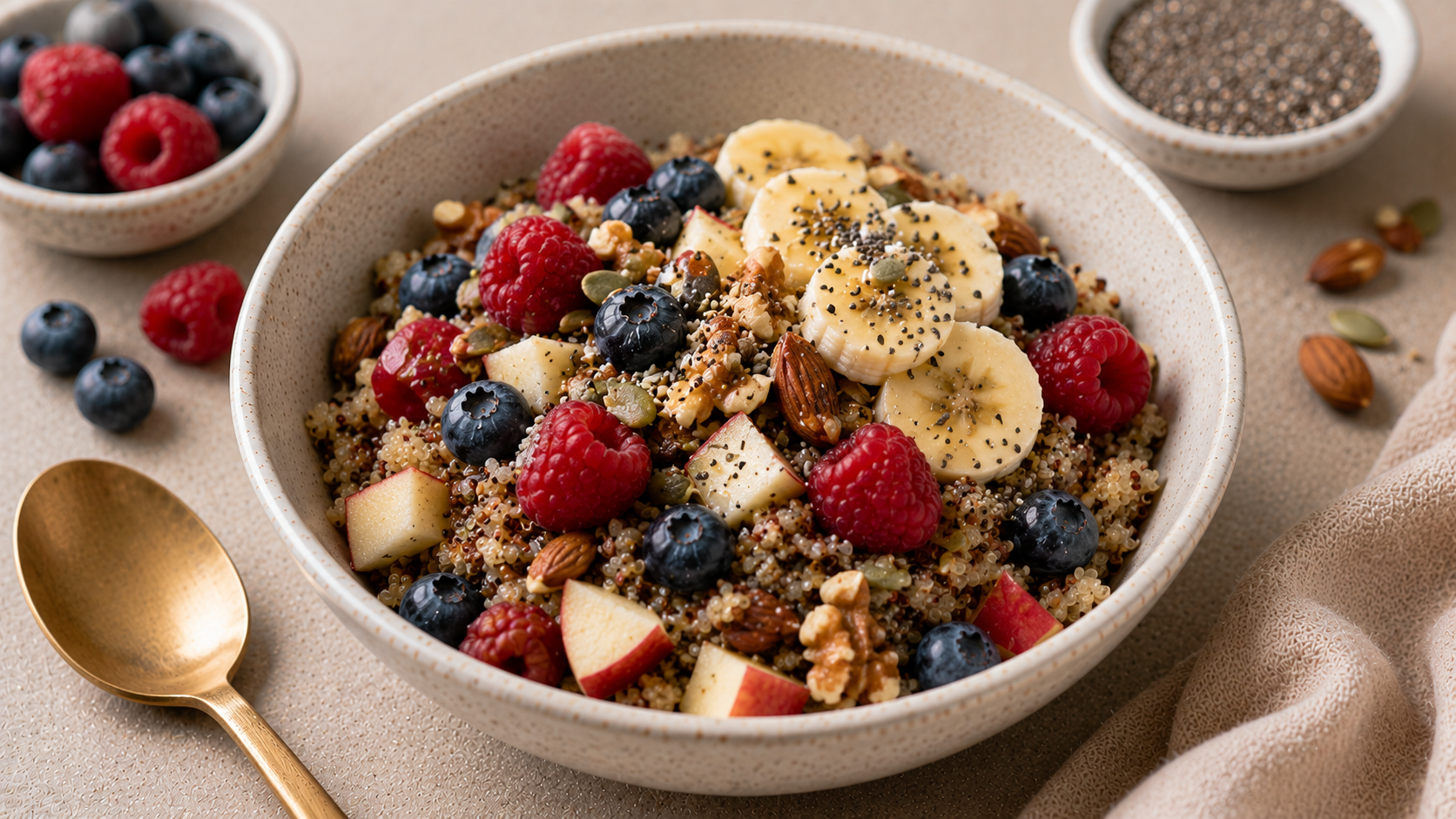
If constipation is the GLP-1 side effect quietly making your life miserable, this is the breakfast to have in your back pocket. A fruit and nut quinoa bowl packs 11g of fibre alongside plant protein and a proper hit of fruit. It is more of a weekend or make-ahead breakfast at 510 calories, but the fibre alone earns it a place in the rotation.
A quick word first: I am not a doctor or a dietitian, just someone who lived this. None of these foods or supplements are medication, and if you are on a GLP-1, check anything new with your GP or pharmacist. Right, let us get to it.
For more on fibre and digestion, see fibre on GLP-1, and for the wider morning plan, high-protein breakfasts on GLP-1.
Why a quinoa bowl earns its place
This is my go-to when digestion has ground to a halt, which on a GLP-1 happens more than anyone tells you.
11g of fibre is a lot for one meal. Fibre is the first thing to disappear when you eat less, and it is central to keeping things moving. A bowl like this front-loads it into your day.
Quinoa is a complete plant protein. Unusually for a grain it contains all the essential amino acids, so you get protein and slow-release carbs together.
Fruit and nuts add texture and staying power. The almonds bring healthy fats, the fruit brings flavour without needing much added sugar.
When a fibre-first breakfast makes sense
I keep this in the rotation specifically for the weeks my digestion has seized up, which on tirzepatide happened more often than I would like. When you can feel things have slowed, front-loading 11g of fibre first thing genuinely helps get the day moving. It is not a glamorous reason to eat something, but anyone who has been badly constipated on the jab will know it is a real quality-of-life issue.
It is also my choice on a big activity day. The slow-release carbs from the quinoa give steadier energy for a long walk or a busy day on my feet than a quick sugary breakfast that leaves me flat an hour later. Horses for courses — I would not eat this before a lie-in, but before a hike it is ideal.
The macros that matter
Here is what one serving gives you:
| Per serving | Amount |
|---|---|
| Calories | ~510 kcal |
| Protein | 12g |
| Carbohydrate | 66g |
| Fat | 24g |
| Fibre | 11g |
Those are the numbers I care about most, and the protein figure is the one to watch on a GLP-1. As a rough guide I aim for somewhere around 1.2 to 1.6g of protein per kilo of body weight across the day to protect muscle while losing fat, and I judge every meal by how much of that it contributes. I log meals like this in Cronometer (it is free) so I know I am actually hitting my targets rather than hoping — and honestly, the first time I tracked properly I realised I was eating far less protein than I thought. If you have never done it, give it two weeks; it is the single most useful thing you can do, and it costs nothing.
What you need (serves 1)
- ¼ cup dry quinoa
- ½ cup water
- 1 handful mixed berries
- ½ banana, sliced
- 1 kiwi, sliced
- 15–20g roasted almonds
- 1 tsp lemon juice
- 1 tsp honey or agave
- Optional: extra berries, desiccated coconut, cinnamon, or a spoon of Greek yoghurt
How to make it
- Rinse the quinoa well under cold water — this gets rid of the bitter coating.
- Tip it into a saucepan with the water and bring to the boil.
- Turn the heat down, cover, and simmer for 12–15 minutes until the water has been absorbed.
- Let it cool for a few minutes.
- Arrange the berries, banana and kiwi over the quinoa.
- Scatter the roasted almonds on top.
- Drizzle with lemon juice and a little honey or agave, then eat warm or chill for ten minutes first.
Making it a higher-protein bowl
At 12g of protein this is more of a fibre-and-energy breakfast than a protein one, so here is how I balance it:
Stir through Greek yoghurt. A couple of spoonfuls adds real protein and turns it creamy.
Add a scoop of collagen or protein. Hydrolysed Collagen stirs in without changing the flavour much. If you would rather a shake alongside, see best protein powder for GLP-1.
Watch the portion. At 510 calories this is a bigger breakfast, so on a quiet-appetite day, half a bowl is plenty.
The mistake people make with quinoa
The two things that put people off quinoa are both fixable. First, bitterness — that is the natural saponin coating, and a proper rinse under cold water before cooking sorts it completely. Second, a claggy, mushy texture, which comes from too much water or not letting it rest. Stick to roughly two parts water to one part quinoa, cover it, and let it sit off the heat for a few minutes at the end so it fluffs up. Get those two right and it is a completely different food.
Great for making ahead
This is one of the few breakfasts that is arguably better prepped. Cook a batch of quinoa at the start of the week, keep it in the fridge, and assemble bowls in two minutes each morning with fresh fruit on top. It stores well in a glass container for three to four days.
How it fits a full day of eating
Because this is a bigger, carb-and-fibre breakfast, I treat it as my main fuel of the morning and keep the rest of the day a little leaner on carbs to balance it. It sets me up well for an active day, so I will often pair it with a lighter, protein-focused high-protein lunch — the breakfast has done the energy job, so lunch just tops up protein.
On these days dinner tends to be protein and veg from my high-protein dinner list, keeping the day balanced overall. If I have trained, a protein shake afterwards helps recovery. The point is that no single meal has to do everything — this one covers fibre and morning energy, and the others fill the gaps. My complete GLP-1 guide explains how I structure a whole day around the jab.
No appetite this morning?
On a low-appetite morning a full 510-calorie bowl is a big ask, so scale it right down — even a few spoonfuls of quinoa with yoghurt counts. And when cooking is off the table entirely, having meals delivered ready to go keeps you on track; I use HelloFresh for that. See also what to eat with no appetite.
Supplements that pair well
Because the fibre is the star here, this pairs naturally with the rest of a gut-friendly routine. A daily probiotic like Pre + Pro 15 sits well alongside it, and if constipation is a real battle, my constipation on GLP-1 guide goes deeper. The free Lily & Loaf lifestyle analysis can point you to what suits you.
Frequently asked questions
Is quinoa good for weight loss?
It is a useful base — complete plant protein plus fibre and slow-release carbs. Portion still matters, since it is calorie-dense, but it keeps you fuller than most cereals.
Can I use frozen fruit?
Yes, and it is cheaper. Let it thaw or stir it through warm quinoa so it softens. Frozen berries are just as nutritious as fresh.
How do I stop quinoa tasting bitter?
Rinse it thoroughly before cooking. That washes off the natural saponin coating that causes the bitterness.
Is quinoa better than oats for breakfast?
Neither is better outright. Quinoa is a complete protein and gluten-free; oats are cheaper and higher in certain soluble fibres. I rotate both depending on the morning.
Can I meal-prep the whole bowl?
Cook the quinoa in batches and refrigerate it, but add the fresh fruit each morning so it does not go soft. Assembled bowls keep for a day; the quinoa base keeps three to four.
Is this suitable for a vegetarian or vegan diet?
Vegetarian as written, and easily vegan — use agave instead of honey and a plant yoghurt if adding one. The quinoa, fruit and nuts are all plant-based.
The bottom line
When digestion has stalled or you have a busy, active day ahead, a fruit and nut quinoa bowl earns its place with 11g of fibre and steady, slow-release energy. Balance the lighter protein with Greek yoghurt or a scoop of collagen and it becomes a genuinely complete breakfast. It is a bigger, more substantial start than most, so save it for the mornings that call for it. To match breakfasts like this to your own goals and gut, the free Lily & Loaf lifestyle analysis is the quickest way to cut through the noise.
The tools I lean on
If you are putting a GLP-1 routine together, this is the order I would do it in, free tools first:
- Track a fortnight of food in Cronometer so you can see your real protein and calories.
- Take the free Lily & Loaf lifestyle analysis to find the supplements actually worth buying.
- Start an Audible trial for something to listen to while you cook or walk.
- Keep HelloFresh on standby for the weeks cooking from scratch just is not happening.
A bit about me
I am Alan Spicer. I lost around seven stone on Mounjaro and filmed the whole thing, warts and all, on my YouTube channel. Protein-first, no-nonsense breakfasts like this were a real part of how I held onto muscle and kept the weight off.
This article shares my personal experience and general information only. It is not medical advice. Food and supplements support a balanced diet and healthy lifestyle and do not replace it or any treatment prescribed by your doctor. Speak to your GP or pharmacist before making changes, especially while on a GLP-1 medication.
Recipe adapted from the original Fruit & Nut Quinoa at Lily & Loaf.
Discover more from Healthy Weight Loss GLP1
Subscribe to get the latest posts sent to your email.