
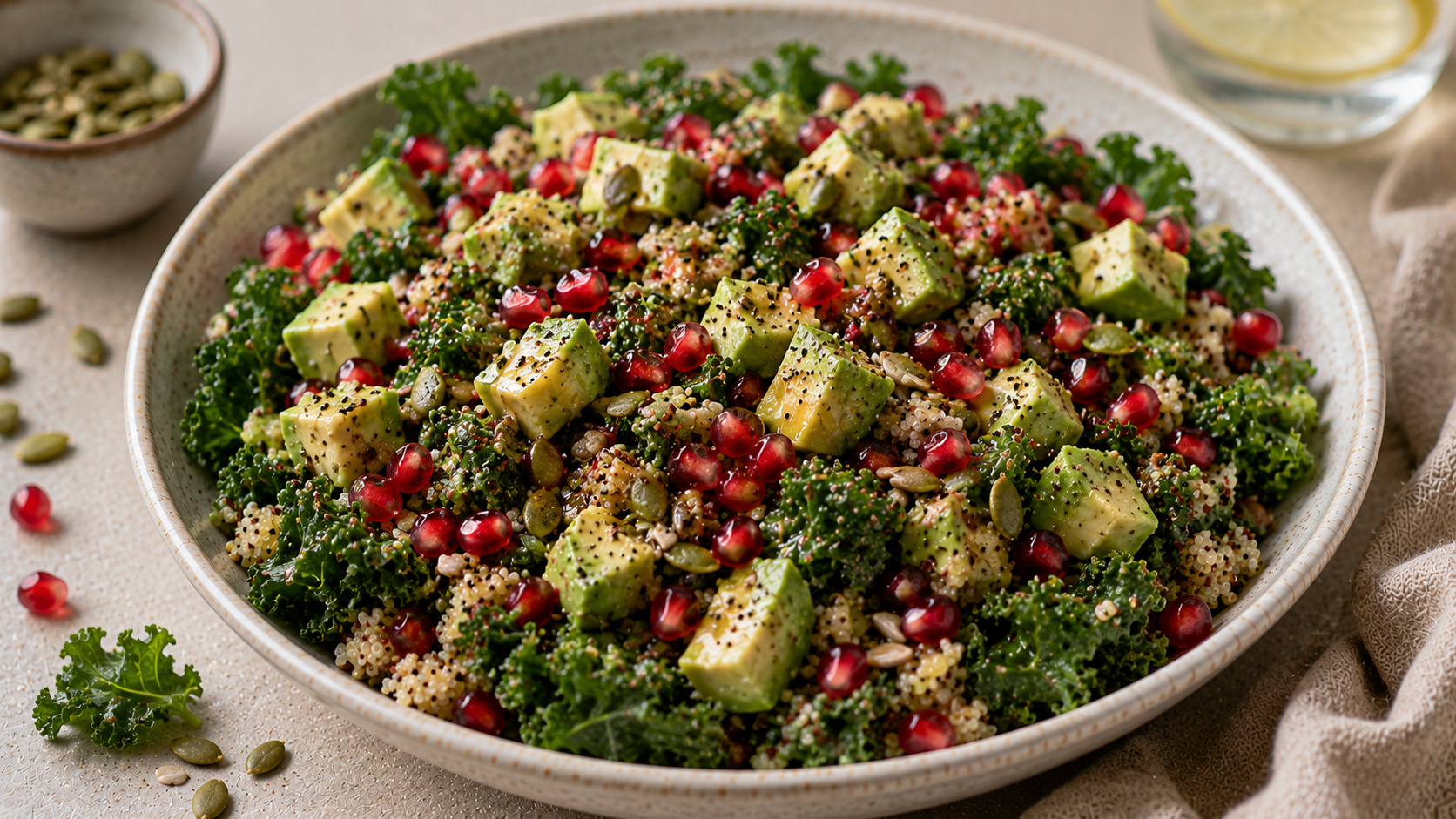
This is the salad I make when I want to pack as much good stuff as possible into one bowl. A superfoods salad loaded with kale, quinoa, seeds, avocado and pomegranate, it delivers a brilliant 11g of fibre and a genuine spread of nutrients for around 360 calories. It is the kind of nutrient-dense power lunch that leaves you feeling like every mouthful is doing you good.
A quick word first: I am not a doctor or a dietitian, just someone who lived this. None of these foods or supplements are medication, and if you are on a GLP-1, check anything new with your GP or pharmacist. Right, let us get to it.
For why fibre and nutrients matter when you eat less, see fibre on GLP-1, and for the full plan, my complete GLP-1 guide.
Why a nutrient-dense salad matters on a GLP-1
When you eat less, every meal has to work harder nutritionally, and this one really does.
Maximum nutrition per mouthful. On a GLP-1 you are eating smaller portions, so nutrient-dense foods like kale, seeds and quinoa help you get what you need from less food.
11g of fibre in one bowl. Between the kale, quinoa, seeds and pomegranate, this is a serious fibre hit that keeps your digestion moving.
A genuine variety of nutrients. Different colours mean different nutrients, and this bowl is deliberately varied — a proper spread of vitamins, minerals and antioxidants.
Why ‘eat the rainbow’ actually matters when you’re eating less
The advice to eat a variety of colourful vegetables sounds like a cliche, but on a GLP-1 it takes on real importance. When your total food intake drops as much as it does on the jab, the risk is not just being short on protein — it is quietly missing out on the range of vitamins and minerals your body needs, simply because you are eating less of everything. A deliberately varied, colourful bowl like this is insurance against that.
The word superfood is largely marketing — there is no official definition and no single food is magic. But the principle behind this salad is sound: pack in a wide variety of nutrient-dense, colourful whole foods so that even a smaller portion delivers a broad spread of what you need. Kale for one set of nutrients, pomegranate for another, seeds for healthy fats and minerals, quinoa for protein and fibre. It is not about any one hero ingredient, it is about the variety. On a reduced appetite, that variety is genuinely worth being deliberate about.
The macros that matter
Here is roughly what one serving gives you. Treat these as a guide rather than gospel, since it depends on your exact ingredients and portions:
| Approx per serving | Amount |
|---|---|
| Calories | ~360 kcal |
| Protein | 14g |
| Carbohydrate | 34g |
| Fat | 20g |
| Fibre | 11g |
The protein figure is the one I watch on a GLP-1. As a rough guide I aim for somewhere around 1.2 to 1.6g of protein per kilo of body weight across the day to protect muscle while losing fat, and I judge every meal by how much of that it contributes. I log meals like this in Cronometer (it is free) so I know I am actually hitting my targets rather than hoping. The first time I tracked properly I realised I was eating far less protein than I thought, so if you have never done it, give it two weeks.
What you need (serves 1)
- 2 handfuls of kale, finely shredded and massaged
- 60g cooked quinoa
- ½ avocado, diced
- 2 tbsp mixed seeds
- 2 tbsp pomegranate seeds
- ¼ cucumber, diced
- A handful of cherry tomatoes, halved
- 1 tbsp olive oil
- Juice of ½ lemon
- Salt and black pepper
How to make it
- Put the shredded kale in a bowl, add a little of the olive oil and lemon, and massage it with your hands for a minute — this softens the kale and takes away the toughness.
- Add the cooked quinoa to the softened kale.
- Add the diced avocado, cucumber and tomatoes.
- Scatter over the mixed seeds and pomegranate seeds.
- Whisk the remaining olive oil and lemon with salt and pepper, and drizzle over.
- Toss everything together and serve — the pomegranate adds little bursts of sweetness throughout.
Boosting the protein
At 14g the quinoa and seeds give this a decent base, and it builds up well:
Add grilled chicken or salmon. Either takes it to a 30g-plus power lunch.
Add chickpeas or edamame. For a plant-based protein and extra fibre boost.
Add feta. A salty, protein-rich finish that suits the pomegranate beautifully. See how much protein per day.
The kale trick that changes everything
Raw kale has a bad reputation, and it is deserved if you eat it straight from the bag — tough, bitter and chewy. But there is a simple trick that transforms it, and it is the difference between a salad you endure and one you enjoy. Massage it. Shred the kale finely, add a little oil and lemon or a pinch of salt, and scrunch it with your hands for a minute. You will actually feel it soften and darken as you do it. The massaging breaks down the tough fibres and mellows the bitterness, leaving you with tender, tasty kale that holds up brilliantly in a salad and does not wilt the way delicate leaves do. It is thirty seconds of effort that completely changes the result, and it is why kale, once you know this, is one of the best salad bases going — sturdy, nutrient-packed and prep-friendly.
A rare salad that keeps
Because massaged kale is sturdy rather than delicate, this is one of the few leafy salads that holds up for meal prep — it keeps for two to three days in the fridge without wilting, and if anything the flavours improve. Add the avocado and seeds fresh for the best texture. Cook the quinoa in a batch and this becomes a quick assembly. A brilliant, sturdy option for my meal prep ideas for Mounjaro.
How it fits a full day of eating
At 14g of protein and 11g of fibre, this is a nutrient-dense, balanced lunch that pulls good weight, especially on fibre. I still aim for a protein-solid breakfast from my high-protein breakfasts and a proper high-protein dinner, but a bowl this varied covers a lot of my daily nutrient and fibre needs at once.
Add chicken, salmon or chickpeas and it becomes a complete high-protein power lunch. a protein shake is there as a backstop. This is exactly the kind of nutrient-dense lunch that makes eating well on a reduced appetite far easier — my complete GLP-1 guide explains how I plan around it.
No appetite today?
This is a hearty, textured salad, so on a genuinely low-appetite day it may be more than you can face — a warm soup or HelloFresh bringing a ready meal might sit easier. On a slightly-off day, a few forkfuls still deliver an excellent spread of nutrients and fibre. More in what to eat with no appetite.
Supplements that pair well
This is one of the most nutrient-dense lunches you can eat, so it does a lot of the work itself, but I still take Super Omega-3 EPA for omega-3 and a probiotic like Pre + Pro 15 to complement all that fibre. For anyone worried about gaps on a reduced appetite, the free Lily & Loaf lifestyle analysis is a genuinely useful check.
Frequently asked questions
What actually makes a food a superfood?
Honestly, marketing — there is no official definition and no single food is magic. The real value here is the variety of colourful, nutrient-dense whole foods in one bowl, which matters more than any single hero ingredient.
How do I make raw kale nicer to eat?
Massage it — shred it finely, add a little oil and lemon, and scrunch with your hands for a minute. It softens, mellows and becomes genuinely enjoyable. This one trick transforms kale salads.
How do I make it a complete meal?
Add grilled chicken, salmon, chickpeas or feta. At 14g the base is decent, and a protein addition takes it to a proper 30g-plus power lunch.
Does it keep for meal prep?
Yes, unusually well for a leafy salad, because massaged kale is sturdy — two to three days in the fridge. Add avocado and seeds fresh for the best texture.
Is pomegranate worth including?
It adds lovely bursts of sweetness and a different set of antioxidants and nutrients, all for very little. It lifts the whole bowl and is well worth it, but any berry works if you prefer.
The bottom line
The superfoods salad is a nutrient-dense power lunch — 11g of fibre, a genuine spread of vitamins and minerals, and lasting energy for around 360 calories. On a reduced GLP-1 appetite, packing this much variety into one bowl is real insurance for your nutrition. Master the kale-massaging trick and add a protein to make it complete. To check for any gaps on a smaller appetite, the free Lily & Loaf lifestyle analysis is a genuinely useful, no-pressure tool.
The tools I lean on
If you are putting a GLP-1 routine together, this is the order I would do it in, free tools first:
- Track a fortnight of food in Cronometer so you can see your real protein and calories.
- Take the free Lily & Loaf lifestyle analysis to find the supplements actually worth buying.
- Start an Audible trial for something to listen to while you cook or walk.
- Keep HelloFresh on standby for the weeks cooking from scratch just is not happening.
A bit about me
I am Alan Spicer. I lost around seven stone on Mounjaro and filmed the whole thing, warts and all, on my YouTube channel. Simple, protein-first lunches like this were a real part of how I held onto muscle and kept the weight off.
This article shares my personal experience and general information only. It is not medical advice. Food and supplements support a balanced diet and healthy lifestyle and do not replace it or any treatment prescribed by your doctor. Speak to your GP or pharmacist before making changes, especially while on a GLP-1 medication. Nutrition figures are approximate and will vary with the exact ingredients and brands you use.
Inspired by the kind of fresh, wholefood lunches in the Lily & Loaf lunches collection. This is my own version, written from my own kitchen.
Discover more from Healthy Weight Loss GLP1
Subscribe to get the latest posts sent to your email.