
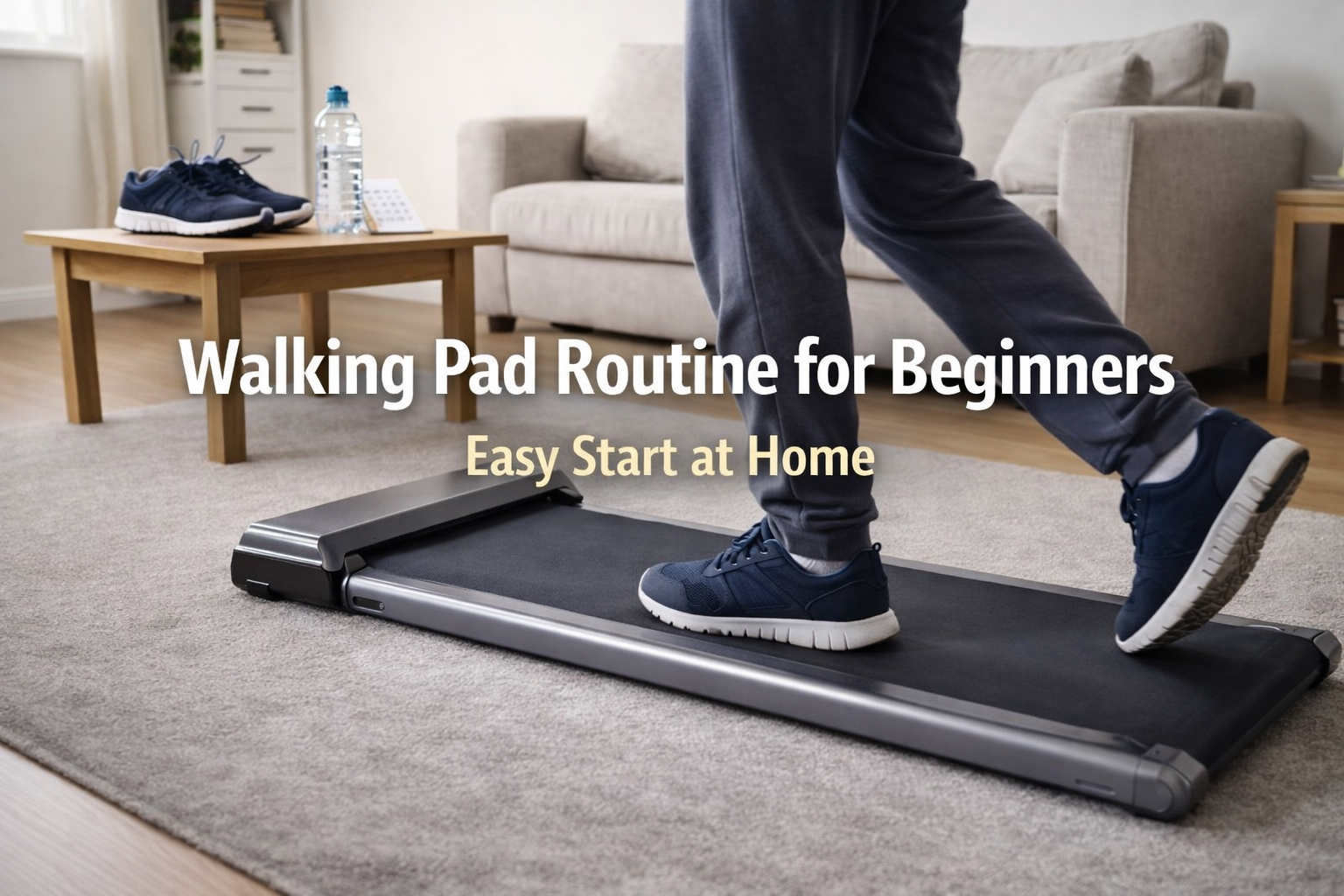
Walking Pad Routine for Beginners at Home
The best walking pad routine for beginners at home is one that feels easy enough to repeat. Start with 10 to 20 minutes at a comfortable walking pace, focus on consistency before speed, and build up gradually as the habit becomes normal. You do not need a complicated plan. You need a routine that fits your life well enough to keep doing it.
That is the bit many people miss. Beginners often think the goal is to find the perfect workout plan. In reality, the goal is to create a walking habit that feels realistic in your home, your schedule, and your energy levels. Once the habit is there, you can always build on it.
Jump to:
Why trust this guide?
I write these walking pad guides from the angle of realistic home movement, not fantasy fitness. My own serious weight-loss journey started after reaching around 27 stone, so I care much more about routines you can repeat than plans that look impressive for two days and then disappear.
That is why this beginner guide is deliberately simple. If you are new to walking pads, the goal is not to smash yourself. It is to build trust with the routine. You can read more about me here, and if you want support with food habits alongside movement, you can also grab my free meal plan here.
Quick answer
If you are a beginner, start with 10 to 20 minutes at an easy pace, three to five times a week. Once that feels normal, build toward daily walking or slightly longer sessions.
You do not need to start fast. You do not need to start long. You do not need to “earn” a walking pad by already being fit. The best beginner routine is the one that gets you moving without turning every session into a chore.
Why simple routines work better for beginners
Most beginners do better with a routine that feels almost too easy at first.
That is not because easy is weak. It is because habits grow better when they do not feel like punishment. Public-health guidance already points in the right direction here: adults should be active every day where possible, every minute counts, and even brisk 10-minute walks have benefits. That means a simple beginner routine is not “cheating.” It is a sensible starting point.
If you are using a walking pad at home, especially in a small space or around work and family life, low-friction consistency is usually a much bigger win than intensity.
Best walking pad routine to start with
If you want the easiest place to begin, start here:
Starter routine
- 5 minutes easy pace
- 5 to 10 minutes steady walking
- 2 to 5 minutes easy finish
That gives you a session of roughly 12 to 20 minutes depending on where you are starting from. It is long enough to count, short enough to feel manageable, and flexible enough to repeat.
If even that feels like too much, start with 10 minutes. If it feels fine, build toward 20. The point is to make the next session easier to say yes to.
What speed should beginners use on a walking pad?
Beginners should usually start at a pace that feels comfortable and controlled rather than impressive.
You want a pace where you feel like you are genuinely walking, but not so fast that you tense up, shorten your session, or resent doing it. A lot of people make the mistake of trying to turn a walking pad into a cardio test too early. That is how routines die.
A better beginner speed mindset
- Easy pace: good for warming up, cooling down, and nervous beginners
- Steady pace: ideal for most beginner sessions
- Brisker pace: useful later, once the habit feels normal
If you are new, “I could keep doing this a bit longer” is usually the sweet spot. That is a much better sign than finishing every session gasping or desperate to be done.
How often should beginners use a walking pad?
For most beginners, three to five times a week is a strong place to start.
If you feel good and the sessions are short and gentle, daily walking can also work very well. But you do not need to force seven perfect days straight away. The real goal is to make walking feel normal in your week.
A simple frequency ladder
- Week 1: 3 sessions
- Week 2: 4 sessions
- Week 3: 4 to 5 sessions
- Week 4: keep 4 to 5 sessions or move towards daily short walks if it feels easy
If you miss a day, that is not failure. It is just normal life. Restart the next day and keep going.
How long should beginners walk?
Ten to 20 minutes is usually the sweet spot for beginners.
That is long enough to feel like a real session, but not so long that it becomes mentally heavy. It also lines up well with current public-health messaging that every minute counts and short sessions still matter.
Your newly live post on whether 20 minutes a day is enough goes deeper into that question, but the short version is simple: 10 minutes is a fine place to start, and 20 minutes is a very solid beginner target.
A simple 7-day beginner walking pad plan
Day 1
10 minutes easy walking. The only goal is to get used to the machine.
Day 2
Rest or a short 5 to 10 minute easy walk if you want to keep momentum.
Day 3
12 to 15 minutes total: 5 minutes easy, 5 minutes steady, 2 to 5 minutes easy.
Day 4
Rest, or use the walking pad for a short work break if that feels easier.
Day 5
15 minutes steady walking at a comfortable pace.
Day 6
10 to 20 minutes while listening to a podcast, watching TV, or doing a light routine you enjoy.
Day 7
Rest or a short confidence-building walk. Finish the week feeling capable, not wrecked.
This is not meant to be a bootcamp. It is meant to teach your brain that walking at home is normal, manageable, and worth repeating.
How to progress without quitting
Once the routine starts to feel normal, build one small thing at a time.
You can progress by:
- adding 2 to 5 minutes to a session
- adding one extra walking day per week
- walking slightly more briskly for part of the session
- splitting sessions into two smaller chunks on busy days
What you do not need to do is jump from beginner walking straight into “I now walk hard every day for an hour.” Progress that feels too dramatic usually does not last.
Can beginners lose weight with a walking pad?
Yes, walking pads can absolutely support weight loss for beginners.
Not because they are magic, but because they make daily movement easier to repeat. If you are currently sedentary, even modest regular walking can support calorie expenditure, routine-building, and consistency. That is often more valuable than sporadic intense exercise you cannot maintain.
For the full version of that argument, read Can a Walking Pad Help You Lose Weight?.
Beginner routine ideas for different real-life situations
If you work from home
Use your walking pad before logging on, at lunch, or during lighter admin tasks. You do not need to walk through every task to make it worthwhile.
If you are heavier or nervous starting out
Keep the pace calm and focus on comfort and confidence first. If you need more support choosing the right machine, read Best Walking Pad for Heavy People in the UK.
If you live in a small flat
Lean into short, quiet sessions that fit your room and your neighbours. Your best companion post here is Best Quiet Walking Pads for UK Flats and Small Spaces.
If you want to work while walking eventually
First learn to walk on the machine comfortably. Then consider lighter desk tasks. Do not try to master both on day one. See Can You Work While Using a Walking Pad?.
Common beginner mistakes
- Starting too hard. A routine that feels brutal is much less likely to survive.
- Walking too fast too soon. Comfort and confidence come first.
- Expecting instant transformation. The goal is momentum, not miracles.
- Buying a machine that does not fit your room. Storage friction kills consistency.
- Thinking short sessions do not count. They do.
Best walking pad type for beginners at home
Most beginners do better with a simple, compact walking pad rather than a full treadmill. You usually do not need huge speed or lots of complicated features. You need something easy to step on, easy to store, and easy to live with.
That is why walking pads are so appealing for beginners. They lower the barrier to starting. If you are still deciding what specs matter most, read Walking Pad Buying Guide: Weight Capacity, Speed, Belt Size and Storage.
See WalkingPad UK options here
My honest take
If you are a beginner, do not overcomplicate this.
Start with a short walk. Keep the pace easy. Repeat it often enough that it starts to feel normal. That is how a walking pad becomes useful. Not by chasing perfect sessions, but by making movement feel ordinary and doable at home.
For a lot of people, that shift is far more valuable than any fancy routine.
People also ask
What is a good walking pad routine for beginners?
A good beginner routine is 10 to 20 minutes at a comfortable pace, three to five times a week, gradually building up as the habit becomes easier.
How long should beginners walk on a walking pad?
Most beginners do well starting with 10 to 20 minutes. It is long enough to matter without feeling overwhelming.
What speed should a beginner use on a walking pad?
Beginners should use a steady, comfortable walking speed that feels controlled rather than intense.
Is it okay to use a walking pad every day?
Yes, many beginners can use a walking pad daily if the sessions are short and comfortable. The key is keeping the routine sustainable.
Can beginners use a walking pad for weight loss?
Yes. It can support weight loss by helping beginners move more consistently and build a habit they can maintain.
How do I build a walking habit at home?
Start small, attach walking to something you already do, and make the routine easy enough to repeat even on low-motivation days.

FAQ
How should a beginner start using a walking pad?
Start with short sessions at a comfortable pace and focus on getting used to the machine before trying to increase speed or time.
Should beginners use a walking pad every day?
They can, but it is also fine to start with three to five sessions a week and build from there.
Is 10 minutes enough to start?
Yes. Ten minutes is a perfectly good starting point if that is what feels manageable.
Can I split my walking pad routine into shorter sessions?
Yes. Two short sessions can work very well, especially on busy days.
Is a walking pad good for beginners at home?
Yes. For many beginners, a walking pad is one of the easiest ways to build movement into home life without needing a full workout setup.
How do I know when to progress?
Progress when the current routine feels normal, calm, and repeatable. Add a little time, a little pace, or an extra day rather than changing everything at once.
Related reading
- Is 20 Minutes a Day on a Walking Pad Enough?
- Can a Walking Pad Help You Lose Weight?
- Can You Work While Using a Walking Pad?
- Walking Pad Buying Guide: Weight Capacity, Speed, Belt Size and Storage
- Best Walking Pads in the UK
- Best Under-Desk Treadmill for Working From Home (UK)
- Best Walking Pad for Heavy People in the UK
Friendly note: This article is based on public-health guidance, product research, and lived experience rather than personal medical advice. If you have pain, balance issues, or medical concerns about exercise, get personalised advice before starting a new routine.
Discover more from Healthy Weight Loss GLP1
Subscribe to get the latest posts sent to your email.