
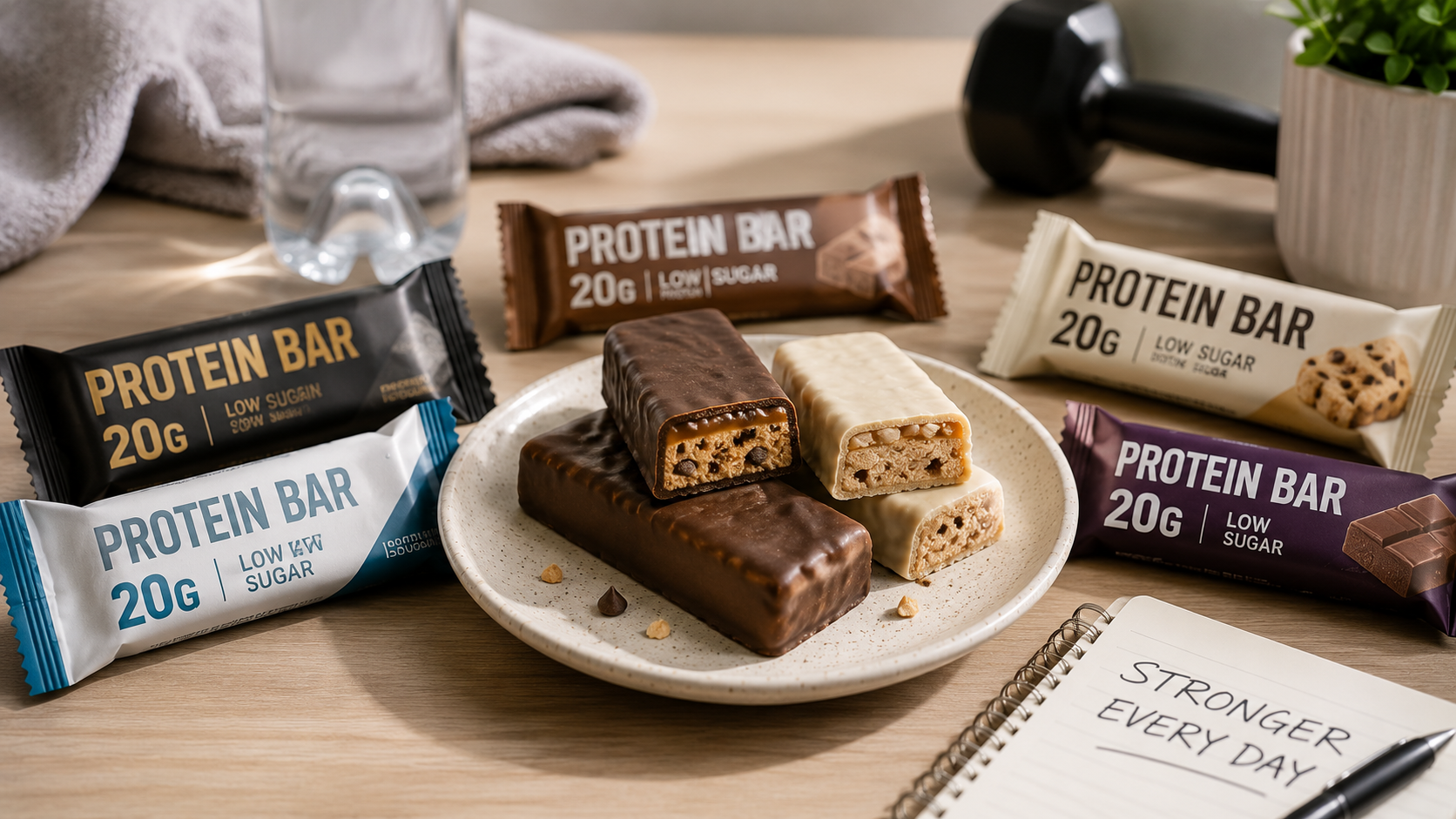
Protein bars are one of the most useful tools in a GLP-1 user’s nutrition kit — they deliver 15–25g protein in a form that requires no cooking, no appetite, and no decision-making. On injection days when nausea makes a full meal unappealing, a protein bar that goes down easily represents 20% of your daily protein target in two minutes. Not all protein bars are equal: some are effectively glorified chocolate bars with a protein label. This guide identifies the genuinely useful ones available in the UK and the specific features that matter for Mounjaro users.
For the full protein picture: How to Get Enough Protein on GLP-1 UK. For tracking: How to Track Macros on Mounjaro UK.
What matters in a protein bar for GLP-1 users
Not all protein is equal in a bar, and not all bars work the same way on a medication that already alters taste perception and GI sensitivity.
Protein content per 100g (not per bar): compare protein as a percentage of total weight. Bars with 20g protein in 60g bar = 33% protein. Bars with 20g protein in 100g bar = 20% protein. Higher protein density means more protein per bite — useful when appetite is low.
Protein quality: whey, casein, egg white, and pea protein are all high-quality complete proteins. Collagen protein is lower quality (limited essential amino acid profile) and is used in some bars to inflate the protein number cheaply. Check the ingredient list for the protein source.
Fibre content: 3g+ of fibre per bar is useful for GLP-1 users where constipation is a common issue. Many bars add chicory root fibre (inulin) — good for gut health but can cause bloating in sensitive individuals, which on an already-sensitised GI system can be uncomfortable.
Sugar alcohol content: maltitol, xylitol, sorbitol are common sweeteners in “low sugar” protein bars. They cause GI distress (gas, loose stools) in many people, and this effect is amplified on a GLP-1 with slowed gastric emptying. Bars sweetened with stevia, sucralose, or erythritol are generally better tolerated. Avoid bars with maltitol specifically if you’re GI-sensitive.
Calorie density: many protein bars sit at 200–250 kcal. On a GLP-1 where total daily intake may be 1,200–1,500 kcal, a 250 kcal protein bar represents 15–20% of daily intake. The calorie count matters more than it would pre-medication.
Palatability when nauseous: this is highly individual, but soft/chewy textures generally fare better than crispy bars during nausea phases. Very sweet bars are often poorly tolerated at peak side-effect times.
Best protein bars UK 2026: the GLP-1-specific shortlist
Best overall: Grenade Carb Killa
The UK’s most popular protein bar brand for good reason. 20–23g protein per 60g bar, 5–7g sugar, 200–215 kcal. Sweetened with sucralose (better GI tolerance than maltitol). Widely available in UK supermarkets (Tesco, Sainsbury’s, Asda, Boots, Holland & Barrett). Soft texture works reasonably well on low-appetite days. Broad flavour range means finding one that works during taste-change phases.
Check Grenade Carb Killa multipack pricing on Amazon UK.
Best texture for nausea days: Fulfil Vitamin and Protein Bar
30g protein per 55g bar (55% protein by weight — among the highest density in UK retail). Multiple vitamin and mineral additions including B vitamins relevant to GLP-1 users. Chocolate-coated exterior with soft interior. Slightly higher price than Grenade but the protein density justifies it for days when only a small amount of food is tolerable. Available in major UK supermarkets.
Best budget: MyProtein Layered Bar
17–20g protein, 200–230 kcal, approximately £2.50 per bar (vs £2.80–3.50 for Grenade and Fulfil in supermarkets). Equivalent nutritional profile at lower cost. Available primarily online through MyProtein and Amazon. Less convenient than supermarket bars but good for weekly batch ordering.
Check MyProtein bar pricing on Amazon UK.
Best for sensitive GI systems: Barebells Protein Bar
20g protein, 198 kcal, notable for using a proprietary sweetener blend that tends to cause less GI distress than many alternatives. Swedish brand, widely available in UK. Smooth texture and less intensely sweet than some competitors — better tolerated on GLP-1 taste-change days. The Cookies and Cream flavour is most commonly reported as GI-friendly.
Best natural ingredients: Trek Protein Flapjack
Oat-based, using natural ingredients rather than synthetic sweeteners. 10–13g protein per 50g bar — lower than the above options but with slower-releasing carbohydrates, genuine fibre, and no artificial sweeteners. Best choice for users who prefer whole-food based snacking over manufactured protein bars. Slightly higher sugar content than whey-based bars but from natural sources (dates, honey).
Best for satiety: PhD Smart Bar
20g protein, 4–7g fibre, 200 kcal. The higher fibre content makes it more filling than lower-fibre alternatives of similar protein content. Useful when you need a bar to genuinely function as a meal replacement on a difficult day rather than just a snack. Widely available in Boots and online.
Bars to avoid on a GLP-1
Bars with maltitol as primary sweetener: SCI-MX, some cheap own-brand bars. Maltitol causes significant GI distress at the amounts used in protein bars — cramping, bloating, loose stools. This effect is amplified by GLP-1 GI sensitivity.
“Protein” bars with under 15g protein: some bars marketed as “high protein” contain only 8–12g protein. Check the label. For a GLP-1 user with reduced overall food intake, a bar needs to deliver at least 15g protein to justify the calorie spend.
Very high sugar bars: some “natural” protein bars use dates and fruit as the primary ingredient, with added whey to get to 10g protein. Total sugar can be 25–35g per bar. On a GLP-1 where blood sugar management is active, these defeat part of the purpose.
When protein bars help most on Mounjaro
Specific situations where a protein bar is more useful than whole food:
- Injection day and the following day (nausea makes cooking unappealing; bar requires no preparation)
- Mid-morning on low-appetite days when breakfast protein was inadequate
- Post-training when the exercise-suppressed GLP-1 appetite makes eating a full meal feel impossible
- Travel days when food choices are constrained
- Long meetings or work situations where a proper meal isn’t possible
Protein bars vs whole food protein
Protein bars are a supplement to whole food protein, not a replacement for it. Whole food sources (chicken, eggs, Greek yoghurt, fish, legumes) provide a broader micronutrient package, better satiety per calorie, and more varied amino acid profiles than most bars. Log both in Cronometer and aim for whole food protein at two of three daily meals, using bars for the third meal or snacks where preparation is genuinely not feasible.
Cost-per-gram-of-protein comparison
| Product | Protein per bar | Cost per bar | Cost per 10g protein |
|---|---|---|---|
| Grenade Carb Killa (multipack) | 20g | ~£1.80 | ~£0.90 |
| Fulfil | 30g | ~£2.50 | ~£0.83 |
| MyProtein Layered (online) | 18g | ~£1.80 | ~£1.00 |
| Barebells | 20g | ~£2.20 | ~£1.10 |
| PhD Smart Bar | 20g | ~£2.00 | ~£1.00 |
For comparison: Greek yoghurt (200g, ~20g protein) costs approximately £0.80 = ~£0.40 per 10g protein. Protein bars are more expensive per gram of protein than whole food sources, which is expected given the convenience premium.
Frequently asked questions
Are protein bars good for weight loss on Mounjaro?
They’re a useful tool for hitting protein targets on days when appetite is very low or cooking isn’t feasible. They’re not superior to whole food protein for weight loss — but they’re significantly better than not eating protein at all on difficult days.
How many protein bars can I have per day on Mounjaro?
One to two maximum, with the rest of daily protein coming from whole food sources. Three or more bars daily means most of your protein is from processed food, which limits micronutrient diversity and can cause GI issues (particularly from accumulating sweetener load).
Which protein bars are best for sensitive stomachs on Mounjaro?
Barebells and Fulfil are generally reported as the best tolerated. Avoid bars with maltitol. On nausea days, try soft-textured bars like Grenade or a small portion of a bar rather than a full bar at once.
Amazon links in this post are affiliate links (tag=mrh04-21). Prices are indicative and subject to change.
Protein bars as part of your weekly nutrition plan
The most useful way to integrate protein bars is as a planned component of your weekly nutrition strategy rather than an emergency snack when you’ve not eaten enough. Knowing in advance which days you’ll use a bar — injection day, busy Tuesday, post-training — means you buy the right quantity and log them in your plan in Cronometer before the day begins.
A practical weekly protein bar budget for GLP-1 users:
- Injection day: 1 bar as a meal substitute at lunch when cooking motivation is zero
- Post-training days: 1 bar as post-workout protein hit within 2 hours of training
- Busy weekday: 1 bar as backup if a planned protein meal doesn’t happen
That’s a maximum of 3–4 bars per week, with the remaining protein coming from whole food sources. At supermarket prices (Grenade multipack around £1.80 each), this adds approximately £6–7 weekly to food budget — reasonable for the convenience and protein it provides.
For users who eat HelloFresh dinners three nights per week, covering 35–45g protein per dinner, the remaining protein target for those days can often be met with a breakfast of Greek yoghurt and a bar as a mid-morning snack — no additional cooking required and the full daily protein target is within reach even on zero-motivation days. See HelloFresh UK (50% off first box) for the dinner component of this approach.
Discover more from Healthy Weight Loss GLP1
Subscribe to get the latest posts sent to your email.