
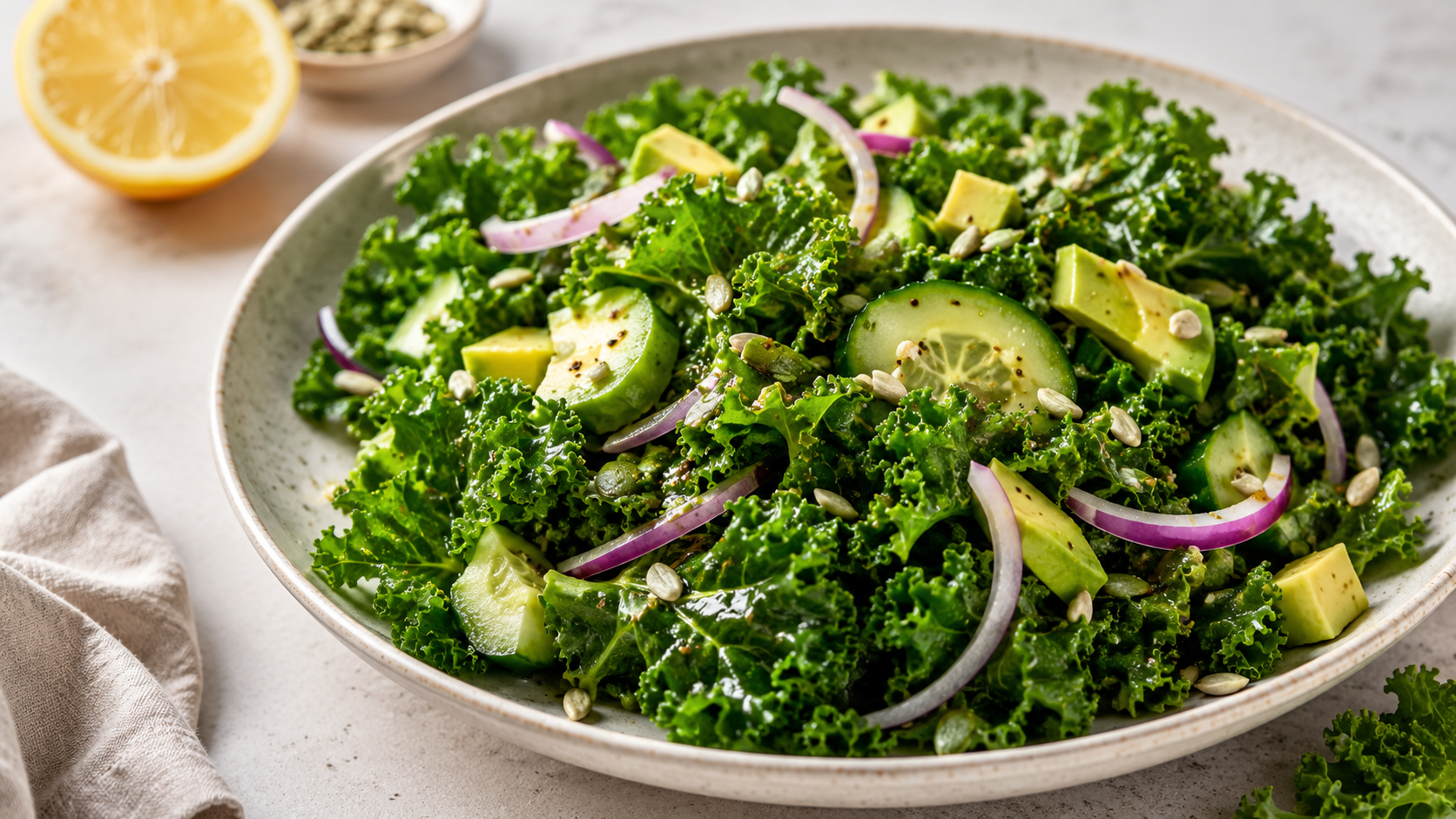
Kale has a reputation as worthy but tough, and this massaged kale salad is here to change your mind. A simple trick transforms raw kale from chewy and bitter into tender and delicious, and dressed with lemon, olive oil and a scatter of seeds, it makes a nutrient-dense, sturdy side that actually gets better as it sits. At around 160 calories a serving, it is one of the most nutritious sides you can put on a GLP-1 plate.
A quick word first: I am not a doctor or a dietitian, just someone who lived this. None of these foods or supplements are medication, and if you are on a GLP-1, check anything new with your GP or pharmacist. Right, let us get to it.
For why nutrients and fibre matter when you eat less, see fibre on GLP-1, and for the wider plan, my complete GLP-1 guide.
Why kale is worth persevering with
Kale earns its superfood reputation, and once you know how to prepare it, it is genuinely enjoyable.
Seriously nutrient-dense. Kale is one of the most nutritious greens going, packed with vitamins, minerals and antioxidants for very few calories — ideal when you are eating smaller portions.
Sturdy enough to keep. Unlike delicate leaves, massaged kale holds up for days without wilting, which makes it a rare salad you can properly batch-prep.
Good fibre from a leafy green. Kale brings more substance and fibre than most salad leaves, making this a more filling, satisfying side.
The massage trick that transforms kale
If you have tried raw kale and found it tough, chewy and bitter, I do not blame you for writing it off — but the problem was not the kale, it was how it was prepared. There is a simple, almost magical trick that transforms raw kale completely, and once you know it, this nutritional powerhouse becomes genuinely enjoyable to eat. The trick is to massage it. It sounds odd, but bear with me. You take your shredded raw kale, add a little olive oil and a squeeze of lemon juice or a pinch of salt, and then you literally scrunch and massage it with your hands for a minute or two. As you do this, something remarkable happens: you can actually feel and see the kale change. The tough, stiff leaves soften and darken, becoming tender, silky and much more pleasant to eat, and the harsh bitterness mellows into something sweeter and more palatable. The massaging physically breaks down the tough cell walls and fibres that make raw kale so chewy, and the oil and acid help tenderise it further. In just a minute of effort, you go from tough, bitter leaves that nobody wants to eat to tender, tasty greens that make a genuinely lovely salad.
This one technique unlocks kale as a brilliant salad base, and it is well worth adding to your repertoire on a GLP-1, because kale is exceptionally nutrient-dense — exactly what you want when you are eating smaller portions and need every mouthful to count. It is also far sturdier than delicate salad leaves, which means, uniquely among salads, a massaged kale salad actually keeps and even improves over a day or two in the fridge rather than wilting into a soggy mess. That makes it one of the very few salads you can genuinely batch-prep, which is hugely useful for having a healthy side ready to go. So do not give up on kale after one tough, bitter experience — give it a proper massage, and you will discover why it deserves its superfood reputation, and how enjoyable it can actually be.
The macros that matter
Here is roughly what one serving gives you. Treat these as a guide rather than gospel, since it depends on your exact ingredients and portions:
| Approx per serving | Amount |
|---|---|
| Calories | ~160 kcal |
| Protein | 5g |
| Carbohydrate | 12g |
| Fat | 11g |
| Fibre | 4g |
The protein figure is the one I watch on a GLP-1. As a rough guide I aim for somewhere around 1.2 to 1.6g of protein per kilo of body weight across the day to protect muscle while losing fat, and I judge every meal by how much of that it contributes. I log meals like this in Cronometer (it is free) so I know I am actually hitting my targets rather than hoping. The first time I tracked properly I realised I was eating far less protein than I thought, so if you have never done it, give it two weeks.
What you need (serves 1)
- 200g kale, tough stems removed and leaves shredded
- 1 tbsp olive oil
- Juice of ½ lemon
- 1 tsp Dijon mustard (optional, for the dressing)
- A pinch of salt
- 2 tbsp mixed seeds
- A handful of dried cranberries or pomegranate seeds
- Optional: shaved parmesan or crumbled feta
How to make it
- Put the shredded kale in a large bowl with the olive oil, lemon juice and a pinch of salt.
- Massage it firmly with your hands for 1–2 minutes, until the leaves soften, darken and turn silky — you will feel the change.
- Whisk the Dijon into any remaining lemon and oil for a little extra dressing if you like, and toss through.
- Scatter over the mixed seeds and the cranberries or pomegranate.
- Add shaved parmesan or crumbled feta if using.
- Serve, or leave to sit — unlike most salads, it only gets better as it rests.
Adapting it
Easy to vary:
Add protein to make it a meal. Grilled chicken, chickpeas or feta turn this side into a complete lunch.
Change the toppings. Toasted nuts, apple, avocado or a different cheese all work beautifully.
Add a grain. A little cooked quinoa makes it more substantial. See fibre on GLP-1.
Why massaged kale is the ultimate prep-ahead salad
One of the great frustrations of salads is that they do not keep — dress a bowl of delicate leaves and within an hour or two they wilt into a sad, soggy mess, which makes leafy salads awkward to prep ahead for the week. Massaged kale is the brilliant exception, and understanding why makes it a genuinely useful tool for eating well. The very toughness that makes raw kale unpleasant to eat — its sturdy, fibrous leaves — is exactly what lets it hold up when other salads collapse. Once massaged and dressed, kale does not wilt the way lettuce, spinach or rocket do. Instead, it sits happily in the fridge for two or three days, and remarkably, it actually improves as it rests, because the dressing continues to soften and flavour the leaves over time, much as the massaging did. So a massaged kale salad you make on Sunday is often better on Tuesday, not worse. This makes it uniquely suited to batch-prep: you can make a big bowl at the start of the week and portion it out for sides and lunches, confident it will still be good days later. That is a rare and valuable quality in a salad, and it is why massaged kale has become such a staple for meal-preppers. On a GLP-1, where having healthy food ready to go removes the friction that leads to bad choices, a salad that genuinely keeps is worth its weight in gold. A few tips to maximise this: keep sturdier toppings like seeds and dried fruit mixed in, as they hold up fine, but add anything delicate like avocado or fresh herbs just before serving so they stay fresh. Store it in an airtight container, and give it a quick toss before eating. With those small considerations, a massaged kale salad becomes one of the most convenient, nutritious, prep-friendly sides you can have in your fridge — a genuine rarity in the salad world, and a real asset for eating well through a busy week.
The rare salad you can batch-prep
This is the salad that breaks the rules — massaged kale holds up for two to three days in the fridge and even improves as it sits, so it is one of the very few salads you can genuinely batch-prep. Make a big bowl at the start of the week and portion it out. Add delicate toppings like avocado fresh, but the kale base keeps beautifully. A genuine star of my meal prep ideas for Mounjaro.
How I use it alongside my meals
This nutrient-dense kale salad is my go-to sturdy side for adding a serious hit of greens and nutrients to a meal. It pairs with any protein — grilled chicken, fish, or the dishes from my high-protein dinner ideas — and because it keeps, it is brilliant packed alongside a protein for a next-day high-protein lunch that will not go soggy.
The seeds and any cheese add a little protein, but it is primarily a nutrient and fibre side, so I pair it with a proper protein source. Add grilled chicken or chickpeas, though, and it easily becomes a complete meal. It is one of the most nutritious sides going, and the fact that it keeps makes it exceptionally useful. My complete GLP-1 guide explains how the whole plate fits together.
When your appetite is low
Kale is quite substantial and chewy even when massaged, so on a genuinely low-appetite day a lighter, softer option may suit better. On a slightly-off day, a small portion with a little protein delivers an excellent hit of nutrients. When cooking or assembling is beyond you, HelloFresh keeps proper meals coming. More in what to eat with no appetite.
Supplements that pair well
Kale is exceptionally nutrient-dense, so this side does a lot of nutritional work itself. It is low in omega-3, so I top up with Super Omega-3 EPA, and a probiotic like Pre + Pro 15 complements the fibre. The free Lily & Loaf lifestyle analysis matches a routine to your goals.
Frequently asked questions
How do I make raw kale nicer to eat?
Massage it — add a little olive oil, lemon juice and a pinch of salt to the shredded kale, and scrunch it with your hands for a minute or two. It softens, darkens and mellows into tender, tasty greens. This one trick transforms it.
Why does massaged kale keep so well?
Its sturdy, fibrous leaves, which make raw kale tough, are exactly what stop it wilting like delicate salad leaves. Once massaged and dressed it holds up for two to three days and even improves, making it a rare prep-friendly salad.
Do I need to remove the stems?
Yes — the thick central stems are tough and fibrous even after massaging, so strip the leaves off them and discard the stems, or save them for a soup or stir-fry. Shred just the tender leaves for the salad.
How do I make it a full meal?
Add protein — grilled chicken, chickpeas, or plenty of feta — and perhaps a little quinoa for bulk. The sturdy kale base and its keeping quality make it a brilliant meal-prep lunch.
Can I use any kale?
Curly kale is the classic choice and massages well. Cavolo nero (black kale) also works beautifully and is a little more tender. Both benefit from massaging; just remove the tough stems first.
The bottom line
Kurly kale salad turns a worthy-but-tough green into a genuinely enjoyable, nutrient-dense side — the simple massage trick transforms raw kale into tender, tasty leaves, for around 160 calories a serving. Uniquely among salads, it keeps and even improves over days, making it a rare batch-prep star for busy weeks. Massage it, add a protein to make it a meal, and enjoy one of the most nutritious sides going. To match your supplements to a nutrient-dense diet, the free Lily & Loaf lifestyle analysis is a quick, no-pressure check.
The tools I lean on
If you are putting a GLP-1 routine together, this is the order I would do it in, free tools first:
- Track a fortnight of food in Cronometer so you can see your real protein and calories.
- Take the free Lily & Loaf lifestyle analysis to find the supplements actually worth buying.
- Start an Audible trial for something to listen to while you cook or walk.
- Keep HelloFresh on standby for the weeks cooking from scratch just is not happening.
A bit about me
I am Alan Spicer. I lost around seven stone on Mounjaro and filmed the whole thing, warts and all, on my YouTube channel. Simple, nutrient-packed sides like this helped me eat more veg, add fibre, and keep my meals interesting while the weight came off.
This article shares my personal experience and general information only. It is not medical advice. Food and supplements support a balanced diet and healthy lifestyle and do not replace it or any treatment prescribed by your doctor. Speak to your GP or pharmacist before making changes, especially while on a GLP-1 medication. Nutrition figures are approximate and will vary with the exact ingredients and brands you use.
Inspired by the kind of fresh, wholefood sides in the Lily & Loaf sides collection. This is my own version, written from my own kitchen.
Discover more from Healthy Weight Loss GLP1
Subscribe to get the latest posts sent to your email.