
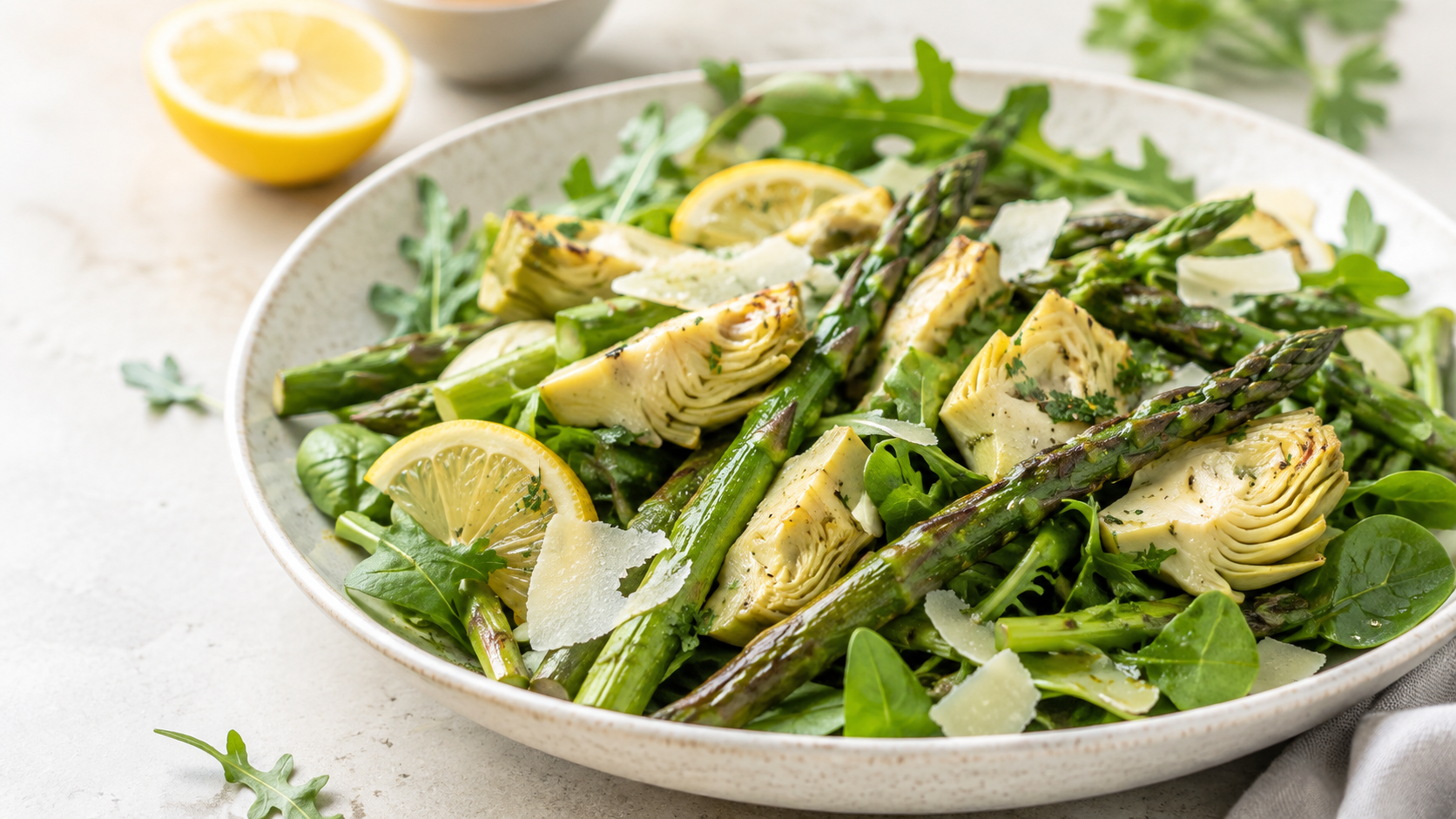
For a side that feels a little bit special without any real effort, this asparagus and artichoke salad is a beauty. Tender asparagus and marinated artichoke hearts with a simple lemon dressing make an elegant, fresh, low-calorie side that lifts any meal, at around 120 calories a serving. It is the kind of sophisticated little dish that proves eating well can feel indulgent, and it is perfect for when you want to impress with minimal fuss.
A quick word first: I am not a doctor or a dietitian, just someone who lived this. None of these foods or supplements are medication, and if you are on a GLP-1, check anything new with your GP or pharmacist. Right, let us get to it.
For the wider approach to eating on the jab, see my complete GLP-1 guide, and for fibre, fibre on GLP-1.
Why this elegant side works
Some sides are workhorses; this one is for when you want a touch of elegance.
It feels special for very little. Asparagus and artichokes have a slightly luxurious quality, so this side elevates a meal and feels indulgent for just 120 calories.
Fresh, light and full of fibre. Both vegetables are nutrient-rich and bring good fibre, making this a genuinely healthy side that tastes refined.
Minimal effort, maximum impact. A quick cook, a squeeze of lemon and a little dressing is all it takes to produce something that looks and tastes impressive.
Why eating well should feel special sometimes
There is a common assumption that healthy eating and elegant, special-feeling food are opposites — that if you are watching your weight, you are resigned to plain, functional, joyless meals while the nice food is reserved for cheat days and blowouts. I think this assumption is not just wrong but actively harmful, because it frames healthy eating as deprivation and treats indulgence as something that has to come from unhealthy food. Dishes like this asparagus and artichoke salad prove the opposite: you can absolutely make food that feels special, elegant and a little bit luxurious while being completely on-plan and genuinely good for you. Asparagus and artichokes have a refined, slightly indulgent quality — they are the sort of thing you might find on a nice restaurant menu — yet this salad is just fresh vegetables and a squeeze of lemon, coming in at a mere 120 calories.
This matters for the long game of weight loss and maintenance. If all your healthy food feels like plain diet fare, you will always feel like you are missing out on the good stuff, and that sense of deprivation is what eventually drives people to abandon their efforts. But if you learn that healthy food can also be elegant, delicious and special — that you can make something impressive and indulgent-feeling that also happens to be nutritious — then the whole framing shifts. Eating well stops being a sacrifice and becomes a different, often more interesting, way of enjoying food. So I make a point of building special-feeling dishes like this into my repertoire, not just workhorse everyday meals. A salad like this is lovely when you have people over, or simply when you want to treat yourself to something a bit refined on an ordinary evening. It reminds me that I am not depriving myself; I am eating beautiful, healthy food that I genuinely enjoy. That mindset — that healthy eating can and should feel special sometimes — is a big part of what makes it sustainable for life rather than a grim phase to endure.
The macros that matter
Here is roughly what one serving gives you. Treat these as a guide rather than gospel, since it depends on your exact ingredients and portions:
| Approx per serving | Amount |
|---|---|
| Calories | ~120 kcal |
| Protein | 4g |
| Carbohydrate | 10g |
| Fat | 7g |
| Fibre | 5g |
The protein figure is the one I watch on a GLP-1. As a rough guide I aim for somewhere around 1.2 to 1.6g of protein per kilo of body weight across the day to protect muscle while losing fat, and I judge every meal by how much of that it contributes. I log meals like this in Cronometer (it is free) so I know I am actually hitting my targets rather than hoping. The first time I tracked properly I realised I was eating far less protein than I thought, so if you have never done it, give it two weeks.
What you need (serves 1)
- 1 bunch asparagus, woody ends trimmed
- 1 jar or tin artichoke hearts, drained and halved
- A handful of rocket or mixed leaves
- 1 tbsp olive oil
- Juice of ½ lemon
- 1 tsp Dijon mustard
- A few shavings of parmesan (optional)
- Salt and black pepper
- Fresh dill or parsley to finish
How to make it
- Blanch or griddle the asparagus briefly — 2–3 minutes — until just tender but still with a little bite, then refresh under cold water to keep it green.
- Whisk the olive oil, lemon juice, Dijon, salt and pepper into a quick dressing.
- Arrange the rocket or leaves on a plate as a base.
- Add the asparagus and halved artichoke hearts.
- Drizzle with the dressing and toss gently.
- Finish with a few parmesan shavings if using, and fresh dill or parsley, and serve.
Adapting it
Easy to tune:
Add protein to make it a meal. Grilled chicken, prawns, a poached egg or some flaked salmon turn this side into an elegant light lunch.
Add other spring veg. Peas, broad beans or tenderstem broccoli fit beautifully.
Add toasted nuts. Flaked almonds or pine nuts for crunch and healthy fats. See how much protein per day.
How to cook asparagus perfectly
Asparagus is a wonderful vegetable, but it is easily ruined by overcooking, which turns it from vibrant, tender and slightly crisp into limp, grey and mushy. Getting it right is simple once you know a couple of things. First, preparation: the woody ends of asparagus are tough and unpleasant, so they need removing. The easiest way is to hold each spear and bend it gently near the base — it will naturally snap at the point where the tender part meets the woody end, taking the guesswork out of where to cut. Alternatively, trim an inch or two off the bottoms. Second, cooking: asparagus needs only brief cooking, just two to three minutes, whether you are blanching it in boiling water, steaming it, or griddling it. You want it tender enough to eat but still with a little bite and, crucially, still vibrantly green. The moment it turns from bright green to a duller olive shade, it is overcooked. A brilliant trick, especially if you are serving it cold in a salad like this, is to refresh it immediately after cooking — plunge the just-cooked asparagus into cold or iced water, which stops the cooking instantly and locks in that vivid green colour and crisp-tender texture. Griddling is a lovely alternative to blanching: a few minutes on a hot griddle pan gives asparagus a smoky char and concentrated flavour that is delicious. Thicker spears take a little longer than thin ones, so adjust accordingly, and thin spears in particular cook very fast, so watch them. Season asparagus simply — it does not need much beyond salt, a squeeze of lemon, and perhaps a little good olive oil or parmesan, as its own delicate flavour is the star. Cooked properly, briefly and refreshed to stay green, asparagus is one of the most elegant, delicious vegetables going, perfect for a special-feeling side like this. Overcook it, and you lose everything that makes it good. So keep it brief, keep it green, and it will reward you.
Prep the parts, assemble fresh
You can cook the asparagus ahead — blanched and refreshed, it keeps its colour and holds well in the fridge for a day or two — and the artichokes come ready from the jar, so this comes together quickly. Dress it just before serving so the leaves stay fresh. It is an elegant, low-effort side to have components ready for, and a lovely part of my meal prep ideas for Mounjaro for when you want something a bit special.
How I use it alongside my meals
This is my elegant side for when I want a meal to feel a bit special — alongside a nice piece of fish, some grilled chicken, or the more special-occasion dishes from my high-protein dinner ideas. It brings a touch of refinement, a good hit of fibre and nutrients, and a fresh, light quality that lifts the whole plate for very few calories.
It brings a little protein from the artichokes and any parmesan, but it is primarily a light, elegant vegetable side, so I pair it with a proper protein. Add grilled chicken, prawns, salmon or a poached egg, though, and it becomes a beautiful light lunch in its own right. My complete GLP-1 guide explains how the whole plate fits together.
When your appetite is low
Fresh, light and elegant, this can appeal on a low-appetite day when heavier food does not, and a few forkfuls alongside a little protein get nutrients and fibre in gently. When cooking or assembling feels like too much, HelloFresh keeps proper meals coming. More in what to eat with no appetite.
Supplements that pair well
Asparagus and artichokes are both nutrient-rich and bring good fibre, so a probiotic like Pre + Pro 15 complements them. As a plant-based side it is low in omega-3, so I top up with Super Omega-3 EPA. The free Lily & Loaf lifestyle analysis matches a routine to your goals.
Frequently asked questions
How do I prepare asparagus?
Snap off the woody ends — bend each spear near the base and it breaks naturally where the tender part begins — then cook it briefly. That removes the tough bottoms and leaves you with just the tender, tasty spears.
How long do I cook asparagus?
Just 2–3 minutes, whether blanching, steaming or griddling — until tender with a little bite and still vibrantly green. Refresh it in cold water afterwards to keep the colour and stop it overcooking, especially for a salad.
Can I use tinned or jarred artichokes?
Yes — jarred or tinned artichoke hearts are convenient, delicious and what makes this quick. Marinated ones add extra flavour; just drain them well. Fresh artichokes are lovely but far more effort to prepare.
How do I make it a full meal?
Add protein — grilled chicken, prawns, flaked salmon or a poached egg — and it becomes an elegant light lunch. Some toasted nuts or a little grain add substance too.
Is this side filling?
It is light and elegant rather than filling — it is designed to lift a meal rather than be the bulk of it. Pair it with a good protein for a satisfying plate, or add protein to turn it into a light meal.
The bottom line
Asparagus and artichoke salad is the elegant, low-calorie side that proves eating well can feel special — fresh, refined and full of fibre for around 120 calories, with minimal effort. Building special-feeling dishes into your repertoire reminds you that healthy eating is a pleasure, not deprivation, which is what makes it sustainable. Cook the asparagus briefly to keep it green, pair it with a protein, and enjoy something a bit refined. To match your supplements to a fresh, veg-rich diet, the free Lily & Loaf lifestyle analysis is a quick, no-pressure check.
The tools I lean on
If you are putting a GLP-1 routine together, this is the order I would do it in, free tools first:
- Track a fortnight of food in Cronometer so you can see your real protein and calories.
- Take the free Lily & Loaf lifestyle analysis to find the supplements actually worth buying.
- Start an Audible trial for something to listen to while you cook or walk.
- Keep HelloFresh on standby for the weeks cooking from scratch just is not happening.
A bit about me
I am Alan Spicer. I lost around seven stone on Mounjaro and filmed the whole thing, warts and all, on my YouTube channel. Simple, nutrient-packed sides like this helped me eat more veg, add fibre, and keep my meals interesting while the weight came off.
This article shares my personal experience and general information only. It is not medical advice. Food and supplements support a balanced diet and healthy lifestyle and do not replace it or any treatment prescribed by your doctor. Speak to your GP or pharmacist before making changes, especially while on a GLP-1 medication. Nutrition figures are approximate and will vary with the exact ingredients and brands you use.
Inspired by the kind of fresh, wholefood sides in the Lily & Loaf sides collection. This is my own version, written from my own kitchen.
Discover more from Healthy Weight Loss GLP1
Subscribe to get the latest posts sent to your email.