
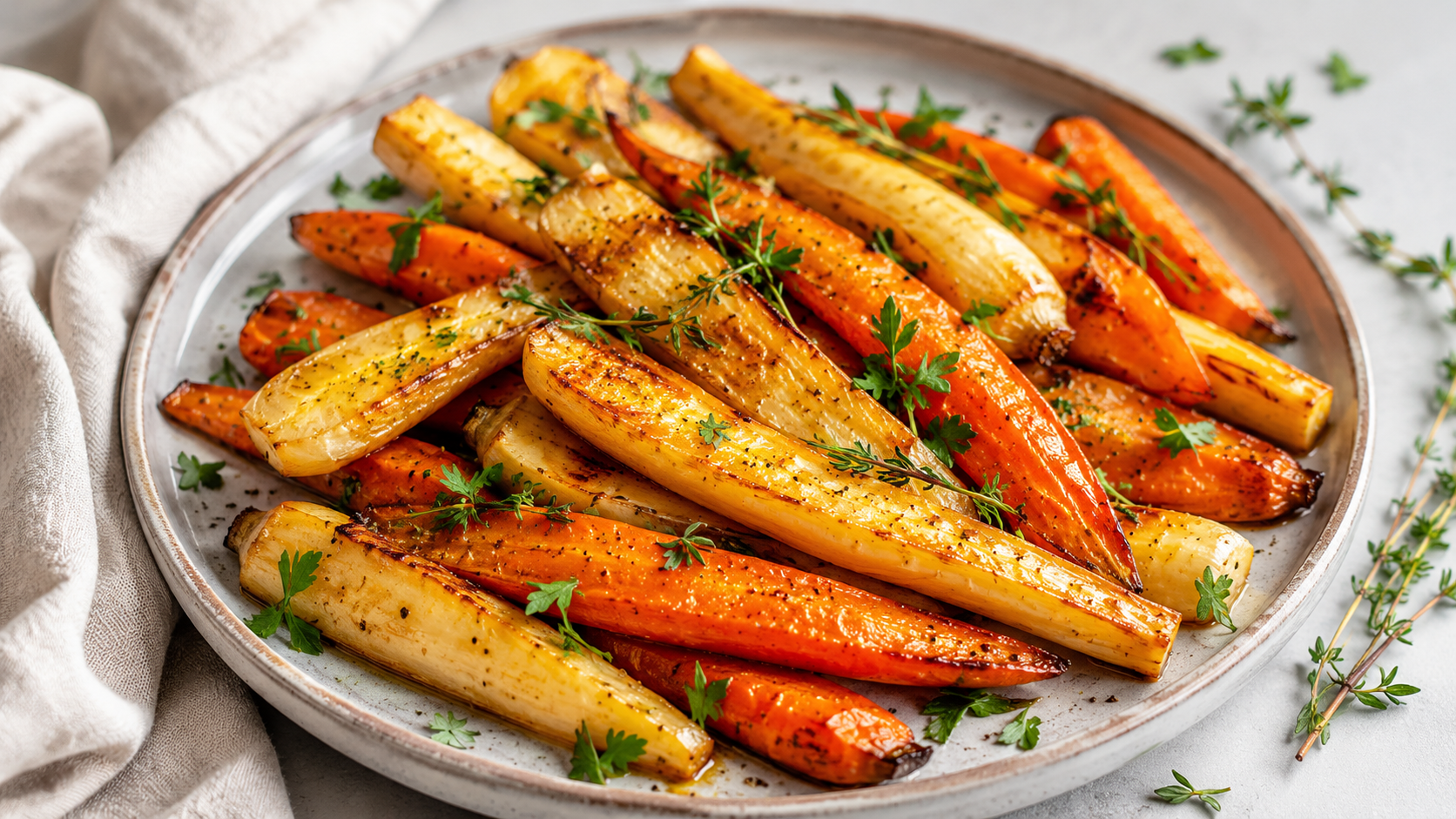
Roasted parsnips and carrots are the naturally sweet, caramelised root-veg side that makes any roast or protein feel like a proper Sunday dinner. Roasting brings out their deep sweetness, and a light touch of oil and herbs is all they need. At around 150 calories a serving with a generous 6g of fibre, they are a comforting, satisfying way to get more veg and fibre onto your GLP-1 plate.
A quick word first: I am not a doctor or a dietitian, just someone who lived this. None of these foods or supplements are medication, and if you are on a GLP-1, check anything new with your GP or pharmacist. Right, let us get to it.
For why fibre matters so much when you eat less, see fibre on GLP-1, and for the wider plan, my complete GLP-1 guide.
Why roasted roots are a great side
Root vegetables are cheap, comforting and, roasted properly, genuinely delicious.
6g of fibre a serving. Parsnips and carrots are properly high in fibre, so this side makes a real contribution to your daily fibre, which matters so much on a GLP-1.
Roasting brings out their sweetness. The high heat caramelises their natural sugars, giving a deep, sweet, comforting flavour that makes them feel like a treat.
Comforting Sunday-dinner satisfaction. They bring that hearty, roasted, comforting quality that makes a plate feel like a proper, satisfying meal.
Why cheap root veg deserves a place in your kitchen
In the rush towards trendy superfoods and expensive health foods, humble root vegetables like parsnips and carrots often get overlooked, and that is a genuine shame, because they are among the most useful, nutritious and affordable foods you can build your eating around. On a GLP-1, where you want maximum nutrition for your money and plenty of fibre to keep your digestion happy, cheap roots are a quiet hero. Carrots and parsnips cost pennies, keep for weeks in the fridge, are packed with fibre and nutrients, and — crucially — are absolutely delicious when roasted properly. You do not need to spend a fortune on exotic ingredients to eat brilliantly; a bag of carrots and parsnips and a hot oven will do you more good than most of the pricey superfoods on the shelf.
This connects to a broader point about eating well on a budget, which I think is genuinely important because a way of eating you cannot afford is not sustainable long-term. Some of the very best foods for a healthy, high-fibre diet are the cheapest — root vegetables, beans, lentils, oats, eggs, frozen veg, tinned fish. Building your meals around these affordable staples means you can eat well month after month without the cost becoming a reason to slip back to processed convenience food. Roasted parsnips and carrots are a perfect example: for the price of a coffee you can make a big tray of a genuinely delicious, high-fibre side that will do more for your health than any amount of expensive superfood powder. So do not overlook the humble root veg in the bottom of the fridge. Roast a tray, and you have a comforting, sweet, fibre-rich side that costs next to nothing and tastes like a proper treat. Eating well does not have to be expensive, and cheap roots like these are proof of it.
The macros that matter
Here is roughly what one serving gives you. Treat these as a guide rather than gospel, since it depends on your exact ingredients and portions:
| Approx per serving | Amount |
|---|---|
| Calories | ~150 kcal |
| Protein | 3g |
| Carbohydrate | 24g |
| Fat | 5g |
| Fibre | 6g |
The protein figure is the one I watch on a GLP-1. As a rough guide I aim for somewhere around 1.2 to 1.6g of protein per kilo of body weight across the day to protect muscle while losing fat, and I judge every meal by how much of that it contributes. I log meals like this in Cronometer (it is free) so I know I am actually hitting my targets rather than hoping. The first time I tracked properly I realised I was eating far less protein than I thought, so if you have never done it, give it two weeks.
What you need (serves 1)
- 3 carrots, cut into batons
- 3 parsnips, cut into batons
- 1 tbsp olive oil
- 1 tsp dried thyme or rosemary
- 1 clove garlic, crushed (optional)
- Salt and black pepper
- Optional: a drizzle of honey for extra caramelisation, or a pinch of cumin
- Fresh parsley to finish
How to make it
- Heat the oven to 200C (fan 180C).
- Cut the carrots and parsnips into similar-sized batons so they cook evenly.
- Toss with the olive oil, herbs, garlic if using, salt and pepper on a roasting tray.
- Spread them out in a single layer with space around them — do not overcrowd.
- Roast for 30–35 minutes, turning once, until tender and caramelised at the edges.
- Drizzle with a little honey for the last 10 minutes if you want extra caramelisation.
- Scatter with fresh parsley and serve.
Adapting them
Easy to vary:
Add other roots. Swede, beetroot, sweet potato or celeriac roast beautifully alongside.
Change the flavour. Cumin and coriander for a spiced version, or maple and thyme for a sweeter one.
Add protein alongside. They partner any roast protein perfectly. See how much protein per day.
Cutting roots evenly and giving them time
Root vegetables are wonderful roasted, but they behave a little differently from softer vegetables, and two things are worth knowing to get them right. First, because they are dense and firm, they take longer to cook than softer veg like courgette or peppers — usually a good thirty to thirty-five minutes — so give them the time they need to become properly tender inside and caramelised outside. If you are roasting them alongside quicker-cooking vegetables, give the roots a head start of ten or fifteen minutes before adding the softer veg, so everything finishes together rather than the roots being hard while the courgette turns to mush. Second, cut them evenly. Because they are dense, unevenly cut roots roast unevenly — the thin bits burn while the thick bits stay hard — so take a moment to cut your carrots and parsnips into similar-sized batons or chunks. This is more important with dense roots than with softer veg. Beyond those two points, the usual roasting rules apply: do not overcrowd the tray, so they caramelise rather than steam; use a good high heat around 200C; and toss them in just enough oil to coat. Parsnips in particular reward roasting because their high sugar content caramelises beautifully, going sweet and golden and almost crisp at the edges. A little honey or maple drizzled on towards the end takes that caramelisation even further, though they are lovely without it too. One thing to watch: because parsnips are so sugary, they can catch and burn faster than carrots towards the end, so keep an eye on them in the last few minutes. Get the even cutting and the timing right, and roasted roots are one of the most comforting, satisfying and genuinely delicious ways to eat your vegetables and get your fibre in, especially in the colder months when you want something warm and hearty on the plate.
A great batch-cook side
Roasted roots batch-cook well and reheat nicely, crisping up again in a hot oven. Roast a big tray and they keep for three to four days in the fridge, ready to go with any protein or added cold to a salad. They are a comforting, fibre-rich side to have prepped, especially in winter, and a useful part of my meal prep ideas for Mounjaro.
How I use them alongside my meals
Roasted parsnips and carrots are my comforting root-veg side for the heartier meals — alongside roast chicken, sausages, the lamb and casserole dishes from my high-protein dinner ideas, or as part of a healthier Sunday roast. They add a generous serving of veg, a proper 6g of fibre, and that sweet, caramelised, comforting quality that makes a plate feel like a real dinner.
They bring little protein, so I pair them with a good protein source — they are there for fibre, nutrients and comforting satisfaction. Being naturally sweet and hearty, they are especially good in the colder months when you want something warm and substantial. My complete GLP-1 guide explains how the whole plate fits together.
When your appetite is low
Sweet, soft and comforting, a few pieces of roasted root veg can be more appealing than plain vegetables on a low-appetite day, getting fibre and nutrients in gently alongside a little protein. Having a batch already roasted means no effort. When cooking is beyond you, HelloFresh keeps proper meals coming. More in what to eat with no appetite.
Supplements that pair well
Root veg is high in fibre, so a probiotic like Pre + Pro 15 complements it, and if you are building your fibre up, do it gradually with plenty of water — see my constipation on GLP-1 guide. Being low in omega-3, I top up with Super Omega-3 EPA. The free Lily & Loaf lifestyle analysis matches a routine to your goals.
Frequently asked questions
Are roasted parsnips and carrots good for weight loss?
Yes — they are high in fibre and nutrients, filling and comforting, for modest calories. Roasting makes them genuinely delicious so you eat your veg happily. They are carb-containing roots, so pair them with a protein and mind the portion.
How do I stop the parsnips burning?
Parsnips are very sugary and caramelise fast, so keep an eye on them in the last few minutes. Cutting them evenly and not having the oven too high helps, and adding any honey only near the end stops it catching.
Do roots take longer to roast than other veg?
Yes — being dense, they take a good 30–35 minutes. If roasting them with softer veg, give the roots a head start of 10–15 minutes so everything finishes tender together rather than the roots being hard.
Can I batch-cook them?
Yes — roast a big tray and they keep three to four days in the fridge, reheating and re-crisping well in a hot oven. They are a handy, comforting, high-fibre side to have prepped, especially in winter.
What other roots can I add?
Swede, beetroot, sweet potato, celeriac and even potato all roast beautifully alongside carrots and parsnips. Cut them to similar sizes and they make a lovely mixed tray of roasted roots.
The bottom line
Roasted parsnips and carrots are the naturally sweet, high-fibre side that makes any meal feel like a proper Sunday dinner — caramelised, comforting and packing 6g of fibre for around 150 calories. Cheap root veg is a quiet hero of eating well on a budget, doing you more good than most pricey superfoods. Cut them evenly, give them time, and pair them with a protein. To match your supplements to a high-fibre diet, the free Lily & Loaf lifestyle analysis is a quick, no-pressure check.
The tools I lean on
If you are putting a GLP-1 routine together, this is the order I would do it in, free tools first:
- Track a fortnight of food in Cronometer so you can see your real protein and calories.
- Take the free Lily & Loaf lifestyle analysis to find the supplements actually worth buying.
- Start an Audible trial for something to listen to while you cook or walk.
- Keep HelloFresh on standby for the weeks cooking from scratch just is not happening.
A bit about me
I am Alan Spicer. I lost around seven stone on Mounjaro and filmed the whole thing, warts and all, on my YouTube channel. Simple, nutrient-packed sides like this helped me eat more veg, add fibre, and keep my meals interesting while the weight came off.
This article shares my personal experience and general information only. It is not medical advice. Food and supplements support a balanced diet and healthy lifestyle and do not replace it or any treatment prescribed by your doctor. Speak to your GP or pharmacist before making changes, especially while on a GLP-1 medication. Nutrition figures are approximate and will vary with the exact ingredients and brands you use.
Inspired by the kind of fresh, wholefood sides in the Lily & Loaf sides collection. This is my own version, written from my own kitchen.
Discover more from Healthy Weight Loss GLP1
Subscribe to get the latest posts sent to your email.